You’ve just spotted another damp patch on the garage ceiling, right after a quote for a “quick fix” felt patch felt suspiciously high. Why does one contractor suggest a few hundred pounds whilst another quotes double that for the same space? It is frustrating to deal with conflicting advice when your extension is at risk of water damage. Understanding the true fiberglass flat roof cost UK homeowners face in 2026 is the first step toward a leak-free home. You need a solution that stops the water for good, not a temporary patch that leaves you worrying every time the weather turns.
We believe in straight-talking advice and total transparency. This guide provides a clear, honest breakdown of GRP pricing. We cover everything from material grades and labour rates to the reality of the London price gap. You will learn how fibreglass compares to traditional felt, why thermal insulation regulations might affect your total spend, and how to secure a transferable guarantee that adds real value to your property. By the end, you will have the confidence to choose a specialist who treats your home with the care and precision it deserves.
Key Takeaways
- Understand why GRP (Glass Reinforced Plastic) is the preferred seamless, liquid resin solution for modern extensions and balconies.
- Discover the current fiberglass flat roof cost UK residents should budget for in 2026, distinguishing between a simple overlay and a full structural replacement.
- Identify how roof complexity, such as skylight perimeters and hidden joist rot, can impact your final quote and labour timelines.
- Compare the 30-year return on investment for fibreglass against felt and EPDM to see why it is the most durable choice for high-traffic areas.
- Learn how to avoid poor workmanship by verifying resin-to-matting ratios and choosing installers with 20+ years of local history.
What is a GRP Fibreglass Flat Roof and Why Does Cost Vary?
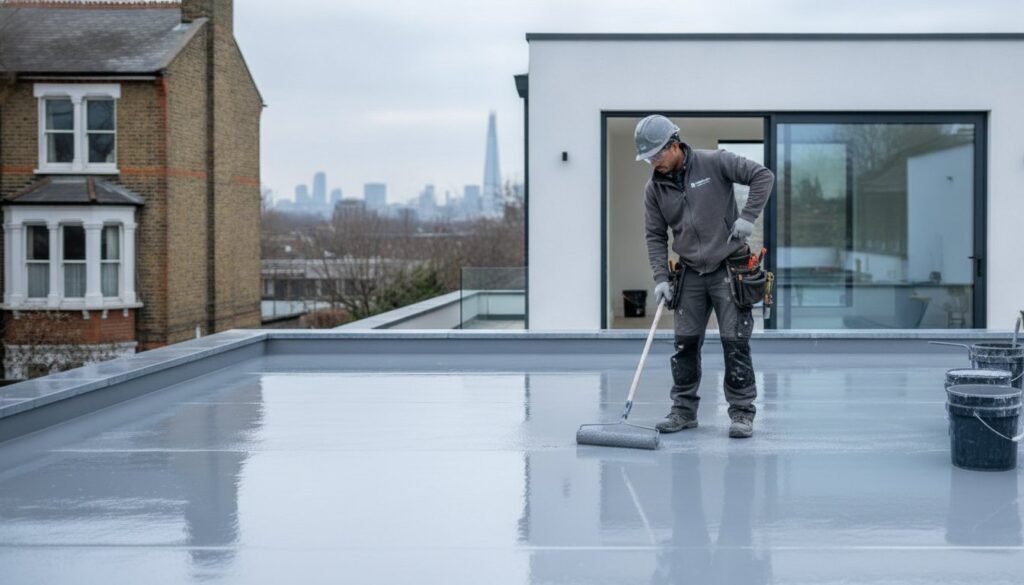
GRP stands for Glass Reinforced Plastic. It is a cold-applied, seamless liquid resin system that has revolutionised how we protect extensions and garages. If you are researching the What is a GRP Fibreglass Flat Roof? material, you will find it is essentially a high-strength laminate. Unlike traditional felt, which relies on heat-sealed joints, fibreglass is applied as a continuous skin. This lack of seams is vital. It eliminates the most common failure points where water typically finds its way into your home. It’s a tough, durable solution that handles the British rain with ease.
Homeowners are increasingly moving away from bituminous felt in favour of GRP for balconies and kitchen extensions. This shift is driven by a desire for a “fit and forget” solution. While felt can become brittle and crack under temperature changes, fibreglass remains resilient. It creates a hard-wearing waterproof barrier that doesn’t just stop leaks; it provides a surface you can actually walk on without causing damage. This makes it ideal for properties where the roof needs to double as a functional space.
The Anatomy of a Fibreglass Roof System
A professional installation is more than just a layer of resin. It starts with a solid foundation. We always use OSB3 tongue-and-groove decking. This isn’t a place to cut corners. The quality of the timber directly impacts the fiberglass flat roof cost UK homeowners pay for a flat, stable finish. If the decking is poor, the roof will eventually fail. Around the edges, we install pre-formed GRP trims. These prevent water from creeping under the perimeter and into your brickwork. Finally, a UV-resistant topcoat is applied. This is usually a classic slate grey. It doesn’t just look smart; it protects the structural layers from sun damage and keeps the roof looking new for decades.
Why GRP is a ‘Premium’ Flat Roofing Solution
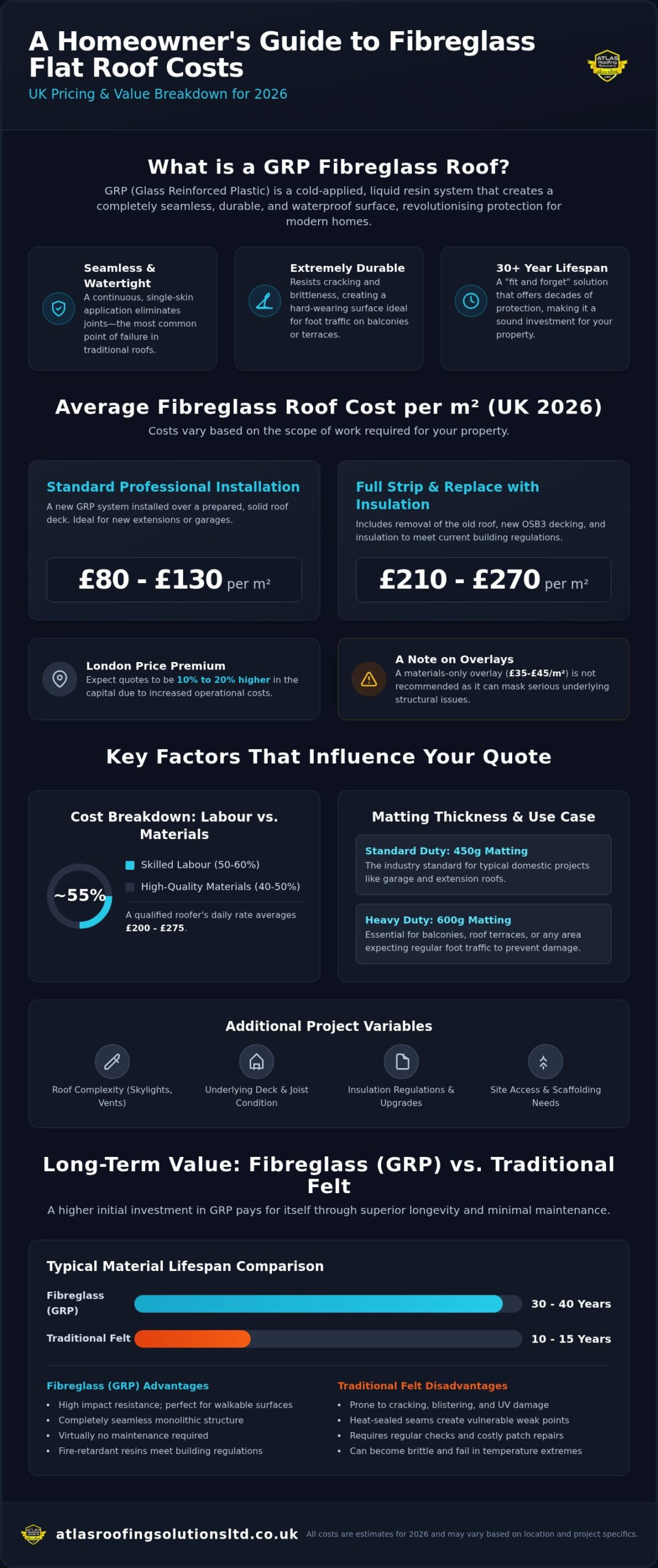
The initial price reflects the high-performance engineering involved. A well-installed fibreglass roof can last 30 to 40 years. Compare that to traditional felt, which often needs replacing after 10 or 15 years. It’s a long-term investment that pays for itself. You are also paying for safety. We use fire-retardant resins that meet strict building regulations. This can sometimes even help with your building insurance premiums. While the upfront cost is higher, the lack of maintenance makes it the most cost-effective choice over time. You won’t be paying for patch repairs every few winters. It is about buying peace of mind and long-term security for your property.
Average Fibreglass Flat Roof Cost per M2 in the UK [2026]
In 2026, the average fiberglass flat roof cost UK homeowners see for a professional installation sits between £80 and £130 per m². This range covers the standard materials and labour. If your project involves a full strip-and-replace with new insulation, the price typically rises to between £210 and £270 per m². For those with a roof deck in pristine condition, a materials-only overlay might cost £35 to £45 per m². However, most reliable contractors advise against simple overlays as they often mask underlying structural issues.
Geography plays a major role in your final quote. If you are based in London, expect to pay a 10% to 20% premium over national rates. This covers the increased cost of labour, parking, and skip hire in the city. It’s a reality of the market that reflects the higher operational costs of working in the capital.
The Cost of Materials vs. Professional Labour
Labour makes up roughly 50% to 60% of a professional roofing quote. A qualified roofer’s daily rate in 2026 averages between £200 and £275. It’s a precision job. We focus on using “Virgin” resins. These provide better flexibility and longevity than cheaper, recycled resins which can lead to premature cracking. The application also depends on a strict weather window. The resin needs dry conditions and specific temperatures to cure into a single, seamless sheet. Don’t forget that following UK Building Regulations for roofing is essential when replacing more than 25% of your roof. This ensures your home stays energy-efficient and legally compliant.
Standard vs. Heavy-Duty GRP: Which Do You Need?
The thickness of the glass fibre matting is a key cost driver. Standard 450g matting is the go-to choice for most garage or extension roofs. It provides a lightweight yet durable seal. For balconies, roof terraces, or any area with regular foot traffic, 600g heavy-duty matting is non-negotiable. This thicker layer prevents the laminate from flexing and cracking under weight. You can also add non-slip topcoats for extra grip. While the heavier matting costs more upfront, it protects the structural integrity of your home for the long haul. If you want a clear idea of the best materials for your specific roof, we offer transparent quotes to help you plan your budget.
Key Factors That Influence Your Fibreglass Roofing Quote
Your final quote depends on more than just the surface area. The fiberglass flat roof cost UK residents receive is often shaped by the specific obstacles found on their property. A simple 20m² rectangle is faster to install than a 20m² L-shaped extension with three skylights. Every corner, chimney stack, or drainage pipe requires meticulous detailing. This precision is necessary to meet professional installation standards. If a contractor rushes these complex perimeters, the risk of water ingress increases significantly.
The “hidden” factor is the condition of your existing roof structure. We cannot see the state of the timber joists until the old felt or asphalt is stripped away. If the structural timber is soft or rotting from years of slow leaks, it must be replaced before the new OSB3 decking is laid. We provide transparent quotes that account for these potential timber repairs. It is about doing the job right the first time rather than covering up a problem that will only worsen. If you are currently dealing with active water ingress and need to understand how to fix a leaking flat roof before committing to a full replacement, our comprehensive guide walks you through the diagnostic process and your repair options.
The ‘London Factor’: Why Local Context Matters
Working in the capital adds logistical layers that affect the bottom line. ULEZ and Congestion Charges are real overheads that impact the fiberglass flat roof cost UK homeowners pay. Parking a van on a narrow terraced street in Fulham or Islington is not the same as having a wide driveway in the suburbs. These costs, along with restricted access for waste removal, are baked into the final price. Hiring a local London roofing expert ensures these logistics are managed efficiently. We understand the local permit requirements and skip hire costs that can catch out-of-town contractors off guard.
Building Regulations and Thermal Upgrades
If you are replacing more than 50% of your flat roof, you are legally required to upgrade the insulation. This is known as a “warm roof” configuration. While adding high-performance PIR insulation boards increases the upfront bill, it slashes energy loss through the ceiling. Meeting current UK Building Regulations (Part L) is not just a box-ticking exercise. It transforms a cold, damp extension into a comfortable living space year-round. The reduction in your home’s heating bills helps offset the initial roofing investment over time. It is a smart way to add value to your property while making it more sustainable.
Fibreglass vs. Felt vs. EPDM: Calculating Long-Term Value
When you look at the fiberglass flat roof cost UK market, the upfront price is only half the story. To find the true value, you must look at the total cost of ownership over 30 years. Traditional bituminous felt might seem like a bargain today, but it often requires complete replacement twice in that timeframe. EPDM rubber is a strong contender for longevity, yet it lacks the structural rigidity of GRP. If your roof needs to handle foot traffic, such as for window cleaning or as a balcony, fibreglass is the only sensible choice. It creates a solid, impact-resistant surface that won’t tear or puncture under pressure.
The aesthetic difference is also striking. GRP provides a sleek, moulded finish that complements modern architectural designs. There are no messy glue lines or overlapping seams to catch the eye. For a deeper dive into these materials, you can read our full analysis on fibreglass roof vs felt roof options. It’s about choosing a material that enhances your home’s kerb appeal whilst providing decades of protection.
Maintenance Costs: Set and Forget
A major advantage of GRP is that it is virtually maintenance-free. Felt roofs are prone to moss growth and UV degradation, which eventually leads to brittle patches and leaks. A seamless fibreglass surface doesn’t have these vulnerabilities. Moss finds it harder to take root on the smooth topcoat, and the material is naturally resistant to sun damage. This makes gutter cleaning much simpler too. You won’t find yourself clearing away loose stone chippings or felt fragments after every storm. It is a genuine “set and forget” solution for busy homeowners.
Resale Value and Transferable Guarantees
In the competitive London property market, a high-quality roof is a significant selling point. Savvy buyers and surveyors look for durable solutions that won’t cause immediate headaches. Providing a 15-year guarantee during the conveyancing process offers immense peace of mind. It proves the work was handled by professionals and adds tangible value to the building. Cheap, poorly installed roofs often become a liability during a sale, leading to price renegotiations or collapsed chains. Investing in quality now protects your equity for the future.
Ready to upgrade your home with a roof that lasts? You can book a free site visit with our team to get an accurate, no-obligation quote today.
Choosing a Professional London Installer for Your Fibreglass Roof
Selecting the right contractor is just as critical as the materials you choose. While searching for the best fiberglass flat roof cost UK, it is tempting to pick the lowest number on the page. However, a low-ball quote often masks the dangers of “cowboy” GRP work. Poor resin-to-matting ratios are a common shortcut used to save on material costs. If an installer uses too little resin, the roof becomes porous and weak. If they apply it in damp conditions, you face “delamination,” where the fibreglass peels away from the timber deck. These mistakes turn a 30-year solution into a three-year headache.
Protect your investment by checking for a physical business address and at least 20+ years of local history. A reputable firm won’t just give you a price over the phone. They will insist on a comprehensive, no-obligation site visit. This allows them to check for hidden rot or access issues that could change the final bill. When you receive your quote, ensure it is backed by a written contract. This document should clearly outline the scope of work, the specific material grades used, and the arrangements for waste removal and skip hire. Transparency at this stage prevents disputes later.
The Atlas Roofing Solutions Ltd Difference
We are a family-run business with deep roots in the community. Our ethos at Atlas Roofing Solutions Ltd is built on straight-talking advice and total honesty. We don’t use high-pressure sales tactics because we believe our workmanship speaks for itself. We specialise in fiberglass roof installation in London, tailoring every project to the unique logistical challenges of the capital. Our 15-year workmanship guarantee provides the ultimate peace of mind. It is a primary differentiator that ensures your home is protected by a team that takes pride in every seal and trim.
Your Next Steps: Getting an Accurate Quote
Getting started is a simple, hassle-free process. To prepare for our roofing survey, please ensure we have clear access to the flat roof area. It is also helpful if you can provide a brief history of any previous leaks or repairs. This information allows us to provide a more accurate assessment of the structural timber’s health. We provide free, transparent quotes that reflect the genuine fiberglass flat roof cost UK for a high-standard finish. Contact us today to organise your free site visit in London and take the first step toward a permanent, leak-free solution for your home.
Secure Your Home with a Long-Term Roofing Solution
Choosing the right material for your property is a long-term commitment to safety and value. You now have a clear picture of how the fiberglass flat roof cost UK residents pay is determined by roof complexity, material weight, and local logistics. While GRP requires a higher upfront investment than traditional felt, its 30-year lifespan and seamless finish make it the most cost-effective solution for modern British homes. It transforms a vulnerable area of your house into a durable, maintenance-free asset.
We believe in making home maintenance simple and hassle-free. As a family-run specialist with over 20 years of experience across London, we provide the expert care your roof deserves. Our transparent pricing and 15-year guarantee on all GRP installations mean you can move forward with quiet confidence. Get Your Free, No-Obligation Fibreglass Roofing Quote today to secure your property for the future. We are ready to help you achieve a permanent, leak-free result that looks fantastic and protects your home for decades to come.
Frequently Asked Questions
Is a fibreglass roof more expensive than EPDM rubber?
Yes, fibreglass generally requires a higher upfront investment than EPDM rubber. This is because GRP is a structural, multi-layered system that involves a new timber deck and a liquid-applied resin laminate. EPDM is a single-ply membrane that is often faster to install. However, GRP provides a much harder, impact-resistant surface. If you plan to walk on the roof or want a sleek, seamless finish for a modern extension, the extra cost is usually justified.
How much does a 20m2 fibreglass roof cost in the UK?
The fiberglass flat roof cost UK homeowners see for a 20m² project depends on the specific requirements of the build. A simple covering replacement will be more affordable than a full structural strip-back. If your project requires new OSB3 decking and high-performance insulation to meet current building regulations, the total will naturally be higher. Every property has unique perimeters and drainage needs. We recommend a professional site survey to get a transparent, fixed quote for your specific extension or garage.
Can I install a fibreglass roof myself to save money?
You can buy DIY kits, but professional installation is the best way to ensure a leak-free result. Fibreglass is incredibly sensitive to the weather and requires precise resin-to-catalyst ratios to cure correctly. Mistakes can lead to brittle patches or delamination, which are expensive to fix later. By choosing a professional, you also secure a long-term guarantee. This is vital for your peace of mind and the future resale value of your home.
Does a new fibreglass roof add value to my house?
A professionally installed GRP roof with a transferable guarantee is a significant selling point for any property. It provides potential buyers with proof that the home is protected for decades. Surveyors often look favourably on GRP because it is a “fit and forget” solution. It eliminates the worry of recurring leaks often associated with older felt roofs. This peace of mind often justifies a higher asking price and helps your home stand out in the London market.
How long does it take to install a GRP flat roof?
A standard residential project typically takes between one and three days to complete. For a small garage or extension, we often strip the old roof and install the new deck on the first day. The resin and topcoat are then applied on day two, provided the weather stays dry. Larger or more complex roofs with multiple skylights may take slightly longer. We always aim for a fast, hassle-free process that minimises disruption to your daily routine.
What happens if my fibreglass roof cracks or makes noise?
Small creaks can occur due to thermal expansion, but visible cracks usually indicate an installation error or structural movement. If you spot a crack, it is important to have it inspected by a local expert quickly. While GRP is very resilient, a crack can compromise the waterproof seal. We can often repair these issues if they are caught early. This prevents water from reaching the timber deck and causing more serious structural rot inside your home.
Do I need planning permission to replace my flat roof with fibreglass?
You don’t usually need planning permission for a like-for-like replacement of an existing flat roof. However, you must comply with Building Regulations if you are replacing more than a quarter of the roof area. This usually means you need to improve the thermal insulation to meet modern energy standards. If you are changing the roof’s height or adding a balcony, it is always best to check with your local council building control team before any work begins.
How much should I budget for scaffolding in London?
Budgeting for scaffolding in the capital depends on the height of your property and ease of access. Costs are typically higher in London because of local council permits and the complexity of working on narrow streets. You might need a specific pavement licence if the structure sits on public land. It is best to include these logistical costs in your early planning. We manage these details as part of our service to ensure your project remains compliant and safe.