For a London extension, EPDM is often the lower-cost option upfront, while GRP fibreglass typically costs more for a comparable roof. In an EPDM-versus-fibreglass flat roof comparison in London, the right choice depends on more than the initial quote: appearance, intended use and the flexibility the roof covering needs all matter. GRP’s hard finish can suit a roof with occasional foot traffic; EPDM provides a flexible rubber covering.
It’s understandable to focus on cost when planning an extension, but the roof also needs to suit the structure and how you’ll use the space. This guide compares EPDM and GRP on upfront cost, appearance, maintenance, composition and flexibility, so you can weigh the practical differences before deciding. The roof deck and installation details matter too. No single option suits every roof, but understanding the differences can make your decision clearer.
Key Takeaways
- Compare EPDM and GRP by expected lifespan as well as upfront cost, since installation quality and roof condition influence how long either covering performs.
- Choose with the roof’s use in mind: GRP creates a hard surface, while flexible EPDM may suit a roof where movement matters.
- Appearance and upkeep differ, so consider the finish you prefer and the simple checks needed to keep the roof clear and in good condition.
- Before settling on a material, weigh the roof’s size, existing deck and detailing, as these affect the work involved and the final choice.
EPDM vs GRP Flat Roofing: Which Is the Better Choice for UK Extensions?
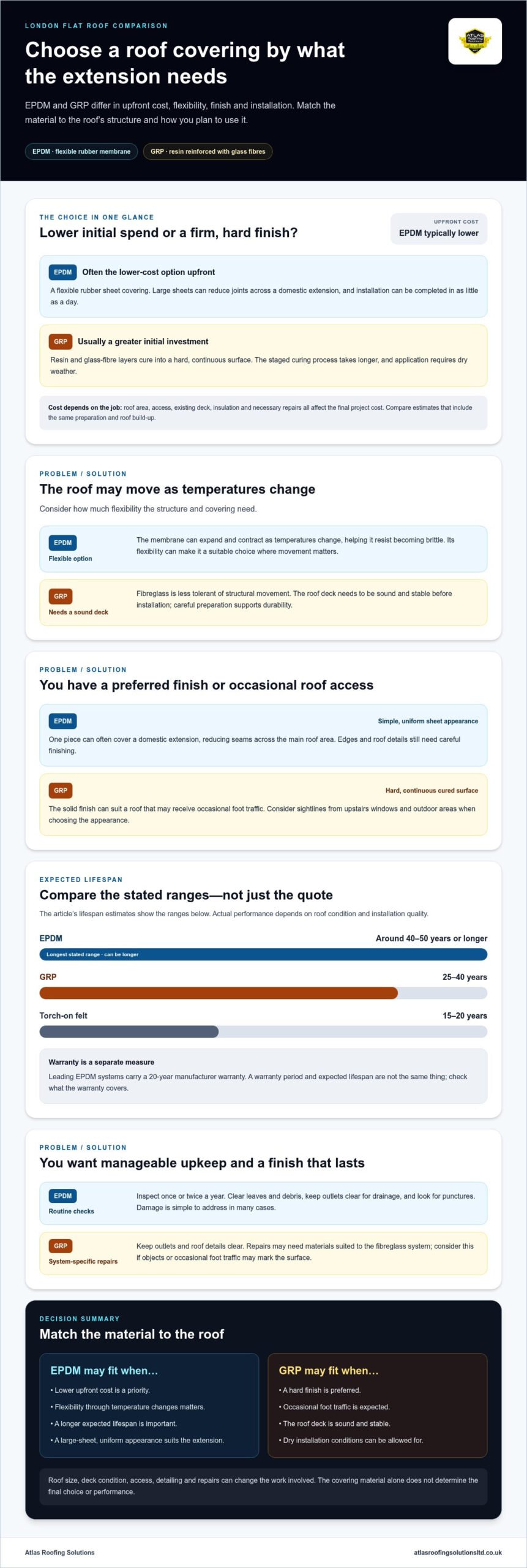
For London weather, EPDM’s flexibility through temperature changes gives it an advantage; GRP is durable but needs dry installation conditions. In the UK, EPDM can last around 40-50 years or longer, while GRP can last 25-40 years when properly installed.
EPDM lifespan and durability
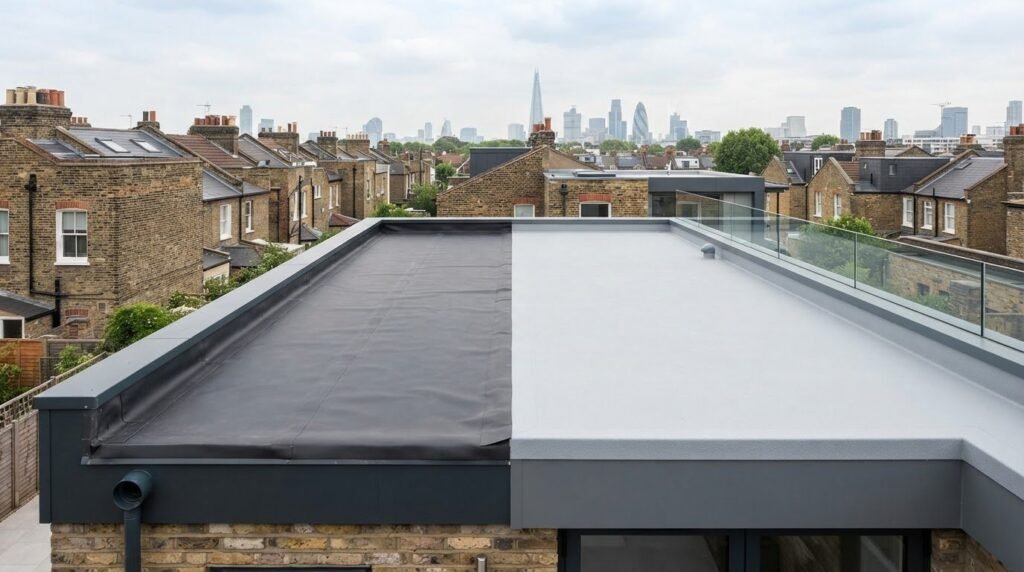
EPDM is a rubber membrane supplied in large sheets, which can reduce joints across a domestic extension. Its flexibility allows it to expand and contract as temperatures change, helping it resist becoming brittle. A correctly installed and maintained EPDM roof can last around 40-50 years or longer. Leading EPDM systems carry a 20-year manufacturer warranty, but a warranty period and expected lifespan are not the same measure.
GRP lifespan and durability
GRP roofing uses resin reinforced with glass fibres, curing into a hard, continuous surface. A properly installed GRP roof can last 25-40 years. Unlike EPDM, fibreglass is less tolerant of structural movement, so the roof deck needs to be sound before installation. Its solid finish suits roofs that may receive occasional foot traffic, while careful preparation and installation support long-term durability.
| Roof covering |
Typical lifespan |
Durability consideration |
| EPDM |
Around 40-50 years or longer |
Flexible membrane; fewer joints across large sheets |
| GRP |
25-40 years |
Hard surface; needs a sound, stable deck |
| Torch-on felt |
15-20 years |
Shorter lifespan than rubber on a domestic roof |
Felt provides a useful lifespan comparison: modern, high-quality torch-on systems typically last 15-20 years. That is shorter than the stated EPDM and GRP ranges, making expected replacement timing another factor to weigh. Actual performance depends on the roof’s condition and the quality of installation, not just the covering material.
Compare warranty wording separately from lifespan. EPDM’s 20-year manufacturer warranty applies to leading systems; warranty terms for any covering should be read for what they cover. Choose EPDM if flexibility and a longer expected lifespan are priorities; choose GRP for a hard finish and a sound, stable deck.
Upfront material and installation costs
EPDM is typically the lower-cost option upfront, while GRP fibreglass usually requires a greater initial investment. The final cost depends on the roof area, deck condition and work involved.
EPDM material and installation costs
EPDM’s overall project cost includes the membrane and its installation. A single-sheet covering can reduce joints, but roof area, access and preparation still affect the work. If the existing deck needs repair or replacement, that also changes the project scope. EPDM can be installed in as little as a day, which may make installation quicker than GRP.
GRP material and installation costs
GRP usually costs more upfront than EPDM for a comparable flat roof. Its resin and fibreglass layers are applied and cure in stages, so installation takes longer, and application requires dry weather. The roof’s size, deck condition and detailing all affect the work involved, particularly where an extension has complex junctions or needs repairs before the new surface is installed.
There is no fixed per-square-metre cost for an EPDM or fibreglass roof in London. The price depends on roof area, access, the existing deck, insulation and any necessary repairs. Comparing estimates is most useful when they include the same preparation and roof build-up.
For regulations, according to the Ministry of Housing, Communities and Local Government, Building Regulations apply when an extension is being built and its flat roof forms part of that new extension.
Installation time also differs: EPDM can be fitted in as little as a day, while GRP takes longer because it cures in stages. Temperature and dry conditions affect when GRP can be applied; EPDM installation does not require flames. If you’re planning a flat roof installation, include deck preparation and detailing when comparing the work involved.
EPDM and GRP appearance and maintenance
Appearance depends on the finish you want and how visible the roof is from your home or garden. EPDM comes in large sheets, and one piece can often cover a domestic extension, avoiding seams across the main roof area. GRP is applied as liquid resin reinforced with glass fibres, then cures into one solid surface. The two coverings therefore look and feel different.
EPDM’s sheet format gives the main roof area a simple, uniform appearance. A single sheet can reduce joints, though edges and roof details still need careful finishing. GRP cures into a hard, continuous surface, which can suit a roof where a firm finish matters. Before choosing, consider sightlines from upstairs windows and whether you’ll see the roof from a patio.
Both materials need straightforward upkeep, but maintenance differs. Inspect an EPDM roof once or twice a year, clear leaves and other debris, and look for punctures. These checks can help you spot damage early. For example, clear debris around outlets so it does not obstruct drainage. Keep outlets and roof details clear on GRP roofs too; repairs may require materials suited to the fibreglass system.
EPDM damage is simple to address in many cases, while GRP repairs may need materials designed for the fibreglass system. This difference matters if the roof may experience occasional foot traffic or contact with objects that could mark its surface. A neat finish depends on detailing at edges, outlets and junctions, not just the visible roof area. Include these details when comparing appearance and future upkeep.
Use a practical selection process: view the proposed finish from rooms and outdoor areas overlooking the roof, consider whether a single-sheet look or a solid cured surface better suits the extension, and plan a once-or-twice-yearly inspection if you choose EPDM. Both materials can provide a durable covering, but your preferred appearance and likely repair needs may help settle the decision.
EPDM roofing composition and flexibility
EPDM is a synthetic rubber roofing membrane supplied in large sheets. On a straightforward extension, one sheet can cover much of the roof, reducing joints across the surface. The rubber remains flexible through temperature changes, expanding and contracting rather than becoming brittle. This movement can be useful where the roof structure shifts seasonally.
GRP fibreglass roofing is made differently. Installers apply liquid resin reinforced with glass fibres, which cures into one solid, waterproof surface. Unlike flexible EPDM rubber, the finished GRP layer is hard. That firm surface can suit areas with occasional foot traffic, but GRP is less tolerant of structural movement. A sound, stable deck is important before installation.
The roof deck and its condition affect which material is suitable. Before work starts, inspect the deck for moisture, movement, deterioration and damage. A soft or damaged area needs attention rather than simply being covered. For example, a deck showing movement may be a poor base for rigid GRP, while EPDM’s flexibility may accommodate some movement better. The roof’s design still matters.
Roofing quotes reflect the required preparation and detailing, not just the membrane or resin. Roof area, awkward shapes, edges, outlets and junctions can all affect the work involved. Existing moisture or deck damage may also need repairs before installation. A clear comparison accounts for these factors and the proposed roof build-up, so material prices alone do not tell the whole story.
Weather affects installation too. GRP needs dry conditions and cannot be installed below 5°C; EPDM application does not require flames. These practical differences can influence scheduling and the preparation needed for a particular roof. For a complex roof with several shapes or junctions, the deck and detailing deserve close attention before choosing between a flexible rubber sheet and a cured fibreglass surface.
For help matching a fibreglass roof to your roof structure and its movement, discuss a fibreglass roof installation.
Atlas Roofing Solutions: Roof Installation
Atlas Roofing Solutions Ltd helps homeowners planning flat roof installations or dealing with roofs that need repair. If you’re weighing EPDM against fibreglass, a site visit can assess the roof deck, its condition and the details that affect the right covering for your extension.
Atlas Roofing Solutions Ltd also handles guttering and uPVC fascias and soffits, which can be relevant when planning work around the roof edge and rainwater drainage. Free site visits and transparent, no-obligation quotes give you a practical next step for discussing the work involved. The company offers a 15-year guarantee on workmanship.
Contact Atlas Roofing Solutions Ltd to discuss your roof installation or repair.
Plan your next step with confidence
Choosing between an EPDM and fibreglass flat roof in London is easier when you identify what matters most for your extension. Set your priorities before settling on a specification: the finish you want, how you’ll use the roof, and the work needed around its edges and drainage. A clear brief keeps the discussion focused on your home’s practical needs.
Whether you’re building an extension or an existing covering needs attention, Atlas Roofing Solutions Ltd provides roof installation, roof repairs and guttering. Share your priorities and the roof’s condition to discuss a suitable way forward for your project.
Talk with Atlas Roofing Solutions Ltd about your roof and take the next step towards a well-planned extension.
Frequently Asked Questions
How long does a GRP flat roof last?
A properly installed GRP flat roof can last 25-40 years. Its service life depends partly on sound preparation and a stable roof deck, since fibreglass is less tolerant of structural movement. For a London extension, consider whether the deck is in good condition before choosing GRP. A well-prepared base helps the covering perform as intended over time.
What Is GRP Fibreglass Roofing?
GRP fibreglass roofing is a flat-roof covering made from resin reinforced with glass fibres. The installer applies the liquid material to the roof, where it cures into a solid, waterproof surface. It can, for example, suit a balcony or roof expected to receive occasional foot traffic. The deck must be sound because GRP is less tolerant of movement.
Which is cheaper?
EPDM is generally cheaper upfront than GRP for a comparable flat roof. The final cost still depends on roof area, access, deck preparation and detailing, so comparing covering materials alone may not reflect the full project. A roof that needs deck repairs, for example, involves different work from one with a sound base. Compare estimates that cover the same scope.
Can You Walk on EPDM or GRP Flat Roofs?
GRP is better suited to occasional foot traffic because it cures into a hard surface. EPDM is not intended as a regular walking surface. If you expect to access a flat roof, factor that use into your material choice. A roof intended as a balcony also needs a suitable design, not just a walkable covering.
Is it worth paying more for EPDM?
A higher upfront cost for EPDM may be worthwhile if flexibility and a longer expected service life matter most to your project. It may be less suitable if the roof needs a hard surface for occasional foot traffic, where GRP could fit better. Weigh the initial spend against the roof’s use, deck condition and the movement it may experience.
So, which is better?
Neither material is best for every London extension. EPDM can suit a roof where flexibility and lower upfront cost are priorities; GRP can be a better fit when a hard surface and occasional foot traffic matter. Start with how you’ll use the roof, then consider the deck’s condition and your preferred finish. Those priorities can point you towards the more suitable covering.