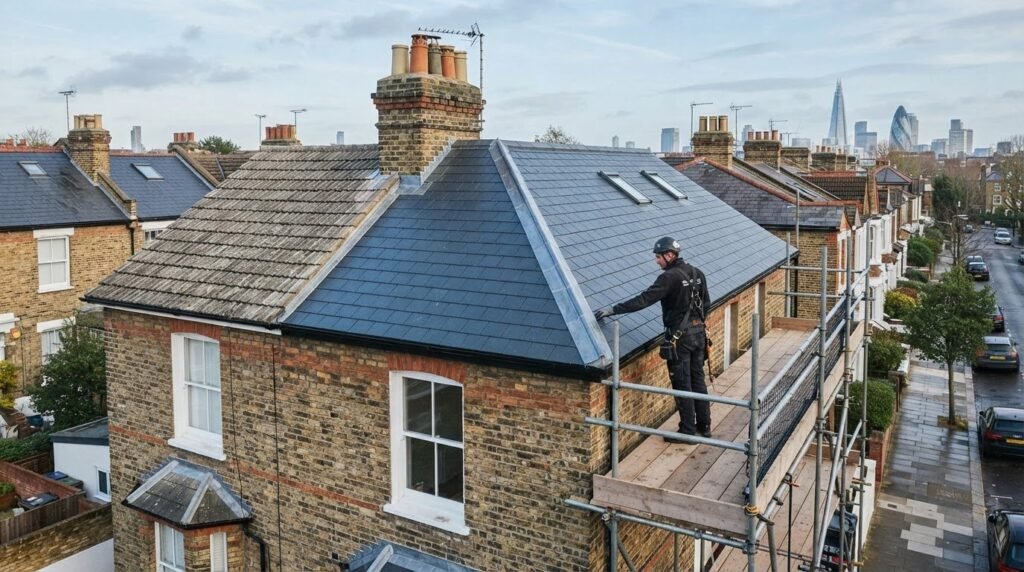
Slate roofs aren’t automatically harder to maintain, but damaged or missing slates need prompt attention. They can last 60 to 125 years or longer, depending on the slate, roof design and location. Replacing concrete roof tiles with slate in London starts with checking the roof’s condition and whether it’s suitable for the change.
It’s understandable to weigh slate’s appearance and durability against the care a roof may need over time. This guide explains what a roof inspection should cover, how matching replacement tiles can preserve the existing look, and when repairs may be more suitable than replacing the entire covering.
You’ll also learn how slate, concrete, clay and composite tiles differ, and what to consider before work begins. The aim is to help you compare options and choose a practical approach for your London roof.
Key Takeaways
- Start with a roof inspection to assess its condition and whether the structure suits a change in covering.
- Compare slate, concrete, clay and composite options against your roof’s needs, appearance and installation requirements.
- Consider targeted slate repairs or refurbishment when damage is localised, rather than assuming the whole roof needs replacing.
- If your home is listed or in a conservation area, speak to your local planning authority before changing the roof covering.
Inspection and like-for-like tile matching
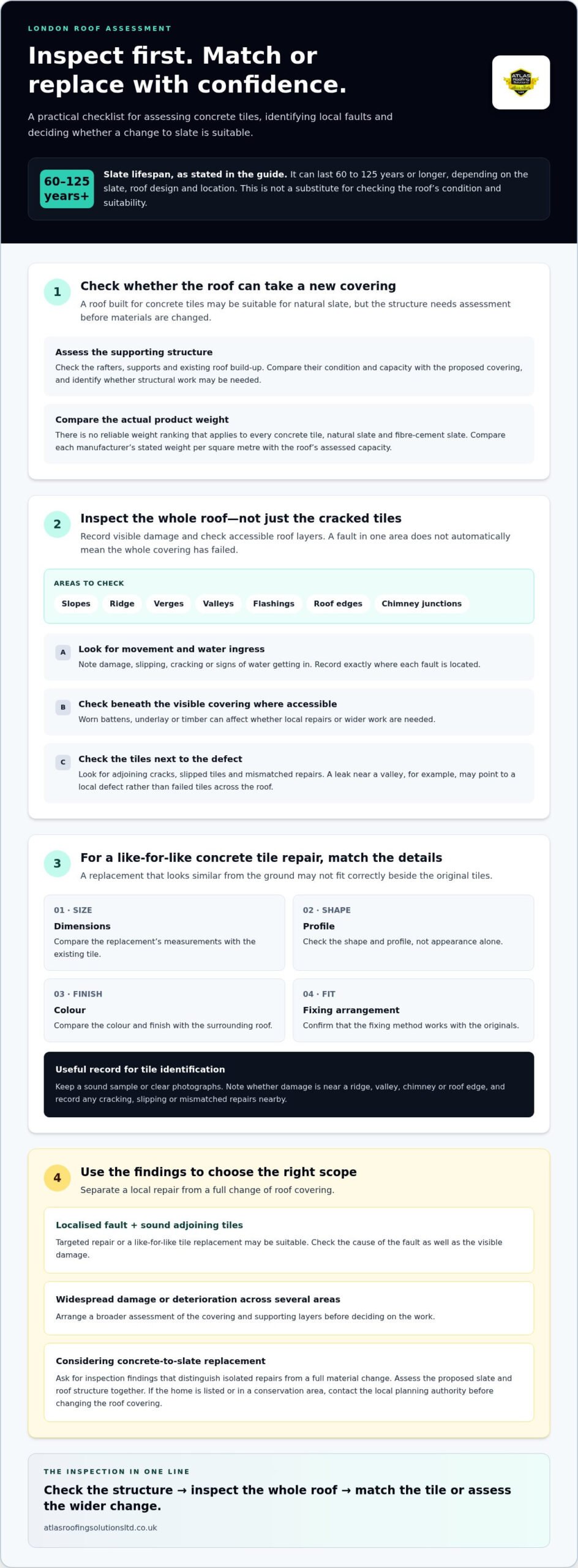
A roof built for concrete tiles may be suitable for natural slate, but its structure must be assessed before changing materials. The assessment considers rafters, supports and the existing roof build-up, comparing their condition and capacity with the proposed covering. For replacing concrete roof tiles with slate in London, this check helps identify whether structural work is needed before installation.
Start with a whole-roof inspection, not just a count of cracked tiles. Check the slopes, ridge, verges, valleys and flashings for damage, movement or signs of water ingress. Where accessible, look beneath the covering: worn battens, underlay or timber can affect whether repairs or wider work are needed. A leak near a valley, for example, may indicate a local defect rather than failed tiles across the roof.
For a like-for-like concrete tile repair, identify the existing tile before choosing a replacement. Compare its dimensions, profile, colour and fixing arrangement. A tile that looks similar from the ground may not fit correctly beside the originals. Keep a sound sample or clear photographs to help identify its shape and finish. This matching process is different from changing the whole covering to slate.
- Record the location: note whether damage is near a ridge, valley, chimney or roof edge.
- Check adjoining tiles: look for cracking, slipping and mismatched repairs.
- Assess the roof layers: inspect battens and underlay as well as the visible covering.
Changing from concrete tiles to slate is a different decision from replacing one damaged tile. Slate roofs can last 60 to 125 years or longer, depending on slate type, roof design and location. Clay and concrete tile roofs and slate roofs in the UK can last more than 100 years. These lifespans make material suitability and roof condition important parts of the decision.
When replacing concrete roof tiles with slate in London, ask for inspection findings that distinguish isolated repairs from a full material change. The proposed slate and the roof structure need to be assessed together. This gives you a clear basis for comparing a complete replacement with repairing or matching the existing concrete tiles.
Replacement of slate, concrete, clay and composite tiles
Choosing a replacement means comparing more than appearance. Material weight, roof condition, fixing method and planning considerations all help determine the right approach.
Tile Types and Weight Differences
There is no reliable weight ranking that applies to every concrete tile, natural slate and fibre cement slate. Products vary, so compare each manufacturer’s stated weight per square metre with the roof’s assessed capacity. Slate-effect products include options made from fibre cement or recycled plastic. Check the product specification, profile and fixing requirements before choosing.
Concrete and clay tiles may suit a like-for-like replacement, while natural slate creates a different finish and requires skilled installation. Individual slates are typically fixed with nails or hooks. A roofer should explain how the selected material, roof layout and supporting structure work together. For UK Building Regulations, don’t assume a change of covering is automatically exempt: the scope of work and its structural implications matter, so establish which requirements apply before work begins.
Ask a London roofer for a written scope covering the proposed material, preparation, fixings and any associated work. Compare quotations on the same basis, and look for clear workmanship warranty terms alongside any product warranty. Warranty periods and coverage differ, so read what each covers, including exclusions and how defects are reported. If the property is listed or in a conservation area, contact the local planning authority before changing the roof covering.
Replacement Timescale and Risks
There is no single timescale for replacing a roof: its size, access, shape, weather and the condition beneath the tiles all affect the work. The roofer should explain the sequence, including removal, checks to battens or underlay, and installation. Hidden timber damage or other repairs can change the scope. Ask how any additional work will be explained and agreed before the job starts.
Slate installation requires careful handling and secure fixing of individual slates. A clear written plan helps you understand the material choice, the likely stages of work and the factors that could affect the project.
Slate roof refurbishment and renovation
Repairs can address local slate damage without replacing every slate. Start by locating broken, cracked or missing pieces, then inspect nearby slates, roof edges, ridges and valleys for related defects. Promptly replacing damaged slates helps prevent further roof damage.
Look for the cause as well as the visible fault. A slipped slate beside a chimney, for example, may indicate a problem with its fixing or the surrounding roof detail. If adjoining slates are sound, targeted repairs may be suitable. Widespread damage or deterioration across several roof areas calls for a broader assessment of the covering and supporting layers.
Slate can crack under pressure, so walking directly on it risks causing further breakage. Roofing professionals use hook ladders, jacks and planks to avoid putting weight on the slate surface. These tools provide safer access for inspecting a roof and carrying out repairs. Handle damaged slates carefully, as disturbing neighbouring pieces can create additional work.
- Record each defect: note its position and whether adjacent slates have shifted or cracked.
- Inspect roof details: include ridges, valleys, edges and junctions around features such as chimneys.
- Match replacements: compare the new slate’s size, thickness, colour and fixing approach with the existing roof.
Renovation may also involve inspecting flashings, battens and underlay where accessible. Replacing a slate alone won’t resolve a leak if water is entering through a nearby junction or damaged supporting layer. Ask the roofer to identify which faults the proposed work will repair and which areas will remain unchanged.
For a sound decision, separate urgent repairs from planned improvements. A missing slate needs attention, but a faded surface alone doesn’t show that the roof has failed. An inspection can record the location and condition of defects, then explain whether local repairs or wider renovation are more suitable.
Planning permission for concrete to slate roof in London?
If your London home is listed or in a conservation area, contact your local planning authority before changing concrete tiles to slate. Requirements depend on the property’s designation and the proposed roof work, so don’t assume the same decision applies to every home.
First, find out whether either designation applies to your property. Then describe the proposed change clearly: replacing concrete tiles with natural slate, changing the roof’s appearance, or altering roof features. These details help the authority understand the scope. Ask what approvals or permissions may apply before arranging the work.
Prepare useful information for your conversation with the authority. Include the property address, photographs of the existing roof and proposed slate, and a brief description of the affected roof slopes. Mention any changes to ridges, verges, chimneys or other visible details. A change of material can alter the roof’s appearance, so describing only the tile replacement may leave out relevant context.
For a listed home, mention its status when contacting the authority. For a property in a conservation area, identify the area and explain which roof elevations will change. The local planning authority can advise on the requirements for that property and proposal. Keep its response with your project records, alongside the roof inspection and material details.
Don’t assume a neighbour’s slate roof means your proposal has the same requirements. Their home may have a different designation, roof design or previous approval. A written project scope can also distinguish replacing the covering from other changes, such as modifying a chimney or roofline.
Once you understand the planning position, arrange the roof work around the approved scope and chosen material. For help assessing the roof and planning a suitable replacement, discuss your roof installation with a roofing professional. This keeps the property’s planning considerations connected to the practical work.
Atlas Roofing Solutions: Roof Installation
Atlas Roofing Solutions Ltd can help turn your roof assessment and material choice into a practical installation plan. If the existing covering needs replacing, Roof Installation is the relevant service. If the damage is localised, Roof Repairs may be more suitable and help you assess whether a full replacement is necessary.
A roof project can also involve connected details. Guttering and uPVC Fascias & Soffits may need attention alongside the covering, so mention them if your inspection identified concerns. Clear information about the roof’s condition, chosen slate and any planning considerations helps define the work required.
For a free, no-obligation estimate and full roof inspection, contact Atlas Roofing Solutions Ltd.
Plan the next step for your roof
For homeowners considering replacing concrete roof tiles with slate in London, the next step is to turn the inspection findings into a clear project plan. Decide whether you want to explore a complete roof change or address specific damage first. Keep your priorities in view, including the roof’s appearance, the condition of its structure and any planning considerations for your property.
Atlas Roofing Solutions Ltd offers Roof Installation when a new covering is the right approach, or Roof Repairs when the work is more localised. Guttering can also be part of the wider roof discussion if it needs attention alongside the covering. A focused conversation about the roof’s condition and your intended outcome can clarify the work to consider.
Contact Atlas Roofing Solutions to discuss the next step for your roof. A considered plan can help you move forward with confidence.
Frequently Asked Questions
Are slate roofs hard to maintain?
No, slate roofs are not inherently difficult to maintain, but they need sensible attention. From the ground, look for slipped or missing slates, especially after severe weather. Watch for water stains in loft spaces and check that gutters are clear. Avoid walking on slate yourself, as pressure can crack it. If you notice a change, arrange an inspection before water ingress affects internal finishes.
How much do slate roofs cost in London?
There is no single price for a slate roof in London. The cost depends on the roof’s area and shape, access, slate selection and the preparation the existing structure needs. Underlay, battens and roof details can also affect the work involved. A project-specific quote is the best way to compare the full scope, rather than judging by the covering material alone.
What are the benefits of using roof tiles and slate roofing in London?
Roof tiles offer a familiar appearance and can be quicker to install than slate, which may reduce labour time. Slate gives a natural finish and can suit homeowners seeking a different look for their property. Both options provide a roof covering, but the right choice depends on the building’s structure, appearance and repair needs. Consider how the material fits the whole roof, including edges and junctions.
How much does it cost to replace concrete roof tiles with natural slate in London per m²?
The cost per square metre depends on the chosen slate and the work needed to prepare the roof. Roof shape, access, removal of the existing tiles, and the condition of battens or underlay can all affect the quote. There is no single figure for every London property. Request a project-specific quote that sets out the materials, preparation and installation included.
What is the cost of replacing concrete roof tiles with artificial slate in London?
The cost depends on the slate-effect product and the installation work required for your roof. Compare the product specification and fixing method, then consider the roof’s dimensions, access and any necessary work to the underlying layers. These details shape the overall scope. A quote based on your property can clarify the proposed materials and work, without relying on a generic rate that may not suit your roof.
What steps are involved in replacing concrete roof tiles with slate, including underlay and battens?
The work follows an ordered process, with the underlay and battens assessed as the existing covering is removed.
- Remove the existing concrete tiles and inspect exposed roof timbers.
- Assess the underlay and battens, replacing damaged sections where needed.
- Prepare the roof and fit the selected slate using its appropriate fixings.
- Complete roof edges and junctions, then check the finished covering.
The preparation required depends on the roof’s condition and the slate chosen.