Waiting for a leak to appear before checking your tiles is the most expensive way to manage a London home. We all know the feeling of watching the rain lash against the glass whilst wondering if those damp patches in the loft are getting worse. In a city where persistent rain and urban debris are constant battles, staying ahead of the weather is essential. Consistent seasonal roof maintenance London isn’t just about aesthetics; it’s about avoiding those eye-watering emergency call-out fees that always seem to strike at the worst possible moment.
You deserve the peace of mind that comes from knowing your property is truly stormproof. This 2026 guide provides a clear, season-by-season strategy to protect your home and extend the lifespan of your roof. We’ll walk you through a methodical schedule of what to check and when, from clearing moss-trapping debris to inspecting chimney flashings. By following this simple, proactive plan, you can transform your roof from a source of anxiety into a durable, long-term asset that stands up to whatever the London sky delivers.
Key Takeaways
- Understand why a proactive approach to seasonal roof maintenance London protects your home from damp and high emergency repair costs.
- Identify critical post-winter damage early, such as slipped slates or sun blistering on flat roofs, to prevent minor issues from becoming major failures.
- Clear gutters and secure uPVC fascias before autumn storms arrive to ensure water ingress doesn’t damage your interior walls.
- Learn the specific warning signs for different London property types, including common “valley” gutter issues found in terraced conversions.
- Gain peace of mind by knowing when a professional survey is required to maintain the structural integrity and 15-year guarantee of your roof.
Understanding the Importance of Roof Maintenance in London
Roof maintenance is often overlooked until a bucket is needed in the hallway. Viewing it as a proactive strategy ensures the structural integrity of your home stays intact. By committing to seasonal roof maintenance London homeowners can avoid the sudden stress of winter leaks. Your roofline, comprising the gutters, fascias, and soffits, acts as the first line of defence. It effectively directs water away from the core structure. When these components fail, the risk of internal damp increases significantly. A well-maintained roofline protects the rafters and prevents rot from taking hold in the timber frame.
London’s Weather Challenges: Damp, Wind, and Pollution
London’s microclimate presents unique hurdles for every homeowner. High humidity combined with urban pollution creates a breeding ground for moss and lichen. These organisms don’t just look untidy; they hold moisture against the tiles and can eventually cause them to lift or become porous. Urban soot and debris from street trees frequently block gutters in busy boroughs. Seasonal temperature shifts are another factor. Materials like lead flashings and traditional felt expand and contract. This constant movement can lead to cracks or fatigue if the roof isn’t inspected regularly.
The Longevity of Different Roofing Materials
The durability of your home depends heavily on its build. Understanding UK domestic roof construction helps explain why certain materials require specific care. Victorian slate and clay tiles are common across London. Whilst they are incredibly resilient, they aren’t immortal. Modern fiberglass solutions offer excellent protection for flat roofs, specifically designed to handle the UK’s erratic weather. When you prioritise seasonal roof maintenance London properties stay protected for longer. Regular maintenance can often add a decade or more to a roof’s functional life. Professional inspections also validate workmanship guarantees. We provide a 15-year guarantee on our work, reflecting our confidence in the longevity of the materials we use and the skill of our team.
Investing in small, regular checks is far more cost-effective than facing emergency structural repairs. A simple gutter clearance or a few replaced slates costs significantly less than a full internal renovation following a major leak. It provides the peace of mind that your home remains a safe, dry sanctuary. Staying on top of these tasks means you are never caught off guard by the elements. It is about being a responsible guardian of your property and protecting your most valuable asset.
Spring and Summer: Post-Winter Recovery and Heat Protection
Once the harsh winter months subside, your focus should shift to recovery and preparation. Spring provides the perfect window to assess any damage left by frost and high winds. It is a vital phase of seasonal roof maintenance London homeowners should never skip. Dry, mild weather makes it much easier to identify slipped slates or patches of loose mortar that might have crumbled during a freeze-thaw cycle. This is also the prime time for masonry work, as mortar sets more reliably without the risk of overnight frost or heavy downpours.
Inspecting for Winter Storm Damage
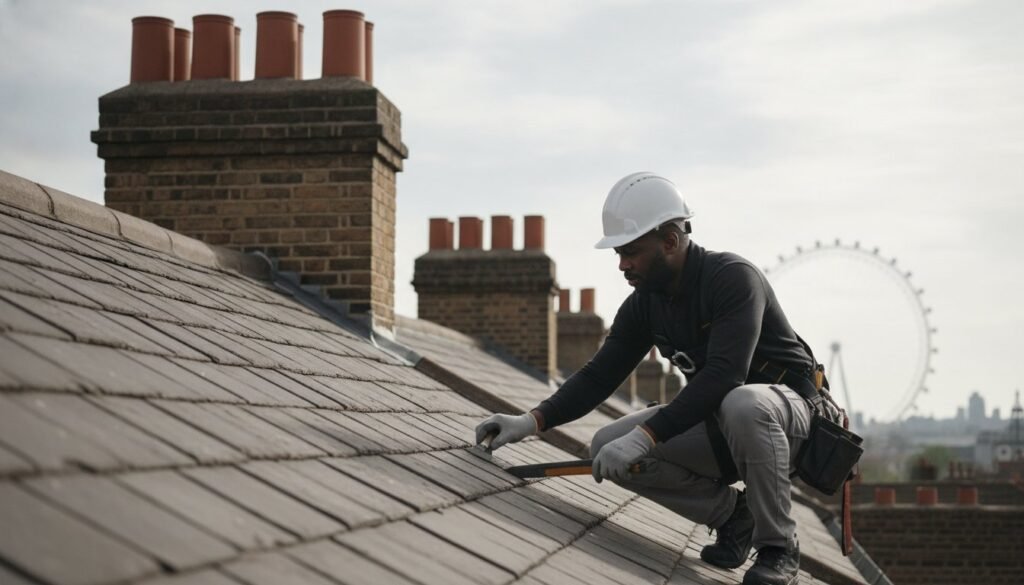
You don’t need to climb a ladder to spot trouble. A simple ground-level inspection using a pair of binoculars is often enough to reveal missing or broken tiles. Look closely at the valleys and the ridge of your roof. Check the chimney stack for cracks in the pots or loose lead flashing. Following professional seasonal roof maintenance advice helps prevent these minor faults from turning into costly interior damp. If you notice any irregularities, our team provides expert roof repairs London families have relied on for over 20 years.
Flat Roof Care: Beating the Summer Heat
Summer heatwaves bring a different set of challenges. Traditional felt roofs are particularly vulnerable to UV damage and thermal movement. As temperatures rise, the material expands, which can lead to sun blistering or cracks. You should also look for ponding water. If puddles remain on your flat roof even during dry spells, it suggests a drainage issue or a structural dip. Upgrading to a fiberglass roof installation London offers superior heat resistance and a seamless finish. Fiberglass doesn’t suffer from the same UV degradation as felt, making it a truly durable solution for the capital’s changing climate.
Don’t forget the mid-year gutter check. Spring blossoms and nesting materials can quickly block downpipes. A quick clearance now ensures your system is ready for the occasional summer thunderstorm. Use this dry period to tackle chimney repairs too. Repointing the masonry whilst the bricks are dry ensures a stronger, more resilient bond. By sticking to a schedule for seasonal roof maintenance London properties remain secure year-round. If you’re unsure about the condition of your stack, we offer free site visits and no-obligation quotes to help you plan your next steps.
Autumn and Winter: Essential Stormproofing and Gutter Clearance
As the leaves begin to fall across London’s Victorian terraces and modern conversions, the clock starts ticking for your roof. Preparing for the winter gales requires a shift in focus toward robust stormproofing. This is the most critical phase of seasonal roof maintenance London homeowners face, as the combination of heavy rain and freezing temperatures can quickly exploit small vulnerabilities. Neglecting these tasks often leads to water ingress, which can damage internal plasterwork and encourage mould growth. Taking a few proactive steps now acts as a shield for your property during the harshest months of the year.
The Critical Gutter and Roofline Check
Your gutters are designed to manage vast amounts of water, but they can’t do their job if they’re choked with debris. Silt and leaves from urban trees are the primary culprits for blockages in London boroughs. Follow these steps to ensure your drainage remains free-flowing:
- Step 1: Clear all organic matter and silt from the channels. This prevents water from backing up and spilling over onto your brickwork.
- Step 2: Inspect the brackets and seals. Leaks here often lead to damp patches on exterior walls, which are expensive to treat once they penetrate the home.
- Step 3: Check your roofline. If your timber boards are rotting, consider upgrading to a low-maintenance soffit and fascia system that provides better protection against high winds.
Securing the Chimney Stack and Flashing
A chimney is often the most exposed part of a London home. Loose mortar on a stack is a major risk during winter gales, as high-velocity winds can dislodge masonry. It’s equally important to check the lead flashing at the base. If this seal is cracked or pulled away, water will find its way into your loft space. We recommend following The Society for the Protection of Ancient Buildings (SPAB) guidance on roof care to understand how traditional materials behave in wet weather. If you spot crumbling mortar or daylight through the stack, it’s time to call for professional chimney repair London services before the first frost arrives.
Whilst you’re preparing for the cold, don’t forget to look up from the inside. Head into your attic or loft space on a bright day. If you see light shining through the roof or smell a musty, damp odour, you’ve found a problem that needs immediate attention. Catching these issues early ensures your home remains a warm, dry sanctuary throughout the winter. It’s about being the reliable guardian of your home and ensuring that your seasonal roof maintenance London schedule is complete before the first major storm hits.
Identifying Warning Signs Amongst Different London Property Types
London’s skyline is a patchwork of history, which means your neighbour’s roof might require entirely different care to yours. Effective seasonal roof maintenance London starts with understanding your specific property type. Whether you live in a grand Victorian terrace or a sleek modern conversion, the warning signs are rarely identical. Identifying these issues early prevents small leaks from becoming structural failures that compromise your home’s security and value.
Victorian and Edwardian Terraced Roofs
Older London properties often suffer from “nail sickness”. This occurs when the original iron nails holding the slates in place rust away over decades, causing tiles to slip down the roofline. You might also notice issues with shared chimney stacks. Because these stacks are exposed to the elements from all sides, the mortar often perishes faster than on the main walls, requiring targeted repointing. Keep a close eye on internal valley gutters too. These are common in terraced designs and can trap debris amongst the tight angles, leading to water backing up under the slates during heavy downpours.
Modern Flat Roof Conversions and Extensions
Modern extensions often struggle with drainage design. If the pitch is too shallow, water can pool, leading to premature material failure. It is also vital to distinguish between a genuine leak and simple condensation. In many London conversions, poor ventilation causes moisture to build up inside, mimicking the look of a roof leak with dark spots on ceilings. However, if you see persistent damp patches or sun blistering on the surface, your roof may have reached the end of its life. In these cases, a new roof installation London is often the most cost-effective long-term solution.
Parapet walls are another frequent failure point in the city. These low walls along the edge of a roof can develop cracks in the rendering or masonry, allowing water to seep into the top of the building structure. Always look for internal clues. Peeling wallpaper, dark spots on the ceiling, or a musty smell in the loft are all signs that your roof’s defences have been breached. If you’ve spotted any of these red flags, we can help. Book a free site visit and no-obligation quote today to ensure your property remains protected and dry.
Professional Maintenance: Protecting Your Investment with Expert Care
A quick look through binoculars is a great start for any homeowner. However, some aspects of seasonal roof maintenance London require a more technical approach. Identifying structural shifts, perished mortar, or subtle failures in leadwork is where professional expertise becomes non-negotiable. Regular professional care isn’t just about fixing leaks. It’s about protecting your most significant investment. In a competitive property market like ours, a roof with a clear maintenance history and a solid guarantee adds tangible value to your home.
Why Choose a Family-Run London Specialist?
Experience matters in a city with such diverse architecture. With over 20 years of local experience, we understand the specific challenges found amongst different London boroughs. We don’t believe in high-pressure sales or complicated jargon. Instead, we offer a straight-talking approach based on honesty and integrity. Accountability is at the heart of our family run roofing company London business model. We never use subcontractors. Every job is handled by our own specialist team, ensuring that our high standards are met on every project. This personal touch provides an atmosphere of safety and long-term security for our clients.
Booking Your Free Site Visit
Taking the first step towards a stormproof home is simple. We offer free site visits to provide a thorough, professional assessment of your property. Our team conducts a methodical inspection of your roof, chimney, and guttering to identify any hidden issues. Following the visit, you’ll receive a transparent, no-obligation quote. This document clearly outlines the scope of work without any hidden surprises. It’s a hassle-free way to gain peace of mind and ensure your home is ready for whatever the elements throw its way.
We take immense pride in our workmanship. That’s why we offer a 15-year guarantee on our services. It’s a sign of our confidence in the durability of our repairs and installations. Whether you need a minor chimney repointing or a complete fiberglass roof, we act as the reliable guardian of your home. By choosing a partner with deep roots in the community, you ensure your property remains a dry, secure sanctuary for years to come. Professional seasonal roof maintenance London is the best way to extend the lifespan of your current roof whilst avoiding the stress of emergency call-outs.
Protecting Your Home for the Years Ahead
Maintaining your home’s first line of defence doesn’t have to be a source of stress. By following a consistent schedule of seasonal roof maintenance London homeowners can identify minor issues before they escalate into structural failures. We’ve explored how to spot winter damage, manage summer heat on flat roofs, and keep gutters clear of urban debris. These simple habits protect your interior and preserve your property’s value in a competitive market.
With over 20 years of experience across the capital, we understand the nuances of both Victorian terraces and modern extensions. We provide free site visits and transparent, no-obligation quotes to take the guesswork out of your home care. Every repair or installation we complete comes with a 15-year guarantee on workmanship, giving you long-term peace of mind and total confidence in our service.
Don’t wait for a leak to tell you there’s a problem. Take a proactive step today to ensure your home remains a dry, secure sanctuary for your family. Book your free London roof maintenance survey today and let our family-run team be the reliable guardian your roof deserves.
Frequently Asked Questions
How often should I have my roof inspected in London?
You should have your roof inspected at least twice a year, ideally in spring and autumn. This schedule aligns with the seasonal roof maintenance London cycle mentioned earlier in this guide. Regular checks catch damage from winter storms or prepare the structure for heavy autumn rains. Houses near large urban trees or in high-pollution areas might need more frequent visits to clear gutters and check for moss build-up. It’s a simple way to stay ahead of the weather.
What are the most common causes of roof leaks in London homes?
Slipped slates and blocked gutters are the primary culprits for leaks. In Victorian terraces, “nail sickness” often causes tiles to slide over time as the fixings perish. Urban debris and silt from busy roads quickly clog downpipes, forcing water back under the roofline. Cracked lead flashing around chimney stacks and perishing mortar on parapet walls also contribute significantly to internal damp. Identifying these early prevents the need for expensive structural repairs later on.
Can I perform my own seasonal roof maintenance?
You can safely carry out basic visual checks and simple cleaning tasks from ground level. Using binoculars to spot slipped tiles or clearing reachable low-level gutters is a great way to stay proactive. However, climbing onto the roof is dangerous and requires specialist safety equipment. For high-level repairs, chimney repointing, or structural surveys, it’s best to call a professional team with the right tools and local experience to ensure the job is handled safely.
How much does a typical roof maintenance check cost in London?
Costs for maintenance checks vary based on the size and complexity of your property. Factors include the height of the building, the type of roofing material, and the specific tasks required, such as gutter clearance or a full structural survey. We believe in transparency, which is why we offer free site visits and no-obligation quotes. This allows you to understand the exact requirements of your home without any upfront cost or hidden fees.
What is the best time of year to clear my gutters?
Late autumn is the most effective time to clear your gutters. You should wait until the majority of the leaves have fallen to ensure the system stays clear throughout the winter months. A secondary check in late spring is also beneficial to remove nesting materials or blossoms. Consistent gutter care is a cornerstone of seasonal roof maintenance London homeowners should prioritise to prevent damp and protect their brickwork from water damage.
Should I remove moss from my roof tiles?
Yes, you should remove moss because it acts like a sponge that retains moisture against your tiles. During winter, this moisture freezes and expands, which can cause tiles to crack or lift. While a small amount might seem harmless, heavy growth blocks the natural flow of water into your gutters. Removing moss helps extend the life of your roof and prevents porous tiles from absorbing water and becoming heavy or brittle over time.
How do I know if my chimney needs repointing?
Look for crumbling mortar joints or loose bricks around the stack to identify perishing masonry. If you notice small pieces of mortar on the ground or in your gutters, it’s a clear sign the joints are failing. You might also see damp patches appearing on the chimney breast inside your home. Because chimneys are highly exposed to London’s wind and rain, they often require more frequent repointing than the main walls of your property.
What is the benefit of a fiberglass roof for maintenance?
Fiberglass roofs are incredibly low-maintenance compared to traditional felt systems. They are seamless, which eliminates the common leak points found at joints and edges. The material is resistant to UV damage and doesn’t suffer from sun blistering during London’s summer heatwaves. Once installed, a fiberglass roof provides a durable, weather-resistant surface that is easy to clean and often lasts for several decades with very little intervention. It’s a hassle-free solution for any modern flat roof.