Fresh mortar isn’t always the right fix for damaged ridge tiles. If you’ve searched for “repointing roof ridge tiles London”, you may be wondering whether cracked mortar means a leak is likely, or whether the tiles themselves have come loose.
It’s sensible to take visible damage seriously, but it doesn’t automatically mean your roof needs extensive work. Repointing can renew worn mortar joints; loose tiles may need a more thorough repair, while a dry ridge system uses mechanical fixings instead. The right choice depends on what has failed, not just on how the mortar looks from the ground.
This guide explains warning signs you can spot safely, how repointing differs from re-bedding, tile replacement and dry ridge fixing, and what to expect from a clear roof assessment. Atlas Roofing Solutions Ltd is a family-owned London roofing specialist with over 20 years’ experience. We assess the roof before recommending a repair, so you can understand the work involved and why it suits your home.
Key Takeaways
- Cracked mortar doesn’t automatically mean every ridge tile needs replacing; the condition and position of the tiles help determine the right repair.
- Compare repointing roof ridge tiles London with individual tile replacement and dry ridge conversion to understand which option may suit the damage.
- A roof assessment considers visible symptoms, mortar condition, roof shape and access before setting the repair scope.
- Expect loose material to be removed carefully, the tiles to be checked and the finished ridge to receive a final inspection.
- An assessment from Atlas Roofing Solutions Ltd helps explain the recommended work. The company brings over 20 years of experience and provides a 15-year workmanship guarantee.
What Does Repointing Roof Ridge Tiles in London Actually Fix?
Repointing renews deteriorated mortar visible around ridge tiles. It doesn’t automatically mean every tile must be replaced. Ridge tiles cap the line where the two slopes of a pitched roof meet, helping shield this junction from rain and wind. If the tiles are sound and correctly positioned but the mortar has weathered, repointing may be suitable. If tiles have shifted or their support has failed, renewing the visible joints alone may not address the problem.
The process of repointing involves renewing mortar joints. On a roof, the repair needs to address what has actually deteriorated, not just cover visible symptoms. A ground-level view can highlight concerns, but it can’t show every condition beneath the ridge or establish whether the roof is safe to access.
What does the mortar do beneath and around ridge tiles?
In a traditional mortar installation, bedding mortar sits beneath the ridge tile and helps support it in position. Pointing is the visible mortar finished along the tile’s edges. The two are related but not interchangeable: worn pointing may call for repointing, while a failed bed or loose tile may need more involved work. Roof construction and previous repairs can affect what a closer inspection reveals.
What signs of failing ridge mortar can you spot from the ground?
From a safe position, look for changes along the roofline. Cracks, gaps or crumbling patches may indicate that the pointing is deteriorating. You might also notice:
- Sections where mortar appears to be missing or pulling away.
- Ridge tiles that look uneven or displaced compared with the rest of the ridge.
- Small pieces of mortar or roofing debris on the ground after bad weather.
These clues warrant attention, but they don’t confirm the cause. A damp patch indoors, for example, may relate to another part of the roof or a different source of moisture. A photograph can help show what you’ve noticed, but it cannot confirm hidden damage, the condition of the mortar bed or whether the roof is safe to access. Don’t climb onto the roof to investigate. A professional assessment can determine whether repointing roof ridge tiles in London is appropriate or whether the ridge needs a different repair.
Repointing, Replacing or Dry Ridge: Which Roof Ridge Repair Fits?
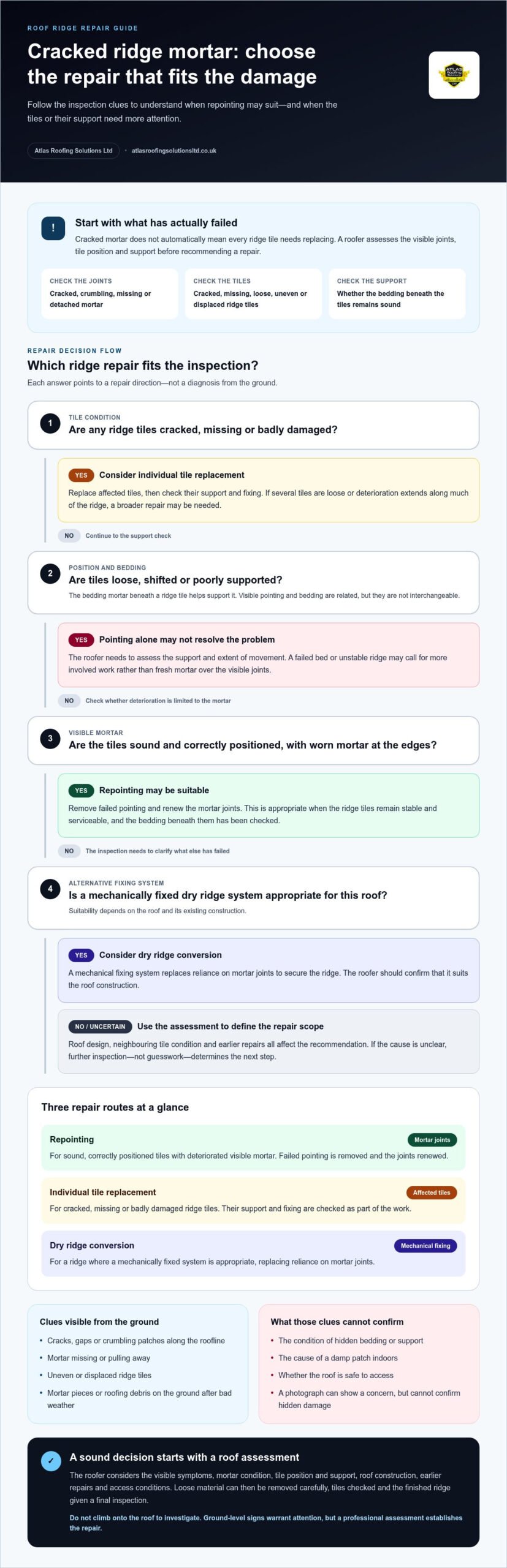
The right repair depends on what has failed. Repointing can renew weathered mortar, but it won’t stabilise a moving tile or restore damaged support. A roofer needs to assess the tiles, their support and the existing roof construction before recommending a method. This keeps the work focused on the cause rather than simply covering what’s visible.
| Repair option |
May suit |
What it involves |
| Repointing |
Tiles that are sound and correctly positioned, with deteriorated visible mortar |
Removing failed pointing and renewing the mortar joints |
| Individual tile replacement |
One or more cracked, missing or badly damaged ridge tiles |
Replacing affected tiles and checking their support and fixing |
| Dry ridge conversion |
A ridge where a mechanically fixed system is appropriate for the roof |
Replacing reliance on mortar joints with a mechanical fixing system |
When may repointing be a suitable option?
Repointing may be appropriate if an inspection finds that the ridge tiles remain serviceable and stable, but the mortar at their edges has cracked, crumbled or detached. The roofer should also check the bedding beneath the tiles. If that support has broken down, fresh pointing on the outside may leave the underlying movement unresolved. Repointing roof ridge tiles in London should therefore follow an assessment of both the visible joints and the tiles they surround.
When should tile replacement or mechanical fixing be considered?
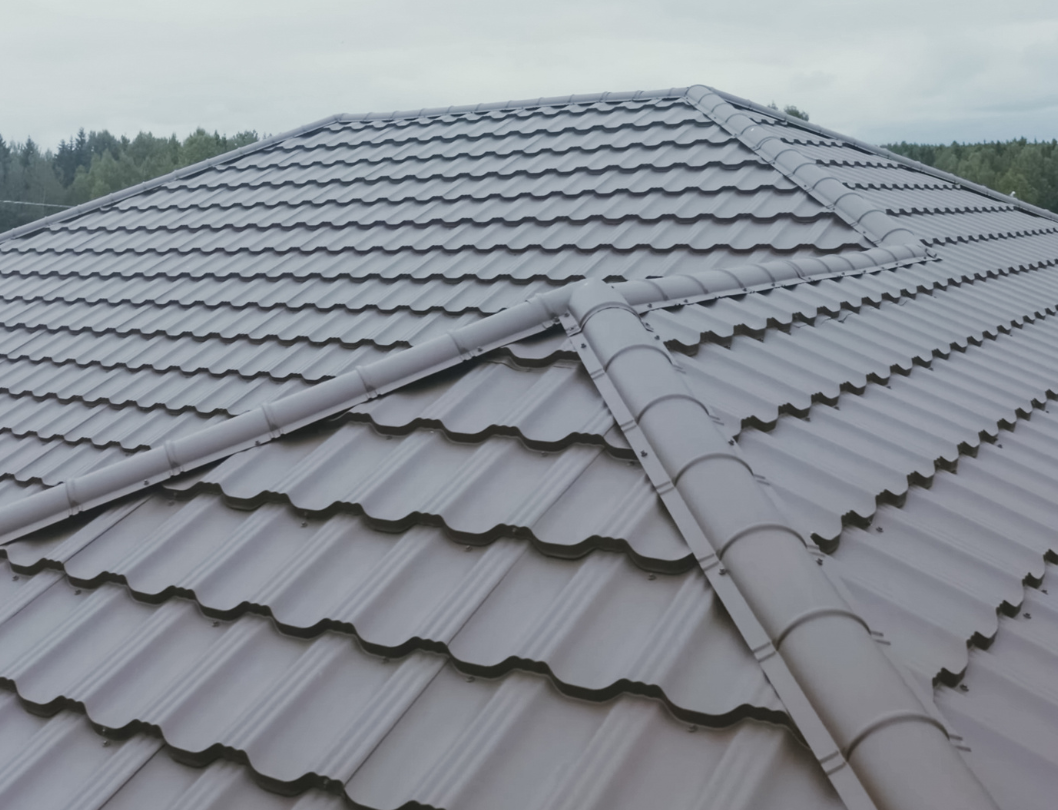
A cracked tile, a missing section or a ridge tile that has shifted significantly may call for replacement or a broader repair. If several tiles are loose, the bedding is unstable or deterioration runs along much of the ridge, simply renewing the pointing may not be enough. A dry ridge system offers a mechanically fixed alternative to relying on mortar to secure the ridge, but it needs to suit the roof and its existing construction.
There’s no single method that fits every home. Roof design, the condition of neighbouring tiles and the extent of earlier repairs all affect the recommendation. A clear inspection can explain why one option is appropriate and what it will address. For help understanding the repair scope, arrange an Atlas roof assessment.
How a Roofer Assesses Ridge Repointing on a London Home
A useful assessment follows the evidence from the roofline to the ridge itself. The roofer first considers what prompted the concern, such as visible mortar gaps, a ridge tile that appears out of line or signs of water entry indoors. Those clues guide a closer inspection, but they don’t establish the repair on their own.
What should the ridge inspection establish?
The roofer checks whether the mortar is cracked, loose, missing or separating from the ridge tiles. They also look for tiles that are damaged, loose or misaligned, and examine their support where access and conditions allow. Signs of water entry are considered alongside the ridge, since moisture can have more than one possible roof-related cause.
This helps establish whether the defect is confined to the pointing or extends to the tiles or their bedding. If the tiles are stable and the deterioration is localised, the repair may be limited to the affected area. If movement or wider damage is found, the scope may need to change. A clear explanation of the findings shows why a particular repair is recommended.
How do access and the wider roof condition affect the plan?
London homes vary in roof design and layout, from terraced houses with limited access around the building to detached properties with different roof shapes. The pitch of the roof, the position of the ridge, nearby structures and available working space can all affect how an inspection and repair are planned. Safe access arrangements depend on the property and the work involved.
The roofer also notes relevant defects near the ridge, such as damaged tiles on the adjoining roof slope or signs of water entry around another roof feature. This doesn’t mean a ridge repair should automatically become a larger project. It provides context, so the proposed work addresses the ridge problem without overlooking an issue that may affect the result.
For repointing roof ridge tiles London, a clear assessment should describe the observed condition, the repair area and any access considerations, rather than relying on a broad assumption based on a photograph. For wider preventative advice, see our guide to seasonal roof maintenance in London.
What to Expect During Roof Ridge Repointing in London
A well-managed ridge repair follows a clear sequence: assess the roof, prepare the affected area, complete the mortar work and inspect the finished ridge. The exact scope depends on the roof’s condition and construction, as well as the safe access arrangements needed for the property. For that reason, there isn’t a reliable fixed duration for every job.
How is a repointing repair carried out?
Assessment comes first. The roofer confirms which part of the ridge needs attention and checks whether the tiles are stable enough for repointing. If the inspection finds a damaged tile or unstable support, the repair plan may need to change rather than simply applying fresh mortar.
Next, the work area is prepared with suitable access and care around the roof covering. Loose, deteriorated mortar is removed from the affected section without disturbing sound material unnecessarily. The tiles and their support are checked again as the old mortar comes away. If the ridge is stable and suitable for mortar repair, the roofer applies appropriate mortar and finishes the joints to suit the existing construction.
The materials and method should reflect the roof, the ridge’s condition and any previous repair work. Repointing roof ridge tiles in London isn’t a one-method-fits-all task. A sound, stable ridge calls for a different approach from one with movement or damaged tiles.
What should happen before the work is signed off?
At completion, the roofer should inspect the repaired section for consistent workmanship and check that the ridge tiles remain correctly positioned. You should receive a clear explanation of the work completed, including any concerns found during the repair that remain outside its agreed scope. This helps you understand what the repair has addressed and whether anything else needs attention.
Atlas Roofing Solutions Ltd provides a free site visit and a transparent, no-obligation quote, so the proposed work and its scope are clear before you decide how to proceed. If the inspection points to concerns beyond the ridge, explore our roof repairs in London service for wider repair information.
For a straightforward assessment of your ridge, arrange a free site visit with Atlas Roofing Solutions Ltd.
Choosing Atlas for Roof Ridge Repointing in London
A ridge repair quote should make the recommended work easy to understand. It should identify the affected part of the ridge, explain what the assessment found and set out the proposed repair method. If repointing is suitable, the scope should make clear which area needs attention. If damaged tiles or unstable support point to another repair, that recommendation should be explained too.
Atlas Roofing Solutions Ltd starts with a roof assessment, helping you understand the ridge’s condition before deciding how to proceed. The team provides a free site visit and a transparent, no-obligation quote tailored to the property. This gives you a project-specific estimate based on the roof’s condition and safe access requirements.
What makes a ridge repair quote clear and useful?
A useful quote connects the inspection findings to the proposed work. It should describe the repair area and whether the recommendation is repointing, tile replacement or another suitable method. This gives you a clear basis for understanding the work and its scope, without assuming that every roof needs the same solution. Atlas explains the proposed repair and provides a project-specific quote following its site visit.
How can Atlas help protect your roof ridge?
Atlas is a family-owned roofing specialist serving London, with over 20 years of experience. That experience supports a careful, condition-led approach: assess the roof, explain what needs attention and carry out the agreed repair with care. Atlas provides a 15-year workmanship guarantee.
Sometimes a ridge assessment may also reveal a concern around adjacent masonry or a chimney. If that’s relevant to your roof, you can read more about chimney repair in London. The focus remains on understanding each issue and its appropriate scope.
If you’re concerned about repointing roof ridge tiles in London, arranging an assessment is a straightforward next step. Arrange a London roof assessment with Atlas Roofing Solutions Ltd and get a clear explanation of the repair options for your home.
Make a Confident Choice for Your Roof Ridge
Cracked mortar doesn’t always mean ridge tiles need replacing. The right repair depends on the condition of the tiles, their support and the extent of the damage. Repointing may suit a stable ridge with deteriorated mortar, while damaged or loose tiles can call for a different solution. A professional assessment helps clarify the cause and keep the work focused on what your roof needs.
If you’re considering repointing roof ridge tiles London, Atlas Roofing Solutions Ltd can assess your roof and explain the recommended repair. As a family-owned London roofing specialist with over 20 years of experience, Atlas provides free site visits and transparent, no-obligation quotes. Its 15-year workmanship guarantee offers added reassurance about the work carried out.
Take the uncertainty out of the next step. Arrange a free roof assessment and get a transparent, no-obligation quote. With a clear plan in place, you can move forward knowing your ridge repair is based on the roof’s actual condition.
Frequently Asked Questions
What is repointing roof ridge tiles?
Repointing roof ridge tiles means removing deteriorated mortar from the visible joints around ridge tiles and renewing it. The ridge tiles cover the junction where the two slopes of a pitched roof meet. Repointing can refresh worn pointing, but it doesn’t automatically replace tiles or repair failed bedding beneath them. A roofer needs to assess the ridge to establish whether the tiles remain stable and mortar work is suitable.
How do I know if my roof ridge tiles need repointing?
Cracked, missing or crumbling mortar along the ridge can indicate that the pointing has deteriorated. From the ground, you may also notice a tile that looks uneven or debris after bad weather. These signs don’t confirm the cause or reveal hidden damage. Don’t climb onto the roof to check. If you’re searching for “repointing roof ridge tiles London”, remember that a professional inspection is needed to assess the mortar, tile position and support safely.
Can roof ridge tiles be repointed without replacing them?
Yes. If the ridge tiles are sound, correctly positioned and stable, a roofer may be able to renew the mortar without replacing them. The underlying bedding and condition of the tiles still need checking, as fresh pointing won’t resolve movement or damaged support. If a tile is cracked, missing or significantly displaced, the repair may need to include replacement or another method. The roof’s construction and previous repairs also inform the recommendation.
How long does repointing roof ridge tiles take?
There isn’t one set duration for every ridge repair. The time required depends on the length and condition of the affected ridge, the amount of deteriorated mortar, the roof’s construction and safe access to the work area. If the inspection finds loose tiles or failed bedding, the repair scope may need to change. A roofer can explain the expected work after assessing the property, rather than estimating from a photograph alone.
Is repointing ridge tiles better than a dry ridge system?
Neither option is best for every roof. Repointing may suit stable tiles where the visible mortar has failed. A dry ridge system uses mechanical fixings instead of relying on mortar joints to secure the ridge, but its suitability depends on the roof and existing construction. If tiles are loose or the ridge has wider deterioration, an assessment can show whether repointing, tile replacement or a different approach best addresses the problem.
Can I repoint roof ridge tiles myself?
Roof ridge repointing is best assessed and carried out by a roofer. Working at height carries a serious risk of falling, and a ground-level view cannot confirm whether ridge tiles or their bedding are stable. Applying mortar without identifying the cause of damage may leave movement or another fault unresolved. If you notice cracked pointing, displaced tiles or debris, observe from a safe position and arrange a professional roof assessment.
How much does roof ridge repointing cost in London?
There’s no single cost for repointing roof ridge tiles London homeowners can rely on without an assessment. The price depends on the affected ridge area, the roof’s condition, the repair method and the access required. Repointing may not be the right scope if tiles are damaged or their bedding has failed. Atlas Roofing Solutions Ltd provides free site visits and transparent, no-obligation quotes, so you can understand the recommended repair and its project-specific cost.