Frozen gutters aren’t usually the real cause of an ice dam. In the UK, ice dams can form during a cold spell with significant snowfall, when heat escaping into the roof space melts snow higher up and the meltwater refreezes at the colder eaves. That’s why preventing ice dams on roof UK homes starts with limiting heat loss and managing roof-space ventilation, rather than focusing only on the gutters.
Ice dams are less familiar in the UK than in colder climates, but the underlying issue is worth understanding if you’ve noticed winter leaks or damage near the roof edge. Snow followed by freezing weather can create a short-lived risk, including in London.
This guide explains how ice dams develop, which warning signs to look for and what you can safely check. It also covers when to leave the roof alone and arrange an inspection instead of trying to remove ice yourself.
Key Takeaways
- Ice dams can form in UK cold spells when snowmelt refreezes at the roof edge; frozen gutters alone don’t confirm the cause.
- For preventing ice dams on roof UK homes, consider how insulation and ventilation work together rather than relying on one measure alone.
- Check the loft for obvious insulation gaps or displaced material only from a safe position, and don’t climb onto the roof.
- Recurring leaks, sagging or damaged roof coverings are reasons to arrange a professional inspection.
- If water is reaching electrical fittings, treat it as urgent and seek prompt help.
What is an ice dam on a roof, and can it happen in the UK?
An ice dam is a ridge of refrozen meltwater that builds up near the colder edge of a snow-covered roof, usually along the eaves. It can form when heat escaping from the home warms part of the roof and melts snow, while the eaves remain cold enough for the water to freeze. The process needs snow cover and sustained freezing conditions, so it isn’t a routine winter problem for every UK home.
The frozen ridge can obstruct further meltwater. As water collects behind it, it may work back beneath roof coverings and find a route into the roof space or home. The What is an ice dam overview explains the general formation process. For homeowners focused on preventing ice dams on roof UK properties, the key is to consider how heat loss, roof design and winter weather combine, rather than treating a frozen gutter as the whole explanation.
How does an ice dam form along the eaves?
The cycle often begins when warmth escapes unevenly through the roof, melting snow on a warmer section. Meltwater runs down the slope towards the eaves, which are colder because they extend beyond the heated rooms below. If the water freezes there, further cycles of melting and freezing can build up the ridge.
Water held behind the ridge may seep beneath tiles or other roof coverings, particularly where there are weaknesses or gaps. Roof shape, insulation and the pattern of snowfall and freezing all influence the risk. A single factor rarely explains the whole picture.
Are ice dams common on UK roofs?
Ice dams are possible in the UK, but the conditions aren’t present every winter or in every area. The UK generally has a milder, more changeable climate than regions where prolonged heavy snow and severe cold are more familiar. Even so, local weather can bring snowfall followed by freezing temperatures, creating a temporary risk on some roofs.
Think of an ice dam as a cold-weather hazard, not an everyday issue that every homeowner should expect. The practical response is to understand the conditions that allow one to form and watch for signs of roof or water damage after wintry weather. The next sections explain how roof construction and maintenance can affect that risk.
What makes a UK roof more vulnerable to ice dams?
Uneven roof temperature is often part of the problem. If warmth escapes through gaps around the loft hatch, ceiling edges or pipework, it can heat some parts of the roof more than others. Meanwhile, the eaves above the outside walls remain colder. When weather conditions are right, this difference can encourage snow to melt higher up and refreeze at the edge.
Insulation and ventilation need to work together. A consistent layer of insulation at ceiling level helps limit heat escaping from the rooms below, while suitable ventilation supports moisture and airflow management in the roof space. Adding insulation without considering existing ventilation can cause problems, so treat the roof as a system rather than trying a single fix. The National Weather Service guide to preventing ice dams also explains why insulation and ventilation are both part of prevention, although its advice should be considered in the context of a UK roof.
How loft insulation and ventilation influence roof temperature
From a safe position, look for obvious gaps or displaced insulation around the loft hatch and at the ceiling edges. Don’t push insulation into the eaves or block vents with stored belongings. Keep existing eaves ventilation clear. Adding vents isn’t a cure-all, as the right approach depends on the roof’s construction and ventilation design.
Moisture matters too. Warm, damp air entering the roof space can contribute to condensation, while openings around services or an ill-fitting loft hatch may allow heat to escape. These details don’t prove that an ice dam will form, but they can affect conditions in the roof space. If you’re unsure what you’re seeing, don’t disturb the roof build-up. Arrange an assessment instead.
Which roof details and winter conditions deserve attention?
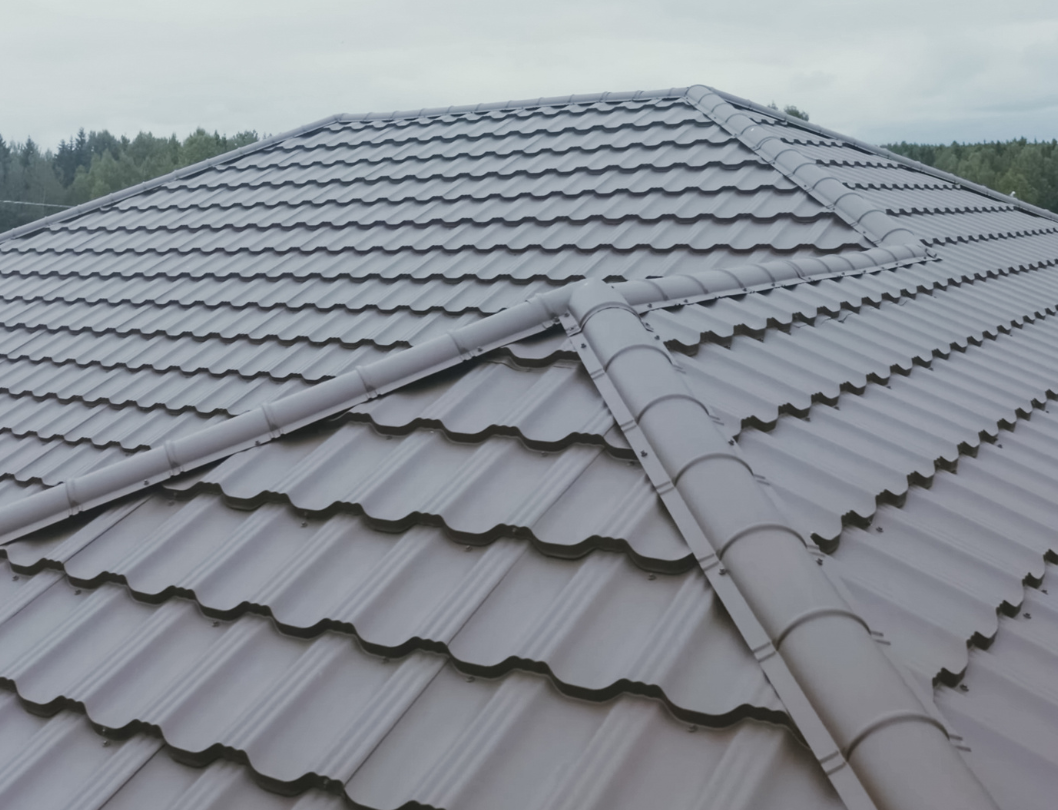
From the ground, notice roof edges, valleys, dormers and places where the roof changes direction or meets another structure. These details can affect how snow and meltwater move across the roof, though no covering or property style is automatically immune. Risk depends on the whole roof and the weather, not just its appearance.
Snow followed by sustained freezing weather creates the conditions for ice dams. A blocked gutter isn’t usually the underlying cause, but poor drainage can contribute to water build-up and related symptoms. Clear gutters help water drain as intended; they don’t correct heat loss or uneven roof temperatures. That distinction is central to preventing ice dams on roof UK homes.
If you’ve noticed recurring leaks or visible roofline damage, a professional assessment can help identify whether repairs are needed. Find out more about professional roof repairs.
Ice dams, frozen gutters or roof leaks: how can you tell the difference?
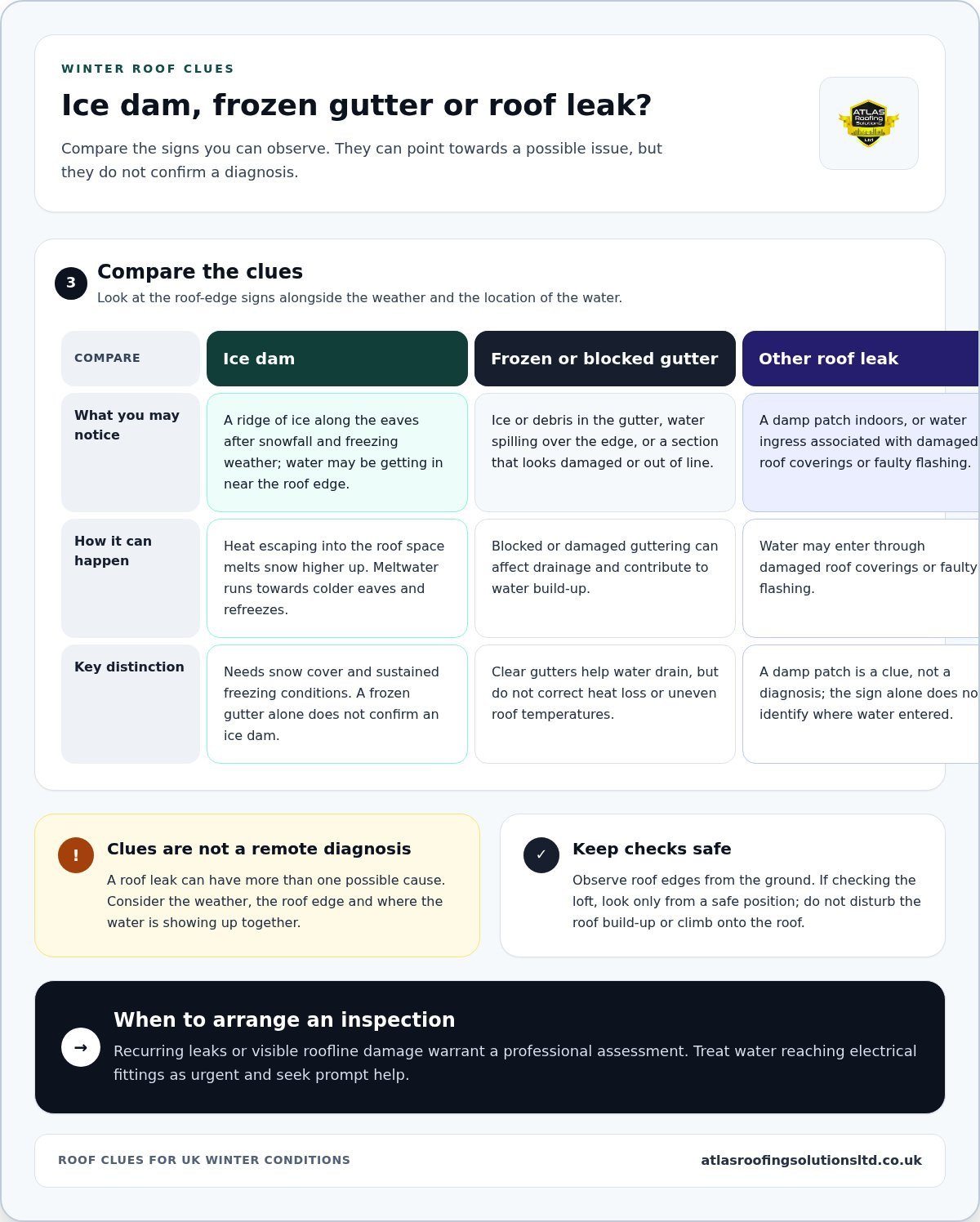
A damp patch indoors can be worrying, but it doesn’t identify the cause. Water might be getting in beneath a ridge of ice, entering through damaged roof coverings or faulty flashing, or overflowing from blocked or damaged guttering. The building science principles of ice dams explain how meltwater can become trapped. The signs below are clues, not a remote diagnosis.
| Possible issue |
Clues you may notice |
| Ice dam |
A ridge of ice along the eaves after snowfall and freezing weather, possibly alongside water ingress near the roof edge. |
| Frozen or blocked gutter |
Ice or debris in the gutter, water spilling over the edge, or a section of gutter that appears damaged or out of line. |
| Other roof leak |
Staining or dripping that appears without snow or ice, which may be linked to damaged coverings, faulty flashing or another weak point. |
These clues can overlap. A frozen gutter may occur at the same time as an ice dam, while a leak near an external wall could have another cause. Indoor staining or dripping alone cannot confirm that meltwater has been trapped behind ice.
What signs might point to an ice dam?
After snow followed by freezing weather, look from the ground for a ridge of ice at the eaves, if it’s clearly visible. Water entering near the roof edge at the same time may support that possibility, but it isn’t proof. Don’t climb a ladder or walk on an icy roof to get a closer look.
Keep a simple record: note when the leak starts, where you see water indoors and whether snow or freezing conditions came beforehand. Photos taken safely from the ground can also help show whether symptoms change over time.
When could a leak or frozen gutter have another cause?
Roof leaks can happen in wet weather without snow or ice. A slipped or damaged covering, a fault around flashing, or water overflowing from blocked or damaged guttering may all allow water into the home. A gutter problem affects drainage, but it doesn’t establish that an ice dam has formed.
If symptoms return, or you can see roof damage from the ground, arrange a professional inspection. For homeowners focused on preventing ice dams on roof UK properties, identifying the actual fault is a safer starting point than treating every winter leak as an ice dam.
How to reduce ice dam risk: a safe UK homeowner checklist
There’s no single winter fix. Check what you can safely see from inside or from the ground, keep drainage in good order and leave roof alterations to a professional who can assess the whole system. Use this checklist as a starting point for preventing ice dams on roof UK homes.
- Start with a safe loft observation. If the loft is easy to access and safe to enter, look for damp patches, water staining or daylight through the roof covering. Don’t enter if the space is awkward, unstable or poorly lit.
- Look for obvious insulation gaps. From a safe position, notice whether insulation appears displaced or uneven, particularly around the loft hatch and ceiling edges. Don’t move it, reach around wiring or disturb materials.
- Keep visible ventilation paths clear. Check that stored belongings haven’t been placed over visible vents or eaves routes. Don’t push insulation into these areas or alter the roof’s ventilation design without professional guidance.
- Keep gutters and roofline in good order. Arrange routine attention to leaves, debris and visible damage so rainwater can drain properly. Clear drainage is sensible maintenance, but it won’t correct heat escaping through the roof or prevent an ice dam on its own.
- Observe the roof from the ground. Look for slipped or damaged coverings, sagging guttering or other changes, especially after severe winter weather. Record what you notice and where, rather than climbing up to investigate.
- Plan changes carefully. Don’t install heating cables or make ventilation or insulation changes as a quick fix. The right solution depends on the roof construction and should be assessed and installed appropriately.
What can you check safely from inside the home?
Keep your checks visual and straightforward. In the loft, look for dampness, staining, daylight or stored items obstructing visible ventilation routes. Don’t move wiring or insulation, and don’t enter an unsafe space. If you find signs of water ingress, note their location and arrange an assessment rather than trying to trace the leak by disturbing the roof.
Which roof and gutter tasks should stay with a professional?
Never climb onto an icy roof or chip ice from tiles, slates or gutters. Avoid pouring salt or chemicals on roof coverings or guttering, as they may cause damage. Heating cables and changes to the roof system also need a suitable professional assessment, not a winter DIY experiment.
For broader seasonal checks, see our seasonal roof maintenance guide. If you’ve noticed recurring leaks or visible roof damage, arrange a professional roof inspection to identify whether repairs or roofline maintenance are needed.
When should you arrange a roof inspection for suspected ice dam damage?
Arrange a roof inspection if leaks return after winter weather or you notice visible damage. Warning signs include:
- Recurring damp patches or dripping, especially near an outside wall or ceiling edge.
- A sagging area of roof or ceiling, or guttering that appears to have come loose.
- Slipped, cracked or missing roof coverings visible from the ground.
- Water reaching or dripping near electrical fittings.
Water near electrics needs prompt attention. Don’t touch wet fittings or attempt to inspect the roof yourself. Keep clear and seek urgent help. In other cases, note when the leak occurs and where it appears, but don’t assume the cause is an ice dam. A roofer needs to inspect the property to establish what’s happening.
What happens during a roofing inspection?
A roofer can assess visible roof coverings, roof edges and the locations you’ve reported, looking for damage or signs that water may be getting in. Where accessible and relevant, the inspection may also consider loft conditions, insulation, ventilation and drainage. The findings guide any recommendations. Repairs should be proposed only where the inspection identifies a reason for them.
This can help distinguish an ice-related concern from other faults, such as damaged coverings, flashing problems or guttering issues. Read about roof repair services in London. For issues around the roof edge, our soffit and fascia guide explains how these roofline components help protect the home.
How can a London roofer help protect your roof?
A practical assessment considers the roof as a whole, including its coverings and roofline, rather than focusing on ice alone. Atlas Roofing Solutions Ltd is a family-owned London roofing specialist with over 20 years of experience. Free site visits and transparent, no-obligation quotes can help you understand the inspection findings and any recommended work.
If you’re concerned about recurring leaks or visible roof damage, arrange a free site visit with Atlas Roofing Solutions Ltd. An inspection can help establish the next sensible step for preventing ice dams on roof UK homes and addressing any damage found.
Protect your roof before winter damage takes hold
Ice dams are possible on UK roofs, but they’re not an inevitable winter problem. The risk depends on conditions such as snow and sustained freezing, alongside how heat and moisture move through the roof. Keeping insulation and ventilation working together, maintaining clear drainage and watching for recurring leaks can all help you respond sensibly.
For preventing ice dams on roof UK homes, safety matters too. Check only what you can see from a safe position, and leave icy roofs, suspected damage and changes to the roof system to a professional.
Atlas Roofing Solutions Ltd is a family-owned London roofing specialist with over 20 years of experience. If leaks recur or you’ve spotted visible damage, a free site visit and transparent, no-obligation quote can help clarify the next step. Arrange a free site visit and get a transparent, no-obligation quote.
A clear assessment can help you protect your roof and feel more prepared for the colder months.
Frequently Asked Questions
Can ice dams form on roofs in the UK?
Yes, ice dams can form on UK roofs, including homes in London, when snowfall is followed by melting and freezing conditions. Snow must remain on the roof while meltwater refreezes near a colder edge, so this isn’t a routine issue for every property or winter. Heat loss from the roof space can affect the risk. If you see ice alongside a leak, note when and where it occurs and arrange an assessment rather than assuming the cause.
What causes an ice dam on a roof?
Heat escaping through the roof can melt snow higher up, while colder eaves allow the meltwater to freeze. As more water refreezes, it can build into a ridge that obstructs further drainage. Insulation, ventilation, roof design and weather conditions all influence this process. A damp patch indoors or ice in a gutter can’t confirm an ice dam on its own, as other roof or drainage faults can produce similar signs.
How can I prevent ice dams on my roof?
The core of preventing ice dams on roof UK homes is reducing avoidable heat loss while keeping the roof’s ventilation paths clear. Insulation and ventilation need to work together, so don’t block existing vents or change the roof system without suitable advice. Keep gutters and roofline drainage maintained too, but don’t rely on gutter cleaning alone. Check the loft only if it’s safe, and arrange an inspection for recurring leaks or visible damage.
Do blocked gutters cause ice dams?
Blocked gutters aren’t usually the underlying cause of an ice dam. Ice dams form when snowmelt refreezes at a colder roof edge, whereas leaves or damage can obstruct gutter drainage. The problems may occur at the same time, and poor drainage can add to water issues or make symptoms harder to interpret. Keep gutters maintained, but if leaks recur, arrange a roof inspection rather than assuming gutter cleaning will resolve the cause.
Should I remove ice from my roof or gutters myself?
No. Climbing onto an icy roof or ladder creates a serious fall risk, and chipping ice can damage roof coverings or gutters. Don’t apply salt or chemicals, or try improvised heating methods. If you notice ice, observe it from the ground and keep away from areas where water is entering. If there’s visible roof damage or a leak, arrange an inspection instead of attempting to clear the ice yourself.
Can loft insulation stop ice dams?
Consistent loft insulation can reduce heat escaping into the roof space, which may help limit uneven roof temperatures. It isn’t a guaranteed standalone solution: insulation and ventilation need to be considered together, and existing ventilation routes must stay clear. Don’t move insulation around wiring or push it into the eaves. If you’re considering changes, have them assessed in the context of the whole roof and loft.
When should I call a roofer about a suspected ice dam?
Arrange a roof inspection if water keeps entering, fresh dampness appears in the loft or on ceilings, roof coverings look damaged, or the problem returns after cold weather. Don’t assume an ice dam is the cause, as other faults can lead to similar symptoms. If water reaches electrical fittings, keep clear and seek prompt help. A London roofer can assess the reported leak and relevant roof and roofline areas.