The “cheapest” quote for your flat roof often ends up being the most expensive mistake you’ll ever make. If you’re tired of patching up recurring leaks in an old felt roof, you’ve likely received plenty of conflicting advice from different contractors. It’s stressful. You want a roof that lasts 20 years or more, not a temporary fix that fails the next time it pours in London.
We agree that your home deserves better than a “patch and hope” approach. This guide breaks down the real differences between GRP vs EPDM roofing to help you choose the most durable, cost-effective solution for your property. We’ll compare the structural strengths of fibreglass against the flexibility of rubber, whilst looking at everything from installation times to long-term resilience. You’ll discover which material provides that essential seamless finish and which one earns our 15-year workmanship guarantee for your specific project.
Key Takeaways
- Learn how to navigate the GRP vs EPDM roofing debate by matching the specific material properties to your property’s daily usage and layout.
- Discover why GRP fibreglass is the superior choice for London balconies or terraces that require a hard-wearing, impact-resistant surface for foot traffic.
- Understand the long-term value of EPDM rubber membranes for larger extensions, offering exceptional UV resistance and a potential lifespan of up to 50 years.
- Compare initial installation costs against long-term maintenance to find the most cost-effective solution for your budget.
- See how a professional 15-year workmanship guarantee provides the long-term security you need to end the cycle of recurring flat roof leaks.
Understanding the Basics: What are GRP and EPDM?
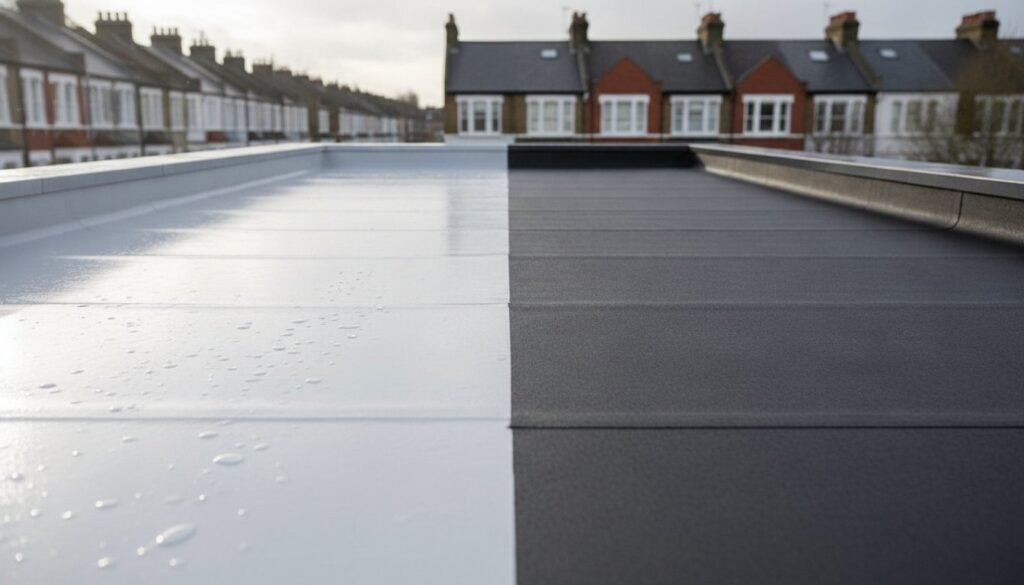
Choosing between GRP vs EPDM roofing starts with understanding exactly what’s protecting your home. GRP stands for Glass Reinforced Plastic, commonly known as fibreglass. This system is created by applying a liquid resin over a glass fibre matting, which is then cured with a catalyst to form a solid, rigid layer. GRP is a seamless, cold-applied structural skin for roofs. It’s tough, completely waterproof, and bonds directly to the timber deck to create a fortress-like finish that stands up to the elements.
EPDM is a different material entirely. It stands for Ethylene Propylene Diene Monomer, which is a durable synthetic rubber membrane that usually arrives on-site in large, pre-cut sheets. Because of the unique EPDM rubber properties, it remains incredibly flexible throughout its life. This allows the roof to stretch and contract with your building as the seasons change, preventing the cracks that plague older systems. Both of these modern solutions have effectively replaced traditional bituminous felt for London extensions, offering a level of reliability that older materials simply can’t match.
The Rise of Modern Flat Roofing in London
Traditional bituminous felt was the London standard for decades. However, Victorian-era roofing methods are no longer the benchmark for 2026. Felt often struggles with the UK’s increasingly erratic climate, where heavy downpours are often followed by intense heat. These temperature swings cause felt to become brittle and crack at the joints. Modern GRP and EPDM systems have replaced felt because they are designed to handle these extremes without degrading. They help homeowners avoid common headaches like “pooling” water or catastrophic joint failure, which were almost inevitable with older materials.
Key Terminology for Homeowners
Understanding the industry jargon helps you make a better decision for your property. Here are the three most important factors to consider when looking at your quote:
- Seamless vs. Seamed: GRP is entirely seamless because it’s applied as a liquid. EPDM is often installed as a single large sheet, but larger or complex roofs might require joined sections. Fewer joints mean fewer potential leak points.
- Cold-applied vs. Torch-on: Both systems are cold-applied. This means we don’t use naked flames or gas torches on your roof, making the installation significantly safer and reducing fire risks during the build.
- Curing times: The British weather dictates the installation window. GRP needs dry conditions and temperatures above 5°C to cure properly into its hard shell. EPDM is less sensitive to temperature during layout, though the adhesives still require a bone-dry deck for a perfect bond.
GRP Fibreglass Roofing: The “Fortress” Solution
GRP roofing isn’t just a waterproof layer; it’s a structural skin that transforms your flat roof into a rigid, impact-resistant fortress. Unlike materials that simply sit on top of the timber, fibreglass bonds directly to the deck. This creates a monolithic surface that easily withstands the weight of maintenance workers or heavy plant pots. For London homeowners, the aesthetic appeal is a significant draw. Most systems are finished in a sleek dark grey topcoat, though a range of other colours is available to match your property’s character. Once cured, a well-installed GRP roof is virtually maintenance-free, requiring only an occasional sweep to keep it looking its best.
The Benefits of a Seamless Finish
The biggest advantage when comparing GRP vs EPDM roofing is the total absence of joints. Because the resin is applied as a liquid, it flows around complex detailing, pipes, and corners to create a single, continuous barrier. This eliminates the “weakest link” found in traditional roofs where seams often fail first. This seamless nature makes it the premier choice for London balconies and walkways. If you plan to use your roof as a terrace, GRP provides the necessary durability to handle constant foot traffic without wearing thin. Integrating these systems with expert roof repairs London ensures that even the most complex architectural features remain watertight for decades.
Potential Drawbacks of Fibreglass
While GRP is incredibly tough, it’s less flexible than rubber. You might occasionally hear a “cracking” or “popping” sound during the height of summer. This is simply thermal expansion. Professional installers prevent this by using specialised expansion joints and correct perimeter fixing, ensuring the roof remains silent and secure. According to the National Federation of Roofing Contractors (NFRC), proper installation is the most critical factor in the longevity of any liquid-applied system.
Weather also plays a massive role in the installation window. We cannot lay GRP in wet or freezing conditions because the resin won’t cure properly. This means projects are often scheduled for the drier months. From a budget perspective, expect a higher initial investment. The material costs and the labour-intensive process of laying glass matting mean GRP typically commands a higher price point when weighing up GRP vs EPDM roofing for a standard extension. If you’re looking for a permanent, walkable solution, requesting a transparent quote is the best way to see if your structure suits a fibreglass finish.
EPDM Rubber Roofing: The Flexible Heavyweight
EPDM is often dismissed by some as a glorified pond liner. This is a complete myth. Modern residential EPDM is a high-performance synthetic membrane designed for extreme durability. It’s thick, resilient, and specifically engineered to withstand the British elements for decades. When considering GRP vs EPDM roofing, the speed of installation is a major factor for many Londoners. Because it often comes in large, single sheets, we can cover a standard extension in a fraction of the time it takes to lay multiple layers of fibreglass. This efficiency doesn’t just save time; it reduces the window where your home is exposed to the weather during the build.
The material’s ability to handle the sun is another standout feature. It possesses exceptional UV resistance, meaning it won’t degrade, peel, or crack even after years of direct exposure to sunlight. From a sustainability perspective, EPDM is frequently cited as the most eco-friendly roofing choice. This is due to its incredible potential lifespan of up to 50 years and the fact that the manufacturing process has a lower carbon footprint than many resin-based alternatives. It’s a simple, honest material that does its job without fuss.
Flexibility and Thermal Movement
London buildings move. Whether it’s due to the heavy clay soil or the swing between a freezing January and a scorching July, your roof needs to “breathe”. Rubber is the master of this movement. Whilst GRP creates a rigid shell, EPDM provides a flexible barrier that stretches and contracts in harmony with your property. This natural elasticity is why EPDM rarely suffers from the stress-cracking issues that can affect more rigid materials. For a standard rectangular extension, a single-sheet application eliminates almost all seams, creating a highly reliable waterproof envelope.
Where EPDM Might Fall Short
Despite its strengths, rubber isn’t the right choice for every scenario. Its primary weakness is a vulnerability to punctures. A dropped tool or sharp garden furniture can tear the membrane, which is why it isn’t suitable for roofs used as terraces or those expecting frequent foot traffic. If you want a walkable balcony, go with GRP. Aesthetics are also a consideration; the “industrial” black finish of EPDM is functional but lacks the sleek, modern look of a colour-matched fibreglass roof.
Finally, the success of a rubber roof depends entirely on the quality of the bond. If the adhesives aren’t applied with precision, the edges can lift over time. This is where professional flat roof repair London expertise becomes vital. Ensuring that every seam and upstand is perfectly sealed is the difference between a 50-year roof and one that fails in five. We focus on getting these details right the first time to ensure your home stays dry for the long haul.
GRP vs EPDM: The Direct Comparison
When weighing up GRP vs EPDM roofing, it’s easy to get lost in technical specs. Most material suppliers will tell you their product is the only permanent solution. We take a different view. After 20 years of installing both systems across London, we know that the “best” roof depends entirely on your specific property and how you use it. One is a structural specialist; the other is an endurance heavyweight.
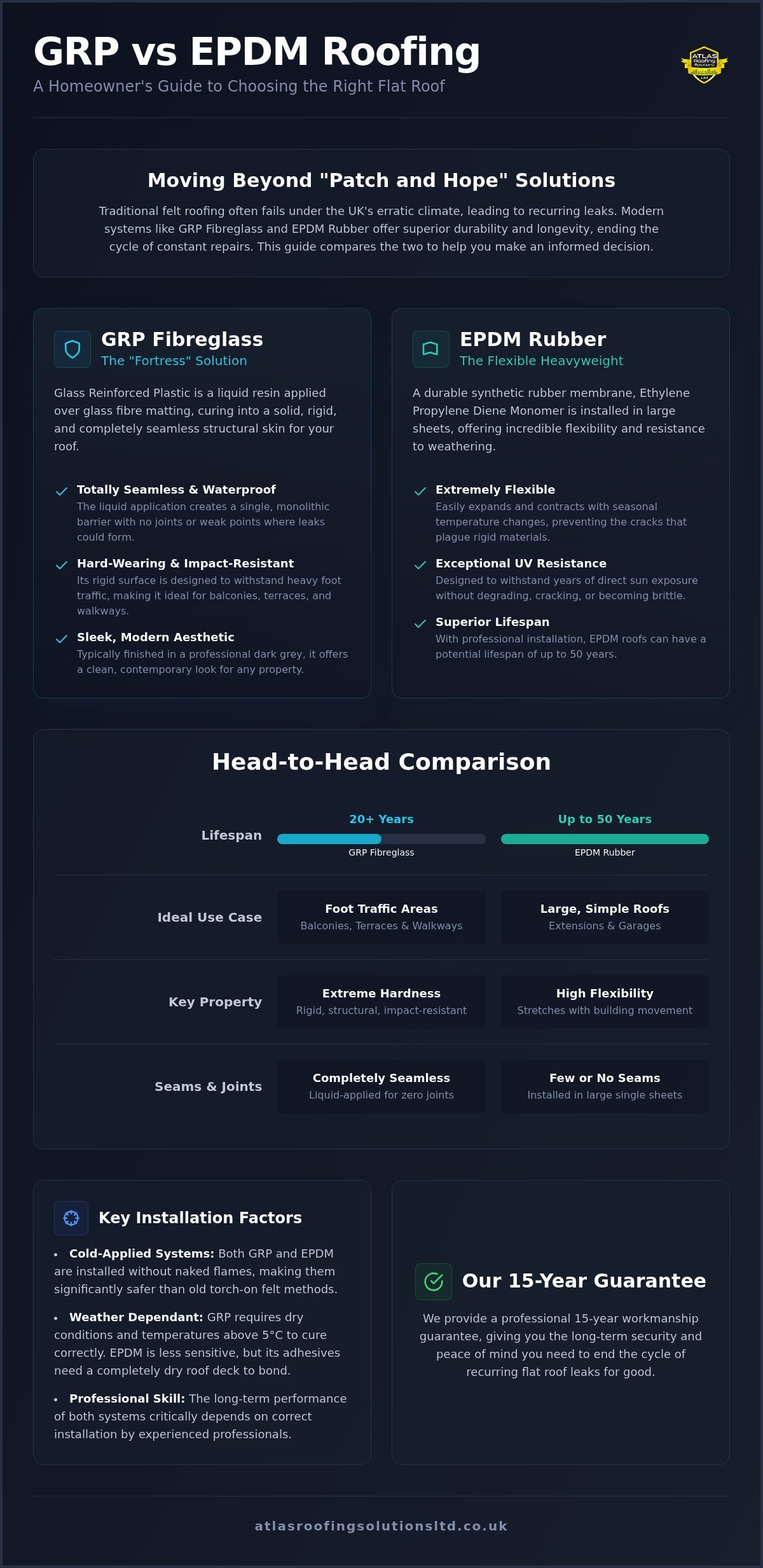
Lifespan is the most significant differentiator. A professionally installed EPDM membrane has a potential lifespan of 50 years. In contrast, GRP typically offers 25-30 years of service before the topcoat might require attention. However, durability isn’t just about years; it’s about impact. If a slate slips from a neighbouring roof or heavy hail hits, the hard shell of GRP is far more likely to survive unscathed. EPDM is tough, but it remains vulnerable to sharp punctures that GRP simply ignores. Installation complexity also varies. GRP is a specialist craft that demands perfectly dry conditions and precise resin mixing. EPDM is faster to lay, but the secret lies in the adhesive application around the perimeters. Both require a high level of skill to ensure they don’t fail prematurely.
The Cost-Benefit Ratio for London Homeowners
Choosing the cheapest quote is often a false economy. A low-cost installation might save money today, but if the seams fail or the resin cracks in five years, the repair bills will quickly outstrip the initial savings. We believe in transparency. That’s why we provide a 15-year guarantee on our workmanship. This gives you the long-term security that your investment is protected. Beyond durability, consider your home’s resale value. GRP’s sleek, colour-matched finish often adds more kerb appeal than the functional, industrial look of black rubber.
Acoustics and Insulation
Acoustics matter, especially if your extension houses a bedroom or home office. GRP is a rigid material, which can result in a “drumming” sound during heavy rain. EPDM, being rubber-based, naturally dampens this noise. Both systems integrate perfectly with modern “warm roof” insulation. To meet the 2026 Building Regulations, we use high-performance PIR boards to achieve the required U-values. This ensures your home stays warm in winter and cool in summer, regardless of the membrane choice. If you’re unsure which system fits your budget and building style, Atlas Roofing Solutions can provide a tailored assessment of your roof.
Making the Choice: Which System Suits Your Property?
The final decision between GRP vs EPDM roofing usually comes down to two simple factors: how you plan to use the space and the scale of the project. Every London home is unique. A Victorian terrace in Clapham has different structural needs than a modern detached property in Richmond. Whilst both materials offer exceptional protection, matching the right system to your home’s architectural style ensures the best long-term value and kerb appeal. It isn’t just about keeping the rain out; it’s about choosing a finish that complements your building.
We often tell homeowners to use the “Balcony Test”. If you intend to walk on the roof, place garden furniture there, or use it as a terrace, GRP is the clear winner. Its rigid, impact-resistant shell handles the pressure of foot traffic without breaking a sweat. Conversely, the “Size Factor” often favours EPDM. For large, expansive flat roofs where aesthetics are less of a priority than cost-effective longevity, the synthetic rubber membrane is the heavyweight champion. It covers vast areas quickly and provides a flexible, reliable seal that can last up to 50 years.
Scenario-Based Recommendations
Context is everything in roofing. For a small kitchen extension or a dormer window, GRP is often preferred because of its sleek, colour-matched finish and structural strength. It’s also the gold standard for fiberglass roof installation London projects on terraced house balconies. In these tight urban spaces, a seamless, walkable surface is a major asset. However, if you’re looking to protect a detached garage or a large garden outbuilding, EPDM is usually the more sensible choice. It’s faster to install and offers incredible UV resistance for a lower initial investment.
Next Steps: Securing Your Free Site Visit
Reading about these materials is a great start, but nothing beats a professional assessment. Every roof has its own quirks, from drainage angles to chimney stacks. During an Atlas Roofing site survey, we take the time to examine your roof’s current condition and discuss your specific goals. We don’t believe in high-pressure sales. Instead, we provide a transparent, no-obligation quote that outlines the best material for your structure and budget. Our family-run team is here to help you make a decision that protects your home for the next 20 years and beyond. Contact our family-run team today for your free flat roof quote and take the first step toward a leak-free home.
Secure Your Home with the Right Flat Roof Solution
Choosing between GRP vs EPDM roofing isn’t about finding a universal winner; it’s about matching the right material to your property’s specific needs. If you’re building a walkable balcony or have a complex roof with multiple pipes and angles, the rigid “fortress” of GRP is the premier choice. For larger, simpler extensions where flexibility and extreme longevity are the priorities, the 50-year potential of EPDM rubber is hard to beat.
We’ve spent over 20 years protecting London homes from the elements. As a family-owned and operated business, we value our reputation for honesty and transparent advice. Every project we undertake is backed by our 15-year workmanship guarantee, ensuring your investment is safe for the long haul. Your home deserves a permanent fix that puts an end to recurring leaks and maintenance stress.
Get a Free, No-Obligation Flat Roof Quote from London’s Specialists
Let’s find the most durable, cost-effective solution for your property together. We look forward to helping you secure your home.
Frequently Asked Questions
Which is more expensive, GRP or EPDM?
GRP is typically the more expensive option due to higher material costs and a more labour-intensive installation process. Whilst EPDM involves laying a pre-cut sheet, GRP requires multiple layers of resin and glass matting applied by hand. When comparing GRP vs EPDM roofing, rubber is the more budget-friendly choice for large extensions, whereas fibreglass is an investment in structural strength and aesthetic finish.
Can I walk on an EPDM rubber roof?
We don’t recommend walking on an EPDM roof unless it’s strictly for occasional maintenance. While the rubber membrane is incredibly durable against the weather, it remains vulnerable to sharp objects like stones in shoe soles or dropped tools. If you’re planning to use your flat roof as a balcony or terrace, GRP is the far superior choice because it cures into a hard, impact-resistant structural shell.
How long does a GRP fibreglass roof actually last?
A professionally installed GRP roof typically lasts between 25 and 40 years. Its longevity depends heavily on the quality of the initial installation and the thickness of the topcoat. Unlike traditional felt, it doesn’t rot or perish. Because it forms a seamless bond with the roof deck, it remains watertight for decades, provided the expansion joints are correctly positioned to handle London’s temperature swings.
Is GRP roofing noisy when it rains?
Fibreglass can produce a drumming sound during heavy downpours because it’s a rigid, hard material. This is more noticeable if the roof is directly above a bedroom without adequate insulation. We solve this by installing a “warm roof” system with high-performance PIR boards. This setup doesn’t just meet building regulations; it also acts as a sound dampener to keep your home quiet and comfortable.
Can GRP or EPDM be installed over an existing felt roof?
It is technically possible, but we strongly advise against it. Installing a new system over old, damp felt can trap moisture and lead to timber rot. For a truly reliable finish, we prefer to strip the roof back to the joists and install a fresh timber deck. This ensures the new membrane bonds perfectly and allows us to provide our full 15-year workmanship guarantee.
Do I need building regulations approval for a new flat roof in London?
Yes, if you’re replacing more than 50% of your flat roof covering, you must comply with current UK Building Regulations. This primarily focuses on thermal performance. You’ll need to upgrade the insulation to achieve a U-value of 0.18 W/m²K for renovations. As experienced London contractors, we handle these requirements during the installation to ensure your property remains compliant and energy-efficient.
What maintenance does a rubber roof require?
EPDM is remarkably low maintenance and doesn’t require regular painting or coating. You should simply clear away leaves and debris twice a year to prevent gutters from blocking. It’s also wise to check the perimeter flashings and seams occasionally. Because the material is highly resistant to UV rays and moss growth, it stays in excellent condition with very little intervention from the homeowner.
Why does Atlas Roofing offer a 15-year guarantee on these materials?
We provide a 15-year workmanship guarantee because we have total confidence in our installation methods and the durability of modern materials. With over 20 years of experience across London, we know these systems perform exceptionally well when fitted correctly. This guarantee isn’t just a piece of paper; it’s our commitment to your long-term security and peace of mind as a local, family-run business.