That loud, rhythmic popping sound coming from your flat roof isn’t just the house “settling,” and contrary to what some might tell you, the material itself is rarely to blame. Most GRP failures in the capital stem from poor original installation or a failure to account for how London’s Victorian terrace structures move during the summer heat. If you are tired of patching the same damp spots or hearing conflicting stories from different contractors, you aren’t alone. It is a common frustration for homeowners seeking reliable fiberglass roof repair London services that actually stand the test of time.
We believe that a roof should offer more than just a temporary fix; it should provide total peace of mind. In this guide, we will show you how to identify the real cause of your leaks and how to implement a permanent, leak-proof solution for your GRP flat roof. You will discover the professional methods used to restore your roof’s integrity, the importance of transparent pricing, and how a 15-year guarantee can finally end the cycle of recurring repairs. From managing thermal expansion to choosing the right topcoat, we have mapped out everything you need to ensure your home stays dry and secure for decades to come.
Key Takeaways
- Learn to recognise the early warning signs of GRP failure, such as surface cracking or “popping” sounds, before they lead to costly interior leaks.
- Understand how the unique structure of London terrace homes and thermal expansion can lead to structural stress on your flat roof.
- Use our homeowner’s framework to determine if your roof requires a simple patch or a full replacement by evaluating the health of the underlying timber.
- Discover the precise sanding and chemical bonding techniques necessary for a durable fiberglass roof repair London that creates a seamless, watertight seal.
- Find out how a 15-year guarantee from a family-owned specialist provides the lasting peace of mind and protection your London property deserves.
Identifying Common Fiberglass Roof Problems in London
Spotting a problem early can be the difference between a simple patch and a full deck replacement. On many London extensions, a layer of urban soot and pollution often settles on the flat roof, masking subtle warning signs. You might think the grey surface looks fine, but beneath that grime, the material could be failing. It’s vital to distinguish between surface-level wear and structural compromise. Whilst a faded colour is often aesthetic, cracks that penetrate the laminate require immediate fiberglass roof repair London to prevent water from reaching your ceiling joists.
Cracking and “Alligatoring” of the Topcoat
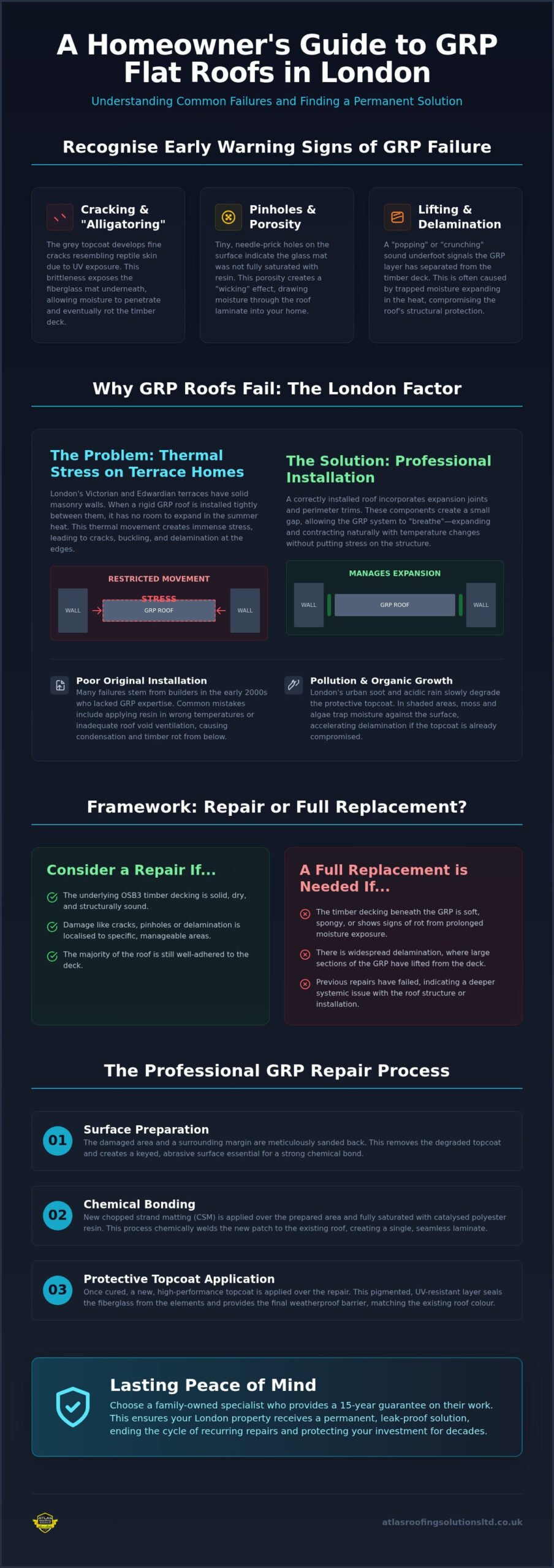
When the grey topcoat begins to resemble the dry, cracked skin of a reptile, we call it “alligatoring.” This usually happens because of prolonged UV exposure. Without regular maintenance, the topcoat becomes brittle and loses its ability to flex. These tiny fractures might look harmless, but they are often deep enough to expose the fiberglass composite material underneath. Once the protective layer is breached, moisture begins to seep into the glass matting, which eventually rots the OSB3 timber decking below.
Pinholes and Porosity Issues
One common issue that many contractors overlook is pinholing. If you look closely at the surface, you might see tiny holes that look like needle pricks. These aren’t just cosmetic flaws. They usually occur because of a poor resin-to-glass ratio during the original installation. If the glass mat wasn’t fully “wetted out” with resin, the roof becomes porous. This creates a “wicking” effect, where the glass fibres act like a straw, drawing moisture through the laminate and into the home.
Lifting and Delamination
Have you noticed a “crunching” or “popping” sound when you walk on your roof? This is a classic sign of delamination. It happens when the GRP layer pulls away from the timber deck. In London’s humid climate, moisture trapped during the build is a frequent culprit. This trapped vapour expands in the heat, forcing the layers apart. If the fiberglass has lifted, it is no longer providing structural protection. Addressing these spots whilst the damage is localised is the most cost-effective way to manage your fiberglass roof repair London and avoid a total strip-back.
Why Fiberglass Roofs Fail: The London Factor
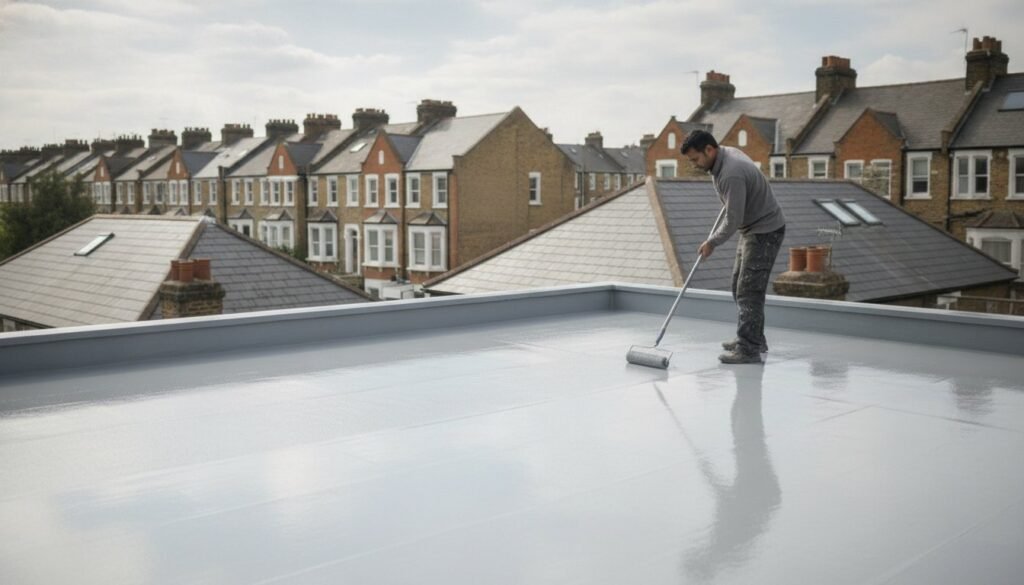
London’s architecture presents a specific set of challenges for GRP systems. Most flat roof extensions in the capital are tucked between the solid masonry walls of Victorian or Edwardian terraces. These buildings are centuries old and have settled into their foundations, yet they still experience minute shifts. When a rigid fiberglass roof is wedged tightly between two party walls without adequate room to flex, the material eventually buckles. This restricted movement is a primary reason why many homeowners find themselves searching for reliable fiberglass roof repair London specialists.
We often see the legacy of “cowboy” installations from the early 2000s. During that period, GRP became a popular alternative to felt, but many general builders didn’t understand the chemistry involved. They often applied the resin in temperatures that were too high or failed to provide sufficient ventilation in the roof void. Without a way for air to circulate, condensation builds up beneath the deck, rotting the timber from the inside out whilst the surface looks perfectly fine.
Thermal Movement and Expansion Joints
A fiberglass roof must be allowed to “breathe” and move. London heatwaves create a “heat island” effect, where city temperatures remain significantly higher than in rural areas. On a mid-summer afternoon, a dark grey GRP surface can reach staggering temperatures. As the material expands, it needs expansion joints to absorb the stress. If your installer skipped these critical trims, the laminate will eventually crack or pull away from the perimeter. Ensuring your roof meets the Building Regulations for structural safety isn’t just about red tape; it’s about making sure the structure can handle these natural cycles of expansion and contraction.
London Pollution and Chemical Degradation
The city’s air quality also plays a role in roof longevity. Urban soot and acidic rainfall can slowly degrade the protective topcoat. This chemical wear makes the surface more brittle over time. In the shaded, narrow gardens of North and South London, organic growth like moss and algae is also common. These organisms trap moisture against the GRP surface, which can lead to localised delamination if the topcoat is already compromised. Regular cleaning isn’t just for looks; it removes the corrosive layers that shorten your roof’s lifespan. If you are worried about the state of your GRP, arranging a free site visit can help identify these issues before they turn into a major leak.
Fiberglass Roof Repair vs Replacement: The Homeowner’s Framework
Deciding between a targeted repair and a full replacement is often the most stressful part of home maintenance. For many Londoners, the fear is paying for a patch that fails in six months. However, a full re-roof isn’t always necessary. The choice depends entirely on the health of your roof’s “skeleton,” which is the timber decking. If the structural OSB3 boards are dry and solid, a professional fiberglass roof repair London can restore the watertight seal without the cost of a total strip-back.
The “Tap Test” and Decking Inspection
We start every assessment by checking for “soft spots.” By walking the roof and using a simple “tap test,” we can hear the difference between a solid bond and a hollow, delaminated area. If the timber feels “spongy” underfoot, it usually means water has already compromised the wood. Since resin will not bond to wet or rotting timber, attempting a repair in these conditions is a waste of your money. A dry, clean substrate is the non-negotiable foundation for any successful GRP restoration.
The “Point of No Return” arrives when more than 25% of the roof area shows signs of structural failure or widespread cracking. At this stage, the risk of moisture ingress becomes too high to ignore. Following UK fire safety regulations is essential when considering significant renovations to ensure your home remains compliant and safe. If the damage is limited to a single corner or a failed joint, a localised patch is a sensible, high-value choice.
Cost and Longevity Comparison
A professional repair is significantly more affordable than a full GRP installation. Whilst a full system replacement is a major investment, a targeted resin wash or patch can extend your roof’s life by another 10 to 15 years. This approach offers an excellent return on investment for homeowners who want to delay a full re-roof whilst maintaining total protection. You can find more detail on these choices in our Flat Roof Repair London: Homeowner’s Guide 2026. Ultimately, our goal is to provide the most durable solution that fits your budget, backed by the honesty of a family-run business.
The Professional GRP Repair Process
A professional repair is far more than a temporary patch. It is a chemical restoration that integrates new materials into the existing structure. When we approach a fiberglass roof repair London, we follow a methodical step-by-step system to ensure the bond is permanent. This process relies on precision and a deep understanding of how GRP behaves in our local climate. It isn’t just about stopping a leak; it’s about restoring the structural integrity of your home’s protection.
Surface Preparation and De-greasing
Preparation is the most critical stage of the entire project. Years of London soot, traffic pollution, and organic growth create a film that prevents resin from sticking. We start by thoroughly sanding the repair area to remove the old, weathered topcoat. This reveals the raw laminate and creates what we call a “mechanical key.” It provides a rough surface for the new resin to grip onto. We are careful with solvents; using the wrong chemicals on aged fiberglass can soften the material too much. Before any resin is poured, we use moisture meters to confirm the deck is bone dry. Even a tiny amount of trapped moisture will cause the repair to fail later.
Laminating and Topcoating
Once the surface is prepped, we apply a fresh layer of Chopped Strand Matting (CSM) over structural cracks or weak points. We feather the edges of this new matting carefully. This ensures the patch blends into the original roof without leaving a visible “hump” or a sharp edge that could catch the wind. The chemistry of the resin is also vital. We adjust the catalyst-to-resin ratio based on the specific temperature on the day. London’s unpredictable weather means a mix that works in the morning might cure too fast in the afternoon heat. Getting this balance right ensures a hard, durable finish that won’t crack under pressure.
The final UV-resistant topcoat acts as a solar shield, preventing the underlying laminate from becoming brittle and cracking under the intense city sun. We colour-match the new finish to your existing roof as closely as possible for a clean, professional look. If you want a permanent solution that comes with a 15-year guarantee on workmanship, contact us for your fiberglass roof repair London.
Choosing a Reliable London Fiberglass Specialist
GRP is a specialist material that requires a specific set of skills and precise environmental conditions to install correctly. Many general builders treat fiberglass like a standard coating, but it is actually a complex chemical process. If the resin is mixed poorly or applied in the wrong humidity, the roof will eventually fail. When you are looking for a fiberglass roof repair London, you need a contractor who understands these nuances. A specialist knows how to bond new materials to old surfaces, ensuring the repair becomes a structural part of the roof rather than just a temporary patch.
A transparent, no-obligation quote is the first sign of a professional service. You should look for a breakdown that explains exactly what is being repaired and why. In the competitive London roofing market, a 15-year guarantee on workmanship is a vital indicator of quality. It provides the long-term peace of mind that your home is protected against the unpredictable British weather. We believe in straight-talking advice and honest assessments, helping you make an informed decision without any high-pressure sales tactics.
The Atlas Roofing Solutions Ltd Advantage
With over 20 years of local experience, we have seen every type of flat roof failure across the capital. This history allows us to spot hidden issues, such as internal timber rot or poor ventilation, that less experienced contractors might overlook. We only use premium materials that are proven to withstand the urban environment and the specific stresses of London terrace structures. As a family-owned and operated business, we value our reputation amongst the community. We treat every home as if it were our own, focusing on durability and meticulous attention to detail. You can learn more about our approach by visiting our page on Expert Roof Repairs London: Trusted Family-Run Roofing Services.
Next Steps: Securing Your Property
The first step toward a leak-free home is a thorough professional assessment. We offer free site visits where we conduct a detailed survey of your fiberglass roof. During this visit, we check for structural integrity, moisture levels, and the condition of the existing topcoat. We then provide a clear plan of action tailored to your specific needs. Whether you require a minor joint repair or a more extensive restoration, we provide a simple, hassle-free experience from the initial contact to the final inspection. Don’t wait for the next heavy downpour to test your roof’s limits. Contact Atlas Roofing Solutions Ltd for your free London roof repair quote and let us restore your GRP flat roof to its full potential.
Secure Your GRP Roof Today
Your GRP roof is a high-performance system, but its longevity depends on precision and a deep understanding of London’s unique structural environment. By recognising early warning signs like pinholing and addressing the specific thermal stresses of city terrace extensions, you can avoid the disruption of a full re-roof. A targeted, professional repair restores the chemical bond that keeps your property dry whilst extending the life of your original investment.
Choosing a specialist who values reputation over quick wins makes all the difference. With over 20 years of local experience, our family-run team provides the expertise needed for a durable fiberglass roof repair London homeowners can rely on. We provide a 15-year guarantee on our workmanship to ensure your home remains a safe, leak-free environment for years to come. We look forward to helping you protect your property with a solution built to last.
Contact Atlas Roofing Solutions Ltd for your free London roof repair quote
Frequently Asked Questions
Can you walk on a fiberglass roof once it has been repaired?
Yes, you can safely walk on a fiberglass roof once the repair has fully cured. GRP is one of the most durable flat roofing materials available, which is why it is frequently used for balconies and walkways across London. It is essential to wait until the topcoat is no longer tacky to the touch. For domestic extensions, we ensure the finish is skid-resistant, making the surface safe for occasional maintenance or window cleaning without risking structural damage.
How long does a professional fiberglass roof repair take to complete?
Most domestic repairs are completed within a single day. The exact timeline depends on the extent of the damage and the current weather conditions. Preparation, such as sanding and cleaning the old laminate, takes up the majority of our time, whilst the resin application and curing happen relatively quickly. For larger terrace extensions, we aim to have the roof watertight before the evening, minimising disruption to your daily routine whilst securing your home against the elements.
Why is my fiberglass roof making a loud cracking noise in the sun?
This noise is caused by thermal expansion and contraction as the material reacts to the city’s temperature shifts. If the roof was installed without adequate expansion joints, the GRP creaks as it moves against the timber deck or perimeter walls. Whilst the noise itself isn’t always a sign of failure, persistent cracking sounds can indicate that the laminate is under excessive stress. We can assess whether your roof needs additional trims to alleviate this tension and prevent future cracks.
Is it possible to DIY a GRP roof repair using a kit from a hardware store?
Whilst DIY kits are available, they often lead to temporary fixes that fail within months. A professional fiberglass roof repair London requires precise chemical mixing and thorough surface preparation that store-bought kits cannot replicate. If the resin-to-catalyst ratio is slightly off, the patch will remain tacky or become brittle. We often find that DIY attempts trap moisture beneath the new layer, which eventually rots the timber decking and leads to more expensive structural repairs.
What is the typical cost of fiberglass roof repair in London?
The cost of a repair varies significantly based on the size of the affected area and the condition of the underlying timber. A simple resin wash to restore a faded topcoat is far more affordable than replacing a delaminated section of the roof. We provide transparent, no-obligation quotes after a free site visit. This allows us to give you an accurate figure based on the specific requirements of your London property rather than a generic estimate that may change later.
How long will a GRP repair last compared to a full replacement?
A professional repair can extend the lifespan of your roof by an additional 10 to 15 years if the timber deck is healthy. In contrast, a full GRP installation is designed to last between 25 and 30 years with minimal maintenance. Choosing a repair is an excellent way to maintain a watertight seal and protect your home’s value without the immediate investment of a total re-roof. We always evaluate the substrate first to ensure any repair is a viable long-term solution.
Can you repair a fiberglass roof in the rain or during winter?
We cannot perform GRP repairs during active rainfall because moisture prevents the resin from bonding to the surface. However, repairs are perfectly possible during the winter months provided the roof is completely dry and the temperature is above five degrees Celsius. We use specialised winter-grade catalysts that allow the resin to cure correctly in cooler weather. Our team monitors local forecasts closely to choose the optimal window for a successful and durable application for your property.
Does a fiberglass roof repair come with a guarantee?
Yes, every fiberglass roof repair London project we undertake is backed by a 15-year guarantee on our workmanship. As a family-run business with over 20 years of experience, we take immense pride in the durability of our work. This guarantee provides you with long-term peace of mind, knowing that your repair has been carried out to the highest professional standards. We believe in accountability and stand by the quality of the materials and labour we provide.