Your roofline isn’t just a decorative trim; it’s the primary defence system protecting your London home from structural damp and expensive repairs. Most homeowners find roofing terminology like soffit and fascia confusing. It’s easy to ignore the boards tucked under your eaves until a patch of rot appears or a gutter begins to sag. We know the anxiety that comes with home maintenance, especially when you’re worried about the rising cost of scaffolding and labour in the city.
This guide clears up the mystery. You’ll discover everything you need to know, from identifying early warning signs of decay to selecting the most durable materials for our unpredictable weather. We believe in straight-talking advice and honest solutions that provide long-term security for your property. We’ll break down the anatomy of your roofline, show you how to spot damage before it spreads, and provide a framework for choosing low-maintenance uPVC upgrades. By the end, you’ll have the confidence to make informed decisions that keep your home dry, safe, and looking its best for years to come.
Key Takeaways
- Learn the distinct roles of the fascia board and the soffit in providing a primary defence against structural damp and pests.
- Discover how to perform a simple “drip test” to identify leaks and spot the early warning signs of timber rot before they lead to expensive repairs.
- Compare the benefits of modern uPVC soffit and fascia systems against traditional timber to ensure your roofline remains maintenance-free.
- Understand why professional installation and safe scaffolding are vital for protecting your property and preserving your existing roof warranties.
- Find out how a 15-year workmanship guarantee offers the long-term security and peace of mind every London homeowner deserves.
Understanding Your Roofline: What Are Soffits and Fascias?
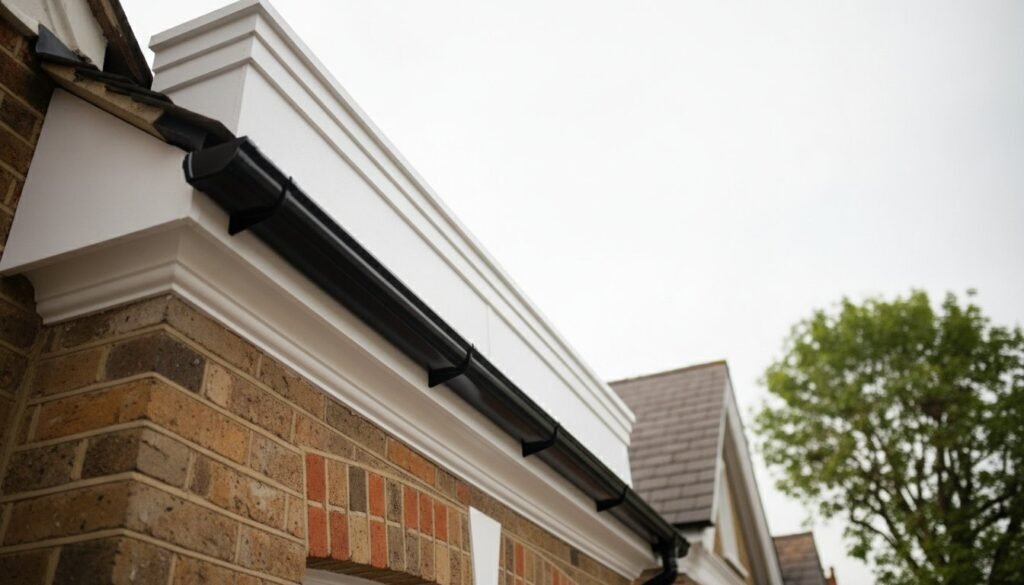
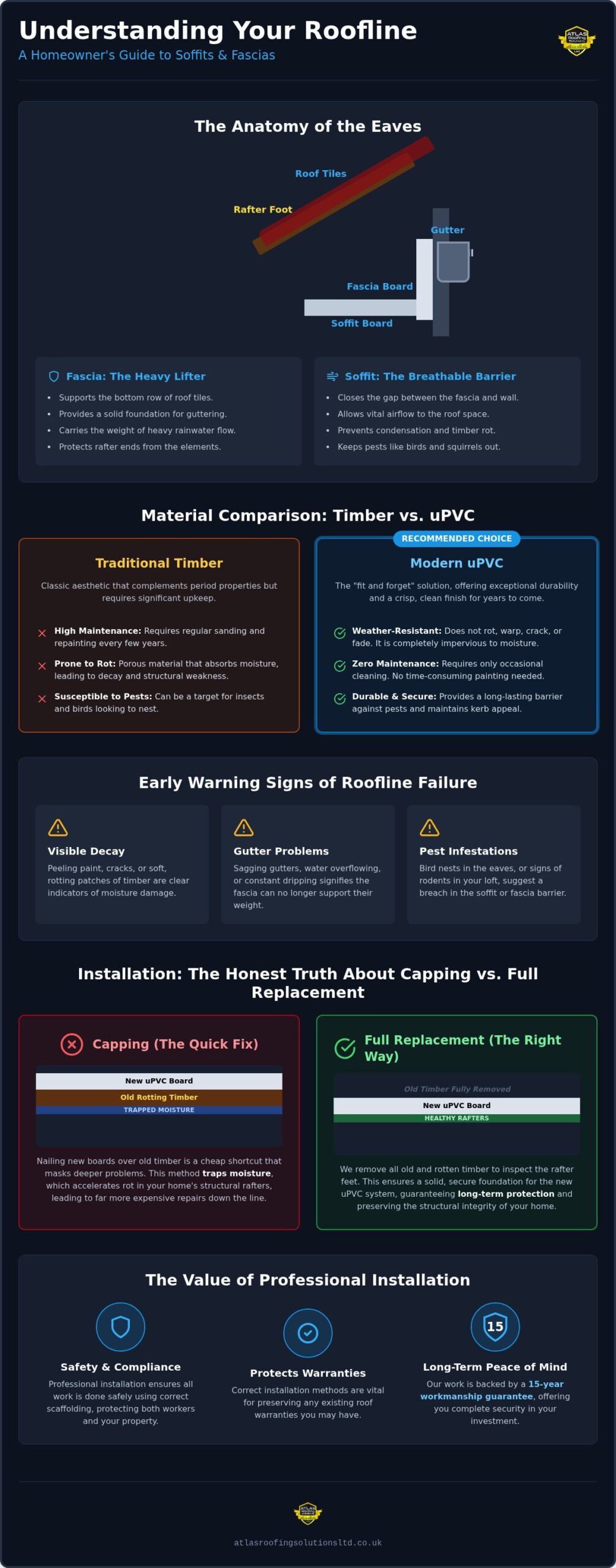
Fascia boards are the long, straight boards that run along the lower edge of the roof. They do the heavy lifting for your roofline. These vertical boards support the bottom row of roof tiles and provide the primary foundation for your guttering system. During a typical British downpour, the fascia board must carry the weight of several gallons of water per second as it flows through the gutters. It’s a high-pressure job that requires a sturdy, reliable material to prevent sagging or detachment.
The soffit is the board tucked underneath the fascia. It bridges the gap between the edge of the roof and the exterior wall of your house. This architectural feature is vital for the health of your attic or loft space. Most modern soffits are designed with built-in ventilation. This allows air to circulate through your roof void, which prevents the build-up of condensation. Without this airflow, moisture can settle on your timber rafters, leading to hidden rot and structural weakness.
The Anatomy of the Eaves
The roofline is the intersection of the roof and the walls. It is a collective term used to describe several protective elements, including fascias, soffits, and bargeboards. Whilst fascias run horizontally along the front and back of the property, bargeboards are the diagonal boards found on the gable ends of a house. Together, these components create a sealed envelope around your home’s eaves. This barrier is your first line of defence against driven rain and pests. It stops squirrels, birds, and rodents from finding their way into your loft to nest, whilst ensuring that wind-driven water is diverted safely into the drainage system.
Why London Homes Require Robust Roofline Protection
London properties face specific environmental pressures that can take a toll on external woodwork. High humidity levels and urban pollution in the city often accelerate the decay of traditional timber. When a soffit and fascia system begins to fail, water can bypass the protective layer and soak directly into the rafter feet. This often leads to the kind of expensive roof repairs London homeowners find most stressful.
Aesthetics also play a significant role in London’s diverse architectural landscape. Whether you own a period Victorian terrace or a sleek modern apartment, the roofline provides a crisp, finished look to the property. Choosing durable, weather-resistant materials ensures that your home remains protected from the elements whilst maintaining its kerb appeal. A well-installed system doesn’t just look better; it provides the “quiet confidence” that your home is secure against the damp, regardless of what the London weather throws at it.
Comparing Materials: uPVC, Timber, and Aluminium
Timber has been the traditional choice for London homes for decades. It offers a classic aesthetic that complements period properties. However, wood is naturally porous. It requires consistent maintenance, including sanding and repainting every few years to prevent decay. If this cycle is neglected, moisture quickly takes hold. A high-quality soffit and fascia system should protect your home, not create a permanent to-do list.
The Rise of uPVC Fascias and Soffits
uPVC has become the UK industry standard for very practical reasons. It is entirely weather-resistant and does not rot, warp, or crack. Modern uPVC is also colour-fast. This means it won’t yellow or fade under the sun. At Atlas Roofing Solutions Ltd, we focus on uPVC because it offers a “fit and forget” solution for our customers. It provides a clean, crisp finish that stays looking new for years without the need for a paintbrush. Our 15-year workmanship guarantee is built on the resilience of these materials. If you want a simple, durable upgrade, you can request a honest quote from our experienced team.
For modern or high-end commercial properties, aluminium is a premium alternative. It is exceptionally strong and offers a sleek, contemporary look. Whilst the initial cost is higher than uPVC, aluminium is virtually indestructible and provides a unique finish for bespoke architectural designs.
Full Replacement vs Capping: The Honest Truth
We believe in straight-talking advice. Many companies offer “capping,” which involves nailing new uPVC boards directly over your existing timber. It is a faster, cheaper method, but it often masks deeper problems. If the underlying wood is already damp, capping traps that moisture. This accelerates rot in your rafters, leading to structural issues that are far more expensive to fix later.
A full replacement is the only way to ensure long-term security. We remove every scrap of old timber. This allows us to inspect the rafter feet and the roof felt edge. If we find any damage, we fix it before the new boards go on. This methodical approach ensures your roofline is structurally sound and provides a solid foundation for your gutters. It’s about doing the job right the first time, giving you quiet confidence in your home’s protection.
Signs of Failure: When to Worry About Your Roofline
Spotting a failing roofline early can save you thousands in structural repairs. If your home still has traditional timber boards, peeling paint is often your first warning sign. When that protective layer cracks, moisture seeps into the grain and stays there. This leads to soft, spongy sections where rot has taken hold. You might also see dark “tide marks” or green algae growing on the underside of the boards, indicating that the wood is holding onto water.
We recommend performing a simple “drip test” during the next heavy London downpour. Watch your gutters closely. If water trickles down the face of the brickwork or drips from behind the guttering, your fascia boards are likely saturated. This overspill rots the back of the board where it’s hidden from view. It’s a common issue that many homeowners miss until the damage is extensive and the wood begins to crumble away from the fixings. Pairing this kind of visual check with a programme of seasonal roof maintenance London homeowners can follow year-round is the most effective way to stay ahead of deterioration before it becomes costly.
Pest activity is another clear indicator of soffit and fascia decay. Wasps, birds, and rodents are experts at finding small gaps in rotted wood to enter your roof space. If you hear scratching in the loft or see birds nesting in the eaves, your roofline is no longer providing a secure seal. This breach doesn’t just let in animals; it lets in driven rain that can cause damp patches on your internal ceilings and walls near the top of your house. If you also notice damp patches appearing around your chimney breast, it may be worth investigating whether perished mortar or failing leadwork is contributing to the problem — a professional chimney repair London specialist can assess the stack and prevent water ingress from above.
The Hidden Danger of Blocked Ventilation
Poor airflow is a silent threat to your home’s structural integrity. It’s subtle. Without a steady stream of fresh air, condensation builds up within the loft void. This stagnant moisture creates a perfect breeding ground for wood-rotting fungi that can weaken your rafters. Modern uPVC soffits often include integral ventilation strips to prevent this issue. These vented systems allow your roof to “breathe” whilst keeping out insects and debris, ensuring a healthy environment for your timbers and insulation.
Guttering Failure and Roofline Damage
Your gutters and fascias operate as a single protective unit. When gutters become blocked with silt or moss, they become incredibly heavy and start to sag. This puts undue physical stress on the fascia board, often pulling it away from the rafter feet and creating gaps for water to enter. If left unaddressed, poor drainage can lead to secondary issues like saturated brickwork or the need for professional flat roof repair London. Identifying “overspill” early is the best way to avoid these cascading costs and keep your home’s exterior resilient. A complete guttering installation London specialists recommend can address these drainage failures before they cause lasting structural harm.
The Installation Process: What to Expect
A professional installation begins with safe access. In London, this usually means erecting a secure scaffolding tower or a full run of scaffolding. Working from ladders is not only dangerous but makes it impossible to achieve the level of precision required for a long-lasting finish. Once safe access is established, the real work starts at the roof edge. We don’t just swap boards; we ensure the entire structure is sound.
We lift the first two rows of tiles. This is a critical step. It allows us to inspect the condition of the roof felt and the rafter feet. In many older properties, the felt has perished at the eaves, causing water to rot the timber from the inside out. We install a rigid eaves protector, also known as a felt support tray. This modern component ensures that water flows directly into the guttering rather than pooling behind the fascia board. It is a simple addition that significantly extends the life of your roofline.
Preparation and Structural Inspection
We never fix new boards to rotten timber. Our team removes all existing soffit and fascia boards, along with any heavy, outdated cast iron guttering. This “strip-to-the-bone” approach allows us to treat or replace any decaying rafter feet. We then use string lines to ensure the new installation is perfectly level and plumb. This creates the correct gradient for your new gutters, ensuring that rainwater flows efficiently toward the downpipes without pooling or overspilling. It’s a methodical process that guarantees a professional finish.
Choosing Colours and Styles
Modern materials offer more than just protection. Whilst traditional white uPVC remains a popular choice for its clean look, many London homeowners are now opting for anthracite grey or black to match modern window frames. Woodgrain finishes like Rosewood or Golden Oak are also available for those who want the look of timber without the maintenance burden. Your choice of colour can change the visual weight of your home, either making the roofline a bold feature or allowing it to blend seamlessly into the architecture.
If you are ready to upgrade your home’s protection with a professional install, you can book a free site survey with our expert team today.
Why Professional Installation is a Long-Term Investment
Investing in your roofline is about more than just kerb appeal. It is about structural security. Whilst the “do-it-yourself” approach is tempting for some, working at height carries significant risks. Beyond the physical danger, a soffit and fascia installation requires technical precision. If the guttering falls are even a few millimetres out of alignment, water will pool and overflow. This eventually leads to the very damp issues you were trying to avoid. Professional installers have the right equipment and the seasoned eye to ensure every component works in harmony with your home’s drainage.
A professional installation also safeguards your broader investments. If you have recently invested in a new roof installation London, poor roofline work can actually void your manufacturer warranties. By choosing an expert team, you ensure that the entire system remains compliant with industry standards. We provide an atmosphere of safety and long-term security. With our 15-year workmanship guarantee, you can rest easy knowing your property is prepared for the harshest British weather. It is a simple matter of protection and preventative care.
The Atlas Roofing Solutions Difference
We are a family-owned business with over 20 years of experience. This history matters when navigating London’s unique architectural challenges. We don’t use high-pressure sales tactics. Instead, we offer a transparent, straight-talking service built on honesty and integrity. We only use high-quality, weather-resistant uPVC because we believe in materials that stand the test of time. Our reputation is built on workmanship we are proud to stand behind. We act as a reliable guardian for your home, focusing on durability and aesthetic improvement.
Next Steps for Homeowners
Taking the next step is hassle-free. We offer a free site visit to conduct a thorough roofline health check. During your consultation, we will explain exactly what is needed and why. You will receive a clear, methodical plan with no hidden surprises. It is an open-book approach that builds quiet confidence from the initial contact to the completion of the job. We guide you through the journey, ensuring you understand the anatomy of your roofline and the benefits of our chosen materials. Get your free, no-obligation roofline quote today and let us help you protect your home for the next generation.
Securing Your London Home for the Future
Your roofline is your home’s first line of defence against the elements. We’ve explored how a high-quality soffit and fascia system prevents water ingress, attic condensation, and pest infestations. By choosing durable uPVC over high-maintenance timber, you ensure your property remains weather-resistant without the constant need for repairs. It’s about more than just aesthetics; it’s about long-term peace of mind and structural integrity.
At Atlas Roofing Solutions, we bring over 20 years of specialist London experience to every project. We believe in transparency and honesty, which is why we offer free, no-obligation site visits to assess your roofline’s health. Our 15-year workmanship guarantee provides the quiet confidence you need to know the job’s done right. Secure your home with a professional roofline upgrade from Atlas Roofing Solutions today. Protecting your investment has never been more straightforward or simple.
Frequently Asked Questions
Do I need to replace my soffits and fascias when I get a new roof?
It is not strictly required, but it’s highly recommended. Replacing them at the same time is the most cost-effective approach because scaffolding is already in place. This allows our team to integrate the eaves protectors and felt support trays perfectly with your new tiles. It prevents the need to disturb your new roof later to address a rotting roofline.
How long does it take to replace the soffits and fascias on a standard house?
A standard terraced or semi-detached home usually takes between one and three days to complete. This timeline includes the safe removal of old materials, a thorough inspection of your rafter feet, and the precise fitting of the new system. Larger detached properties or homes with complex roof shapes may take slightly longer. We always provide a clear, methodical schedule before we start.
Is uPVC better than wood for fascias and soffits?
Yes, uPVC is the preferred industry standard for modern London homes. Unlike timber, uPVC is entirely weather-resistant and will not rot, warp, or crack over time. It requires no sanding or repainting, making it a “fit and forget” solution. This material offers superior long-term value and durability compared to high-maintenance wood, which often fails in our damp climate.
Can I just paint my old wooden fascias instead of replacing them?
You can paint timber if it’s structurally sound, but this is often a temporary fix. If rot has already started inside the grain, a fresh coat of paint simply traps moisture and accelerates the decay. We often find that once paint begins to peel, the underlying wood is already compromised. A full replacement provides a permanent, maintenance-free solution for your home.
Do soffits need to be ventilated by law in the UK?
Yes, UK Building Regulations require adequate ventilation in the roof void to prevent condensation. If your property was built after 1990, it must meet specific airflow standards. Using a vented soffit and fascia system is the most reliable way to comply with these rules. It protects your roof timbers from damp whilst ensuring your home meets modern safety standards.
Will new fascias and soffits increase the value of my home?
A new roofline significantly improves your property’s kerb appeal and marketability. Surveyors and potential buyers look for signs of proactive maintenance. A crisp, clean uPVC finish suggests the home is well-protected against structural damp. It provides buyers with quiet confidence that they won’t face immediate repair bills, which can help you secure a better sale price in the London market.
How much does it cost to replace uPVC soffits and fascias in London?
The total cost depends on the linear meterage of your roofline and the complexity of the access required. Factors like the height of the building and the need for specific scaffolding will influence the final figure. Before you accept any quote, it’s worth reading our detailed breakdown of the cost to replace uPVC soffits and fascias London homeowners can expect in 2026, so you can budget accurately and spot any hidden fees. We provide transparent, no-obligation quotes after a site visit. This ensures you get an accurate price based on your home’s specific layout rather than a vague estimate.
Can you install new gutters at the same time as the roofline?
We almost always install new gutters alongside a soffit and fascia upgrade. It is the most logical time to do the work because the gutters are fixed directly to the new fascia boards. Installing them together ensures the gradients are perfectly aligned for efficient drainage. This prevents future leaks and ensures your entire roofline system works as a single, cohesive unit. Learn more about how our professional guttering installation London service integrates seamlessly with a full roofline replacement.