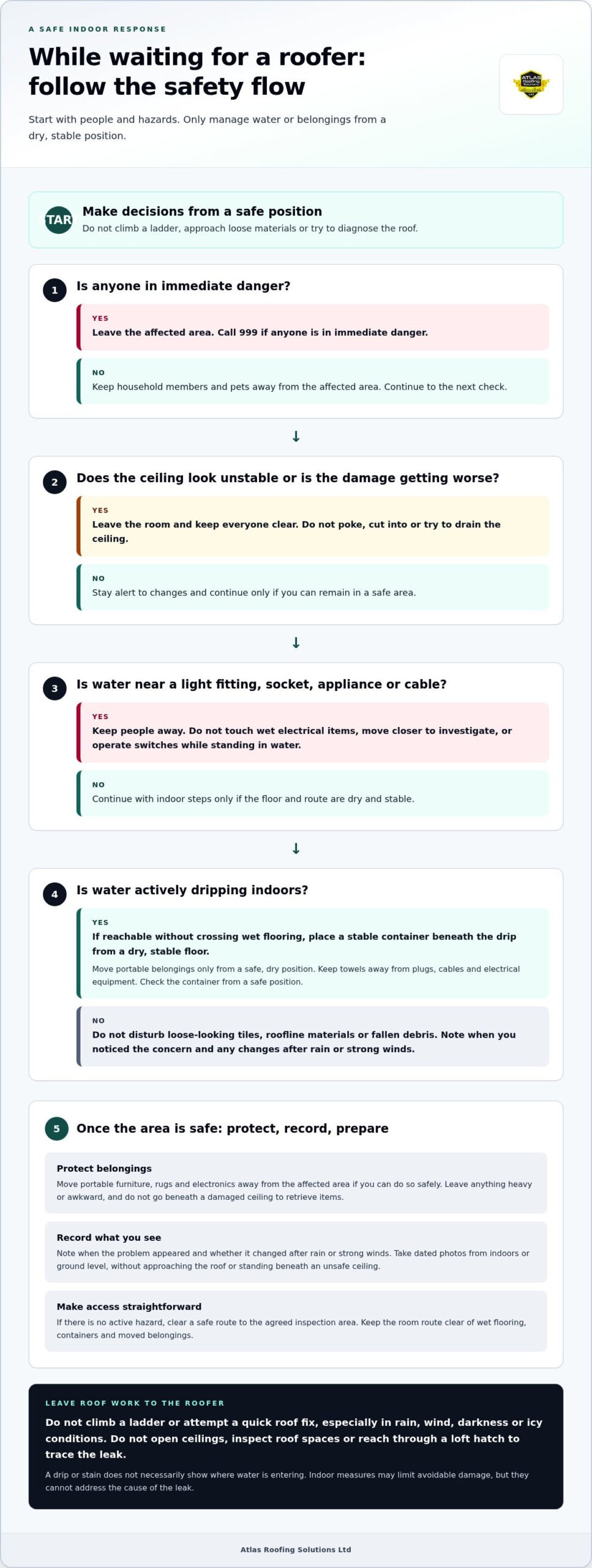
A leak can turn a quiet day into a race to protect ceilings, belongings and electrics. If you’re wondering what to do while waiting for a roofer, start with safety, not the ladder. A wet or damaged roof is dangerous to walk on, and a quick DIY fix can put you at greater risk.
It’s understandable to feel anxious when water is getting into your home, especially if you’re unsure what’s safe to handle. You can take sensible steps indoors to reduce avoidable damage and keep people away from hazards without attempting to repair the roof yourself.
This checklist explains how to manage drips, protect furniture and electronics, and respond cautiously if water is near electrical fittings. You’ll also learn what to photograph, what details to note and how to make access straightforward, so your roofer has a clear picture of what’s happened.
Key Takeaways
- Knowing what to do while waiting for a roofer starts with keeping people clear of hazards and dealing with water only from a safe, stable position.
- Protect belongings, but keep away from wet electrical fittings, sockets, appliances and cables.
- Don’t climb a ladder or attempt a quick roof fix, especially in rain, wind, darkness or icy conditions.
- Prepare useful details for the roofer, including dated photos taken safely and a brief note of where the leak appears.
- If damage worsens quickly or a ceiling seems unsafe, leave the affected area. Call 999 if anyone is in immediate danger.
What to do first while waiting for a roofer
Focus on what you can manage from a safe position: people, indoor hazards and belongings. You don’t need to diagnose the roof or pinpoint where water is entering. Whether you’ve spotted a leak, storm damage or loose-looking materials, this order helps you respond without taking unnecessary risks.
- Keep clear. Move household members and pets away from the affected area. Stay well back from a ceiling that’s bulging, sagging or visibly damaged, and don’t approach loose materials outside.
- Contain water if it’s safe. Put a stable container beneath a drip only if you can reach it and stand on a dry, stable floor. Don’t cross a wet area or move towards water near electrical fittings.
- Protect belongings. From a safe, dry position, move furniture, rugs and electrical items away from the affected area. Leave anything too heavy or awkward to move.
- Record what you see. Note when the problem appeared and whether it changed after rain or strong winds. Take photos from indoors or ground level, without approaching the roof or standing beneath an unsafe ceiling.
Water can travel along roof timbers or other surfaces before it becomes visible indoors. A drip or stain doesn’t necessarily show where water is entering. Don’t try to trace the leak by opening ceilings or inspecting roof spaces. General guidance on Emergency Home Repairs treats temporary measures as a stopgap until a professional can assess the problem.
If water is coming into the property
Choose a container that won’t tip easily and place it only where you can reach it without stepping on wet flooring. Move portable belongings out of the way if it’s practical. Keep everyone clear of any ceiling that looks swollen, cracked or unstable. Don’t touch wet lights, sockets, appliances or cables, and don’t move items if doing so takes you beneath a damaged ceiling.
If there is no active leak
A quiet spell doesn’t necessarily mean the issue has gone away. Don’t disturb loose tiles, roofline materials or fallen debris, whether you spot them from a window or at ground level. Note when you first noticed the concern and any changes after rain or strong winds. Before the roofer arrives, clear a safe route to the agreed inspection area and move anything that could obstruct access.
These steps apply to more than leaks. If you’ve noticed slipped-looking tiles or damage after poor weather, keep your distance, make a brief note and leave the roof for a professional to assess. That’s the safest way to manage what you can while deciding what to do while waiting for a roofer.
How to limit indoor damage without climbing onto the roof
You can take practical steps indoors if you can do them from a stable, dry position. The aim is to reduce immediate risks and limit avoidable damage while you wait for a professional assessment. These measures may buy time, but they can’t stop every leak or prevent all damage. Leave the roof, loose tiles and outside debris alone.
Protect belongings and floors
If it’s safe to reach, move portable valuables, rugs, furniture and electronics away from drips. Don’t cross a wet floor or go beneath a ceiling that looks damaged to retrieve something. Leave any item that is too heavy to move or can only be reached by an unsafe route.
For a steady drip, place a stable container underneath it, making sure you don’t have to stand on a wet or cluttered surface. A towel or other absorbent material nearby can catch splashes, but keep it away from plugs, cables and electrical equipment. Check the container from a safe position. Ask someone else to help only if they can reach it safely too.
Keep a clear route through the room. Wet flooring, containers and moved belongings can create trip hazards, particularly in a dimly lit area. Don’t add items if they make it harder for household members to leave safely.
Recognise electrical and ceiling hazards
Water near a light fitting, socket, appliance or cable is a reason to keep people away. Don’t touch wet electrical items or operate switches while standing in water. Keep others out of the affected area, and don’t step closer to investigate the source of the water.
A sagging, cracked or changing ceiling needs extra caution. Don’t poke it, cut into it or try to drain it yourself. Water and weakened ceiling material can fall unexpectedly. Leave the room and keep everyone clear if the ceiling appears unstable or the damage is getting worse. If anyone is in immediate danger, leave the affected area and call 999.
Even careful indoor steps can’t address the cause of a roof leak. Avoid makeshift repairs overhead, including reaching through a loft hatch or trying to cover a ceiling opening. Contain what you can without entering a hazard zone, then leave the roof assessment and repair to a roofer.
Atlas Roofing Solutions Ltd carries out roof repairs across London. Once you’ve made the area safe, you can arrange a roof repair site visit and explain what you’ve noticed. Keep clear of any area that remains unsafe until the roofer can assess it.
What not to do while waiting for a roofer
A quick roof fix isn’t worth a fall or an electrical injury. Climbing up to secure a tile or cover a leak may seem like the fastest way to protect your home, but you can’t reliably judge the roof’s condition from below. Leave repairs to the roofer. Your role is to observe from a safe distance and keep people away from hazards.
Why roof and ladder access can be dangerous
Don’t climb a ladder or access the roof in rain, wind, darkness or icy conditions. Wet surfaces can be slippery, gusts can affect your balance, and poor light makes hazards harder to spot. Loose debris adds another risk. Even in dry weather, damage may have weakened a section of roof that looks sound from the ground.
A ladder can shift or sink, and carrying a tarp or tools while climbing can make it harder to keep a secure hold. On the roof, loose materials and uneven surfaces can make movement unpredictable. These risks apply whether you own the property, rent it or are helping someone else. Don’t let urgency, confidence or a second pair of hands turn a repair attempt into a fall.
- Don’t climb up to inspect, replace tiles or retrieve loose roof materials.
- Don’t lean out of an upstairs window or stand beneath loose debris to get a closer look.
- Don’t ask a tenant, neighbour or family member to attempt a repair on your behalf.
- Don’t dismantle guttering, fascias or other roofline materials to investigate the damage.
Looking is different from repairing. If it’s safe, note what you can see from ground level or through a window, such as a visibly displaced tile or debris after strong winds. Keep your distance and don’t touch or move anything. A photo taken from a safe position may help explain what you noticed, but don’t put yourself at risk to get a better view.
Avoid improvised repairs and risky electrical checks
Don’t fit a tarp, apply sealant or attempt to secure materials from a ladder or roof. These jobs involve working at height and handling equipment near a damaged surface. Indoors, never poke, cut or press a damaged ceiling to release trapped water. Don’t touch wet electrical fittings or try to diagnose wiring. Keep others away and leave the area if it appears unsafe.
Water near electrical fittings can create a serious hazard. Don’t operate switches or handle electrical equipment if you’re standing in water, and don’t approach wet sockets, lights, appliances or cables to investigate. If there’s immediate danger to anyone, leave the affected area and call 999.
The safest approach while waiting for a roofer is to avoid turning observation into a DIY repair. Record what you can see from a safe place, keep clear of the roof and leave the assessment to a professional.
A practical checklist to prepare before the roofer arrives
A clear handover helps the roofer understand what you’ve noticed and where to begin, without you needing to inspect the roof. Keep your notes and photos together, and gather information only from places you can reach safely. If the situation changes before the visit, update the roofing team rather than investigating the damage yourself.
Make a useful record of the problem
Take photos from a stable indoor position or from ground level. Add the date and a short caption, such as “water mark in upstairs bedroom after rain” or “debris visible beside the front gutter”. A brief note gives the image context and helps distinguish an earlier mark from a new change.
- Timing: Write down when you first noticed the issue and when water appeared indoors, if there’s a leak.
- Location: List the rooms affected and describe what you can see, such as a ceiling stain, dripping or visible damage from the ground.
- Changes: Note whether the problem changed after rain or strong winds, or whether a drip started, stopped or moved.
- Visit details: Keep appointment messages, access information and your observations together so they’re easy to find.
Keep the record factual. You don’t need to identify the fault or guess how water travelled through the property. Share what you observed and when. For background on professional repairs, see our guide to expert roof repairs in London.
Make access and communication straightforward
Before the visit, check the appointment details and share clear directions or entry arrangements. If there’s a safe route to the agreed inspection area, keep it clear. Move pets and household members away from that area, and tell the roofing team about immediate concerns, such as a ceiling that appears unstable or water near electrical fittings.
It can help to have one person ready to explain the timeline and point out the affected rooms, while staying clear of hazards. If the issue worsens before the roofer arrives, pass on the new information. Don’t go outside or into an unsafe part of the home to gather more detail.
Good preparation gives the visit a clear starting point without putting anyone at risk. Once immediate household risks are managed, you can arrange a roof repair site visit with Atlas Roofing Solutions Ltd and share the notes you’ve collected.
When to seek urgent help and arrange a professional roof assessment
Some changes mean you should raise the concern promptly rather than simply wait for the planned visit. Rapidly worsening damage, substantial water entering the property or a ceiling that appears unsafe needs careful attention. First, keep people away from the affected area. If anyone is in immediate danger, leave and call 999.
Signs the situation may be getting worse
Look out for water spreading or appearing in another room, a leak becoming heavier, or new movement, cracking or sagging in a ceiling. Don’t approach a ceiling to inspect it closely. Outside, keep clear of loose materials or debris near people, doorways and paths. If conditions change, tell the roofer before the visit and explain what changed, when it happened and which areas are affected.
A developing problem can make a room or access route unsafe, even if the original issue seemed manageable. Don’t wait for a scheduled assessment if the situation has become an immediate danger to someone. Move away from the hazard, keep others back and call 999 if urgent help is needed. For other significant changes, contact the roofing team with your updated observations. Don’t climb up to investigate or try to slow the damage with an improvised roof repair.
What to expect from Atlas Roofing Solutions Ltd
Once immediate risks are managed, arrange a professional assessment to understand the roof issue and appropriate next steps. Atlas Roofing Solutions Ltd is a family-owned roofing specialist serving London, with over 20 years of experience. Atlas offers free site visits and transparent, no-obligation quotes, so you can discuss the problem and understand the proposed work before deciding how to proceed.
Atlas Roofing Solutions Ltd also provides a 15-year guarantee on workmanship. For preventative context once the immediate concern has been assessed, see this guide to seasonal roof maintenance guidance.
When you arrange the visit, share any new safety concerns and the notes or photos you’ve gathered from safe positions. The roofer can take those details into account during the assessment. You don’t need to identify the fault yourself, and you shouldn’t approach the roof to gather more evidence.
If you’re ready to arrange a professional assessment in London, book a free roof site visit with Atlas Roofing Solutions Ltd. While you wait, stay alert to changes, communicate clearly and leave roof access and repair work to the professionals.
Take the next step towards a safer, drier home
Once everyone is clear of immediate hazards, you don’t have to solve the roofing problem yourself. A professional assessment gives you a practical basis for deciding what needs attention next. Keep your notes handy, share any changes you’ve noticed, and leave roof access and unsafe areas to the professionals.
Atlas Roofing Solutions Ltd is a family-owned London roofing specialist with over 20 years of experience. You can arrange a free site visit and receive a transparent, no-obligation quote, so you can consider the proposed work before deciding how to proceed. Workmanship is covered by a 15-year guarantee.
If you’re still wondering what to do while waiting for a roofer, focus on the next safe step: get a clear assessment rather than attempting a roof repair yourself. Arrange a free site visit and request a transparent, no-obligation quote from Atlas Roofing Solutions Ltd.
Frequently Asked Questions
Can I climb onto the roof while waiting for a roofer?
No. Don’t climb onto the roof or use a ladder to inspect or repair it. Wet, windy, dark or icy conditions make access especially hazardous, and damage can leave a roof less stable than it looks from the ground. A fall can cause serious injury. Observe only from a safe indoor position or from ground level, and leave roof inspection, tarpaulins and temporary exterior work to the roofer.
What should I do if my ceiling is bulging while I wait for a roofer?
Keep everyone out of the room and don’t poke, cut or press the ceiling. A bulge that’s sagging, cracking or changing may indicate a hazard, so treat it cautiously and don’t stand underneath it to inspect or move belongings. Tell the roofer that the ceiling has changed. If anyone is in immediate danger, leave the affected area and call 999.
Should I turn off the electricity if my roof is leaking?
Don’t touch wet switches, sockets, lights or appliances. If the consumer unit is reachable without crossing a wet area or entering an unsafe space, follow your household’s normal safe procedure. Otherwise, keep clear and don’t try to investigate the wiring. If there’s immediate danger, leave the affected area and call 999. Switching off power, if safe, doesn’t replace a professional assessment of the leak and any electrical risk.
Can I put a bucket under a roof leak while waiting for a roofer?
Yes, if you can place it from a dry, stable position and the floor and route are safe. Choose a container that won’t tip easily, and keep it away from electrical items. Don’t stand under a sagging ceiling or move into an unsafe part of the room to catch a drip. Move belongings only if it’s safe, and don’t use tools overhead or disturb ceiling materials.
Should I put a tarp on my roof before the roofer arrives?
No. Don’t climb onto the roof or use a ladder to fit a tarp. Wet, windy or damaged surfaces can be dangerous, and a loose covering may shift or create another hazard. Keep people away from the affected area instead. If it’s safe indoors, contain drips and protect portable belongings, then tell the roofer what you can see from ground level without approaching or disturbing roof materials.
What information should I give the roofer before the visit?
Share when you first noticed the problem, which rooms are affected and whether it seems to change after rain. Describe visible damage you’ve observed safely, and send photos taken indoors or from ground level if useful. Include clear access arrangements and mention any worsening or immediate hazard. A helpful part of what to do while waiting for a roofer is to provide these details without climbing up or removing materials for a closer look.
What should I do if the roof leak gets worse before the roofer arrives?
Keep people out of affected rooms, and protect belongings only if you can do so safely. Contact the roofer to report what has changed, such as water spreading to another room or a ceiling beginning to sag. Don’t touch water near electrical fittings or remain beneath an unstable ceiling. If anyone is in immediate danger, leave the area and call 999.