The lowest-cost guttering may not be the best-value choice over the life of your roofline. When comparing uPVC vs cast iron guttering cost, the material price is only part of the picture. Installation complexity, maintenance and how well the style suits your property all matter.
It’s understandable to focus on the upfront quote, especially when costs vary between materials. uPVC is lighter and generally simpler to handle, whilst cast iron is heavier, needs care to help prevent rust and can be a better visual match for some period homes. The right choice depends on more than the initial outlay.
This guide compares the factors that shape the installed cost, along with ongoing upkeep and future replacement considerations, so you can weigh value fairly. We’ll also look at which material may suit different buildings and rooflines. A site visit helps assess the existing guttering and the scope of the work, giving you a clear, project-specific quote rather than a figure based on guesswork.
Key Takeaways
- Look beyond the material price: gutter length, profile and the number of fittings all affect the installation scope.
- Compare genuine cast iron with cast-iron-effect uPVC carefully. They differ in material, upkeep and practical considerations.
- Assess uPVC vs cast iron guttering cost by weighing installation, maintenance, repairs and future replacement together.
- Match the guttering to your property’s character and roofline, then consider the upkeep you’re comfortable with.
- A site visit can clarify the existing roofline and help produce a transparent, project-specific quote.
What determines uPVC vs cast iron guttering cost?
Material is only one part of the installed cost. The total scope also depends on how much guttering the property needs, the shape of the roofline, and the work involved in removing old sections and fitting the new system. A rain gutter carries water away from the roof, but the layout needed to do that can vary considerably from one home to another.
Length is a starting point, not the whole calculation. The profile, number of corners and junctions, and position of outlets all affect the quantity and type of fittings required. Downpipes matter too: their number, length and route influence the materials and work involved. Cast iron is heavier than uPVC, which can make handling and installation more involved.
Which items should a guttering quote include?
A clear quote should explain the work being priced, including materials and fittings, labour, removal of existing guttering and waste handling. It should also state whether downpipes are included and describe any additional roofline work identified during the assessment.
This makes comparisons fairer. One quote may cover replacement along the full roofline, whilst another may allow for only certain sections or leave removal and disposal outside its scope. Before comparing totals, check that the same areas and tasks are included.
Why can two homes need very different guttering budgets?
Building height and access affect how installers reach the roofline and carry out the work. The layout matters too: a straightforward run is different from one with several corners, awkward junctions or multiple downpipes. If the existing fascia is damaged, repairs or replacement may also need to be considered before new guttering can be fitted securely.
For example, a London terraced house with a simple front roofline may need a different scope from a taller house with rear extensions, varied roof levels and ageing fascias. Neither location nor house type alone determines the work. The details of the individual property do.
That’s why uPVC vs cast iron guttering cost can’t be judged from the material alone. An accurate figure depends on the roofline, access, removal requirements and any condition issues found on site. Atlas Roofing Solutions Ltd visits properties across London to assess existing guttering and fascias, understand the scope, and provide a transparent, no-obligation quote tailored to the property.
UPVC and cast iron guttering: what changes between the materials?
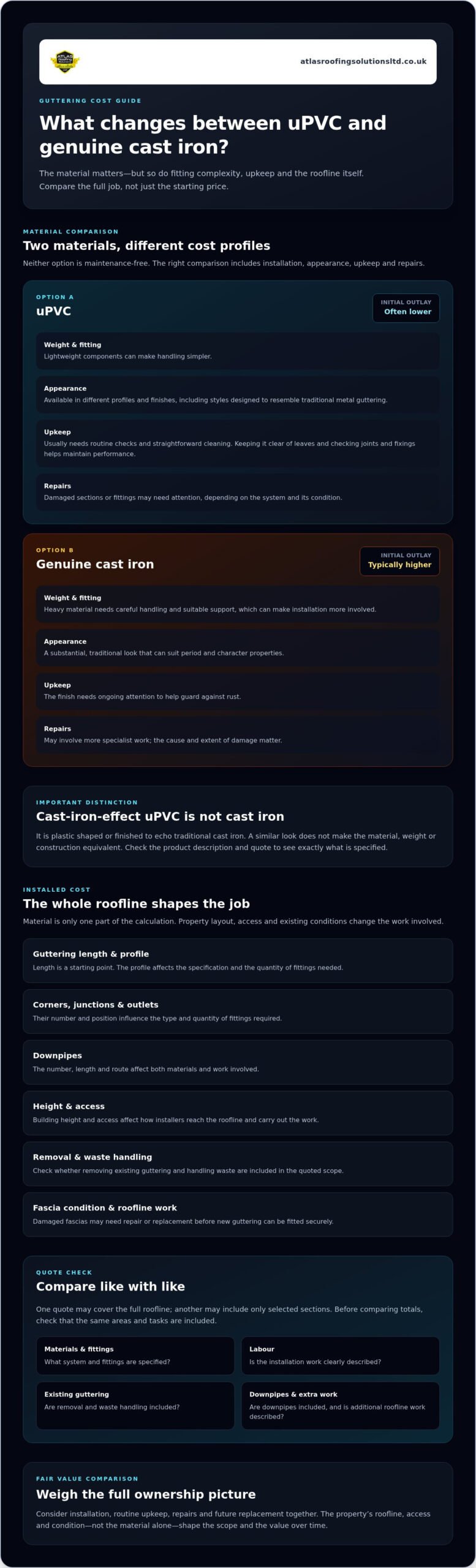
The materials affect more than appearance. uPVC is generally lighter and often has a lower initial outlay, whilst genuine cast iron has a heavier, solid feel and a traditional look. Its weight can make handling and fitting more involved. A useful comparison considers upkeep and repair needs as well as the initial specification.
| Factor |
uPVC |
Genuine cast iron |
| Initial outlay |
Often the lower-cost starting option, with lighter components. |
Typically a higher initial investment, with material weight adding to fitting complexity. |
| Appearance |
Available in different profiles and finishes, including options designed to resemble traditional metal guttering. |
Has a substantial, traditional appearance that can suit period and character properties. |
| Weight |
Lightweight, which can make handling simpler. |
Heavy, so installation requires careful handling and suitable support. |
| Upkeep |
Usually needs routine checks and straightforward cleaning. |
Needs attention to its finish to help guard against rust. |
| Repairs |
Individual damaged sections or fittings may need attention, depending on the system and its condition. |
Repairs may involve more specialist work. The cause and extent of damage matter. |
Is cast-iron-effect uPVC the same as cast iron?
No. Cast-iron-effect uPVC is plastic shaped or finished to echo the appearance of traditional cast iron. A similar look doesn’t make the material, weight or construction equivalent. Read the product description and quote carefully to identify what is specified. The profile and finish also affect how naturally the guttering sits against the building.
How do appearance and upkeep compare?
uPVC is a practical, lightweight option. Keeping it clear of leaves and checking joints and fixings helps maintain its performance. Genuine cast iron offers a solid, traditional appearance, but its finish needs ongoing care to help guard against rust. Neither material is maintenance-free. Condition, installation and exposure all affect how it holds up over time.
So, uPVC vs cast iron guttering cost is only one part of the decision. If you’re unsure which material and profile would suit your roofline, a guttering site visit can help assess the existing setup and discuss options for your property.
Which guttering offers better long-term value: uPVC or cast iron?
There isn’t one material that’s always cheaper over its lifetime. Better value depends on the full ownership picture: the installation work required, routine upkeep, repairs and how soon the system may need replacing. A lower initial outlay can be appealing, while a more substantial material may suit a property better if it’s maintained properly.
For a fair comparison, consider each option against the same questions:
- Installation: What work and fittings does the roofline need?
- Upkeep: What checks and maintenance will help keep the system in good condition?
- Repairs: Can damaged sections be addressed without changing more of the system?
- Future replacement: How might the material, condition and availability of matching parts affect later work?
This framework won’t produce a universal winner, but it makes the uPVC vs cast iron guttering cost comparison more realistic. Actual maintenance needs vary with the guttering’s condition, exposure to the elements, installation quality and how regularly it’s inspected.
What ongoing maintenance should homeowners allow for?
Keep gutters clear of leaves and other debris, and look for leaks, loose joints or visible damage during routine checks. If water can’t drain properly, it may overflow onto the surrounding roofline. Persistent moisture can affect nearby fascias and soffits, so don’t ignore signs such as staining or water spilling over the edge. Our guide to soffits and fascias explains how these roofline components help protect your home.
Neither material should be treated as maintenance-free. uPVC generally needs straightforward cleaning and checks, whilst cast iron needs attention to its finish to help guard against rust. The right routine depends on what an inspection reveals, not simply the material name.
When can repair or replacement affect the overall value?
A leak or damaged section in one area may call for a local repair. If deterioration is widespread, or the existing system has several weak points, the work may need a broader scope. The condition of the supporting roofline matters too.
Matching existing sections and fittings can affect how practical a repair is, particularly where a system has an older or distinctive profile. A site assessment helps establish whether a targeted repair is suitable or whether more extensive replacement should be considered. That way, the comparison reflects the property’s actual needs rather than assumptions about either material.
How to choose guttering for your London property
Start with the building, not the material price. A straightforward selection process helps you balance appearance, practical fit and future upkeep:
- Assess the property: Note the existing gutter profile, roofline shape and condition of the fascias.
- Compare materials: Consider the look, weight and maintenance needs of uPVC and cast iron.
- Check the scope: Make sure the proposed work covers the guttering, fittings, downpipes, removal and access arrangements you need.
- Review upkeep: Think about the regular checks and cleaning you’re prepared to carry out.
This order keeps uPVC vs cast iron guttering cost in context. A material may look appealing on its own, but the right choice also needs to suit the building and the complete installation.
What should owners of older London homes consider?
Look at the existing gutter profile, the proportions of the building and the appearance of neighbouring rooflines. Genuine cast iron may complement some period properties, whilst a suitable uPVC profile may work well on others. Age alone doesn’t mean a home needs cast iron.
If the property is listed or lies in a conservation area, requirements can vary according to the building and location. Check the relevant local guidance before changing the material or appearance, rather than assuming the same rules apply to every older home.
Modern homes bring different design considerations. The gutter profile, colour and scale should sit comfortably alongside the roof tiles, fascias and overall proportions. A profile that looks balanced on a larger roofline may feel too prominent on a smaller home. Consider how the finish works with the existing exterior, as well as whether the layout can carry rainwater away effectively.
What should a homeowner compare before accepting a quote?
Check that the proposed material and profile are clear, and that the quote describes fittings, downpipes, removal of old guttering and access arrangements. Then compare the work included, not just the headline totals. Differences in scope can make two figures look far apart even when they cover different tasks.
Once the new system is in place, regular checks can help you spot blockages or damage early. See our seasonal roof maintenance guide for practical roofline checks.
A site visit can help you weigh the property’s appearance against the condition and layout of its roofline. Arrange a guttering site visit for a clear, no-obligation quote tailored to your home.
Get a clear guttering quote from Atlas Roofing Solutions Ltd
Choosing between uPVC and cast iron is easier when you understand what your roofline needs. Atlas Roofing Solutions Ltd provides guttering services across London and offers free site visits to assess existing guttering and discuss the project in the context of your property. With over 20 years of roofing experience, the team can help you understand the practical scope, appearance and upkeep involved, rather than relying on a one-size-fits-all estimate.
What happens during an Atlas guttering assessment?
During a site visit, Atlas reviews the existing system, the property layout, access to the roofline and any visible condition issues. The assessment helps establish whether the work involves replacing all the guttering or addressing particular sections, and whether the fascias or other roofline details need attention as part of the project.
Material options are discussed in relation to the building and the work required. The quote reflects the proposed materials and tasks for your property, rather than assuming the same approach works for every home. Atlas provides a transparent, no-obligation quote, so you can review the proposed scope without pressure to proceed.
How can homeowners take the next step?
Before arranging an assessment, consider what matters most to you: the property’s appearance, the maintenance you’re comfortable with, or the condition and layout of the existing guttering. Knowing your priorities can make it easier to discuss whether uPVC or cast iron is a better fit and understand the factors behind the uPVC vs cast iron guttering cost for your project.
Atlas Roofing Solutions Ltd is a family-owned London roofing specialist, and its workmanship is backed by a 15-year guarantee. A site visit gives the team the opportunity to look at your roofline and explain the options clearly, while the quote sets out the work proposed for your home.
Arrange a free guttering site visit to receive a project-specific, no-obligation quote and discuss the right approach for your property.
Choose guttering that fits your home and your plans
The right choice isn’t simply the material with the lowest initial outlay. Compare the full installation scope, consider the upkeep each option needs, and make sure the profile suits your property’s character and roofline. That gives you a fairer way to judge uPVC vs cast iron guttering cost and long-term value.
Every roofline is different. Atlas Roofing Solutions Ltd has over 20 years of experience helping London property owners assess guttering options. A free site visit looks at the existing roofline and project requirements, followed by a transparent, no-obligation quote tailored to the work. Workmanship is backed by a 15-year guarantee.
Arrange a free site visit and request a transparent, no-obligation guttering quote. With a clear assessment of your property, you can choose with confidence and keep your home protected.
Frequently Asked Questions
Is uPVC guttering cheaper than cast iron?
uPVC often has a lower initial outlay than genuine cast iron, but the difference depends on the product, profile and installation scope. Compare materials and fittings alongside labour, access and removal of the existing system. One quote may include work another leaves out. For a fair view of uPVC vs cast iron guttering cost, compare the same tasks and use a property-specific assessment, not just the headline figure.
How much does it cost to replace guttering in London?
There isn’t one reliable figure for every London property. The total depends on the chosen material, gutter length, fittings, access, removal work and the condition of the roofline. A taller building or a layout with several junctions may involve a different scope from a simple roofline. A site visit and clear quote help show what work is included and why it suits your home.
Is cast iron guttering worth the extra cost?
Cast iron may be worth considering if its traditional appearance suits your property and you’re prepared to maintain its finish. Its value depends on more than appearance: include installation requirements, future upkeep and repair practicality in your decision. uPVC is lighter and has different maintenance considerations. Cast iron isn’t automatically the right option for an older home, so weigh the material against the building’s character and your project’s needs.
How long does uPVC guttering last compared with cast iron?
There’s no single lifespan that applies to every uPVC or cast iron installation. Product quality, fitting, weather exposure, maintenance and accidental damage all affect how long guttering remains serviceable. Check the system regularly, clear debris and look for leaks, loose joints, brackets or outlets. Spotting an issue early can help prevent water overflowing onto the roofline. A professional assessment can help identify deterioration that isn’t easy to see from the ground.
Can uPVC guttering look like cast iron?
Yes, some uPVC systems use profiles and finishes designed to resemble traditional cast iron. They are still plastic products, not genuine cast iron, so a similar appearance doesn’t make their construction or material properties the same. Check the material stated in the product details or quote. Then consider whether the profile and finish complement your roofline, particularly if your London home has distinctive architectural features.
Which guttering is best for a period property?
The best option depends on the property’s character, existing roofline, preferred appearance and the work required. Cast iron can complement some traditional buildings, while suitably styled uPVC may also be considered. An older home doesn’t automatically require cast iron. If your property is listed or in a conservation area, check the relevant property-specific guidance before changing its guttering material or appearance.
Does replacing guttering include fascias and soffits?
Not necessarily. A guttering replacement may cover gutters and associated fittings, while fascias and soffits are separate roofline components. Their condition can affect the work needed, so the quote should clearly state what will be replaced or repaired. Atlas Roofing Solutions Ltd can assess the roofline during a free site visit and provide a transparent, no-obligation quote for your London property based on the project’s scope.