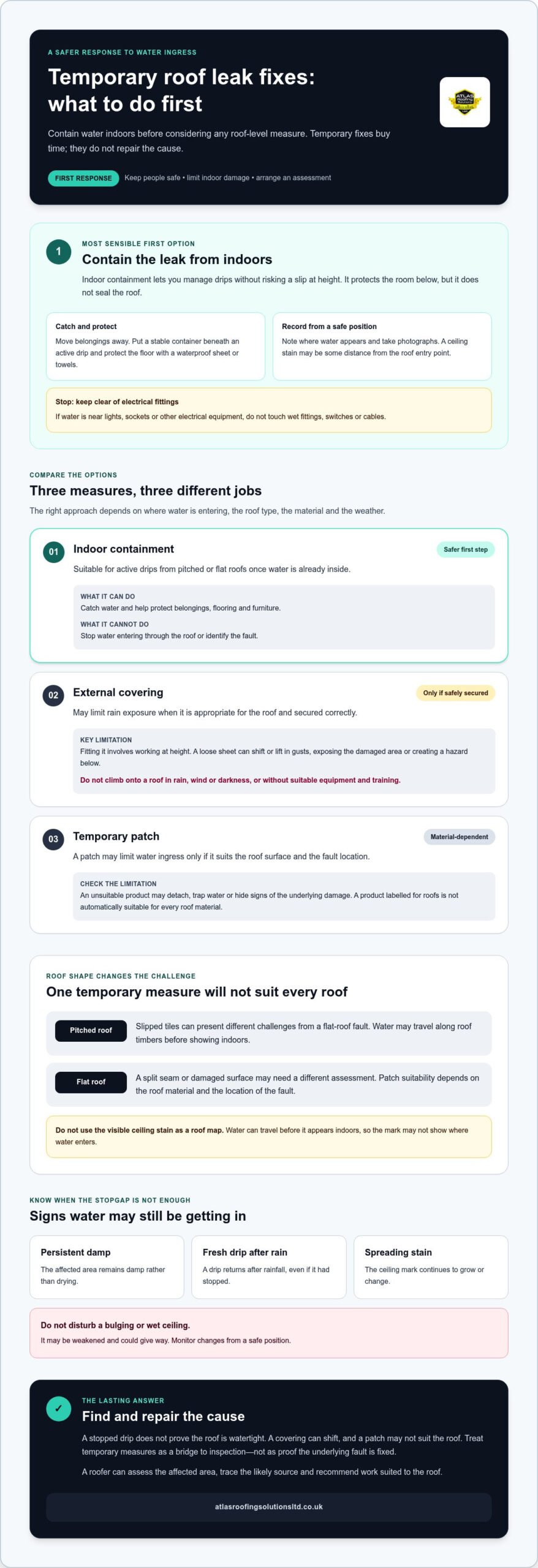
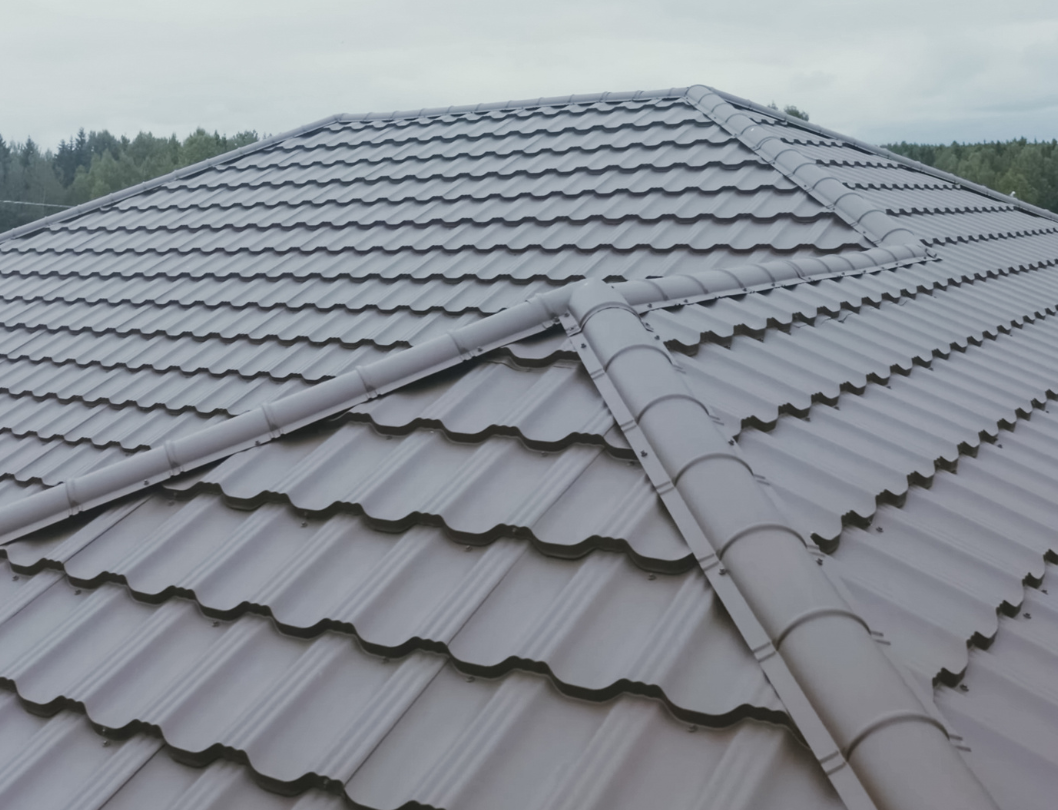
You hear a drip, spot a spreading ceiling stain and reach for the ladder. Stop there. A temporary roof leak fix should limit water getting into your home, not put you at risk on a wet or windy roof.
It’s unsettling when water is coming in, especially when you can’t see where it’s entering. Start by placing a container beneath the drip, moving belongings out of the way and taking photos of the damage from a safe position. If water is near lights or sockets, keep clear and don’t touch wet electrical fittings.
This guide explains safe steps you can take indoors, compares temporary options and shows why improvised coverings may fail in London’s changeable weather. You’ll also learn when a short-term measure has done its job and it’s time for a lasting roof repair. Water can travel before it appears indoors, so an inspection can help trace the source and identify the right repair. Temporary measures buy time; they don’t fix the cause.
Key Takeaways
- A temporary roof leak fix buys time, but a lasting solution depends on finding and repairing the point where water enters.
- Indoor containment, an external covering and temporary patching serve different purposes. Weather, roof type and safe access affect which option may be suitable.
- Water stains can appear away from the leak source, so visible damage alone may not show where the roof needs attention.
- A roof assessment can help identify the cause and guide the right repair for a pitched or flat roof.
- Knowing when a temporary measure is no longer enough helps you plan a lasting repair before further water damage develops.
Temporary roof leak fix: what it can and cannot do
A leak needs attention, but the first step doesn’t have to be a repair on the roof. A temporary measure can help limit water damage while you arrange an assessment. Catching drips and moving belongings can protect ceilings, flooring and furniture. The aim is to manage the water safely, not to diagnose a roof you can’t see.
Temporary water control limits immediate ingress; a permanent roof repair finds and fixes the cause. A drip stopping may only mean water has shifted or paused. It doesn’t prove the roof is watertight or that damaged tiles, flashing, a flat-roof joint or another weak point has been repaired.
What counts as a temporary roof leak fix?
There are two broad approaches. Indoor containment, such as placing a container beneath a drip, manages water after it enters the property. An external covering or patch aims to limit water getting through the roof. These options aren’t interchangeable: the suitable choice depends on the leak’s location, roof type and weather. Roof coatings are another product category, but they aren’t a universal answer. Understanding Roof Coatings for Temporary Fixes explains their general uses and limitations.
Applying a covering or patch means working at roof level. For most homeowners, that isn’t a safe DIY task, particularly on a wet, sloping or exposed roof. Don’t climb up to investigate or secure loose material. A covering that seems simple from the ground can become unstable in wind or fail to seal the actual entry point.
When is a temporary fix only a stopgap?
Persistent damp, a fresh drip after rain or a stain that keeps spreading may all mean water is still getting in. Monitor changes indoors, but don’t assume the wet patch shows where the roof is damaged. Water can travel along roof timbers or other surfaces before appearing on a ceiling, so the visible mark may be some distance from the entry point.
Even if the drip stops, the underlying fault may remain. A temporary covering can shift, and a patch may not suit the roof material or shape. Treat either as a bridge to inspection, not a lasting repair. A roofer can assess the affected area, trace the likely source and recommend work suited to the roof. That’s more useful than repeatedly patching the place where water happens to appear indoors.
Temporary roof leak fixes: safer options for limiting water ingress
There are two places to manage a leak: inside the home, where water is already coming through, and on the roof, where a covering or patch might reduce further ingress. They do different jobs. A container can protect the room below, but it won’t seal the roof. An external measure may limit exposure, but only if it’s suitable and secured safely.
Indoor containment is safer than climbing onto a wet roof because it lets you manage drips without risking a slip at height. It’s the sensible first option for most homeowners, especially during rain or gusty weather. Keep your response simple and avoid anything that could make the situation more dangerous.
Indoor steps to contain a roof leak
Move furniture, electronics and other belongings away from the affected area. Place a stable container beneath an active drip and protect the floor with a waterproof sheet or towels. If water is spreading, note where it appears and take photographs from a safe position. Don’t push, cut or disturb a bulging or wet ceiling. It may be weakened and could give way.
Water close to a light fitting, socket or other electrical equipment needs extra caution. Keep clear, and don’t touch wet fittings, switches or cables. Indoor containment can catch drips, but it doesn’t make an area safe if water is near electrics.
Roof coverings and temporary patch materials
A covering may reduce rain exposure if it’s appropriate for the roof and secured correctly. But fitting it involves working at height. Don’t climb onto the roof in rain, wind or darkness, or without suitable equipment and training. A loose sheet can shift or lift in gusts, leaving the damaged area exposed or creating a hazard below.
Temporary patch materials aren’t universal. The roof surface and the location of the fault affect whether a product will adhere and perform as intended. An unsuitable patch can detach, trap water or cover signs of the underlying damage, making a later inspection harder. Don’t choose a sealant just because it’s labelled for roofs; check that it’s intended for the roof material. The National Roofing Contractors Association’s roofing resources offer general industry information, though product suitability depends on the roof in front of you.
A temporary roof leak fix is a short-term measure, not proof that the roof will be protected through the next spell of bad weather. If you can’t secure a covering safely, leave roof-level work alone. A roofer can assess the damage and recommend a suitable repair. If the leak needs more than indoor containment, Atlas Roofing Solutions Ltd can help with roof repairs in London.
Which temporary roof leak fix suits a pitched or flat roof?
Roof shape can help narrow down what might limit water ingress, but no temporary measure suits every home. A pitched roof with slipped tiles presents different challenges from a flat roof with a split seam or damaged surface. Use the comparison below to understand the broad differences, not as a reason to access the roof or apply a product without knowing it suits the material.
| Temporary measure |
Potential suitability |
Main limitation |
Roof access |
| Indoor containment |
Active drips from pitched or flat roofs, where water is already entering indoors |
Catches water but doesn’t stop it entering through the roof |
No |
| External covering |
May reduce rain exposure over a damaged area if fitted securely and appropriately |
Can shift in wind, fail to cover the entry point or create a hazard |
Yes |
| Temporary patch |
May be suitable for a specific surface fault when the material and conditions allow |
An unsuitable patch can detach, trap water or hide damage |
Usually |
Temporary measures for pitched roofs
Slipped, cracked or missing tiles can leave a route for rain to get beneath the roof covering. A leak may also involve a ridge or flashing, but an indoor stain alone won’t show which part is affected. If you can’t access the roof safely, indoor containment is the practical short-term choice. Don’t climb up to reposition a tile or secure a sheet.
Tiles, ridges and flashings need an appropriate inspection before the lasting work can be decided. A covering placed over the wrong area may not control the leak, particularly if water is entering elsewhere and travelling beneath the roof before it appears indoors.
Temporary measures for flat roofs and garages
On a flat roof, standing water can complicate a temporary patch, while a split seam or damaged surface may require a different approach. A product that covers a visible mark may not suit the roof material or address the point where water is getting through. Don’t apply a patch based on appearance alone.
A garage leak may affect stored belongings, while a leak above an occupied room can also threaten ceilings and household electrics. Treat water near electrical fittings as a safety concern, whatever the building. The setting changes the immediate risk, not the need to understand where water is entering. A temporary roof leak fix is only a short-term measure until the cause can be assessed.
Flat roofs vary in construction and condition, so temporary measures should not be confused with a lasting solution. If you’re considering what happens after the immediate leak is controlled, the relevant flat-roof repair guidance can help explain why the roof needs to be assessed on its own merits.
What to do if your roof leaks: a safe step-by-step guide
A clear order of action helps you protect people and belongings without turning a leak into a more serious accident. Deal with immediate hazards first, then record what’s happening so a roofer can assess the problem. Don’t try to find the source by climbing onto the roof.
- Protect people first. Keep children and pets away from the affected area. If water is near electrical fittings, sockets or appliances, keep everyone clear and don’t touch wet fittings, switches or cables. If the ceiling is sagging or looks unstable, leave the room and don’t go back in to retrieve belongings.
- Contain drips if it’s safe. Move valuables and electronics out of the way, then put a stable container beneath active drips. Protect the floor around it if you can do so without entering an unsafe area. Don’t push, puncture or disturb a wet or bulging ceiling.
- Stay off the roof. Don’t climb a ladder or walk on a wet, damaged or unfamiliar roof, even if the leak seems close by. Rain, wind and poor visibility make access more hazardous, and roof coverings may be fragile or unstable. Leave external checks and coverings to someone equipped to work safely.
- Record what you can see. Take photographs of visible staining, drips and affected belongings from a safe position. Note when the leak began, whether it followed rain or strong winds, which rooms are affected and whether the water is steady or intermittent. These details can help explain how the leak behaves.
- Arrange an assessment. Contact a roofing specialist to inspect the affected area and identify a suitable next step. A temporary roof leak fix can help manage water in the short term, but renewed dripping or spreading damage still needs investigation.
First actions inside the property
Keep the area beneath a leak as clear as possible, but don’t put yourself at risk to move furniture or take photographs. A container may catch drips, yet water near electrics changes the priority: stay well clear rather than attempting to manage the leak yourself. Photograph ceiling marks from a safe distance and note if their shape or spread changes.
When to stop and arrange professional help
Act promptly if water is actively entering, spreading across a room, appearing near electrics or accompanied by a sagging ceiling. Don’t enter rooms that appear unsafe, and don’t climb up to investigate, even after a storm. Storm-related damage may need a closer roofing assessment; the cause isn’t always visible from indoors.
Once people are safe and you’ve recorded the signs, arrange a roof leak assessment in London to establish where water is entering and what repair is appropriate.
From temporary roof leak fix to a lasting London roof repair
A temporary roof leak fix has served its purpose when it buys time to plan the next step. If water returns, damp remains or a ceiling mark continues to grow, don’t rely on another patch as the answer. A lasting repair starts by finding the likely point of entry, not simply treating the place where water appears indoors.
That distinction matters because rainwater can travel along roof timbers or other surfaces before showing through a ceiling. A stain beneath a chimney, for example, doesn’t prove the water entered directly above it. Choosing a repair before examining the roof could mean addressing the wrong area while the original route for water remains open.
What a professional roof inspection helps establish
During a site visit, a roofer can assess the visible indoor signs alongside the relevant roof area and consider possible entry points. Depending on the property, this may involve checking roof coverings, joins, flashing or the area around a chimney. The aim is to understand what may be allowing water in and what repair is appropriate, rather than assume the cause from a ceiling stain alone.
Atlas Roofing Solutions carries out roof repairs, flat roof repairs and chimney maintenance in London. An inspection can help establish which part of the roof needs attention and inform a suitable recommendation. The work depends on what the assessment finds, so don’t assume a particular repair method or timescale before the property has been seen.
Arrange a lasting roof repair in London
Atlas Roofing Solutions is a family-owned London roofing specialist with over 20 years of experience. The team offers a free site visit and a transparent, no-obligation quote for the recommended work. This gives you an opportunity to understand the proposed repair before deciding how to proceed.
An assessment is especially useful if a temporary covering or patch has been used. It can help distinguish a short-term measure from work intended to address the underlying fault. Share what you’ve noticed, such as when the leak appears, which rooms are affected and whether the signs change after rain. Photos taken safely indoors can help describe the problem, but they don’t replace inspecting the roof itself.
If water is still entering, or your temporary measure has only delayed the next leak, arranging an assessment is a sensible next step. Atlas Roofing Solutions can inspect the affected area and discuss a suitable roof repair. Arrange a free site visit and discuss your roof repair.
Give your roof a clear next step
A leak can leave you feeling stuck between waiting for the next shower and worrying about what might be happening above the ceiling. You don’t have to solve the roofing problem from indoors. The useful next step is moving from temporary control to a considered repair plan, based on the condition of your roof rather than guesswork.
A temporary roof leak fix can provide breathing space, but it shouldn’t become a reason to put off dealing with recurring damp or fresh signs of water ingress. If you’re unsure whether the issue has settled, an assessment can help clarify what needs attention and give you an opportunity to discuss the recommended work.
Atlas Roofing Solutions is a family-owned London roofing specialist with over 20 years of experience. A free site visit and transparent, no-obligation quote can help you understand the next step for your home.
Arrange a roof repair site visit. With a clear plan in place, you can move forward with greater confidence and focus on protecting your home.
Frequently Asked Questions
Can I use a tarp as a temporary roof leak fix?
A tarp may help limit rain exposure if it’s the right size and securely fitted, but putting one on a roof isn’t a safe DIY task for most homeowners. Wind can lift loose material, and a covering may miss the actual entry point. Don’t climb up to position or fasten a tarp. If one is already in place, keep clear if it moves or comes loose and arrange a roof assessment.
How long will a temporary roof leak fix last?
There’s no reliable set duration. A temporary measure might last for weeks or months, but its effectiveness depends on how it was installed, the roof’s condition and the weather it faces. Wind or heavy rain can cause a covering or patch to fail sooner. Treat it as a short-term measure, not a period of guaranteed protection, and arrange an inspection even if the leak seems to have stopped.
Should I put sealant on a leaking roof from inside?
No, applying sealant to an indoor ceiling or loft surface isn’t a dependable way to stop water entering through the roof. It may cover a mark without reaching the entry point and could conceal signs that help a roofer understand the problem. Don’t apply a product unless it’s specifically suitable for that material and location. Record the damp area and have the roof assessed instead.
What should I do if a roof leak is near a light fitting?
Keep away from the fitting and don’t touch it, the switch or any wet cables. Keep other people out of the affected area too. If you can reach the consumer unit without going near water or wet surfaces, switch off the relevant circuit. Otherwise, leave it alone and seek urgent help from a qualified electrician. Don’t use the light again until it has been checked and made safe.
Can a temporary roof leak fix stop a leak in heavy rain?
It might reduce water ingress, but there’s no guarantee it will hold in heavy rain. Water can overwhelm an imperfect covering or find another route through damaged roofing, while gusts may loosen material. A patch may also be unsuitable for the roof surface. Indoors, focus on moving belongings away from the leak and catching drips safely. Don’t climb onto the roof to improve a covering during poor weather.
Will buildings insurance cover a temporary roof leak fix?
It depends on your buildings insurance policy, the cause of the damage and the insurer’s terms. Check your policy documents and contact your insurer to ask how they want the incident recorded before arranging non-urgent work. Take dated photographs of visible damage and keep receipts for any reasonable temporary measures. Avoid assuming what will be reimbursed, as cover and claim requirements vary between policies.
Can I fix a roof leak myself from the loft?
Don’t try to repair the roof from the loft. You may be able to note where water appears from a safe position, but loft spaces can have poor footing, hidden hazards and exposed electrical cables. Don’t step on insulation or plasterboard, and don’t touch wet wiring or disturb damp materials. If access feels unsafe or water is near electrics, stay out and arrange a professional roof inspection.