What if the best way to make a roof replacement manageable is to get your household ready before the first tile comes off? It’s natural to worry about noise, dust and disruption, especially when you’re unsure what to move or how to keep pets and belongings safe. Knowing how to prepare for a roof replacement gives you a clear plan before the work begins.
A little organisation can make a big difference. Clear access, protect fragile items and plan for pets and family members. You’ll also know what to discuss with your roofing team, from where materials and vehicles can go to how weather might affect the work sequence.
This guide takes you through practical steps to arrange before the start date, protect your home and outdoor spaces, and keep communication clear while work is under way. You’ll also learn what to expect from the main stages of the project, so you can feel more prepared from start to finish.
Key Takeaways
- Learn how to prepare for a roof replacement by agreeing the work scope, materials and any related roofline work before the start date.
- Plan access and parking in advance so the roofing team can work with fewer avoidable obstacles.
- Use a checklist before and during the project to keep household arrangements on track.
- Discuss the work sequence and household needs to make the project feel more predictable.
- Use a site visit to talk through practical arrangements before work begins.
Why preparing for a roof replacement makes the work easier to manage
A short preparation plan can reduce avoidable disruption and help you feel more in control before roof work begins. It won’t remove the noise or activity, but it gives everyone a clearer idea of what’s happening and how the household can carry on around it.
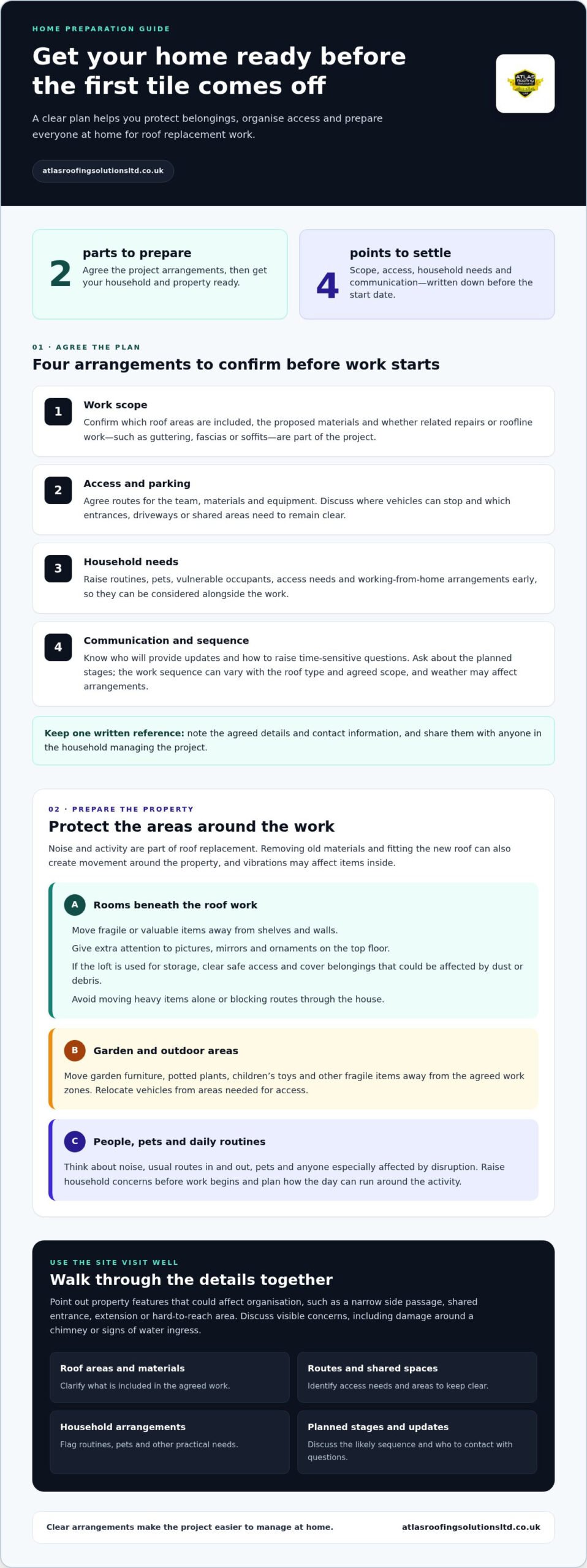
Preparation has two parts: agreeing the work scope and practical arrangements with the roofing team, then getting your household and property ready. The tasks depend on your home, roof design and agreed project. A straightforward roof replacement may have different access needs from work that also includes roofline repairs, such as guttering, fascias or soffits.
Use a site visit to discuss the roof areas involved, proposed materials, related work and likely sequence of activity. A basic guide to roof construction can also help you recognise common terms used to describe roof structure and layers. For your own preparation, identify household routines, move or protect belongings, and raise concerns early.
What should you expect when a roof is replaced?
Roof replacement involves work at height and activity around your property. You may hear noise as old materials are removed and the new roof is fitted, see materials being moved, and need to adapt how you use nearby entrances or outdoor areas. These changes are temporary, but their extent depends on the project.
The order of work can vary with the roof type and agreed scope. Ask the team to explain the planned stages during the site visit, so you have a clearer idea of when particular areas may be affected. Don’t assume every roof follows the same timetable or creates the same level of disruption.
Which preparation decisions are yours to make?
Start with the needs of the people and animals at home. Consider household routines, access requirements and whether anyone is especially affected by noise or changes to the usual route in and out. Mention pets, parking needs or working from home early, so these can be considered alongside the work arrangements.
Some decisions are yours; others need to be agreed with the roofing team. You can decide which belongings to move and how to manage your day, while access routes, parking and the work sequence should be discussed together. Write down the practical arrangements and contact details before the start date. A clear note gives everyone the same reference if plans need to be revisited.
Before roof replacement begins: agree the scope, access and arrangements
A clear plan starts with knowing exactly what work is included and how the team will reach the relevant areas. This is a practical first step in how to prepare for a roof replacement: agree the scope, discuss access, flag household needs and keep a written note of the arrangements.
Confirm the work scope and the site visit details
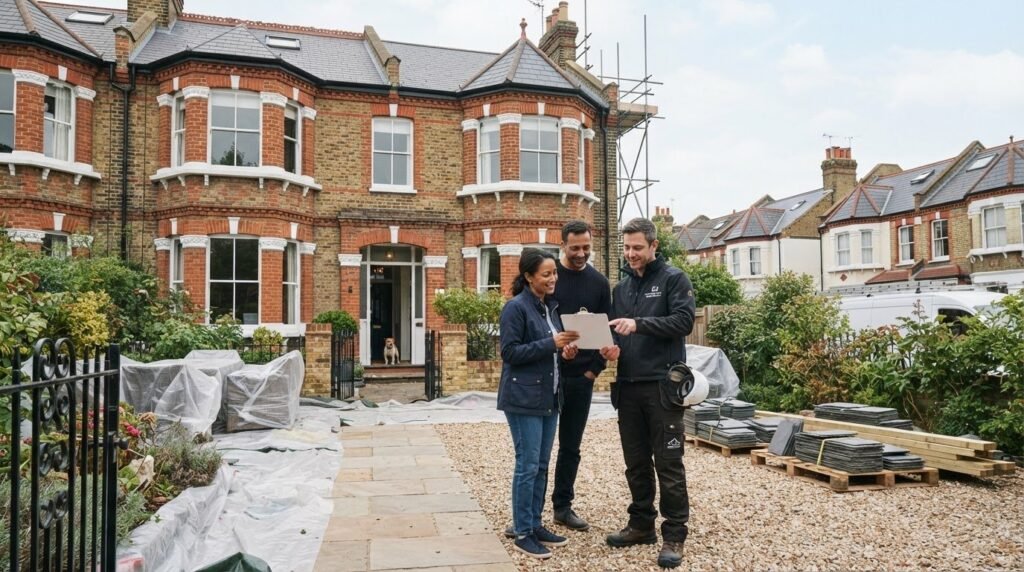
During the site visit, walk through which roof areas need replacing and whether related repairs or roofline work, such as guttering, fascias or soffits, are included. Discuss the proposed materials and point out visible concerns, such as damage around a chimney or signs of water ingress. A written scope helps prevent misunderstandings about what is and isn’t part of the project.
Use the visit to point out property-specific details too: a narrow side passage, a shared entrance, an extension or an area that’s difficult to reach. These details can affect how the work is organised. For a closer look at the installation process, read the new roof installation guide.
Plan access and communication before the start date
Agree where materials and equipment can be brought onto the property and which routes need to stay clear. In London, restricted parking, narrow streets and shared driveways or entrances can make access more complicated. Raise these early and discuss practical arrangements, including where vehicles can stop and how residents or neighbours will continue to use shared areas.
Before the start date, make sure these points are settled:
- Work scope: roof areas, materials and any related repairs or roofline work.
- Access: suitable routes for the team and materials, plus any areas that must remain clear.
- Household needs: routines, pets, vulnerable occupants and working-from-home arrangements.
- Communication: who will provide updates and how to raise time-sensitive questions.
Keep the agreed details and contact information in one place, and share them with anyone in the household who’ll be managing the project. If your home has shared access or specific property restrictions, check whether permissions or local requirements apply with the relevant authority before work starts. A site visit with Atlas Roofing Solutions Ltd gives you the opportunity to discuss the scope and practical arrangements clearly before the project begins.
How to protect your home and household during roof replacement
Preparing the house can limit avoidable disruption, but expect some noise and activity while roofers are at work. Removing old materials and bringing new ones into place can create movement around the property, and vibrations may affect items inside. A few targeted steps can help protect belongings and keep everyone clear of the work area.
Prepare rooms, belongings and outdoor areas
Start with the rooms directly beneath the roof work. Move fragile or valuable items away from shelves and walls, especially pictures, mirrors and ornaments on the top floor. If you use the loft for storage, clear safe access to it and cover belongings that could be affected by dust or debris. Avoid shifting heavy items alone or blocking routes through the house.
Outside, move garden furniture, potted plants, children’s toys and other fragile items away from the agreed work zones. Relocate vehicles from areas needed for access or material handling, following the arrangements made for your property. If you’re unsure which outdoor spaces need clearing, use the agreed site plan rather than moving items into another access route.
Keep off the roof. Roof access and work zones are for the roofing team. Don’t climb up to inspect progress or attempt repairs yourself. Stay clear of equipment and stored materials, and use the household’s normal safe routes around the property.
Plan for children, pets and everyday routines
Make a clear plan for children and pets before work starts. Keep them indoors or elsewhere as appropriate, and away from the working area, equipment and materials. Explain temporary changes to children in advance, such as which door to use or where they can play. Manage gates and other boundaries so pets can’t wander into the work zone.
If someone in your household works or studies from home, consider that noise may interrupt calls or concentration. Where possible, arrange a quieter alternative for tasks that need focus. Let neighbours know about the planned activity if noise, parking or shared boundaries could affect them. A brief, courteous heads-up can help avoid surprises.
These practical steps are central to how to prepare for a roof replacement safely whilst your home remains occupied. Revisit them as the project progresses, particularly if the work area or access arrangements change. Keeping household members informed and belongings out of the way helps the roofing team work around your home with fewer avoidable interruptions.
Roof replacement preparation checklist for the day before and workdays
A checklist gives you a quick way to check the practical details without having to remember everything at once. Use your agreed project arrangements as the reference, since access needs and the work sequence can vary from one property to another.
What to do the day before roofers arrive
- Check the plan: review the agreed arrival and access arrangements, and keep the project contact details somewhere easy to find.
- Clear the agreed areas: move vehicles, garden furniture and other belongings from places needed for access or work.
- Prepare indoors: make sure loft access is clear and move or cover belongings that could be affected by dust or vibration.
- Brief the household: tell everyone which entrances or areas may be affected and where they should keep clear.
- Secure pets: arrange a safe place away from the work area, equipment and materials.
- Check parking: follow the arrangements discussed for your property, particularly if street parking is restricted or access is shared.
Keep the list to hand, but don’t move items into a different route the roofing team needs to use. If an arrangement is unclear, use the agreed project communication plan to raise it before work starts.
What to do while the replacement is under way
Keep household members out of active work areas, and don’t move materials or equipment. If you have a concern, use the agreed contact rather than approaching roofers who are working at height. This keeps communication clear and avoids unnecessary interruptions.
Weather can affect roofing work and may change the planned sequence. Follow project-specific updates from the roofing team rather than assuming that a change in the forecast means the start date or schedule has changed. If arrangements do need to shift, use the contact details you’ve recorded to keep household plans aligned.
Once the replacement is complete, ongoing care still matters. The seasonal roof maintenance guide covers practical steps for looking after your roof through the year. If you’re planning a project, discuss your roof replacement arrangements with Atlas Roofing Solutions Ltd so the scope and household preparations can be considered together.
How Atlas Roofing Solutions makes roof replacement preparation clearer
Knowing how to prepare for a roof replacement is easier when you can talk through your property and the work with the roofing team. A site visit gives you time to discuss which roof areas are involved, any related repairs, access around the home and household concerns such as pets, parking or shared entrances. It also gives the team a chance to explain the proposed sequence in straightforward terms.
Atlas Roofing Solutions Ltd is a family-owned London roofing specialist with over 20 years of experience. Clear conversations at the planning stage help turn practical details into arrangements you can follow, rather than leaving you to guess what to move or where the team will need access.
What a site visit and clear quote help you plan
During a site visit, walk through property-specific details that may affect the project. Point out restricted access, areas that need care, or household routines that could be disrupted. The discussion can clarify the proposed work and practical arrangements before the start date, including what you need to prepare yourself.
Atlas Roofing Solutions Ltd provides free site visits and transparent, no-obligation quotes. A clear quote gives you a basis for understanding and planning the proposed work without pressure to proceed. It helps you see what has been discussed and make informed arrangements for your household. Project details differ, so the plan is shaped around the property and agreed scope rather than assumptions about every roof being the same.
What reassurance should continue after installation?
Careful planning is one part of a well-managed project. Atlas Roofing Solutions Ltd brings over 20 years of experience to roofing work and provides a 15-year workmanship guarantee. This offers reassurance about workmanship after installation.
A calm, practical conversation can make the next step feel simpler. You can raise questions, understand the proposed work and plan around your household before a roof replacement begins.
Arrange a free site visit to discuss your roof replacement and the preparations that suit your property.
Make your roof replacement easier to manage
A clear plan helps turn a major home project into a series of manageable steps. Agree the work scope and access arrangements early, then protect belongings, organise household routines and keep the project contact details close at hand. Noise and activity may still occur, and weather can affect the work sequence, but good communication helps you respond without guesswork.
Knowing how to prepare for a roof replacement starts with understanding what’s planned for your property and what your household needs. A site visit is a useful opportunity to talk through both. Atlas Roofing Solutions Ltd is a family-owned London roofing specialist with over 20 years of experience, offering free site visits and transparent, no-obligation quotes. Its 15-year workmanship guarantee provides further reassurance after installation.
Ready to discuss your roof and practical preparations? Arrange a free, no-obligation site visit with Atlas Roofing Solutions Ltd. A straightforward conversation can help you plan the next steps with confidence.
Frequently Asked Questions
What should I do before a roof replacement?
Before roofers arrive, confirm the work scope and access arrangements, then clear the agreed working areas and move fragile belongings away from rooms beneath the roof. Plan for children, pets and anyone working from home, and keep the project contact details handy. Your preparation will depend on the property and planned work, so record the arrangements discussed during the site visit and follow project-specific updates.
Do I need to move out during a roof replacement?
Not necessarily. Whether you can stay at home depends on your property, the work scope and your household’s needs. Expect some noise and activity, and keep everyone away from work zones. Before work begins, discuss access, daily routines and any vulnerable occupants with the roofing team. Don’t assume every project causes the same level of disruption; agree arrangements that suit your home and the work planned.
Should I empty my loft before roofers replace the roof?
Clear the loft access and, where practical, move fragile or valuable belongings away from areas beneath the work. Whether the loft itself needs emptying depends on the roof design and agreed scope. Discuss preparation for your property during the site visit, and don’t climb onto the roof or enter unsafe areas to inspect it. The right steps depend on your home’s layout and the work being carried out.
What should I do with my car and garden furniture during roof replacement?
Move vehicles and garden furniture away from agreed access and working areas where possible. Discuss parking, material access and shared entrances before work starts, especially on London streets where space may be limited. The roofing team can explain which areas need to stay clear. Don’t block access routes or move equipment once work is under way. Follow the site arrangements agreed for your property.
Can bad weather delay a roof replacement?
Yes, weather can affect roof work, so conditions may change the planned sequence or timing. That doesn’t mean every shower will stop work or that you should assume a particular delay. Keep the project contact details available and follow updates from the roofing team. If conditions change, use the agreed contact to ask about next steps and whether any household arrangements need adjusting.
Do I need planning permission for a roof replacement in London?
Requirements depend on your property and the proposed work, so don’t assume one rule applies to every London home. Listed status, location in a conservation area or changes to the roof may affect which permissions or requirements apply. Check guidance from the relevant local authority and seek project-specific advice where appropriate. Keep any applicable requirements clear before work begins rather than relying on a general checklist.
How can I protect my belongings during roof replacement?
Move fragile or valuable items away from rooms beneath the work, and clear loft access if needed. Cover or relocate belongings where appropriate, based on the agreed work and your home’s layout. Move outdoor items away from working areas, and keep children and pets clear of equipment and stored materials. Use the site visit to discuss property-specific precautions, as preparation needs can vary between projects.