What if the best way to make roofing work easier is not to avoid every disruption, but to know what to expect? Managing disruption during roofing work starts with a clear plan. Noise, dust, changes to access and a roof exposed to the weather can all affect daily routines, but uncertainty need not add to the strain.
It’s understandable to wonder how the work will affect children, pets, neighbours and shared spaces, or what to move before the team arrives. Even with careful planning, weather or unexpected findings can change the day’s work. Knowing how progress and changes will be communicated helps you adjust your plans.
This guide explains what to expect before and during a roofing project, and how to prepare your home and household. You’ll find practical ways to plan around noise and access, protect belongings, consider children and pets, and keep communication clear if conditions change. A well-defined scope and straightforward conversations make the work easier to manage from start to finish.
Key Takeaways
- Roofing disruption depends on the property, access and work required, so plan around your home rather than a fixed expectation.
- Managing disruption during roofing work is easier when you agree the project scope, prepare the property and keep communication clear as work progresses.
- Repairs, a full roof replacement and flat-roof work can differ in their work areas, access needs and household considerations.
- Use a pre-start checklist for outdoor belongings, vehicles, pets and access routes, and follow the roofing team’s instructions around work zones.
- A free site visit and transparent quote can help clarify the work scope. Atlas Roofing Solutions Ltd is a family-owned London roofing specialist with over 20 years of experience.
What disruption can roofing work cause at a London property?
Roofing work affects each home differently. The level of disruption depends on the roof, the property layout and the work involved. A local repair may be confined to one area, while a roof installation can bring more activity around the building. A clear project scope helps residents understand what to expect instead of having to guess.
Which parts of daily life may be affected?
Noise is often most noticeable when work is happening directly above a room or involves removing and fixing roofing materials. Sound can carry indoors, so you may need to adjust calls, rest or other routines while noisier tasks are under way. Deliveries and workers arriving at the property can also mean more activity outside.
Access may change temporarily. A driveway or entrance might be needed for deliveries or work-related access, while a garden, side passage or shared path may be affected by the work area. In a flat or building with communal access, residents may need to coordinate routes and keep one another informed. Any changes to parking or outdoor use depend on the property and the agreed arrangements.
Dust or debris is another consideration, although the risk and where it may arise depend on the work area and the building. Follow the roofing team’s site instructions and keep clear of work zones. Discussing access and any areas of concern before work starts helps make household arrangements more straightforward.
Why disruption differs between roofing projects
A repair to a limited section of roof may involve a more localised work area. A larger roof installation can involve more materials, activity and access requirements. Flat and pitched roofs, as well as different property layouts, bring different practical considerations, so there is no single disruption pattern for every project.
Weather can affect working arrangements, particularly when tasks depend on suitable conditions. On a terraced London street, limited space around the property may make deliveries or access more complex. Shared entrances, narrow side paths and communal outdoor areas can also require careful coordination with other residents.
That coordination is part of construction management, where planning and organising project activity helps keep work on track. For homeowners, the practical starting point is understanding the agreed scope and how the site layout may affect everyday access. These details shape what residents should prepare for and where clear communication matters most.
How planning and communication keep roofing disruption manageable
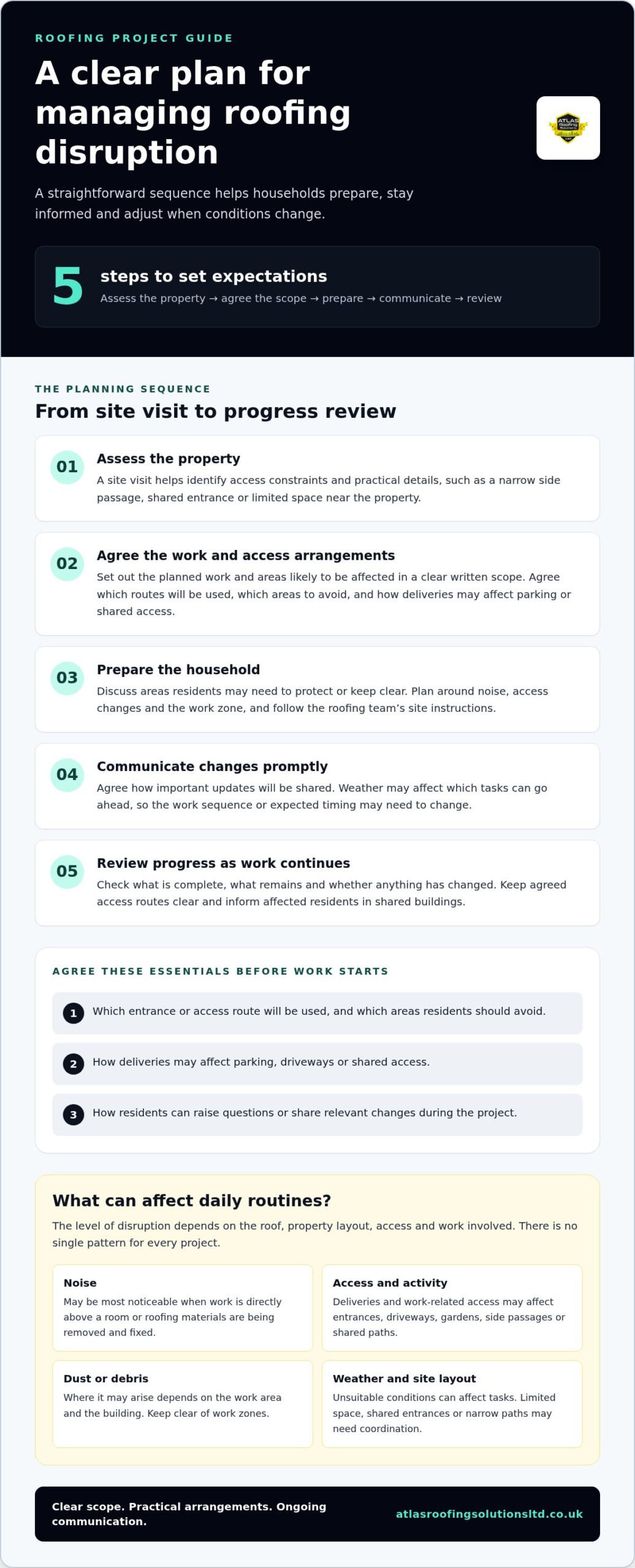
A clear plan will not remove every inconvenience, but it can prevent avoidable surprises. To manage disruption during roofing work, follow a straightforward sequence: assess the property, agree the scope, prepare the household, communicate about changes and review progress as the project continues.
Before work starts: agree the essentials
A site visit gives the roofing team a chance to understand the building and its surroundings. A narrow side passage, shared entrance or limited space near the property can affect access. The visit can also help identify areas residents may need to protect or keep clear, so these practical points can be discussed before work begins.
Agree a clear written scope describing the planned roofing work and the areas likely to be affected. It is also useful to settle practical arrangements in advance, including:
- Which entrance or access route will be used, and which areas residents should avoid.
- How deliveries may affect parking, driveways or shared access.
- How residents can raise questions or share relevant changes during the project.
Atlas Roofing Solutions Ltd provides free site visits and transparent, no-obligation quotes. These help set out the work involved before it starts, giving you a clearer basis for planning household routines. For a broader overview of roofing trade resources, the National Roofing Contractors Association (NRCA) offers information for roofing professionals and the public.
During the project: keep communication practical
Roofing work is exposed to the weather. Rain or other unsuitable conditions may affect which tasks can go ahead, so the work sequence or expected timing may need to change. Agree how important updates will be shared, and pass on relevant information promptly, such as a change to access arrangements or a household need that could affect the agreed route.
Keep agreed access routes clear and follow the roofing team’s site instructions, particularly around active work areas. In a shared building, make sure affected residents know about the arrangements. A quick review of what is complete, what remains and whether anything has changed helps keep expectations aligned without assuming the work will follow an unchanging timetable.
For a project-specific starting point, arrange a free roofing site visit with Atlas and discuss the scope and practical arrangements before work begins.
Roof repairs or a new roof: what changes the level of disruption?
The type of roofing work is a useful starting point for planning, but it does not determine every detail. A focused repair may affect a limited area, while a full replacement can involve wider activity around the property. The roof, access routes and conditions on site all influence how work is organised and what residents may notice.
| Project type |
Likely work area |
Access and household considerations |
| Roof repair |
Often focused on the section needing attention |
Access may be concentrated near that area, but routes and outdoor spaces could still be affected. |
| Roof replacement |
May involve a broader area of the roof |
More materials and activity may mean deliveries or temporary changes to access and parking. |
| Flat-roof work |
Centred on the flat roof and any affected adjoining areas |
Access depends on the property layout, including how the roof is reached and whether spaces below or alongside it are in use. |
Localised roof repairs and flat-roof work
A repair to one section may keep the main work area relatively contained, depending on the defect and what an inspection reveals. Access to a flat roof varies too: a roof over an extension, for example, may have different access and protection needs from one over a separate outbuilding. For more on the repair itself, see Atlas’s guide to flat roof repair.
Larger roof installation and roofline projects
A roof installation can involve work across more of the roof, bringing additional deliveries, activity and temporary access changes. If fascias, soffits or guttering are part of the agreed project, those elements can also affect which areas around the property are in use. Readers considering a full replacement can find more detail in Atlas’s guide to new roof installation.
These are broad comparisons, not a fixed schedule. The actual sequence depends on inspection findings, materials and site conditions, including access and weather. That is why managing disruption during roofing work starts with a scope tailored to the home. Knowing which areas may be affected helps you plan household routines without assuming every repair or replacement follows the same pattern.
How to prepare your home before roofers arrive
A little preparation can make roofing work easier to live around. Focus on the agreed work area and access routes rather than reorganising the whole house. The roofing team’s site instructions should guide what you move and which areas you keep clear.
A simple checklist for the day before work
- Outdoor belongings: Move garden furniture, plant pots and other items away from agreed work and delivery areas. Where appropriate, move fragile or valuable belongings from rooms directly below the planned work.
- Vehicles: Park clear of agreed access and delivery areas. If parking arrangements affect neighbours or shared spaces, let them know in advance.
- Children and pets: Plan routines that keep them away from work zones. Make sure children understand which areas are off limits, and arrange a safe place for pets during periods of activity.
- Access needs: Agree how household members will use entrances and paths. If anyone needs an accessible route, raise this before work starts so it can be considered in the arrangements.
Use the agreed routes and do not enter restricted work areas, even briefly. This helps protect residents and avoid interruptions to the work. If you are unsure whether an item or route should be moved or kept clear, raise it with the roofing team before work begins.
Managing shared access and London property constraints
In flats and shared buildings, tell relevant neighbours or the property manager about the agreed access arrangements. Communal paths, entrances and delivery points may be used by several households, so clear communication can prevent confusion. If a property has restricted parking or narrow access, plan around those specific constraints rather than assuming they apply to every London home.
Weather or new findings during the work can alter the expected sequence. If plans change, use the agreed communication route to clarify which areas or household arrangements are affected, and follow any updated site instructions. Keep access routes clear unless the team advises otherwise. Managing disruption during roofing work is easier when residents know what has changed and what to do next.
For routine preparation between projects, explore Atlas’s guide to seasonal roof maintenance. If you are planning roofing work, arrange a free roofing site visit to discuss the property and practical arrangements before work begins.
How Atlas Roofing Solutions helps make roofing work easier to manage
Roofing work cannot always happen without affecting daily routines, but understanding the project can make disruption easier to plan around. Atlas Roofing Solutions Ltd is a family-owned London roofing specialist with over 20 years of experience. The team carries out roof installations, repairs and roofline projects, tailoring the work to each property rather than promising a disruption-free job.
Clear expectations from the first site visit
An on-site assessment helps build a practical picture of the roof, the property and the work required. Access, the areas likely to be affected and the roof’s condition all inform the project scope. For a London home with a narrow side passage or shared entrance, understanding the layout early can make the conversation about arrangements more specific.
Atlas offers free site visits and transparent, no-obligation quotes. The quote sets out the agreed work, helping homeowners understand what the project covers before deciding how to prepare. A clear scope is a useful reference when organising access, moving belongings or planning around work near a particular part of the home. It also helps prevent assumptions about what is included.
Managing disruption during roofing work does not mean guaranteeing that nothing will change. Weather or findings during the work may affect the sequence, and the details depend on the property and agreed project. A realistic scope gives residents a sound starting point for planning around those practicalities.
A straightforward next step for London property owners
Whether the property needs a roof repair, a new installation or roofline work such as guttering, fascias or soffits, start by assessing its actual requirements. Atlas’s experience with these types of roofing projects helps homeowners understand the work being considered and its scope. The company also provides a 15-year guarantee on workmanship.
Before a site visit, note any access concerns, shared routes or household needs you would like to discuss. This helps you cover the practical details alongside the roofing work and make informed preparations. A calm, clear conversation is a sensible first step.
Arrange a free roofing site visit to discuss your London property and the work you’re planning.
Plan your roofing project with confidence
Roofing work brings activity, but knowing what to expect can make it easier to fit around daily life. The level of disruption depends on the property and the work involved, so agree the scope and practical arrangements before the project begins. Clear communication also helps you respond sensibly if weather or site conditions affect the planned sequence.
To manage disruption during roofing work, focus on the essentials: understand which areas may be affected, prepare access and household routines, and follow the roofing team’s site instructions. A little preparation can help you feel more in control from the first day of work through to completion.
Atlas Roofing Solutions is a family-owned London roofing specialist with over 20 years of experience. Free site visits and transparent, no-obligation quotes help set out the proposed work, and workmanship is covered by a 15-year guarantee.
Arrange a free site visit and get a transparent, no-obligation quote, then take the next step with a clearer plan for your home.
Frequently Asked Questions
Will I need to leave my home during roofing work?
Homeowners can often remain at home during roofing work, although it depends on the project and property. Noise, restricted access or work near a particular room may make some routines less convenient. Find out which entrances and areas are expected to be affected, then plan around those arrangements. If anyone in the household has specific access or safety needs, raise them before work begins so they can be considered in project planning.
How noisy is roofing work, and when is it usually loudest?
Noise varies with the work being done. It is often most noticeable during tasks such as removing old materials, cutting or fixing roofing components, and may carry into rooms directly below the work area. The loudest periods cannot be predicted without knowing the project sequence, so discuss likely noisy tasks and timing in advance. In London, noisy work hours can vary by borough, so residents should consider local council guidance when planning their routines.
Can roofers work in the rain?
Some roofing tasks may need to pause or change if rain makes conditions unsuitable. The decision depends on the work, materials, weather and site conditions, so there is no single rule for every roof. Discuss how weather could affect the planned sequence and how changes will be communicated. If rain alters the day’s work, follow the roofing team’s instructions and keep clear of work zones or areas affected by changing conditions.
What should I move or protect before roof work begins?
Move garden furniture, plant pots and other belongings away from agreed access and delivery areas. Park vehicles clear of the planned work area, and where appropriate, move fragile or valuable items from rooms directly beneath the work. Confirm which paths and entrances need to stay clear instead of moving belongings unnecessarily. The roofing team’s site instructions should guide any further preparation, as affected areas depend on the project scope and property layout.
How can I keep children and pets safe during roofing work?
Plan household routines so children and pets stay away from work zones and agreed access routes. Explain to children which areas are off limits, and arrange a secure, calm place for pets while there is activity outside. Do not let anyone enter a restricted area to retrieve a toy or speak to workers. Follow the roofing team’s site instructions, and make sure other carers or household members understand the access arrangements too.
What happens if roofers find additional damage?
If further damage becomes visible during the work, ask for a clear explanation of what has been found and how it may affect the agreed scope. Any extra work, materials or changes to the sequence may need discussion before decisions are made. A transparent conversation helps you understand the options and any implications for household arrangements. Keep communication open, particularly if the change affects access, the areas in use or your expectations for the project.
How can roofing work be managed in a terraced London property?
Managing disruption during roofing work in a terraced London property starts with planning around its specific access and shared spaces. Agree how entrances, narrow paths, parking and deliveries will be handled where relevant, and tell affected neighbours or the property manager about the arrangements. Keep agreed routes clear and follow site instructions. A site assessment can help identify constraints early, so the project scope and household preparations reflect the property rather than a general assumption.