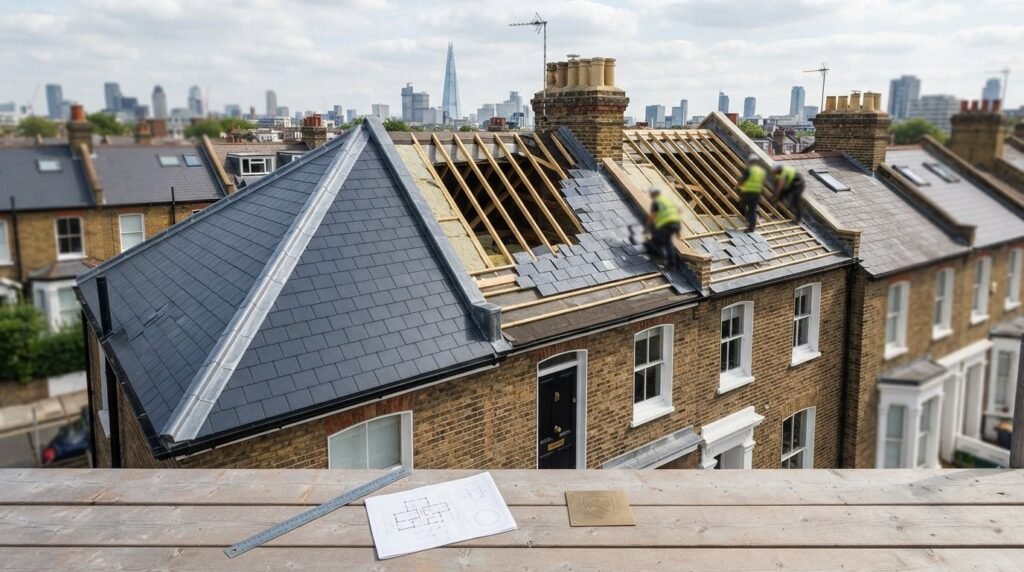
Failing to notify building control about a major renovation can lead to statutory fines of up to £5,000 and a forced stop-work order. It’s a stressful reality for many homeowners. You want a roof that is durable and weather-resistant, not a legal battle with the council. Figuring out if you need planning permission for roof replacement London projects is rarely simple. This is particularly true for those managing the tight constraints of a London terrace or a property in a designated conservation area. We know how confusing it is to juggle planning laws alongside strict building regulations.
This guide provides a clear framework to help you navigate your 2026 roof replacement with confidence. We’ll explain the crucial difference between planning consent and building control, including the mandatory Part L thermal upgrades required for any project covering more than half your roof. You’ll learn exactly when Permitted Development applies and how to secure a Lawful Development Certificate for £274. We also highlight how using an NFRC Competent Person Scheme contractor lets you self-certify your work. It’s the simplest way to ensure your home remains safe, compliant, and fully protected.
Key Takeaways
- Learn the vital distinction between planning permission and building regulations to avoid stop-work orders and ensure structural safety.
- Discover the specific scenarios where planning permission for roof replacement London becomes mandatory, including height increases and material changes.
- Identify how local Article 4 directions in London boroughs can withdraw your Permitted Development rights and what this means for your project timeline.
- Understand the benefits of self-certification through the NFRC Competent Person Scheme to bypass council backlogs and avoid extra surveyor fees.
- See how a 15-year workmanship guarantee and proper compliance documentation protect your home’s value and make future property sales hassle-free.
Understanding Permitted Development for London Roofs
Permitted Development (PD) acts as a national grant of planning permission. It’s designed to let homeowners perform minor improvements without the need for a full planning application. For many residential projects, planning permission for roof replacement London is usually unnecessary, provided the work stays within strict visual and structural boundaries. These rules exist to maintain the character of our streets while allowing you to keep your home in good repair. However, PD isn’t a free pass. It comes with rigid criteria that, if ignored, can lead to enforcement notices from your local council.
The most fundamental rule is that the height of the new roof must not exceed the highest part of the original structure. If you’re simply replacing worn materials like-for-like, you’re generally on safe ground. Problems arise when you attempt to alter the pitch or increase the ridge height. Even a slight increase to accommodate thicker insulation can sometimes push a project out of PD territory, making a formal application mandatory.
The 15-Centimetre Rule Explained
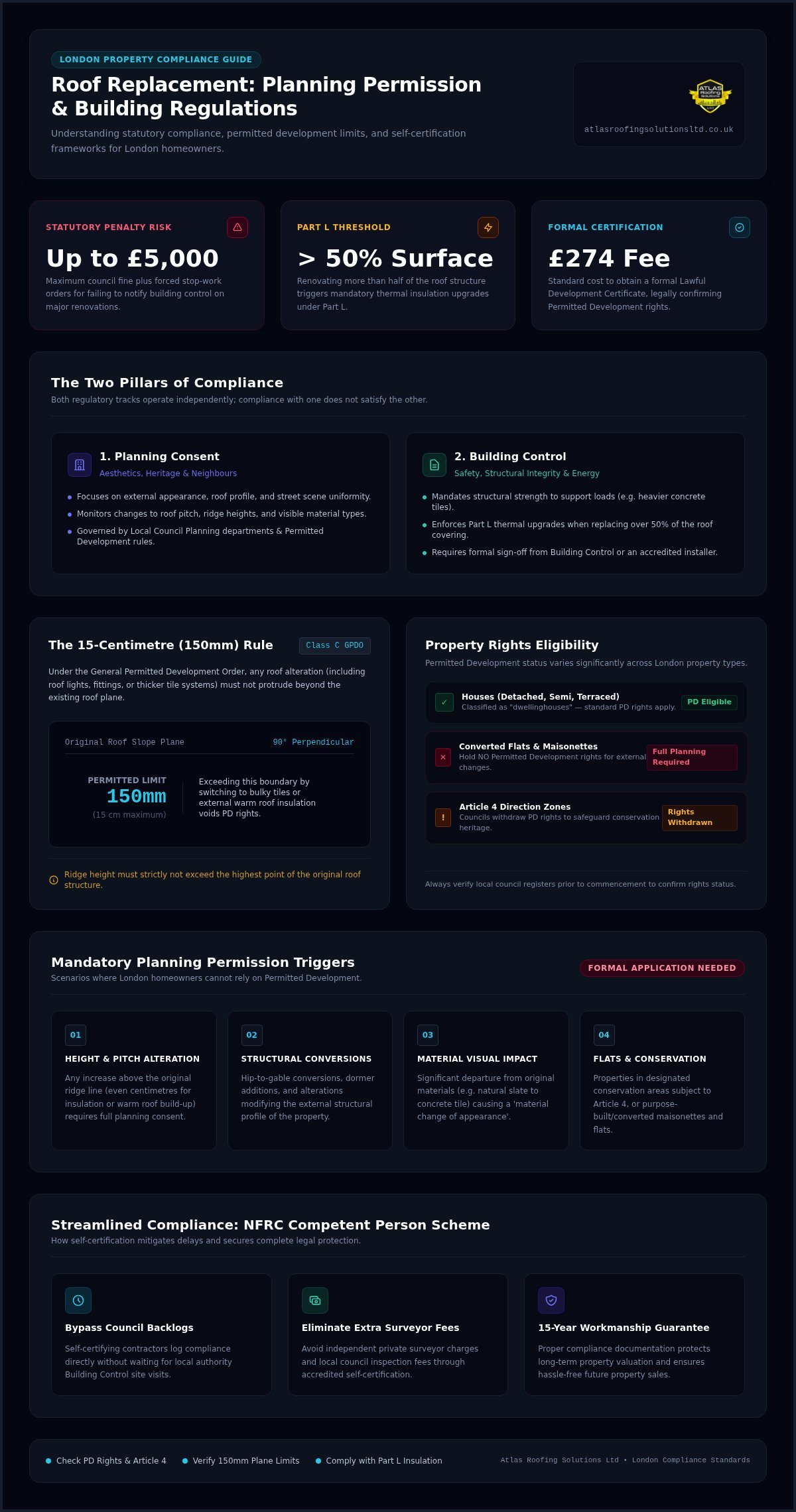
One of the most specific constraints involves how far your new roof surface can project from the original plane. Under Class C of the General Permitted Development Order, any alteration, including the installation of roof lights or new tiles, must not protrude more than 150mm (15cm). This measurement is taken perpendicularly from the plane of the existing roof slope. It’s a vital detail for Londoners considering a material change.
Switching from traditional thin slates to modern, heavy concrete tiles can significantly alter the roof’s profile. If the new tiling system exceeds that 15cm limit, you’ve technically changed the shape of the building. Councils often scrutinise these changes because they impact the uniform look of a terrace. We always recommend checking the thickness of your chosen materials against the original profile to ensure you stay compliant.
Property Types and Your Rights
Your rights depend heavily on the legal classification of your home. Permitted Development rights apply to “dwellinghouses,” which includes detached, semi-detached, and most terraced houses. However, London’s unique housing stock presents a challenge. If you live in a converted flat or a purpose-built maisonette, you have no Permitted Development rights. Any external change to a flat, no matter how small, requires full planning permission.
It’s also common for London boroughs to issue Article 4 directions to protect specific neighbourhoods. These directions allow councils to withdraw your PD rights entirely, often to preserve the heritage of a conservation area. Similarly, commercial premises and shops follow different regulations. Before you start, it’s essential to confirm that your property still holds its original rights, as this is the only way to ensure your planning permission for roof replacement London project proceeds without a hitch.
When Planning Permission Becomes Mandatory in London
While Permitted Development covers many basic repairs, specific triggers make full planning permission for roof replacement London projects a legal necessity. You can’t simply assume your project is exempt, especially in a city where every inch of the skyline is protected. If your plans involve changing the shape or height of the roof, the council will require a formal application. This is particularly common in London’s dense residential streets where privacy and light for neighbours are paramount concerns. Failing to identify these triggers early can lead to expensive delays or even a requirement to tear down the new structure.
Altering the Roof Pitch or Height
A common misconception is that minor height increases don’t matter. In reality, adding even a few centimetres to the ridge line to accommodate new insulation can void your Permitted Development rights. If you’re considering a hip-to-gable conversion or adding dormers, these are structural changes rather than simple replacements. According to the Planning Portal’s roof guidance, any alteration that exceeds the highest part of the existing roof requires consent. We often see this when homeowners switch to a ‘warm roof’ system, where insulation is placed on top of the rafters, inadvertently raising the total height of the property.
Material Changes and Aesthetic Impact
London planning departments rely heavily on the ‘material change of appearance’ clause. This means the new materials should look similar to the original ones to maintain the character of the street. If you live in a row of Victorian slates and you install bright red concrete tiles, you’re likely to face an enforcement notice. However, modern solutions like GRP fiberglass roofs are often accepted for flat sections, provided they don’t clash with the local character. If you’re unsure if your choice of tile or membrane will be accepted, we can provide expert advice on council-friendly materials for your specific project.
Adding a balcony or roof terrace is another automatic trigger for a full application. Even if you’re already stripping the roof back for a replacement, adding a walk-on surface or railings is never covered by Permitted Development. These features significantly impact the privacy of nearby houses, so councils rarely allow them without a thorough review. Ensuring you have the correct planning permission for roof replacement London is the best way to protect your investment and avoid future legal headaches during a property survey.
Planning Permission vs. Building Regulations: What’s the Difference?
Many homeowners assume that if they don’t need planning permission for roof replacement London projects, they can simply get to work. This is a risky mistake. Planning permission and building regulations are two entirely different legal requirements. Planning is concerned with the outside of your home, focusing on how the project affects your neighbours and the local aesthetic. Building regulations, however, focus on what’s underneath. They ensure the structure is safe, energy-efficient, and fire-resistant. You might not need the council’s blessing for the look of your roof, but you almost certainly need it for the technical standards.
Obtaining GOV.UK building regulations approval is mandatory for most significant roofing projects in London. While planning permission manages the visual “street scene,” building control ensures your home meets modern environmental and safety benchmarks. For instance, a like-for-like slate replacement on a detached house might bypass planning, but it still requires a building control notification if you’re stripping back the majority of the roof covering.
The 25% Rule for Building Control
Under Approved Document L of the Building Regulations, a project triggers mandatory compliance if you renovate more than 25% of the building’s total external envelope. For roofing specifically, the legal threshold is even more direct. If you replace or renovate more than 50% of a roof’s surface area, you must upgrade the insulation. This isn’t optional. The law requires you to bring the thermal performance up to current standards, typically aiming for a target U-value of 0.16 W/m²K.
This “strip and re-cover” rule is particularly relevant for older London terraces. If your existing insulation is poor, you’ll need to add high-quality materials to meet the 2026 standards. It’s a sensible move. Proper insulation prevents up to 25% of your home’s heat from escaping through the tiles. It saves money on energy bills and ensures your project is fully compliant with the law.
Structural Integrity and Fire Safety
Safety is the core of building control. If you’re switching from a light material like slate to a heavy concrete tile, the added weight could compromise your rafters. A structural engineer might be needed to confirm your home can handle the load. Additionally, fire safety is a major factor for flat roofs, especially those near property boundaries. Materials must meet specific fire-rating standards to prevent the spread of flames between buildings.
Managing these inspections and technical requirements doesn’t have to be a burden. A professional new roof installation in London handles these complexities for you. By using a contractor certified under the NFRC Competent Person Scheme, you can even self-certify the work. This bypasses the need for separate council inspections and ensures you receive a Building Regulations Compliance Certificate once the job is finished. It’s the simplest way to ensure your planning permission for roof replacement London project remains stress-free and fully documented.
Navigating London-Specific Constraints: Conservation Areas and Article 4
London’s architectural heritage is world-class, but it creates a complex web of rules for homeowners. While national Permitted Development rights offer a starting point, they’re frequently overridden by local designations. If your property is in a designated heritage zone, securing planning permission for roof replacement London projects becomes much more likely. You aren’t just maintaining a house; you’re preserving a piece of the city’s history. London Borough Council planning officers take this responsibility seriously, scrutinising everything from the texture of a slate to the specific lead work on a dormer.
Conservation Areas in London Boroughs
Conservation areas cover vast swathes of boroughs like Hampstead, Kensington, and Greenwich. In these zones, the council aims to protect the “special architectural or historic interest” of the neighbourhood. This means you can’t simply swap out natural Welsh slates for synthetic alternatives without permission. Even the colour of your ridge tiles or the style of your guttering might be protected. If your project involves heritage features, such as a Victorian stack, you’ll need a specialist for chimney repair London to ensure the work meets conservation standards. If your home is a Listed Building, the rules are even stricter, requiring specific Listed Building Consent before any work begins.
Article 4 Directions: The Hidden Constraint
The biggest hurdle for many is the Article 4 direction. This is a legal tool that allows local councils to withdraw specific Permitted Development rights for a particular street or area. In boroughs like Islington, where 40 of the 42 conservation areas are covered by Article 4, you’ll almost certainly need full planning permission for roof replacement London work. These directions are often hidden in the small print of council websites. We recommend checking your borough’s interactive planning map or asking a professional to verify your status.
For absolute peace of mind, many homeowners apply for a Lawful Development Certificate (LDC). For a fee of £274, the council provides formal, written confirmation that your proposed roof works are legal and don’t require planning permission. It’s a vital document to have in your files, especially when it comes time to sell your property. If you’re feeling overwhelmed by borough-specific maps and heritage rules, book a consultation for a transparent compliance check. We’ve spent 20 years working with London councils and know exactly what planning officers expect to see in a successful application.
Ensuring a Hassle-Free Roof Replacement with Atlas Roofing
Managing the complexities of planning permission for roof replacement London doesn’t have to be a source of stress. Atlas Roofing Solutions Ltd brings over 20 years of local experience to every project, acting as a “reliable guardian” for your home. We understand the specific nuances of London borough councils, from the historic streets of Greenwich to the busy residential rows of Islington. Our role is to take the technical burden off your shoulders, ensuring every phase of your project meets the highest standards of integrity and safety.
Our 15-year workmanship guarantee provides more than just immediate peace of mind. It serves as a vital document for future property surveys. When the time comes to sell your London home, having a clear record of compliant work backed by a family-run specialist is a significant advantage. We provide transparent, no-obligation quotes that account for everything from thermal insulation requirements to structural reinforcements. You won’t find hidden costs for compliance hurdles; Atlas Roofing Solutions Ltd builds these into the plan from day one.
Our Approach to London Roofing Compliance
Every project begins with a methodical assessment of your property’s planning status. During our initial site visit, we verify if your home is subject to Article 4 directions or falls within a conservation area. If the project requires structural sign-off, we coordinate with qualified structural engineers to ensure Building Regulations are fully satisfied. Whether we are carrying out minor roof repairs London or a complete installation, Atlas Roofing Solutions Ltd ensures the work aligns with the latest 2026 thermal performance benchmarks.
Local experience is invaluable when dealing with London building inspectors. We have built a reputation for integrity and transparency with local authorities across the city. They know our work is durable and compliant. This professional relationship often helps streamline the inspection process, ensuring your project stays on schedule and receives its final certification without unnecessary friction.
Get Your Professional Roof Survey Today
Prevention is always more cost-effective than a reactive fix. We suggest booking a seasonal roof maintenance London check to evaluate your home’s current condition before major issues arise. Our straight-talking team provides honest advice on whether a repair or full replacement is your best long-term option. We operate with a sense of accountability that only a family-owned business can offer.
Booking a consultation is the first step toward a secure, weather-resistant home. We’ll guide you through the intricacies of planning permission for roof replacement London and deliver a durable solution that stands the test of time. Contact Atlas Roofing Solutions Ltd today to experience a simple, transparent process designed around your home’s protection and your peace of mind.
Secure Your Home’s Future with a Compliant New Roof
Achieving a durable, weather-resistant home in the capital requires more than just high-quality tiles; it requires a commitment to full legal compliance. As we’ve explored, navigating the specific requirements for planning permission for roof replacement London involves balancing your national Permitted Development rights against the unique heritage constraints of your specific borough. Whether you are dealing with an Article 4 direction or the strict thermal requirements of Building Control, getting the details right today prevents costly legal complications when it eventually comes time to sell.
Atlas Roofing Solutions Ltd brings over 20 years of local expertise to every project. As a family-run business, we prioritise transparent pricing and a straight-talking approach that removes the typical anxieties of home maintenance. Our 15-year workmanship guarantee provides a layer of long-term security, ensuring your investment is protected and fully documented for future property surveys. We take pride in being a dependable partner for homeowners who value quality and integrity.
Don’t leave your home’s protection to chance. Book your free London roof survey and transparent quote today. Let our team provide the professional guidance and skilled craftsmanship needed to keep your home safe, compliant, and beautifully maintained for years to come.
Frequently Asked Questions
Do I need planning permission to change roof tiles in London?
You usually don’t need planning permission for roof replacement London projects when replacing tiles on a like-for-like basis. This falls under Permitted Development. However, if your home is in a conservation area or covered by an Article 4 direction, you must apply for consent. Changing from traditional slate to modern concrete tiles also triggers scrutiny because it significantly alters the building’s appearance. Always check your local borough’s specific heritage constraints before starting.
What happens if I replace my roof without planning permission?
Replacing a roof without required consent can lead to a local council enforcement notice. This legally mandates that you return the roof to its original state at your own expense. You could also face statutory summary fines of up to £5,000. Beyond legal penalties, a lack of compliance documentation causes major delays when selling your home. Future buyers’ surveyors will flag the missing paperwork, potentially collapsing the sale or forcing a price reduction.
Does a flat roof replacement need planning permission?
Most flat roof replacements don’t require planning permission if the new structure doesn’t exceed the height of the original roof. Using modern materials like GRP fiberglass is generally acceptable under Permitted Development for standalone houses. However, if you live in a flat, maisonette, or a commercial property, these rights don’t apply. You’ll need full planning permission for any external changes. Ensure your contractor provides a 15-year guarantee to prove the work meets professional standards.
How much does a planning application for a roof cost in London?
For a standard householder planning application in 2026, the statutory fee in England is £548. This fee is exempt from VAT. You should also budget for the Planning Portal’s online service charge, which is £99 for standard submissions. If you’re seeking a Lawful Development Certificate to formally confirm your project is exempt, the fee is exactly £274. These costs are separate from any professional fees for architectural drawings or structural engineering reports.
Can I change the colour of my roof without permission?
You can change the colour of your roof tiles without permission only if the new appearance is similar to the existing materials. Permitted Development relies on the “material change of appearance” clause. If you choose a colour that clashes with the street scene, the council may intervene. In London conservation areas, planning officers often specify exact shades to preserve local character. It’s safer to stick to traditional tones that match your terrace.
Is a Lawful Development Certificate the same as planning permission?
No, a Lawful Development Certificate (LDC) is not the same as planning permission. An LDC is a legal document that proves your roof replacement was lawful at the time of construction and didn’t require a formal planning application. While not mandatory, it provides vital protection during property sales. It costs £274 and acts as a “peace of mind” certificate. It confirms to future buyers and lenders that your project fully complied with all local planning laws.
Do Building Regulations apply if I am only repairing part of the roof?
Building Regulations only apply if your repairs are substantial. The legal threshold is reached if you renovate more than 25% of the total external building envelope or more than 50% of the roof’s surface area. If your repair exceeds these limits, you must notify building control and upgrade your insulation to meet 2026 standards. Minor patch repairs or guttering fixes don’t usually trigger these requirements. We ensure all our work meets current safety benchmarks.
How long does it take for a London council to approve a roof application?
Most London councils aim to determine a standard householder planning application within 8 weeks. However, due to the complexity of urban planning and high volumes of applications, this timeline often extends to 10 or 12 weeks. If your property is a listed building or located in a sensitive heritage zone, the process can take longer. It is best to factor in at least three months for the approval process before scheduling any major installation work.