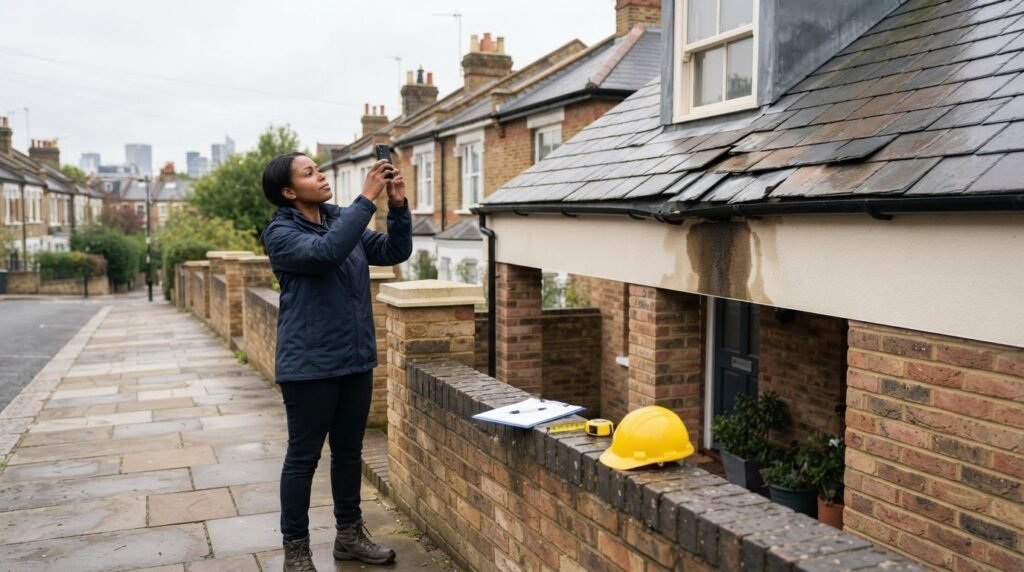
If you’re working out what to do if your roofer does a bad job, start by photographing the defects, reviewing your agreement and complaining to the…
If you’re working out what to do if your roofer does a bad job, start by photographing the defects, reviewing your agreement and complaining to the trader in writing. In England, the Consumer Rights Act 2015 requires traders to carry out home-improvement work with reasonable care and skill, according to the UK legislation register. Give the roofer a clear opportunity to put the work right, and keep a record of what you agree.
It’s understandable to want an independent opinion before deciding whether the issue is poor workmanship or a disagreement about what was agreed. A surveyor’s report can document defects and explain what needs attention, giving you clearer evidence if discussions stall.
This guide explains how to complain, arrange an independent roof survey and seek a price reduction or refund if the problem remains unresolved. It also covers how to preserve evidence and consider your next steps, so you can protect your home and make an informed decision.
Key Takeaways
- Photograph defects and compare them with your contract, including the agreed work, materials and timeline, before making a complaint.
- Write to the trader who arranged the work, explain what needs fixing and keep a record of your communications and any agreed timescale.
- An independent roof survey can document workmanship problems and give you a clearer basis for discussing the next steps.
- If you and the trader agree a refund for faulty home-improvement work in England, it should be paid within 14 days, according to the UK legislation register.
- Find out how the payment method and your home insurance may affect your options if the dispute remains unresolved.
Taking the complaint to the trader who arranged the work
Start with the business that accepted your booking and arranged the roofing job. In England, the Consumer Rights Act 2015 requires traders to carry out home-improvement work with reasonable care and skill, according to the UK legislation register. A subcontractor may have done the physical work, but raise the complaint with the trader who organised it.
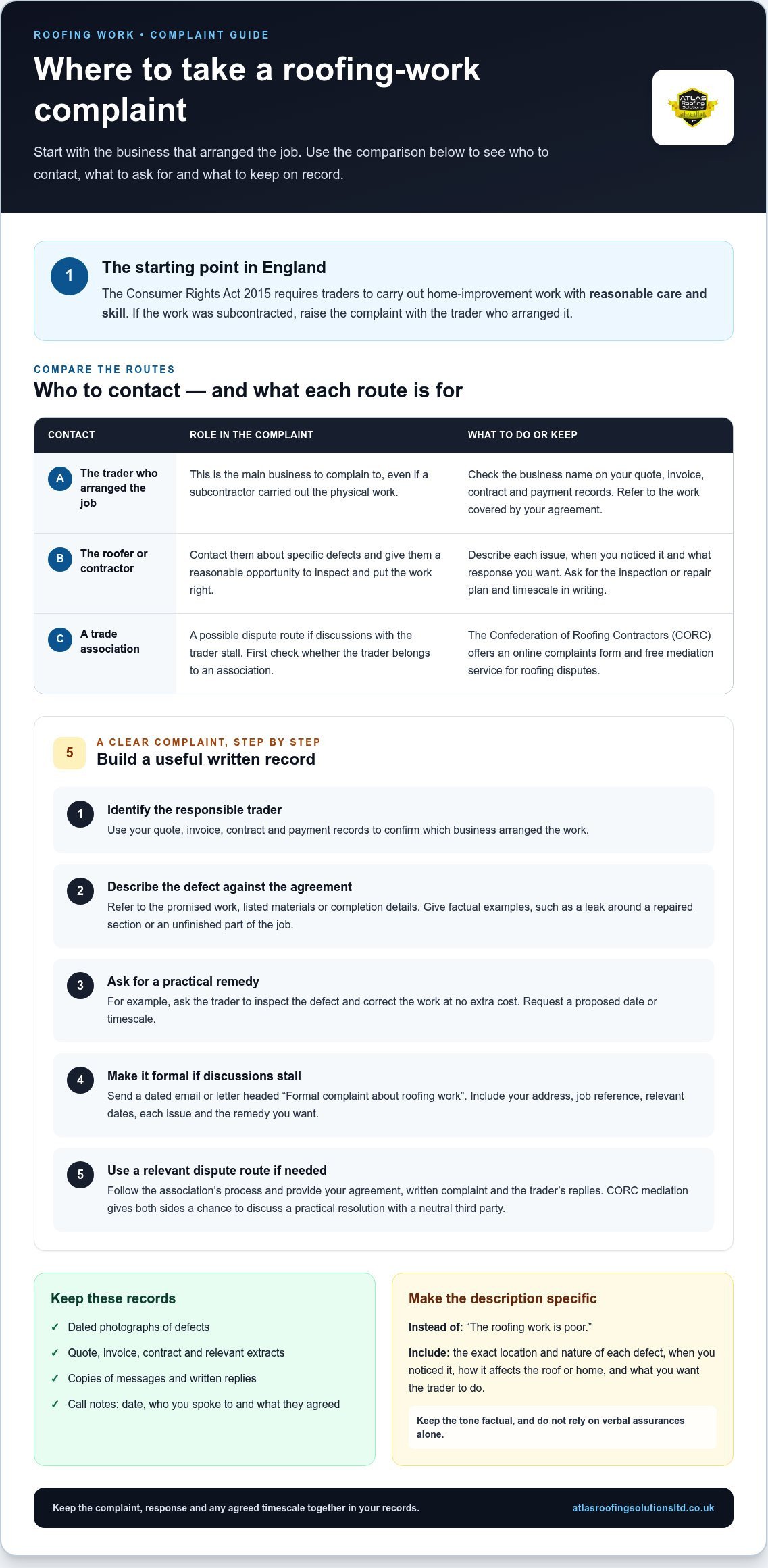
- Identify the responsible trader. Check your quote, invoice, contract and payment records for the business name. If someone else carried out the work, compare their details with the paperwork before directing your complaint. In England, if a trader subcontracts home-improvement work, raise the problem with the trader who arranged it. Explain that your complaint concerns work covered by your agreement, even if another team completed it.
- Set out the problem against the agreement. Refer to the specific work promised, the materials listed and any written completion details. For example, explain that a leak remains around a repaired section or that an agreed part of the job was left unfinished. Keep your description factual. Include when you noticed the problem and how it affects the roof or home. This gives the trader a clear issue to investigate, rather than a general claim that the work is poor.
- Ask for a practical remedy. Say what you want the trader to do, such as inspect the defect and correct the work at no extra cost. Ask for a proposed date or timescale, and keep the response with your records. Giving the trader a reasonable opportunity to put things right can clarify whether they accept responsibility. If they disagree, ask them to explain their position in writing and respond to each defect you raised.
- Make the complaint formal if discussions stall. Send a dated email or letter with the subject “Formal complaint about roofing work”. Include your address, job reference, relevant dates, a concise description of each issue and the remedy you want. Attach relevant photographs or contract extracts, and keep copies of everything. Ask for a written response and record any calls, including the date, who you spoke to and what they agreed. Don’t rely on verbal assurances alone.
- Use a relevant dispute route if needed. Check whether the trader belongs to a trade association, as some associations help resolve disputes. The Confederation of Roofing Contractors (CORC) offers an online complaints form and free mediation service for roofing disputes. Follow the association’s complaint process and provide your agreement, written complaint and the trader’s replies. Mediation gives both sides a chance to discuss a practical resolution with a neutral third party.
Contact the roofer directly, describe the defect clearly and keep a written record. A calm, specific request gives them the opportunity to inspect the work and propose a remedy.
-
Make initial contact about the poor work
Write to the trader with a clear description of each problem and when you first noticed it. For example, identify water entering beside a roof joint, a loose tile or an unfinished area. Add dated photographs, then explain what response you want, such as an inspection and repair plan.
Use the contact details on your invoice or agreement, and keep a copy of your message. Don’t rely on a brief phone call alone. If you speak by telephone, note the date, who you spoke to and what they agreed to do. Keep your tone factual, even if you’re frustrated. Specific examples make the concern easier to assess.
-
Arrange an inspection or repair visit
Yes. Let the roofer return to inspect the disputed work and allow a reasonable opportunity to correct it. Agree on the visit date, the areas they’ll examine and whether they intend to carry out repairs. Ask for the proposed work and timescale in writing, especially if the original agreement specified particular materials or tasks.
Before the visit, take photographs and move belongings away from affected areas. During the inspection, show the trader each defect and note their explanation. If they offer a repair, ask what it will involve and how it addresses the cause, not just the visible symptom. Keep copies of any revised plan or messages.
Record what happens after the visit, including whether the repair was carried out and whether the problem remains. You must allow a reasonable time for a repair or replacement, without significant inconvenience. If the proposed work does not address the defect, explain your concern in writing and request a clear response.
-
Deal with urgent leaks or damage
Yes. Act promptly to limit damage while the dispute continues. If it’s safe, photograph the leak and affected areas first, then move furniture and use a container to catch water. Don’t climb onto a wet or damaged roof. Tell the trader in writing that the issue is urgent and ask when they can make the area safe.
Keep evidence of any temporary measures, including photographs, messages and receipts for protective materials. Explain what you did and why, so the timeline is clear. If a building or structure is dangerous in England, report it to your local council immediately, including outside normal working hours.
If urgent roof damage needs separate attention, explore professional roof repairs whilst preserving evidence of the original work. Keep the contractor informed about any urgent intervention and retain records of what was changed. This helps distinguish emergency protection from the disputed repair, and provides a clearer account if you later seek reimbursement.
Independent roof surveys and expert reports
Take clear photographs of defects and keep the contract, messages and repair records together. An independent surveyor’s assessment can help establish whether the roofing work is defective and explain what needs attention.
-
Arrange an independent roof survey
Choose a surveyor independent of the trader, explain the dispute and identify the areas you want assessed. Before the inspection, share the agreed scope of work, details of the materials and photographs showing the problem. Ask for a written report describing the observed defects, their likely cause and the repairs needed.
A useful report should connect its findings to specific parts of the roof. For example, it might describe uneven roof lines, mismatched materials or flashing that appears to have been reused. It can also record whether rusting nails or nails driven below the wood surface are visible. These observations help distinguish a cosmetic concern from a workmanship issue that may affect the roof’s performance.
Ask the surveyor to explain the evidence behind each conclusion, rather than relying on broad statements such as “poor quality”. A clear report should distinguish observations made directly from conclusions drawn from them. Keep the final report with your agreement and correspondence. It can give you a stronger basis for discussing corrective work or pursuing the dispute further.
-
Document defective work and gather evidence
Photograph each defect from several angles, including a wider view showing its location and a close-up of the detail. Record when you took the pictures and what you noticed, such as a recurring leak after roof work or a visible gap around flashing. Don’t alter the roof or climb onto it to gather evidence. Take photographs from a safe position.
Keep original image files alongside copies of your messages, invoices, contract and repair notes. Make a simple timeline showing when the work was completed, when each problem appeared and when you reported it. For example, note whether a leak returned after a repair visit. This sequence helps the surveyor and trader understand how the problem developed.
During the assessment, ask the surveyor to record relevant details, not just the visible damage. Roofing nails are designed for specific roof components; their position and condition may matter. The available guidance identifies nail placement 2.5 cm above the cut-out and 2.5 cm away from edges as a point to check. Don’t draw technical conclusions yourself. Let the report explain whether the observed installation is appropriate.
Ask for photographs or clear descriptions of any missing underlayment or drip edges, as their absence can leave the roof less protected from water damage. Keep any report amendments and follow-up correspondence together. An organised evidence file helps you refer to specific defects and findings when discussing a remedy with the trader.
Refunds when the trader cannot or will not fix the problem
If repairs fail or the trader refuses to act, put your refund request and supporting evidence in writing. The next steps depend on your agreement, payment method and claim value.
-
Seek a refund if the problem remains unfixed
Ask the trader in writing for a price reduction or refund, explaining why the agreed repair has not resolved the defect. Attach the survey findings, photographs and relevant messages. If you and the trader agree a refund for faulty home-improvement work in England, the trader should pay it within 14 days, according to the UK legislation register.
Check what the trader supplied as well as the service. In England, if the trader supplied goods alongside the work, you can ask them to fix the problem. You may be able to seek a refund or stop further work if the problem remains unresolved. Set out the remedy you’re requesting, the defect it relates to and the evidence supporting your position. Keep the trader’s written response with your records.
If you paid by debit card, ask your bank about chargeback, which reverses a transaction. Keep your invoice and communications ready. Credit card payment conditions differ, so identify exactly how you paid before making a claim.
-
Understand the roofer’s obligations
Compare the finished work with your agreement and the standard required by law. In England, the Consumer Rights Act 2015 requires traders to carry out home-improvement work with reasonable care and skill. The Act is relevant when assessing whether the workmanship met that standard; your contract also helps show what work and materials were agreed.
Record the specific shortcoming, such as a leak returning after a repair or an agreed task left incomplete. A price reduction or damages may be available if the trader breached the agreement. Link your request to the defect and any expert findings, rather than naming a figure without explaining how you calculated it.
Remember that a refund isn’t automatic simply because you’re unhappy. Set out the work promised, what was delivered and the remedy you requested. This gives the trader a focused opportunity to respond and creates a useful record if you need to pursue the dispute further.
-
Claim compensation or use small claims court
First, calculate the remedy you are seeking and organise evidence showing the agreement, defect and resulting loss. In England and Wales, a roofing-work claim worth less than £10,000 can be handled by the Small Claims Court. Starting a claim involves a fee based on the claim’s value; you may recover it if you win.
For a credit card claim, contact your card provider about Section 75. Under the UK legislation register, a consumer may be able to claim money back when at least part of a roofing-work payment was made by credit card and the payment was over £100. Provide the agreement, payment records and evidence of the trader’s breach.
Consider court action as a last resort, because it can involve time and expense. A solicitor specialising in construction or contract law can advise on your evidence, the alleged breach and the remedy you’re seeking. Keep copies of every claim form, court message and payment record.
What should I do first if a roofer has done a poor job in the UK?
- Make the area safe and record the defects. Don’t climb onto the roof or touch loose tiles, damaged chimney parts or exposed wiring. From a safe position, photograph each visible problem, including the room below a leak. Note the date, weather conditions and when you first noticed the damage. For example, record whether water appeared after the trader repaired a specific roof section.
Keep original photographs and videos, and don’t edit them. Move furniture or belongings away from water, then use a container to catch drips. If a building or structure is dangerous in England, report it to your local council immediately, including outside normal working hours.
- Check the agreement and report the issue. Find the quote, invoice or contract, then compare the promised work and materials with what you can see. Write to the trader who arranged the job, identify each defect and explain when it appeared. Ask them to respond and propose how to address it. Save your message and any reply with the photographs, so your complaint has a clear timeline.
Keep a note of calls too. Record the date, who you spoke with and any action they promised. If a subcontractor carried out the work, direct your complaint to the trader who arranged the project, rather than relying on a conversation with the work crew.
- Look for immediate risks and limit further damage. If rain is entering your home, protect rooms and belongings without attempting to access the roof. Tell the trader promptly about the leak and explain what needs urgent attention. Photograph any temporary measures and keep receipts for materials used to protect your home. These records can help distinguish emergency steps from the original disputed work.
If the problem affects a neighbour’s property, such as rainwater running towards their doorway, record the location and tell the trader in writing. Keep the neighbour’s messages and photographs of the affected area with your other evidence.
- Review your home insurance documents. Read the policy wording and contact its legal-protection service for guidance on the dispute. The policy terms determine whether the cost of repairing poor roofing work is covered. Keep the trader’s agreement, photographs, survey report and correspondence ready, so you can explain what happened and what remedy you’re seeking. If you’re unsure what to do if your roofer does a bad job, an organised record gives you a clear starting point when discussing your options.
- Keep the evidence organised before taking further action. Create a folder containing the agreement, payment records, dated images, inspection findings and every message. Arrange the documents in date order and write a short timeline of the job, defect and complaint. Part of working out what to do if your roofer does a bad job is keeping an accurate record of what happened and when. If you need another roofing assessment to understand the damage, discuss your roofing concerns and keep any new findings with your records.
If you later leave a public review, describe your experience accurately and constructively. Stick to verifiable details, such as the agreed work, the defect and the trader’s response. Avoid unsupported accusations. A factual account is clearer for readers and less likely to cause further dispute.
Atlas Roofing Solutions: Roof Installation
If an independent assessment shows that your roof needs remedial work or replacement, Atlas Roofing Solutions Ltd can help with roof repairs or a new roof installation. The right option depends on the roof’s condition and the work needed to protect your home. Atlas Roofing Solutions Ltd also provides guttering services, which may be relevant if the assessment identifies related issues.
For a roofing project, Atlas Roofing Solutions Ltd provides free site visits and transparent, no-obligation quotes. Its workmanship comes with a 15-year guarantee. This is a practical next step when you need a separate contractor to carry out agreed repair or installation work, rather than continuing a dispute with the original roofer.
Contact Atlas Roofing Solutions Ltd to discuss your roofing project.
Take the next step towards a sound roof
Knowing what to do if your roofer does a bad job means more than resolving the complaint. Your next decision should focus on the roof’s condition and the work needed to protect your home, rather than allowing the dispute to delay necessary repairs.
If an independent assessment indicates further work is needed, Atlas Roofing Solutions Ltd can help with roof repairs, a new installation or guttering. Choose the next step based on the findings and your home’s needs. A clear scope of work can help you move forward with greater confidence.
Contact Atlas Roofing Solutions to discuss the work your roof needs. A practical plan can help you focus on restoring your home’s protection.
Frequently Asked Questions
How do I make a formal complaint to a roofing contractor?
Send a dated email or letter to the trader who arranged the work, with “Formal complaint” in the subject line. Identify the property, job and defects, then state the outcome you want, such as a repair or price reduction. Attach only relevant evidence, such as an invoice extract or photograph. Keep the sent message and delivery record. If the trader replies by phone, make a dated note of their response and any proposed next step.
Can I withhold payment or claim a refund for substandard roofing work?
You can request a price reduction or refund if faulty work remains unresolved, but don’t assume you can simply withhold an unpaid balance. Explain the dispute in writing and ask the trader to set out any amount they believe remains due. If you paid by credit card and at least part of the roofing payment was over £100, Section 75 may let you claim from the card provider, according to the UK legislation register. Keep payment records and evidence together.
How can I get an independent roof survey or building report, and how much does it cost?
Arrange an independent surveyor’s inspection and explain which roof areas and workmanship concerns need assessing. Ask for a written report that separates observed defects from recommended repairs, so the findings are clear. The fee depends on factors such as roof size, access, inspection scope and the level of detail required in the report. Request a written quote describing what the inspection covers before arranging the visit, and keep the report with your dispute records.