For flat roof repair in Kensington and Chelsea, the right approach depends on the roof system and where water is getting in. A local repair may suit isolated damage, while wider deterioration can require replacement. If a lasting repair cannot be completed safely straight away, temporary weatherproofing may help protect the property in the meantime.
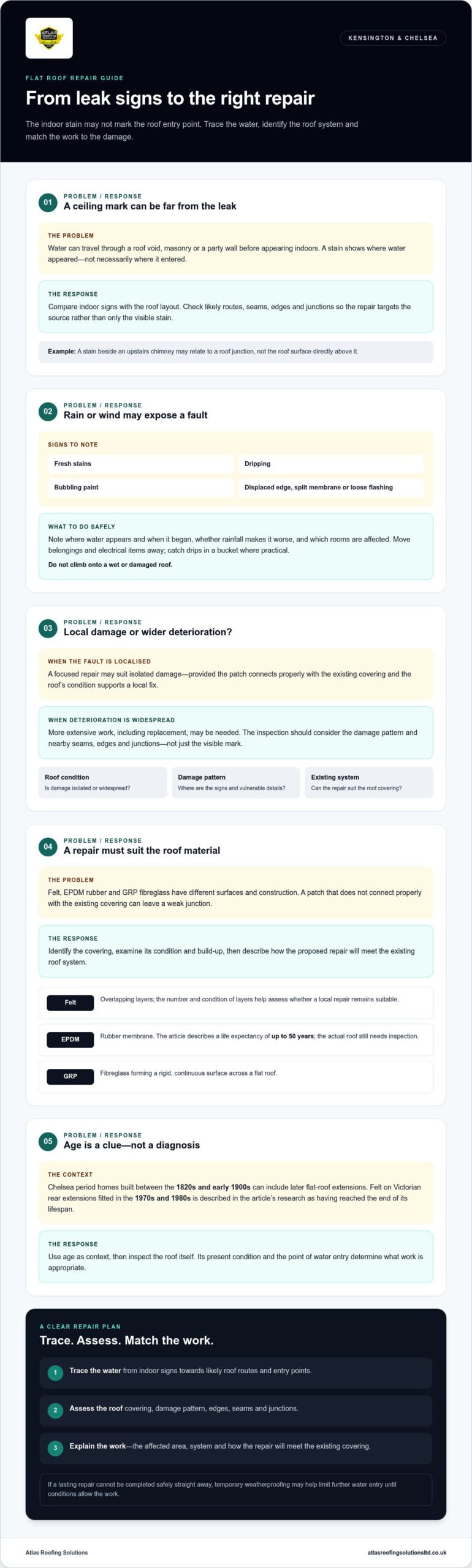
A ceiling stain doesn’t always show where a leak began. Water can travel through a roof void, masonry or a party wall before appearing indoors, and UK Government guidance notes that leaks can damage a building’s structure. Promptly tracing the source matters, especially in period homes where roof materials and details may need careful attention.
The roof material also affects the repair. This guide explains how work differs for felt, EPDM rubber and GRP fibreglass roofs, what to consider when choosing between a patch and replacement, and how conservation requirements may apply to protected properties. You’ll also learn what leak tracing involves and what to expect from a clear repair plan, so you can understand the options before work begins.
Key Takeaways
- Match the repair to the roof’s condition: isolated damage may need a local fix, while widespread deterioration can call for replacement.
- Compare felt, EPDM rubber and GRP fibreglass by considering the existing roof build-up, condition and the needs of the property.
- Trace water back to its entry point, as a stain indoors may appear some distance from the roof leak.
- For a listed or protected building in a conservation area, check the relevant consent requirements before work that would materially alter it.
- Use a clear inspection and repair plan to understand the work required and choose a practical next step for protecting your home.
Flat roof repair and emergency call-outs
In Kensington and Chelsea, emergency flat-roof work first aims to limit water entry. The roofer then traces the fault and assesses whether a lasting repair can be completed safely.
Leaks and storm damage
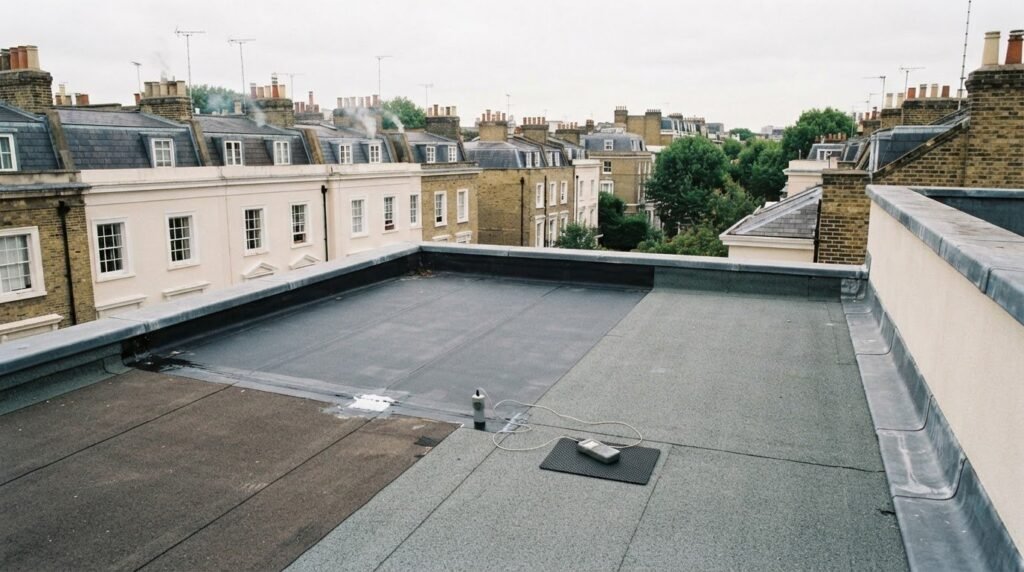
After heavy rain or strong winds, look indoors for fresh stains, dripping or bubbling paint on ceilings and upper walls. From a safe position outside, a displaced edge, split membrane or loose flashing may indicate where water is getting in. For example, a damp patch beneath a roof junction may point to damage around the join rather than the centre of the roof.
During an emergency call-out in Chelsea, the priority is to reduce further water entry and assess the affected area. If a lasting repair cannot be completed safely straight away, temporary weatherproofing may be used until conditions allow the work. Don’t climb onto a wet or damaged roof. Note where water appears indoors and protect belongings below.
Give the roofer clear details: when the leak began, whether it worsens during rainfall and which rooms show signs of water. These observations can guide inspection of seams, roof edges and junctions. If water is still entering, move furniture and electrical items away from the affected area, then catch drips in a bucket where practical.
Risks of delaying repairs
Delaying a flat roof repair can allow damp to spread into ceilings, walls and roof timbers, increasing the affected area. UK Government guidance warns that leaks can damage a building’s structure. A small ceiling stain can therefore signal ongoing water ingress, even if the original roof defect isn’t visible indoors.
Look for changes rather than waiting for a large leak: a stain that grows after rain, peeling paint, a musty smell or soft plaster around a ceiling mark. These signs can help distinguish an active leak from old damage. Tell the roofer when the marks appeared and whether they change after rainfall.
A prompt assessment can show whether the problem is localised or affects a wider roof area. For flat roof repair in Kensington and Chelsea, the inspection should consider visible damage and nearby seams, edges and junctions. This helps determine whether a focused repair is suitable or more extensive work is needed. If water continues to enter and a lasting repair cannot yet be completed safely, temporary weatherproofing may limit further exposure.
GRP fibreglass, EPDM rubber and felt roofing systems
For homes in Kensington and Chelsea, the existing roof build-up and its condition guide the choice of repair. GRP fibreglass, EPDM rubber and felt each form a different roof surface, so the work needs to suit the system already in place.
GRP fibreglass forms a rigid, continuous surface across a flat roof. EPDM is a rubber membrane, while felt systems use overlapping layers for protection. These differences matter when repairing a split, worn area or failed joint. A patch must connect properly with the existing covering, or the junction itself can become a weak point. The roof’s age, damage pattern and material all inform whether repair or replacement is appropriate.
EPDM rubber roofing is described as having a life expectancy of up to 50 years. That figure is a useful guide, not a substitute for inspecting the actual roof. Look for lifting edges, visible splits and signs of water entry, then identify whether the membrane has deteriorated broadly or only around a particular detail. On a felt roof, the number and condition of its layers also help explain whether a local repair remains suitable.
In Chelsea, period homes built between the 1820s and early 1900s can include later flat-roof extensions. Felt systems fitted to Victorian rear extensions in the 1970s and 1980s have reached the end of their lifespan, according to the research information for this article. The roof’s present condition still matters: age alone does not show where water enters or what repair is appropriate.
Roofing needs vary across Kensington and Chelsea, including between a main building and a rear extension. In Chelsea and nearby areas, an inspection should identify the covering, examine edges and junctions, and match the proposed work to the roof. Installation quality matters: a poorly installed system may not be fully waterproof or perform as intended.
When arranging roofing work, look for evidence of insurance and trade-association membership, such as the National Federation of Roofing Contractors (NFRC). Membership is a credential to verify, not a substitute for understanding the proposed work. Ask for a clear description of the system, the affected area and how the repair will meet the existing roof covering.
If you’re weighing repair against a new covering, explore flat roofing options as a practical next step. A clear assessment of the existing material helps make the choice relevant to the building, rather than relying on a generic system recommendation.
Leak detection and tracing water ingress
A ceiling mark shows where water appeared, not necessarily where it entered. In Chelsea properties, water can travel through party walls, roof voids or masonry before becoming visible indoors.
Tracing the route means comparing indoor signs with the roof layout. For example, a stain beside an upstairs chimney may relate to a roof junction rather than the roof surface directly above. A roofer follows the likely path, checks vulnerable joins and identifies where water is getting through the covering. This helps ensure the repair addresses the source, not just the visible stain.
Before an inspection, note these details to help narrow down the search:
- Room and position: record which room shows staining and whether it sits near an external wall, chimney or roof junction.
- Timing: note whether water appears during rainfall, afterwards or in dry weather. This can help distinguish a rain-related ingress route from another source.
- Pattern: describe whether the mark is spreading, forming a line or appearing in more than one place. Several marks may indicate a route through a roof void or masonry.
- Recent changes: mention visible roof damage or changes noticed after a storm, without climbing onto the roof to investigate.
These observations give the inspection a useful starting point. The roofer can compare the indoor location with roof edges, seams and junctions, then assess how the covering meets adjoining walls. A leak near a boundary wall, for instance, may travel through masonry before reaching a ceiling some distance away. The entry point and indoor damage therefore need separate assessment.
UK Government information describes a low-level flat roof in poor repair where water poured in at the junction with a theatre. The example shows why junctions deserve close attention during an inspection. The connection between a flat roof and an adjoining building can be vulnerable if the covering or meeting point has deteriorated.
Once the likely entry point is identified, the repair plan should address the defect and its connection to the surrounding roof. If the inspection finds more than one damaged area, each should be considered before work begins. This helps distinguish a local fault from wider deterioration and gives the homeowner a clearer account of what needs attention.
Keep a simple record of where and when the leak occurs, then share it during the assessment. For example, a mark that grows after rain beside a party wall gives more useful clues than saying “the ceiling is damp”. Accurate observations can focus the investigation, while avoiding unsafe roof access keeps the search practical.
Conservation areas and consent considerations
In Kensington and Chelsea, the proposed work matters as much as the roof defect. For a listed or protected building in a conservation area, check the relevant consent requirements before work that would materially alter the property.
Start by distinguishing a repair from a change. A roofer can describe the damaged area, existing covering and proposed method, helping you understand the scope. For example, replacing a worn section like-for-like differs from changing the roof’s visible finish or profile. The key consideration is whether the planned work would materially alter the protected building.
Before work is arranged, use these practical steps:
- Establish the property’s status: identify whether the building is listed or otherwise protected, and whether it sits within a conservation area.
- Record the existing roof: note the covering, visible details and where the repair is needed. Photographs from safe viewpoints can help show the current appearance.
- Describe the proposed work: set out whether it involves a local repair, replacement of a wider area or a change to the roof covering.
- Check consent requirements: if the work would materially alter a listed or protected building in a conservation area, check the relevant requirements before proceeding.
This approach helps keep the building’s status and repair scope clear. A small repair to a damaged section may affect the property differently from replacing the whole roof. The key question is not simply whether the work is on a roof, but what it changes about the protected property. A written description makes that distinction easier to consider.
For a period home in Chelsea, details such as the roof edge, junctions and visible finish may be part of the proposed work. Ask for these elements to be described plainly rather than relying on a broad phrase such as “flat roof replacement”. Clear wording helps show whether the plan preserves existing details or changes them.
If water is entering, separate immediate protection from planned permanent work. Record the leak and explain the proposed temporary measure, then consider the lasting repair and its effect on the building. This distinction helps clarify which action addresses urgent water ingress and which could materially alter the property.
Keep the property’s status, photographs and written work description together. If the proposal changes from a local repair to broader replacement, revisit consent requirements before the revised work begins. For a listed or protected home in a conservation area, this is a practical part of planning a suitable repair, alongside identifying the roof system and extent of damage.
Flat roof materials and systems
How long a flat roof repair lasts depends on the defect, the roof’s condition and whether the repair suits its covering. There’s no single lifespan that applies to every repair. Guarantee terms also vary, so distinguish workmanship cover from material cover and read what the written guarantee includes.
Start by identifying the existing system. Felt, single-ply and torch-on roofing describe different flat-roof coverings, while GRP fibreglass and EPDM rubber are other systems used on flat roofs. A repair needs to be compatible with the material and the detail being repaired. For example, a patch across a seam must bond or connect properly with the surrounding surface.
The wider roof build-up matters as much as the visible membrane. A roofer should assess the substrate, roof edges, outlets and junctions before recommending a repair. If water has affected the layer beneath the covering, treating only the surface may leave the underlying problem unresolved. The right scope follows the defect, not simply the most visible spot.
Compare repair options by asking what the inspection found and how the proposed method addresses it. A local split on a sound covering differs from widespread cracking, loose seams or deterioration around several details. In the latter case, a small patch may not resolve the broader weakness. The condition of the surrounding material helps determine whether a local repair is practical.
- Material: establish whether the roof is felt, GRP fibreglass, EPDM rubber or another system.
- Damage: note whether the defect is isolated or appears across several areas.
- Details: include edges, seams, outlets and junctions in the inspection.
- Guarantee: read whether the written terms cover workmanship, materials or both, and note any exclusions.
Maintenance also affects a repaired roof’s condition. Keep outlets clear of leaves and debris, and look for changes around seams or roof edges during routine checks from a safe position. A fresh indoor stain, lifted edge or visible split deserves attention before water spreads to other parts of the building.
For a sound comparison, request a written explanation of the defect, chosen material and repair scope. It should say whether the work addresses one point or a wider area, and explain the relevant guarantee terms. If you need a closer assessment of your roof, discuss your flat roof repair and the system already in place.
A repair’s lifespan depends on the defect, the roof’s condition, and whether the repair suits the existing system and addresses the full problem. Guarantees may cover workmanship, materials or both, and their terms and exclusions vary.
Atlas Roofing Solutions: Roof Installation
Atlas Roofing Solutions Ltd can help when a flat roof needs repair or its condition suggests replacement. Its roofing services include flat roof repair, Roof Repairs and Roof Installation, helping homeowners move from identifying an issue to considering the next step. Guttering and uPVC Fascias & Soffits may also need attention when connected roofline components are affected.
For a leak or visible membrane damage, explain where water appears and what changes you’ve noticed. This helps focus the discussion on the roof’s condition and the work involved. If an inspection indicates that a new roof is more suitable than a local repair, Roof Installation is another option. Atlas Roofing Solutions Ltd provides free site visits and transparent, no-obligation quotes, so the proposed work can be set out clearly.
To discuss a roof repair or installation, contact Atlas Roofing Solutions Ltd.
Take the next step towards a sound roof
Choosing flat roof repair in Kensington and Chelsea starts with understanding what your property needs. Use the inspection findings to decide what should be addressed and how the work fits the building. If the property is protected, keep any consent considerations in view as you plan the next step.
Atlas Roofing Solutions Ltd provides Roof Repairs when a roof needs attention, Roof Installation when replacement is appropriate, and Guttering for related rainwater management. A straightforward discussion can help you explain the issue and consider a practical way forward without rushing the decision.
When you’re ready to discuss the roof, contact Atlas Roofing Solutions Ltd. A clear starting point can make planning the right work easier.
Frequently Asked Questions
Looking for a Roofing Company in Chelsea?
Atlas Roofing Solutions Ltd is a London roofing business offering Roof Repairs, including flat roof repair, for homes and businesses. It also provides Roof Installation and Guttering. For a Chelsea property, describe the roof covering, where damage is visible and whether water is entering indoors. These details help focus the discussion on the work needed, rather than treating every roof problem as a replacement.
What are common causes of flat roof leaks and damage?
Common causes include worn or split coverings, failed seams, damaged roof edges and weak junctions around adjoining walls or roof openings. Blocked outlets can also leave water standing on the surface and put strain on vulnerable areas. For example, a leak near an extension wall may relate to the junction rather than a tear in the centre of the roof. The roof’s age and maintenance history can help explain the likely cause.
Which flat roofing materials are best for repairs: felt, EPDM, GRP or liquid roofing?
No material is automatically best for every repair. Felt, EPDM rubber and GRP fibreglass are established flat-roof systems; liquid roofing is another option named in this question. The existing covering, condition around the defect and compatibility of the repair method should guide the choice. For instance, a repair needs to connect properly with the surrounding surface. Ask for the proposed material and method to be clearly explained.
How do I find a reputable flat roof repair contractor in Kensington and Chelsea?
Look for a roofer who can explain the defect, describe the repair method and provide a clear written scope. Check evidence of insurance and any trade-association membership, such as the National Federation of Roofing Contractors (NFRC). A useful proposal identifies the affected area and explains how the repair will meet the existing roof covering. Atlas Roofing Solutions Ltd offers Roof Repairs, including flat roof repair, for London properties.
Do flat roof repairs in Kensington and Chelsea require planning permission or building regulations approval?
Whether approval is needed depends on the property and proposed work, so distinguish a repair from a material alteration. For a listed or protected building in a conservation area, check the relevant consent requirements before work that would materially alter it. Write down the repair scope, including whether the covering or visible details will change. This gives you a clear basis for considering the applicable requirements before work starts.
How quickly should a leaking flat roof be repaired, and what emergency options are available locally?
Arrange an assessment promptly when water is entering, because an ongoing leak can affect ceilings, walls and the building’s structure. In Chelsea, temporary weatherproofing may be used if a lasting repair cannot be completed safely straight away. Keep people away from unsafe roof areas, move belongings from beneath drips and record where water appears. Share those observations so the roofer can focus the inspection.
What are the steps involved in diagnosing and repairing a flat roof leak?
Start by recording where water appears and when, then arrange an inspection of the relevant roof area. The roofer identifies the covering, checks seams, edges and junctions, and traces the likely entry point. The repair method should then address the defect and suit the existing system. After the work, clarify which area was repaired and what maintenance can help keep outlets and roof details clear.
Do listed buildings or conservation areas in Kensington and Chelsea have special roofing restrictions?
Consent may be relevant, particularly if proposed work would materially alter a listed or protected building in a conservation area. Before planning a broad replacement, record the existing covering and describe what the work would change. A local repair and a change to the roof’s visible finish may affect the building differently. Check relevant consent requirements before proceeding with material alterations.