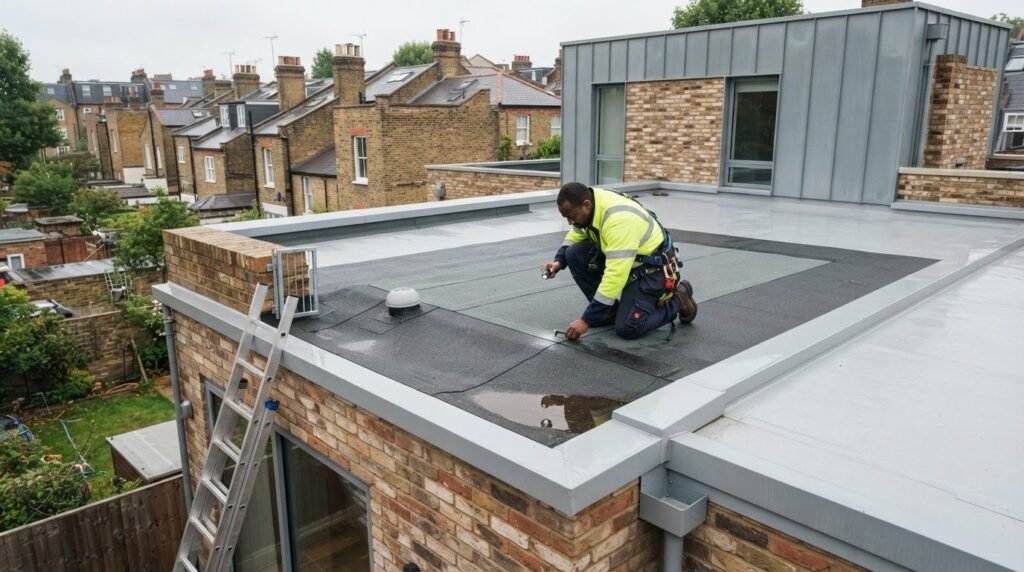
A flat roof rarely fails overnight. Long before damp patches creep across your ceiling, harsh British weather quietly tests every joint, flashing, and drainage outlet. Using a dependable flat roof maintenance checklist transforms reactive, stressful leaks into predictable, simple upkeep that protects your home for decades.
We know how unsettling it is to spot standing water after heavy rain, wondering whether minor ponding signals hidden timber rot beneath the deck. Factoring in ladder safety and differing rules for GRP fibreglass, modern felt, and EPDM rubber only adds to the confusion. This guide will show you how to safeguard your property against costly water ingress across every season, giving you the clarity to spot cracked upstands, surface blisters, and split seams early. Here is your seasonal inspection schedule, designed to help you tackle basic clearing tasks safely and recognise when professional attention is needed.
Key Takeaways
- Follow our four-season flat roof maintenance checklist to keep drainage outlets clear and protect against harsh British freeze-thaw cycles.
- Learn the specific failure signs for GRP fibreglass, modern torch-on felt, and EPDM rubber, from pinholes to seam separation.
- Discover why over 70% of flat roof leaks start at perimeter flashings, lead chases, and gutter junctions rather than the central deck.
- Safely differentiate between standing water that evaporates naturally and critical ponding that signals structural sagging.
- Know the exact warning signs, such as spongy timber decking or torn upstands, that require a professional roof survey.
Why Regular Flat Roof Maintenance Matters for UK Properties
Every home needs a sound defence against the elements. A proper maintenance regime isn’t just about sweeping away autumn leaves; it’s a structured schedule of visual assessments, clearing drainage channels, and checking perimeter seals. For those exploring the construction fundamentals of what is a flat roof, these structures are rarely dead flat. They feature subtle falls designed to shed precipitation into gutters. Incorporating an actionable flat roof maintenance checklist ensures these drainage planes stay functional year-round, defending your building against persistent weather extremes.
Standing water often causes unneeded panic. A shallow puddle that vanishes within 48 hours of rainfall is usually harmless surface tension. In contrast, deep pools that linger for days signal structural deflection. Over time, that standing weight depresses timber decking, stretches waterproof membranes, and creates stress fractures. Catching these seam splits and minor blisters early prevents water tracking into ceiling joists and decking boards beneath. Keeping regular, dated records of these checks also protects you, providing vital evidence to satisfy building insurance criteria and keep manufacturer warranties valid.
Understanding the British Climate’s Impact on Flat Roofs
Our unpredictable weather takes a heavy toll on exposed structures. Freeze-thaw cycles work into microscopic surface fissures across aged mineral felt and perimeter mastic. As trapped moisture freezes, it expands rapidly, forcing seams apart and opening paths for direct water ingress. Intense summer heat creates equal strain; prolonged UV exposure degrades bonding oils, loosening mineral chippings and causing surface crazing. Meanwhile, damp urban conditions foster moss and lichen colonies. These growths act like wet sponges against lap joints, speeding up membrane decay.
The True Cost of Deferred Maintenance
Ignoring minor wear is an expensive gamble. A single split seam left unattended allows moisture to seep into internal warm-deck insulation boards:
- Phase 1: Damp insulation loses thermal resistance, driving up domestic heating demand.
- Phase 2: Moisture stagnates against timber decking, sparking dry rot and fungal decay.
- Phase 3: Saturated structural joists weaken, eventually causing ceiling stains and crumbling plasterwork.
By the time damp patches disfigure your bedroom ceiling, moisture has usually spent months rotting internal woodwork. Addressing hairline cracks with our structured flat roof maintenance checklist preserves structural integrity, saving you from disruptive emergency rebuilds and extensive plastering repairs down the line.
The Essential Seasonal Flat Roof Maintenance Checklist
A reliable flat roof maintenance checklist works alongside Britain’s weather patterns rather than against them. Instead of waiting for a sudden drip through your ceiling, dividing upkeep into seasonal checkpoints keeps property care predictable and simple. Regular preventative care preserves your waterproofing, cushions against sudden weather shifts, and keeps drainage flowing freely all year.
Spring and Autumn Routine Tasks
Spring is for recovery; autumn is for preparation. In spring, examine the roof surface for shrinkage and thermal cracks caused by winter frost. Once autumn arrives, focus on clearing organic debris before seasonal rains set in:
- Sweep gently: Clear accumulated silt, twigs, and leaf mould using a soft-bristle broom. Never use metal shovels or stiff wire brushes that can score the surface.
- Clear drainage points: Remove blockages from rainwater outlets, scuppers, and gutter hoppers to stop water backing up over edges.
- Check protective layers: Inspect solar-reflective coatings and mineral chippings for bald patches, adhering to the standards outlined by the National Federation of Roofing Contractors.
Post-Storm and Winter Freeze Checks
Severe gales bring sudden physical hazards. Check immediately for fallen tree branches or slipped tiles from adjoining pitched roofs that may have punctured your waterproof barrier. Once severe downpours pass, check the surface 48 hours later. Persistent standing pools point towards blocked internal outlets or sagging decking. High winds also lift lead aprons and tear mortar chases along parapet walls, creating quiet paths for driving rain.
Safe Inspection Protocols for Homeowners
Personal safety always takes precedence over property checks. Never step onto wet felt, fragile rooflights, or untested timber decking without proper equipment. Many visual checks can be carried out safely from the ground using binoculars, or from a secure first-floor window. If you spot torn upstands or suspect decking rot, you can arrange a free site survey with an experienced local roofer to assess the surface safely.
Diagnosing Common Flat Roof Problems by Material Type
Different roofing materials show distress in very distinct ways. A symptom that warrants a simple patch on one surface might signal structural failure on another. To use your flat roof maintenance checklist effectively, you must match your observations to the specific membrane protecting your home.
| Membrane Type |
Common Symptom |
Probable Cause |
Recommended Action |
| Mineral Felt |
Surface alligatoring and open lap seams |
Bitumen dry-out from UV rays; failing adhesive |
Re-seal open joints or apply solar-reflective coating |
| GRP Fibreglass |
Fine surface crazing or loud creaking |
Topcoat shrinkage; lack of thermal expansion joints |
Re-coat gel layer; trim edges if movement is restricted |
| EPDM Rubber |
Perimeter tenting and seam tape lifting |
Adhesive breakdown; wind uplift stress |
Clean and re-bond seams using dedicated primer and tape |
Mineral Felt and Bitumen Systems
Alligatoring resembles cracked reptile skin. It occurs when solar heat dries out volatile oils within bitumen, leaving the sheet brittle. Trapped moisture between plies creates dome-like blisters; these rupture during cold snaps, letting water penetrate the core. Check the torch-on seams carefully. Peeling lap joints along drainage channels let surface runoff track directly beneath the felt.
GRP Fibreglass Roof Diagnostics
Fine hairline checks in the coloured topcoat are often cosmetic, caused by seasonal temperature swings. Laminate fractures, however, run right through the fibreglass matting and leak immediately. Loud cracking or popping sounds underfoot usually point to poor expansion gaps along perimeter trims. Check the resin bonding where the flat deck turns up against adjoining walls; poor adhesion here creates unsealed entry points.
EPDM Rubber Membrane Vulnerabilities
Single-ply rubber holds up well against standing water, but details around the perimeter need scrutiny. Tenting happens when the membrane pulls taut away from internal corners, usually caused by missing mechanical restraints. Standing pools can slowly degrade seam adhesives over many years, peeling back join tapes. Check also for tiny puncture tears left by birds, falling twigs, or heavy tools dropped during gutter cleaning.
Perimeter, Flashing, and Roofline Inspection Points
Most flat roof leaks do not start out in the open. In fact, over 70% of ingress issues trace back to perimeters, upstands, and drainage junctions. The central membrane often remains completely intact while water sneaks through a loose lead chase or a detached drip edge. That is why any reliable flat roof maintenance checklist must place edge detailing and drainage assemblies right at the centre of your inspection routine.
Lead Flashings and Masonry Abutments
Thermal movement causes exterior brickwork and flat roof coverings to expand and contract at different rates. Over several seasons, this stress pulls mastic sealants away from porous brick faces:
- Check mortar chases: Confirm lead flashing wedges remain tight inside masonry joints, with mortar pointing smooth and crack-free.
- Examine sealant beads: Look for dry, shrunken, or detached sealant along the upper edge of lead cover strips.
- Inspect parapet copings: Check coping stones along boundary walls for crumbling joint mortar or missing damp-proof courses underneath.
Roof Edge Trims, Fascias, and Rainwater Drainage
Drip trims carry a heavy burden. They direct water off the flat surface straight into the centre of your guttering. If a drip trim sits loose or cracks, rainwater tracks back behind the lip, running down timber boards instead. Inspect the condition of your timber or uPVC fascias behind these trims. Soft, rotting timber behind the edge allows fixings to pull loose, letting high winds lift the roof boundary during autumn storms. Check that gutters maintain a consistent fall, carrying water away without leaving silt dams behind.
Chimney Junctions and Penetration Detailing
Every penetration through your roof deck creates a vulnerability. Inspect the weathering collars around soil vent pipes, flue terminals, and skylight upstands for hardened rubber seals or splits. Chimney stacks require particular attention. Spalling chimney brickwork, washed-out lime mortar, and fractured fillets drop moisture straight behind counter-flashings, showing up as damp patches on the ceilings below.
If your seasonal checks reveal crumbling chimney joints, split lead, or rotten fascia boards, contact us to book an integrated roofline and flat roof repair before minor perimeter leaks reach your internal timber framing.
When to Call a Professional London Roofing Specialist
Sweeping away leaves and clearing a hopper head fit comfortably within routine homeowner upkeep. Structural repairs do not. Using your flat roof maintenance checklist helps you draw a firm line between simple surface cleaning and issues that demand experienced trade intervention. While visual assessments keep you informed, complex faults require specialised diagnostic equipment, such as electronic leak detection and moisture probes, to locate hidden water ingress without damaging sound materials.
Red-Flag Symptoms Demanding Urgent Professional Help
Certain symptoms indicate that moisture has already bypassed your outer membrane, threatening structural timbers beneath:
- Spongy or sagging decking: Any springy give underfoot means moisture has saturated the underlying timber deck or joists, compromising structural safety.
- Deep, stubborn ponding: Standing water deeper than 25mm that lingers longer than 48 hours points to structural deflection or failed falls that simple cleaning cannot resolve.
- Active internal leaks: Water dripping inside your home, especially near electrical conduits, light fittings, or load-bearing walls, requires immediate isolation and expert repair.
What to Expect from an Atlas Roofing Solutions Ltd Survey
When severe faults emerge, a professional survey removes the guesswork. Atlas Roofing Solutions Ltd provides comprehensive, transparent site visits across London without obligation. We inspect the entire waterproof covering alongside peripheral lead flashings, chimney stacks, and uPVC roofline assemblies. You receive an honest assessment outlining whether a localised flat roof repair or a complete re-roofing makes the best practical sense, backed by over 20 years of family-owned craftsmanship and our 15-year workmanship guarantee.
Protecting Your Home: Next Steps
Protecting your property comes down to combining consistent homeowner vigilance with dependable professional support. Keep an annual maintenance logbook containing dated notes, seasonal photographs, and records of any minor repairs. This documentation provides clear evidence for building insurers and keeps manufacturer warranties secure. If your latest seasonal review reveals damaged seams, failing upstands, or suspect timber, contact our family-run team to book your free site survey and keep your home completely watertight.
Protecting Your Property with Year-Round Peace of Mind
Staying ahead of weather wear doesn’t need to feel daunting. By implementing this seasonal flat roof maintenance checklist, you transform unpredictable structural leaks into simple, manageable upkeep. Clearing autumn leaf litter, inspecting perimeter lead aprons, and identifying early membrane cracks will keep your roof watertight and extend the lifespan of your timber decking by years.
When visual checks reveal deep ponding, spongy boards, or split seams, you don’t have to tackle the repair alone. Atlas Roofing Solutions Ltd brings over 20 years of family-run roofing expertise to homeowners across London. We take immense pride in our dependable craftsmanship, backing all our major repairs and installations with a comprehensive 15-year workmanship guarantee.
Take the uncertainty out of your roof’s condition today. Book your free, no-obligation flat roof survey with Atlas Roofing Solutions Ltd, and let our trusted local team deliver the lasting protection your home deserves.
Frequently Asked Questions
How often should a flat roof be inspected in the UK?
You should inspect a UK flat roof at least twice a year, ideally in spring and autumn. Performing these bi-annual checks aligns with our flat roof maintenance checklist, allowing you to catch winter frost splits and clear autumn leaves before heavy winter rains arrive. Across London properties, it’s also wise to conduct quick ground-level visual checks following severe windstorms or unusually prolonged downpours to spot dislodged perimeter trims or debris.
Is ponding water on a flat roof always a sign of damage?
No, shallow standing water isn’t always an emergency, provided it evaporates within 48 hours. Minor puddle formation often happens due to natural surface tension or harmless atmospheric changes. However, if water remains pooled deeper than 25mm after two dry days, it indicates inadequate falls or sagging timber deck boards. This prolonged ponding stresses membrane seams and accelerates adhesive decay, warranting a professional assessment before timber rot takes hold.
Can I safely walk on my flat roof to carry out inspections?
You should never walk directly on a domestic flat roof unless it was structurally engineered as a terrace or balcony. Standard residential flat roofs across London use timber decking that can become soft or brittle with age, creating hidden fall-through risks. Wet felt and algae-coated EPDM are also extremely slippery. Carry out your seasonal checks safely from ground level using binoculars, or inspect from upper-storey windows. Leave surface access to equipped roofing professionals.
What is the typical lifespan of a well-maintained UK flat roof?
A properly installed and maintained flat roof typically lasts between 15 and 30 years depending on the material. Modern torch-on mineral felt usually delivers 15 to 25 years of service, whilst GRP fibreglass and EPDM rubber systems routinely endure for 25 to 30 years or more. Proactive seasonal maintenance, prompt seam sealing, and clear drainage outlets are critical. Without regular care, trapped moisture can cut that expected service life in half.
How do I remove moss, algae, and debris without damaging the roof surface?
Clear loose moss, leaves, and organic silt using a soft-bristle broom and a plastic garden scoop. Never use stiff wire brushes, metal shovels, or high-pressure power washers, as they easily strip protective mineral granules and puncture delicate membranes. For stubborn biological growth, apply a gentle, specialist roof biocide spray on a dry afternoon. Let the treatment work naturally over several days, then brush the dead residue away gently into your cleared gutter line.
Can a leaking flat roof be repaired or does it require complete replacement?
Many flat roof leaks can be successfully repaired without requiring a complete roof replacement. Isolated problems like lifted seams, cracked lead flashings, or localised puncture tears respond well to targeted patch repairs and re-bonding. However, if water ingress has already saturated the underlying insulation or rotted the timber decking, a complete re-roofing becomes necessary. A professional survey will determine whether spot repairs are viable or if re-decking provides the safest long-term investment.
What should I do immediately if water starts leaking through my flat roof ceiling?
Catch the immediate water flow with buckets and relieve trapped ceiling water to prevent a ceiling collapse. Pierce the centre of bulging ceiling plaster with a screwdriver to direct collected water into a container below. Turn off nearby electrical circuits at the consumer unit if water nears light fittings. Never climb onto a wet roof during a downpour to investigate. Instead, place tarpaulins indoors to protect flooring, document the damage, and contact a London roofing specialist.
Why is water penetrating into the room below when there is no visible damage on the roof?
Water frequently tracks horizontally along roof joists, internal decking, and vapour barriers far away from the initial entry point. A leak visible on your ceiling may originate metres away at a cracked perimeter lead flashing, chimney abutment, or detached fascia trim. Moisture penetrates tiny mortar voids, runs down angled timber beams, and collects at low points. Using a structured flat roof maintenance checklist helps pinpoint these hidden perimeter defects before internal damp causes widespread ceiling damage.