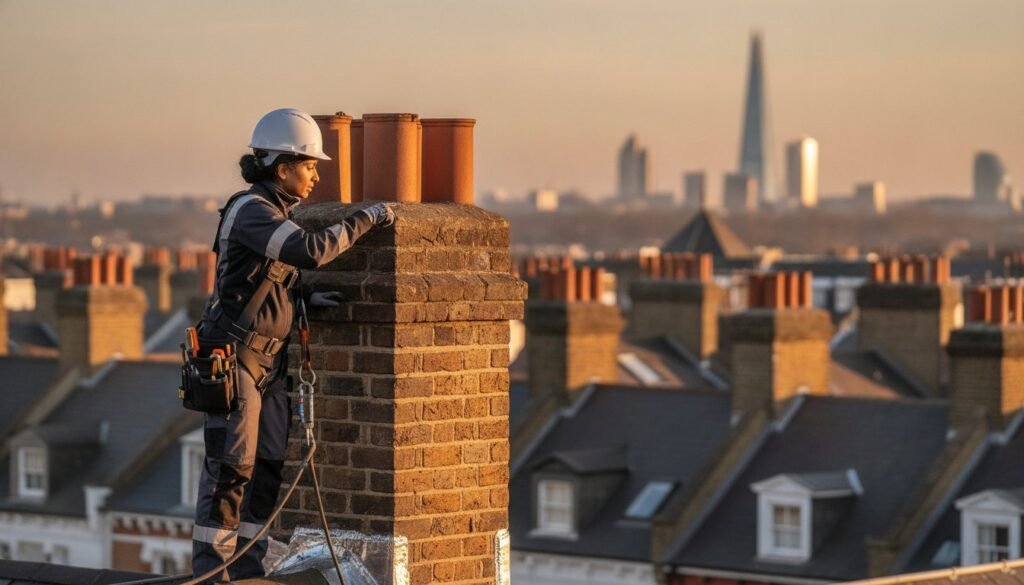
That iconic London skyline, with its rows of historic Victorian and Edwardian chimney stacks, hides a growing problem that most homeowners don’t see until it’s too late. A chimney is more than just a charming architectural feature; it’s a hard-working ventilation system that faces the full force of the British weather. Staying on top of chimney maintenance London properties require is the only way to prevent minor wear from turning into a costly structural disaster. We all love the warmth of a fire, but that comfort quickly fades when you notice damp patches on the upstairs ceiling or worry about the invisible risk of carbon monoxide leaks. It’s easy to feel overwhelmed by technical jargon, especially when you’re unsure if a repair is truly necessary.
This guide offers a clear, honest roadmap to protecting your home in 2026. We’ve simplified the process, focusing on the practical steps that keep your family safe and your masonry dry. You’ll learn how to spot the difference between internal soot build-up and external structural failure. We will give you the confidence to know when you need a chimney sweep and when it’s time to call in a specialist roofer. From improving heating efficiency to meeting the latest emissions standards, we’ve broken down everything you need to ensure your chimney remains a durable, hassle-free part of your home.
Key Takeaways
- Understand why effective chimney maintenance London properties require must address both internal flue cleanliness and external structural integrity.
- Learn the correct sweeping frequencies for different fuel types to prevent carbon monoxide risks and ensure your heating remains efficient.
- Identify common external failure points, such as cracked flaunching or lifting lead flashing, that lead to damp patches inside your home.
- Master the art of spotting warning signs from the ground, including loose bricks and vegetation, before they escalate into costly emergency repairs.
- Gain clarity on when to call a chimney sweep for routine cleaning versus a specialist roofer for essential structural restoration and weatherproofing.
Understanding the Importance of Chimney Maintenance in London Properties
Effective chimney maintenance London homeowners invest in involves far more than just a quick sweep before winter. It is a dual process. You need to look at internal cleaning to keep the flue clear and external structural care to keep the masonry sound. To truly understand what a chimney is and how it functions, you have to view it as a vital ventilation organ for your property. It draws out spent gases whilst allowing the building to breathe. Without this airflow, moisture becomes trapped, leading to a host of internal issues.
London’s skyline is famous for its period terraces. These Victorian and Edwardian stacks have stood for over a century, but they aren’t invincible. Ageing lime mortar often begins to crumble, leaving the bricks vulnerable to the city’s damp climate and high winds. Regular inspections are essential because catching a loose pot or a small crack now prevents the massive expense of a full stack rebuild later. It’s about protecting your investment with simple, proactive care.
Safety First: Preventing Carbon Monoxide and Fire Risks
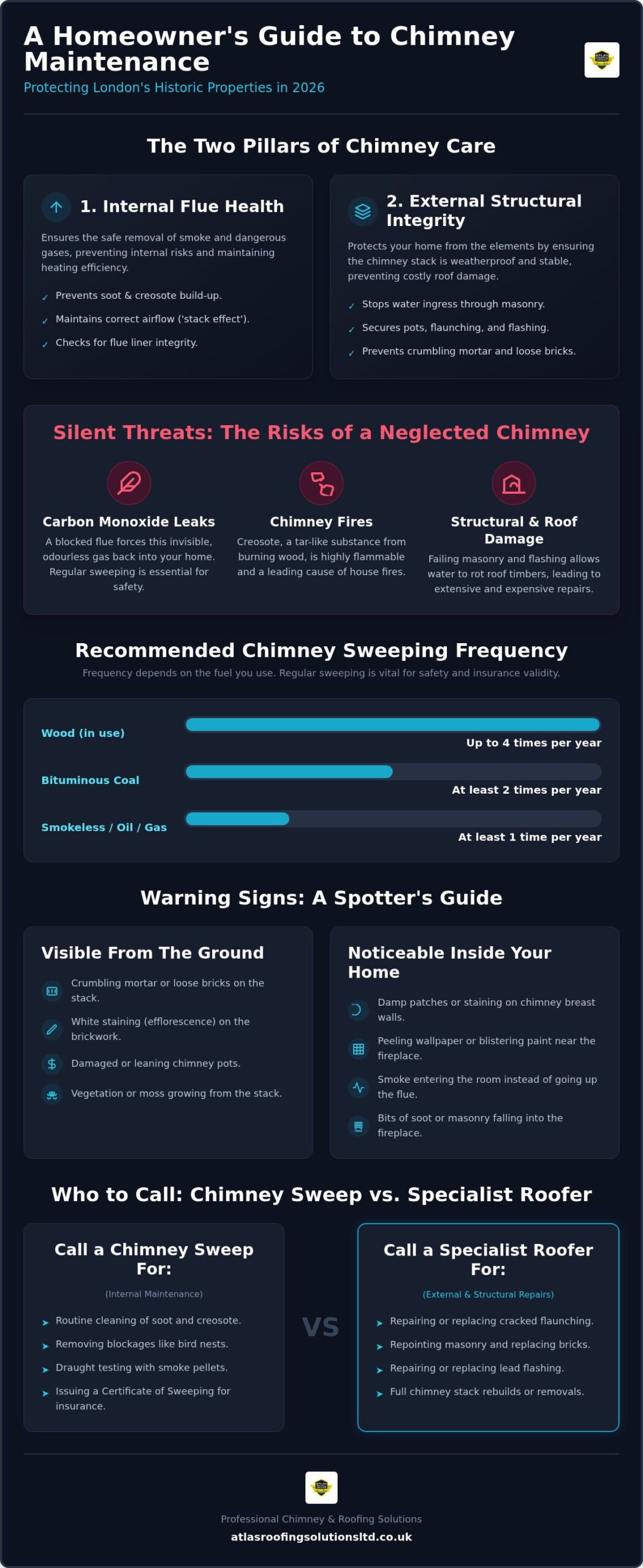
A blocked chimney is a silent threat. When soot, bird nests, or debris obstruct the flue, dangerous gases like carbon monoxide can’t escape. Instead, they seep back into your living spaces. Wood-burning stoves bring their own challenges, specifically the accumulation of creosote. This highly flammable tar-like substance is a leading cause of chimney fires if left to build up over several months of use. Annual safety checks by a qualified professional are a mandatory requirement for most UK home insurance policies to remain valid.
Protecting the Structural Integrity of Your Roof
Neglect doesn’t just stay in the chimney; it spreads. When the external masonry or lead flashing fails, water enters the roof space. This leads to rot in the structural timbers, which is a far more complex and expensive fix than a simple repointing job. You might notice damp patches appearing on the chimney breast or peeling wallpaper in upstairs rooms. These are often the first signs that the stack’s integrity has been compromised. A stable, weatherproof chimney is the cornerstone of a healthy roofline and a dry home. By addressing these issues early, you ensure the longevity of your entire roofing system.
The Internal Maintenance Checklist: Ensuring a Clean Flue
While the exterior of your stack might look solid, the flue is the engine of your fireplace. Proper chimney maintenance London homeowners should follow starts with a clear path for smoke and gases. A clean flue ensures the “stack effect” works correctly, pulling air up and out of your living space. If you notice smoke lingering in the room or a lack of draw, it’s usually a sign that the internal system is failing. Testing the draught with a smoke pellet is a standard way to verify that everything is moving in the right direction.
Inspecting the flue liner is another critical step. Over time, liners can crack or deteriorate, especially in older London homes. A compromised liner allows heat and toxic fumes to reach the building’s fabric, which is a major fire risk. If you have an unlined chimney, you are relying on the original brickwork and mortar to remain gas-tight; a gamble that rarely pays off in period properties. Ensuring the liner is intact is the only way to guarantee the safety of your family and the longevity of your home.
The Role of Chimney Sweeping and Certificates
How often you sweep depends entirely on what you burn. If you use oil, gas, or smokeless coal, an annual sweep is usually enough. However, burning bituminous coal requires a visit twice a year, and wood-burning stoves may need attention up to four times a year during peak use. A professional sweep provides a certificate of sweeping. This document is essential; without it, many home insurance policies are effectively void in the event of a fire. As noted by the East Sussex Fire & Rescue Service, regular maintenance is the single most effective way to prevent house fires.
Remember that most of Greater London is a Smoke Control Area. This means you must use DEFRA-exempt stoves or authorised smokeless fuels. Modern Ecodesign stoves are cleaner, but they still require regular internal checks to prevent creosote build-up. Using the wrong fuel or neglecting the sweep can lead to fines ranging from £300 to £1,000.
Dealing with Blockages and Debris
Blockages often come from unexpected sources. Jackdaws are notorious for nesting in London chimneys, dropping twigs that can fill a flue in days. Installing a bird cowl or guard is a simple, proactive fix to keep wildlife out. Beyond nature, internal blockages often signal external masonry failure, such as bricks or mortar falling inward. If a sweep identifies structural debris, you’ll need more than just a brush. This is where professional chimney repairs become necessary to restore the stack’s safety and ensure your home remains weatherproof.
External Structural Checks: Pots, Flashings, and Masonry
While a clean flue is vital for safety, the external stack is your home’s first line of defence against the elements. Most chimney issues we see in the capital aren’t caused by soot, but by water entering through the masonry. Effective chimney maintenance London homeowners should prioritise involves a regular ground-up inspection. Start with the chimney pot and the flaunching, which is the sloped mortar bed that holds the pot in place. If this mortar is cracked or missing, the pot becomes unstable and water can pour directly into the stack structure.
London’s legacy of industrial history means our period properties often face slightly more acidic rain, which accelerates the erosion of traditional lime mortar. You should look for “spalling,” where the face of the brick begins to flake or crumble away. This usually happens when moisture gets trapped inside the brick and freezes. It is also worth checking the verticality of your stack from the street. A chimney that appears to be leaning often indicates that the mortar on the weather-beaten side has perished faster than the sheltered side, causing the stack to pull and weaken.
Chimney Repointing and Masonry Care
For London’s Victorian and Edwardian terraces, the choice of materials is everything. Using a modern, rigid cement mortar on old, soft bricks is a common mistake that leads to further cracking. Professional chimney repointing London specialists utilise breathable lime-based mixes that allow moisture to escape the building naturally. We always recommend “weathered” joints, where the mortar is angled to shed water away from the brickwork. This simple detail prevents water ingress and protects the structural integrity of the stack for decades.
Leadwork and Weatherproofing the Base
The junction where the chimney meets your roof tiles is a notorious weak spot for leaks. This gap is sealed by lead flashing, which must be tucked deeply into the mortar joints. Over years of British summers and winters, lead expands and contracts, eventually leading to “splitting” or lifting. If you notice damp patches or peeling wallpaper on the chimney breast inside your home, the flashing has likely failed. A permanent fix requires professional lead burning to weld the joints, ensuring a watertight seal that can withstand the harshest London downpours.
Identifying Warning Signs: When to Call a Roofing Specialist
You don’t always need to climb onto the roof to know your stack is in trouble. A proactive approach to chimney maintenance London homes require starts with a simple visual inspection from the pavement. Look for loose bricks, missing mortar, or any signs of vegetation growth. Buddleia and grass might look harmless, but their roots act like wedges, forcing apart old masonry and creating deep channels for water to enter your home. If you can see green shoots emerging from your chimney, the structural damage is already underway.
Inside the house, your fireplace often provides clues through what we call the “Soot Test.” If you find unexpected debris in your grate, such as small chunks of red brick or gritty mortar, the internal lining of your flue is likely disintegrating. This is a clear sign that the stack’s structural integrity is failing from the inside out. Similarly, a persistent smoky smell when the fire isn’t lit or a sudden lack of draw suggests a blockage or a collapsed internal mid-feather wall. These aren’t just inconveniences; they are safety risks that a standard sweep cannot fix.
London’s weather can be unpredictable, and high winds are particularly punishing for aged chimney stacks. After any significant storm, it’s wise to check that your chimney pots are still sitting level. Cracked flaunching can easily give way under pressure, leaving a heavy pot precariously balanced. If a pot looks tilted or “off,” it’s an emergency waiting to happen.
Damp and Water Ingress Indicators
Distinguishing between different types of damp is essential for an accurate fix. You might notice “hygroscopic salt” patches, which appear as brown or yellow stains on the chimney breast. These occur when old soot deposits draw moisture from the air, even on dry days. However, active leaks usually present as damp tide-marks that grow larger after heavy rain. Both issues indicate that the stack is no longer weatherproof and requires specialist chimney repair London expertise to prevent the rot from spreading to your roof timbers. Ignoring minor damp spots during the winter months often leads to expensive ceiling collapses by the spring.
Structural Instability and Falling Masonry
A leaning chimney is a high-priority safety risk, especially in busy London streets where pedestrians are constantly passing below. If your stack is visibly tilting, the mortar on the weather-side has likely perished completely. You should also look for “blown” bricks, where the hard outer face has popped off to reveal a soft, crumbly interior. These bricks have lost their structural strength and must be replaced rather than just repointed. Repeated frost-thaw cycles on saturated chimney masonry cause water to expand within the brickwork, leading to rapid structural failure and “blown” surfaces.
If you’ve spotted any of these warning signs, it’s time to act before the damage escalates. You can contact Atlas Roofing Solutions Ltd for a professional assessment and a long-lasting restoration of your chimney stack.
Professional Solutions: How Atlas Roofing Solutions Ltd Can Help
While a chimney sweep is essential for a clean flue, they are rarely equipped to handle the structural complexities of an ageing London stack. This is where Atlas Roofing Solutions Ltd steps in. We provide the specialised chimney maintenance London homeowners need to ensure their property remains safe and watertight for the long term. With over 20 years of experience navigating the unique architectural challenges of the capital, we understand the intricacies of Victorian, Edwardian, and modern chimneys alike. We aren’t just contractors; we’re a family-owned business that values reputation and honest craftsmanship.
Our approach is grounded in transparency. We offer a “straight-talking” assessment of your chimney’s health, avoiding technical jargon and high-pressure tactics. Whether you’re dealing with a minor leak or a leaning stack, we provide clear solutions tailored to your home’s specific needs. To make the process as simple as possible, we offer free site visits and no-obligation quotes. This ensures you have all the information you need before any work begins, with no hidden costs or surprises down the line.
Comprehensive Stack Restoration and Repair
Our expertise covers the full spectrum of chimney care. We handle everything from precision repointing with traditional lime mortars to complete stack rebuilds and stabilisations. We are committed to using high-quality materials that respect your property’s aesthetic, ensuring that repairs are both durable and visually seamless. Our deep knowledge of roof repairs London properties often require means we look at the bigger picture. We don’t just fix the chimney; we ensure the surrounding roofline, guttering, and leadwork are all functioning as a single, protective system.
Hassle-Free Maintenance for London Homeowners
We know that home maintenance can be stressful. That’s why we manage the entire project from start to finish, including all material logistics. Our goal is to provide a hassle-free experience with minimal disruption to your daily life. Every structural repair we carry out comes with a 15-year guarantee on workmanship. This level of accountability provides a sense of security that a standard sweep simply cannot match. It’s our way of showing that we believe in the longevity of our work and the long-term protection of your home.
Ready to secure your home against the elements? Contact Atlas Roofing Solutions for your chimney maintenance today and book your free professional assessment.
Securing Your Chimney for the Seasons Ahead
Protecting your home starts with a clear understanding that a healthy chimney requires both internal cleanliness and external structural integrity. By following a regular schedule for chimney maintenance London properties need, you can prevent minor issues like damp patches or loose mortar from escalating into expensive structural failures. We have explored how identifying warning signs early, from “blown” bricks to failing leadwork, keeps your household safe and your roof timbers dry.
At Atlas Roofing Solutions Ltd, we bring over 20 years of London roofing experience to every project. We provide a 15-year guarantee on all chimney workmanship, ensuring your peace of mind long after the job is done. Whether you need a simple repair or a full stack restoration, our family-owned team is here to help with honest, transparent advice. We take pride in our history of protecting the capital’s period architecture with skill and integrity.
Don’t wait for the next storm to test your stack’s stability. Book Your Free Chimney Maintenance Inspection Today and take advantage of our free, no-obligation site visits. We look forward to helping you keep your home warm, safe, and weatherproof for years to come.
Frequently Asked Questions
How often should I have my chimney maintained in London?
You should schedule chimney maintenance London inspections at least once a year. The exact frequency depends on your fuel type. Wood-burning stoves often require a sweep up to four times during the winter. Smokeless fuels or gas fires usually only need an annual check. Regular maintenance ensures you comply with insurance requirements and avoids the build-up of flammable creosote or dangerous blockages.
What is the difference between a chimney sweep and a chimney repair specialist?
A chimney sweep focuses on the internal cleaning of the flue to remove soot and debris. In contrast, a chimney repair specialist handles the external and structural health of the stack. This includes repointing masonry, fixing lead flashing, and stabilising chimney pots. If your sweep finds structural damage or if you notice damp patches on your walls, you need a roofing expert rather than just a cleaning service.
How much does chimney repointing cost in London?
The cost of chimney repointing in London varies based on the size of the stack and roof accessibility. Factors like the type of mortar required for period properties and the extent of masonry damage influence the final quote. We recommend a professional site visit to assess whether you need simple repointing or extensive brick replacement. This ensures you receive a transparent price for a long-lasting, weatherproof solution.
Why is damp appearing on my chimney breast even when I don’t use the fire?
Damp often appears due to hygroscopic salts in old soot that pull moisture from the air, or external structural failures. If the lead flashing has split or the mortar joints have eroded, rainwater will seep into the masonry. This moisture eventually travels down the chimney breast, causing peeling wallpaper or stains. Identifying the root cause requires an external inspection of the stack’s weatherproofing and masonry condition.
Do I need scaffolding for chimney maintenance or repairs?
Scaffolding is often necessary for chimney repairs to ensure the safety of workers and the protection of your roof. Whilst minor inspections can sometimes be done via ladders, structural work like repointing or pot replacement requires a stable platform. The need for scaffolding depends on the height of your stack and the pitch of your roof. We assess the safest access method during our free site visits.
Can I inspect my own chimney stack safely from the ground?
You can safely perform a basic visual check of your chimney stack from the ground using binoculars. Look for obvious signs of distress such as a visible lean, loose bricks, or vegetation growth. Check if the chimney pots look level and if the mortar flaunching at the top appears cracked. While this ground-level check is a great starting point, it cannot replace a professional close-up inspection of the leadwork and masonry.
What are the signs that my chimney pot needs replacing?
A chimney pot needs replacing if you notice deep cracks in the ceramic or if the pot appears to be leaning. If the mortar flaunching holding it in place has crumbled, the pot becomes unstable and poses a safety risk during high winds. You might also find small pieces of terracotta in your fireplace. Replacing a damaged pot promptly prevents water from entering the flue and damaging the internal stack structure.
Is chimney maintenance a legal requirement for London landlords?
Landlords have a legal duty of care to ensure that all chimneys and flues in their properties are safe and functional. Regular chimney maintenance London landlords arrange prevents carbon monoxide risks and fire hazards. You must ensure working alarms are fitted. Most insurance policies require an annual sweep certificate to prove the property is maintained to a safe standard.