A cracked chimney pot doesn’t automatically mean the whole stack needs replacing. A sound plan for chimney pot replacement London homeowners can rely on starts with assessing the pot, its flaunching and the chimney around it together.
It’s understandable to worry about water getting in, loose masonry becoming unsafe or repair work causing disruption. But visible damage may not tell the whole story. The pot could be the main issue, or cracked flaunching and a weakened stack may also need attention. Replacing the pot without checking its base and surrounding brickwork can leave the underlying problem unresolved.
In this guide, you’ll learn which signs may point to replacement, what to consider when choosing a pot and how the condition of the flaunching and stack affects the work. Atlas Roofing Solutions Ltd is a family-owned London roofing specialist with over 20 years of experience. We assess the chimney and surrounding roof before setting out a clear scope, so you can understand the proposed solution for your property and decide on the next step.
Key Takeaways
- Cracks, movement or damage around the pot’s base can signal a problem, but don’t automatically mean the whole chimney needs rebuilding.
- Choose a replacement pot by considering the existing flue, chimney stack, roof setting and how the chimney is used.
- Assess the pot, flaunching, flashing and masonry together to see whether replacement alone will address the fault.
- For chimney pot replacement London properties need, the work scope and access arrangements should reflect the building and roof layout.
- Atlas brings over 20 years of roofing experience to assessing the chimney and planning suitable work.
Chimney pot replacement in London: when is replacement the right response?
Visible damage can look alarming, but it doesn’t automatically mean the whole chimney needs rebuilding. A pot may be cracked or loose whilst the stack beneath it remains sound. Equally, a leak near the chimney could come from damaged flaunching, flashing or brickwork rather than the pot itself. The right response depends on identifying where the fault starts and checking the condition of the surrounding parts.
Chimney pots sit at the top of the flue and form part of the chimney’s finish and function. A general overview of chimney pots explains their role and historical use, but the condition of your own pot needs a practical assessment.
What signs suggest a chimney pot may need attention?
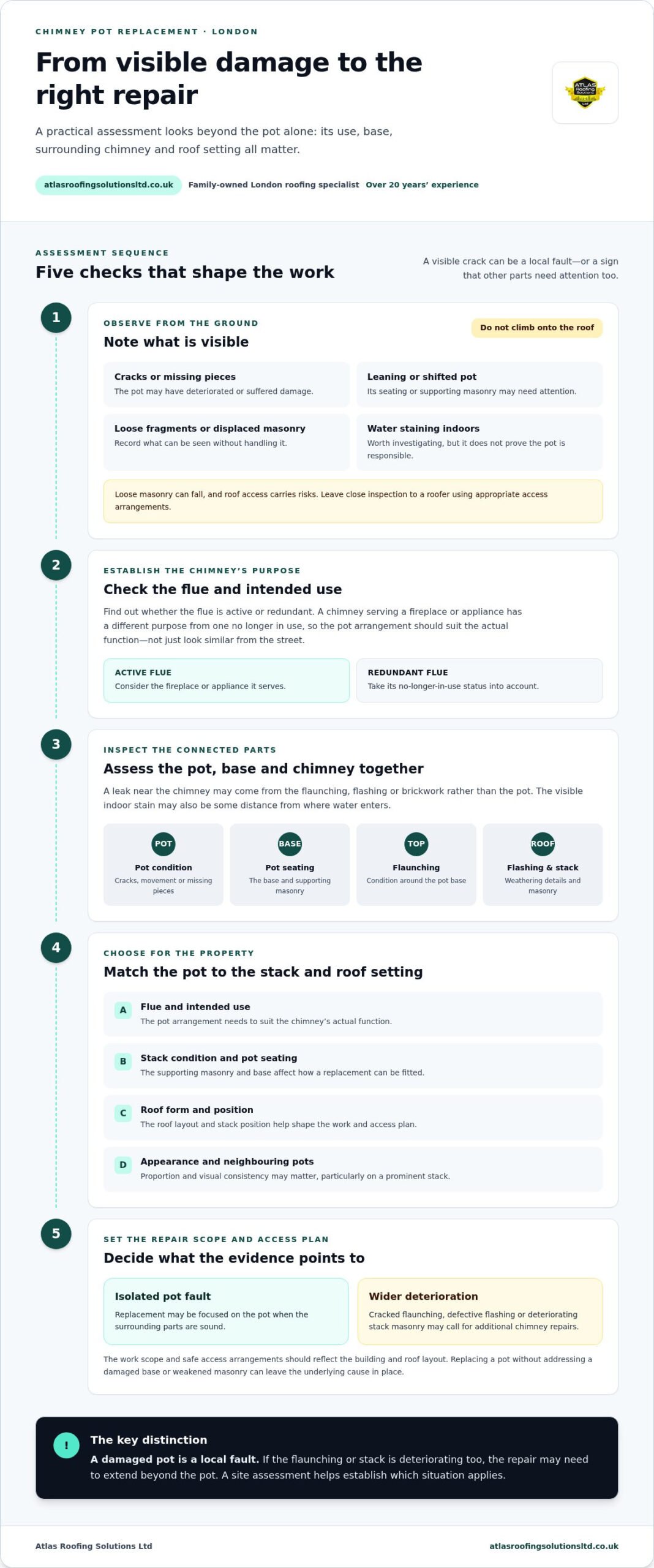
From the ground, look for visible cracks, a pot that appears to lean, missing sections, loose fragments or displaced masonry around its base. These signs don’t confirm the cause or show how far the damage extends, but noting what you can see can help when arranging an inspection.
- Cracks or missing pieces: the pot may have deteriorated or suffered damage.
- A leaning or shifted pot: its seating or the masonry supporting it may need attention.
- Water staining indoors: a damp patch near the chimney is a reason to investigate, but doesn’t prove the pot is responsible.
Don’t climb onto the roof or try to handle a pot that looks unstable. Loose masonry can fall, and roof access carries its own risks. Leave close inspection to a roofer using appropriate access arrangements.
When is a pot replacement different from a chimney repair?
An isolated pot problem may call for replacement, while cracked flaunching, defective flashing or deteriorating stack masonry can require additional chimney repairs. These parts work together to protect the roof and chimney from weather. If water is getting in, the visible stain inside may be some distance from the entry point.
A damaged pot is a local fault; deterioration in the stack means the repair may need to extend beyond the pot. Replacing a pot without addressing a damaged base or weakened masonry can leave the cause of the problem in place.
A site assessment helps establish the scope. Atlas examines the pot, its seating, the flaunching and the surrounding roof and stack before setting out the work. This helps distinguish a focused replacement from a broader repair, without assuming that every visible crack means a full rebuild. For issues affecting other parts of the chimney, see our chimney repair in London service.
If you’re considering chimney pot replacement London homeowners can arrange through Atlas, start by noting the signs you can safely observe from the ground. An assessment can help distinguish a pot fault from wider chimney deterioration and identify what needs attention.
How to choose a replacement chimney pot for your London property
The right replacement isn’t simply the one that looks similar from the street. It needs to suit the existing flue, the condition and shape of the stack, the roof setting and the chimney’s intended use. Considering these details helps identify a pot that works for the chimney and sits appropriately on the property.
A replacement pot must suit both the chimney it sits on and the purpose that chimney serves. That’s why chimney pot replacement London homeowners arrange should begin with an assessment, rather than a choice based on appearance alone. Atlas looks at the chimney and surrounding roof before setting out a suitable scope.
Does the chimney still serve a fireplace or appliance?
First establish whether the flue is active or redundant. A chimney still serving a fireplace or appliance has a different purpose from one that’s no longer in use, and the pot arrangement should reflect that function. Don’t assume that a matching-looking pot is suitable or select one based on a guess about the flue. The existing setup and intended use need to be considered during a site assessment.
How do roof style and shared stacks affect pot choice?
A pot is part of the roofline as well as the chimney. On a London terrace, a prominent stack may sit alongside neighbouring pots, so proportions and visual consistency can matter. But properties vary: roof form, stack condition and the arrangement of nearby pots all influence what’s appropriate. Atlas considers these features together rather than treating every terrace or shared stack as identical.
| What to consider |
Why it matters |
| Flue and intended use |
The pot arrangement needs to suit the chimney’s actual function. |
| Stack and pot seating |
The supporting masonry and base affect how a replacement can be fitted. |
| Roof form and setting |
Roof layout and the stack’s position help shape the work and access plan. |
| Appearance and neighbouring pots |
Proportion and consistency may be important where the chimney is a visible feature. |
Use the table as a guide to the points an assessment needs to resolve, not as a way to specify a pot yourself. A period property may have a prominent chimney that contributes to its character, while another roof may call for a more straightforward visual match. The stack’s condition can also affect what’s suitable, even if the pot appears to be the only concern.
Access is part of planning roof work safely, and the right arrangements depend on the building and roof layout. The Health and Safety Executive’s guidance on the Work at Height Regulations 2005 explains the importance of managing work at height. Atlas considers the property’s roof and chimney setting when assessing the work. To arrange a tailored assessment, arrange a chimney site visit.
Replace the pot, repair the flaunching or address the whole chimney?
Once a chimney has been assessed, the next question is how much work is needed. A replacement pot may be appropriate if the pot is damaged but its support and surrounding masonry remain sound. If the evidence points to a fault elsewhere, the scope may need to include flaunching, flashing or stack repairs. Replacing everything isn’t automatically the safest or best-value option; the work should match the condition found.
Visible symptoms alone can’t show the full extent of a fault. A damp mark inside, for example, doesn’t establish whether water is entering at the pot base, the roof junction or through deteriorated masonry. A useful assessment follows the likely route of water and checks connected parts, rather than treating the most obvious sign as a complete diagnosis.
When might the issue be limited to the pot?
If inspection finds a damaged pot but sound seating, flaunching and surrounding stack, the work may be limited to replacing that pot. This is a possible outcome, not a conclusion to draw from one visible crack or loose fragment. The recommendation should explain what has been observed, why replacement is appropriate and which parts of the chimney the work will address.
When could flaunching, flashing or masonry need attention too?
Flaunching is the mortar that beds and secures the pot at the top of the stack. If it has cracked or deteriorated, replacing the pot alone may leave its base inadequately supported or exposed to water. Flashing forms the junction between chimney masonry and the roof covering; defects there can allow water into the roof even when the pot appears intact.
Stack masonry matters too. Loose, deteriorated or damaged brickwork can affect the stability of the chimney and may call for repairs beyond the pot or its base. The assessment should distinguish these issues and show whether each is included in the proposed work, rather than bundling separate faults together without explanation. For related information on chimney repointing and maintenance, see our chimney repair guidance.
Atlas Roofing Solutions Ltd carries out a free site visit to assess the chimney and surrounding roof. The findings inform a clear, no-obligation quote that sets out the proposed scope, helping you see whether the recommendation is for pot replacement, additional repairs or both. With over 20 years of roofing experience, Atlas focuses on work that addresses the observed condition, rather than assuming replacement is always preferable to a suitable repair.
For chimney pot replacement London properties may need, a proportionate plan should make clear what is damaged, what work is proposed and why. This helps you understand what the repair is intended to resolve before work begins.
What to expect from chimney pot replacement on a London roof
A clear process makes roof work easier to understand. For chimney pot replacement London homeowners can expect four main stages: a site assessment, a written scope, planned work and completion checks. Details vary from property to property, but each stage should clarify what needs doing, how access will be managed and what the finished work is intended to address.
What happens during the site visit and quote?
Atlas offers free site visits to assess the pot, its base, visible stack condition and nearby roof junctions. Looking at these parts together helps establish whether the work appears limited to the pot or may involve other chimney or roof repairs. The written, no-obligation quote then sets out the proposed scope, so you can understand what’s included and how the recommendation relates to the observed condition.
Before work begins, access arrangements are planned around the property. The right approach depends on factors such as building height, roof shape, the chimney’s position and safe working conditions. A tall terrace with restricted space around it may present different access considerations from a lower property with a simpler roof layout. The method should suit the site rather than follow a one-size-fits-all assumption.
How can property context affect the work?
London roofs often sit close together, and some chimneys are shared between adjoining properties. The stack’s position, neighbouring structures and access around the building can affect how work is organised. Where a chimney is shared, its condition and arrangement may also make communication with neighbours a practical consideration. Each property needs an individual assessment.
Heritage settings call for particular care. If your home is listed or in a conservation area, check the relevant borough planning authority’s requirements before changing the chimney pot. Consent may be needed for alterations, and the appropriate process depends on the property and proposed work. Appearance can matter too: a replacement on a prominent period roof may need to sit comfortably with the building’s character and nearby chimney features.
Once the agreed work is complete, checks should confirm that the pot is securely positioned and that the parts included in the scope have been addressed. A final review also gives you the opportunity to understand what work was carried out. For ongoing care beyond this repair, seasonal roof maintenance in London can help you keep an eye on the wider roof over time.
Atlas brings over 20 years of roofing experience to chimney work, with a clear scope agreed before the job proceeds. To discuss your property, arrange a chimney site visit.
Arrange chimney pot replacement in London with Atlas Roofing Solutions
Choosing the right repair starts with identifying the fault, checking the pot and surrounding chimney, then agreeing a scope that fits the property. A cracked or unstable pot may need replacement, but the assessment should also consider its base, the stack and nearby roof junctions. This helps ensure the proposed work addresses the condition found rather than assuming every chimney needs the same solution.
Atlas Roofing Solutions Ltd is a family-owned London roofing specialist with over 20 years of experience in chimney and roofing work. For homeowners considering chimney pot replacement in London, that experience supports a straightforward process: a free site visit, a clear written quote and time to understand the proposal before deciding whether to proceed.
What information helps Atlas assess your chimney?
A few details can make the first conversation more useful. Share your London postcode, property type and a short description of what you’ve noticed. If water is getting in, say where you’ve seen staining and when it appears. Mention loose material, visible damage or whether the stack may be shared with a neighbouring property.
Photos can also provide context if you can take them safely from the ground. Don’t climb onto the roof or approach loose masonry to get a closer view. Even a clear ground-level image won’t replace an inspection, but it can help explain what has caught your attention.
What happens after you request a site visit?
Atlas visits the property to assess the relevant chimney and roof condition. The inspection considers the pot and its base alongside visible stack masonry and roof junctions, helping establish whether the issue appears isolated or the proposed scope should include related repairs. The findings are then set out in a transparent, no-obligation quote so you can see what work is proposed and what it is intended to address.
Atlas Roofing Solutions Ltd offers a 15-year guarantee on workmanship. The applicable terms depend on the agreed work, so review them alongside the written scope. This makes the proposal clear: you can understand the recommended work, its boundaries and the workmanship terms before making a decision.
There’s no need to diagnose the chimney yourself. Share what you’ve observed, let the site visit establish the condition, then consider the written plan. To take the first step, arrange a free chimney site visit.
Take the next step towards a sound chimney
Uncertainty about a chimney can make it tempting to put off a decision. You don’t need to diagnose the fault yourself. A clear, property-specific plan can help you understand what needs attention and decide how to move forward.
For chimney pot replacement London homeowners can turn to Atlas Roofing Solutions, a family-owned roofing specialist with over 20 years of experience. Start with a free site visit and transparent, no-obligation quote, then review the proposed work at your own pace. Atlas also provides a 15-year guarantee on workmanship; the applicable terms can be considered alongside the agreed scope.
Arrange a free site visit and get a transparent, no-obligation quote to understand your chimney’s condition and the work that may suit your London property.
Frequently Asked Questions
Can a chimney pot be replaced without replacing the whole chimney?
Yes, a pot can often be replaced on its own if the rest of the chimney is in suitable condition. For chimney pot replacement London properties need, the key question is whether the pot’s support and the stack remain sound. If damage extends to other parts, extra repairs may be needed. Atlas’s inspection helps establish the appropriate scope, rather than assuming either a full rebuild or a simple swap is always right.
How long does chimney pot replacement take?
There isn’t one set timeframe for every job. The work can depend on the number of pots, the chimney’s condition, how access can be arranged and whether repairs are needed beyond the pot. Weather and site conditions may also affect the work plan. The proposed scope should set out the expected schedule for your property before work starts.
Is chimney pot replacement possible during winter?
It may be possible, but the decision depends on roof conditions and whether the work can be carried out safely. Wet, icy or windy conditions can affect access and working at height, so a planned job may need to be adjusted if conditions aren’t suitable. If you’re concerned about a loose pot, keep clear of the area below it and arrange an assessment rather than attempting a temporary fix yourself.
Do all chimneys need a chimney pot?
No. Chimney tops can be configured differently, and the appropriate finish depends on the flue and how the chimney is used. A working fireplace or appliance needs an arrangement suited to its intended function, whilst a redundant flue may need a different approach. Don’t assume an open or capped chimney is automatically faulty. An inspection can establish what the existing setup does and whether it needs alteration.
Can I use my fireplace while a chimney pot is being replaced?
Don’t use the fireplace during the replacement work. The flue or chimney may be affected by the work, and debris could potentially enter it. Wait until the work is complete and the person responsible for the job confirms the chimney is safe to use. If the fireplace serves a fuel-burning appliance, follow any relevant advice for that appliance before lighting it again.
What happens if a chimney pot is no longer in use?
An unused pot doesn’t necessarily need removing. The flue may still need a suitable finish that protects it from weather whilst allowing appropriate ventilation. Blocking a redundant chimney without considering airflow can contribute to moisture problems, so don’t seal it simply because the fireplace is unused. Have the chimney assessed and explain whether the flue is disused, especially if you’ve noticed damp or musty smells in the room.
Does home insurance cover chimney pot replacement?
It depends on your policy and what caused the damage. Cover may differ between sudden accidental damage and deterioration over time, and policy exclusions or excesses can affect a claim. Check your documents and speak to your insurer before arranging work if you intend to claim. They may ask for photographs, an assessment or other evidence, so keep records of the damage and any correspondence.