An unused chimney doesn’t automatically need sealing. Chimney cowls are optional, but the right one can help keep birds and debris out while allowing the flue to ventilate. For chimney cowl installation in Hackney, the choice depends on whether the chimney is in use, the fuel and flue type, and the condition of the chimney top.
It’s understandable to want to keep draughts, rain or nesting material out of a disused chimney. But fitting the wrong cowl, or covering a chimney that needs attention, can leave the underlying problem unresolved. A cowl won’t repair damaged brickwork or fix every persistent draught.
This guide explains when capping makes sense and how the chimney’s size, fuel, flue and existing faults affect the suitable option. You’ll also learn what influences installation costs, what fitting involves, and how to keep the cowl and chimney in sound condition, helping you make an informed choice before work begins.
Key Takeaways
- An unused chimney does not automatically need capping; the decision depends on its condition and whether the flue still needs to ventilate.
- Match the cowl to the chimney problem, fuel, flue and pot size rather than choosing by appearance alone.
- Check for blockages or damage before fitting, then keep the cowl secure and the chimney maintained.
- Understand what affects fitting and whether planning permission may apply before arranging work in Hackney.
Choosing a cowl based on the chimney problem, fuel and flue type
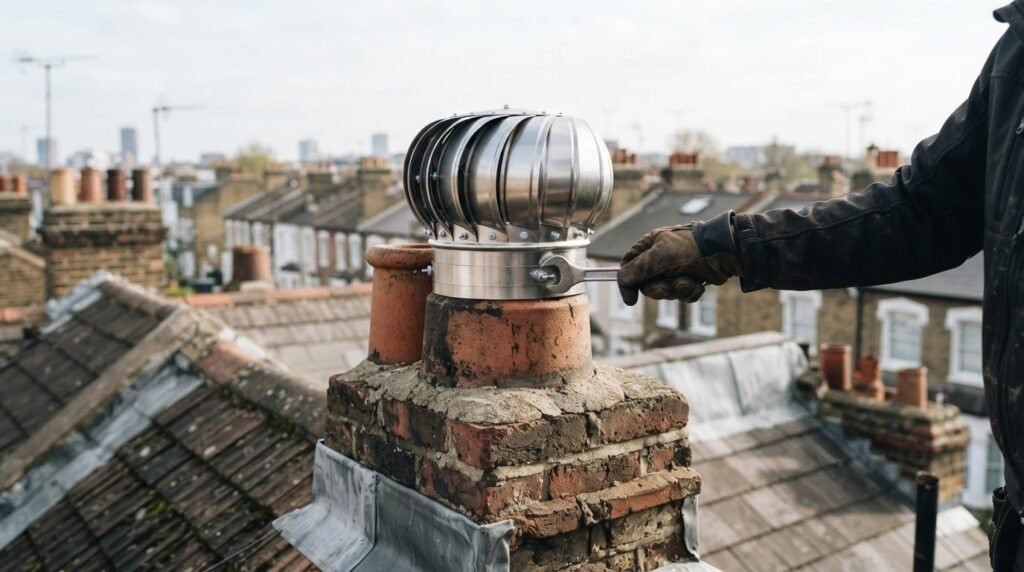
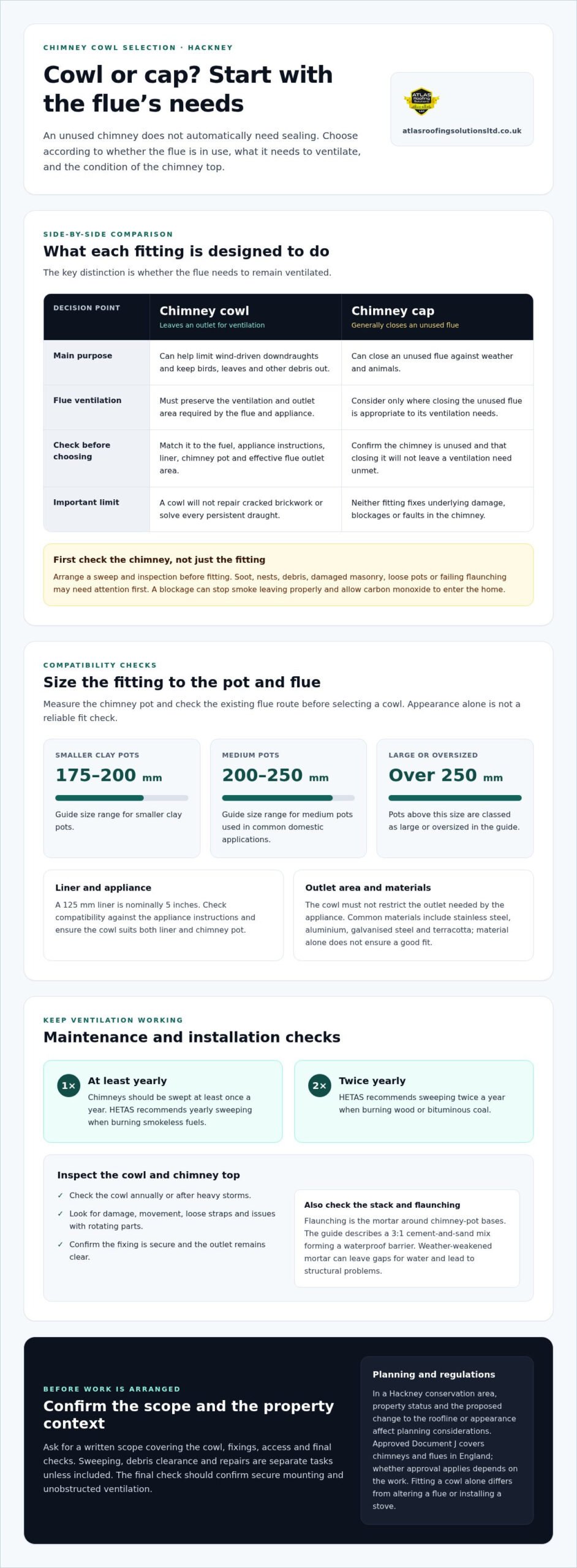
Start by identifying the problem. Chimney cowls can help limit wind-driven downdraughts and keep birds, leaves and other debris out, but they won’t repair a cracked chimney stack or solve every persistent draught. A cowl leaves an outlet for ventilation; a chimney cap generally closes an unused flue against weather and animals. Choose between them based on whether the flue remains in use and its ventilation needs.
Fuel and appliance instructions matter. A wood-burning stove, for example, needs a suitable flue and an outlet that won’t obstruct the required flow. A 125 mm liner is nominally 5 inches, and its compatibility must be checked against the appliance instructions. A cowl must suit the liner and chimney pot, not just look like the right fit. For chimney lining and flue installation, assess the existing route, liner diameter and intended appliance before selecting a cowl.
Measure the pot and inspect its condition before choosing a fitting. The guide’s size ranges are 175-200 mm for smaller clay pots and 200-250 mm for medium pots used in common domestic applications; pots over 250 mm are large or oversized. The effective flue outlet area also matters: a cowl must not restrict the outlet needed by the appliance. For stove installation, match the cowl to the flue specification and manufacturer’s instructions.
In a Hackney conservation area, the property’s status and the proposed change to its roofline or appearance affect planning considerations. Establish those details before choosing a prominent cowl. For Building Regulations in England, Approved Document J covers chimneys and flues. Whether approval applies depends on the work: fitting a cowl alone differs from altering a flue or installing a stove, so assess the full scope rather than treating every job alike.
Materials, maintenance and inspections
Choose cowl material to suit the chimney pots, exposure and fixing method. Stainless steel, aluminium, galvanised steel and terracotta are common options, but the cowl must also match the flue and appliance instructions. Material alone won’t ensure a good fit. Check that the design allows the required ventilation and remains secure in the roof’s weather conditions.
Before fitting, arrange a chimney sweep and inspection. Sweeping can reveal soot, nesting material, debris and flue problems that might otherwise go unnoticed. A blockage can stop smoke leaving properly and allow carbon monoxide to enter the home. A professional should check for damage or obstructions and arrange necessary chimney repairs before fitting a cowl.
Keep the fireplace and flue maintained after installation. HETAS recommends sweeping yearly when burning smokeless fuels, and twice a year when burning wood or bituminous coal. Chimneys should also be swept at least once a year. Regular cleaning clears smoke deposits and helps identify nests or cobwebs before they affect ventilation.
Inspect the cowl annually or after heavy storms. Look for damage, movement, loose straps and problems with rotating parts. A secure fixing matters: a shifted cowl can restrict the outlet or fail to keep animals out. Include the chimney stack and mortar in the same visual check. Flaunching is the mortar around chimney-pot bases; its 3:1 cement-and-sand mix forms a waterproof barrier. Weather-weakened mortar can leave gaps for water and lead to structural problems.
For an unused or active chimney, an inspection can distinguish a cowl issue from defects needing repair. If the check reveals damaged masonry, loose pots or failing flaunching, address those faults before fitting. A chimney repairs assessment can help establish the roof work needed to restore a sound, properly maintained chimney.
Chimney cowl supply and installation
A sound installation starts with the chimney, not the cowl. The fitter should assess the pot, flue opening, existing fixings and roof access, then confirm the cowl suits the appliance and allows ventilation. A cowl that blocks the outlet or sits loosely can undermine its purpose. Sweeping before fitting helps reveal soot, nests or debris that could affect airflow.
People searching for “chimney cowl installation Hackney” should look for an installer experienced in chimney-top work. Ask for a written scope covering the cowl, fixings, access and final checks. A clear explanation of how the installer will preserve ventilation and secure the fitting helps you compare proposals by the work involved, not just the item supplied.
Fitting should follow the cowl manufacturer’s instructions. Depending on its design, the cowl may slot into the flue or attach with specified mechanical fixings. A clamp should hold it firmly without distorting the fitting. Sealant, adhesive or fire cement must not replace a required mechanical fixing. The installer should check that the cowl is secure and the outlet remains clear.
Weather and roof access shape the practical arrangements. Work should not begin in unsuitable wind, rain, frost or other poor conditions. Scaffolding isn’t always needed: a ladder and suitable access method may work for an accessible, single-storey roof, while taller or difficult roofs may need a different safe-access plan.
Before booking “chimney cowl installation Hackney”, make sure the scope explains whether sweeping, debris clearance or repairs are included. These are separate tasks from fitting the cowl. If inspection identifies damaged masonry or loose chimney-top materials, deal with those defects first; chimney repairs can address roof-level faults before installation proceeds. The final check should confirm secure mounting and unobstructed ventilation.
Do you need planning permission to install a chimney cowl in Hackney?
There isn’t one answer for every Hackney property. Whether permission is needed depends on the building’s status and the proposed change, including the cowl’s size, position and effect on the roofline. A small fitting on an existing chimney differs from altering the chimney stack or adding a prominent feature.
Start by identifying whether the property is listed or sits within a conservation area. Then compare the proposed cowl with the existing chimney pot and roof. A change that affects the building’s appearance may need closer planning consideration, particularly if the roof is visible from the street. Don’t assume the same answer applies to every home in Hackney.
Planning permission and Building Regulations are separate considerations. Approved Document J is relevant UK guidance for chimneys and flues, especially where work affects the flue, ventilation or an appliance. A cowl fitted to an existing chimney isn’t the same scope of work as installing a stove or changing the flue arrangement. Set out exactly what the work involves before deciding which requirements apply.
Before arranging installation, gather the property address, photographs of the chimney and details of the proposed cowl. Note whether the work changes the stack, pot or outlet, and whether the flue serves a working appliance. Use those details to establish the planning position with Hackney Council and distinguish planning questions from Building Regulations matters. Keep any written response with the property records.
If inspection reveals cracked masonry, loose pots or failing mortar, resolve those defects before fitting a cowl. That repair work may have a different scope from simply attaching a fitting, so describe it accurately when discussing the property. For help addressing roof-level chimney defects, arrange chimney repairs before installation proceeds.
Atlas Roofing Solutions: Roof Installation
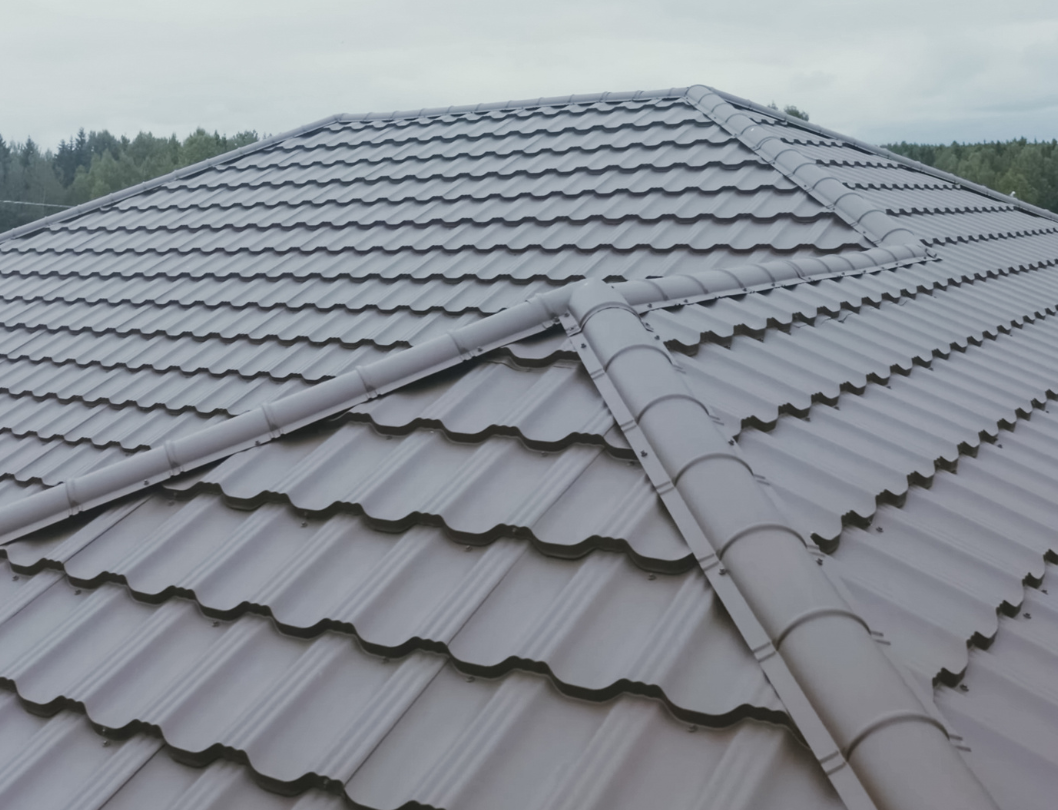
Atlas Roofing Solutions Ltd can help when an inspection points to wider roof work rather than a cowl alone. If tiles or the surrounding roof need attention, its Roof Repairs service addresses roof defects; for a new roof, Roof Installation may be the relevant next step. Sound guttering and uPVC fascias and soffits also help protect the roof edge from water ingress.
Share the inspection findings and explain whether the issue involves the chimney, roof covering or drainage. Atlas Roofing Solutions Ltd offers free site visits and transparent, no-obligation quotes, so you can consider the proposed work before deciding.
Contact Atlas Roofing Solutions Ltd to discuss your roofing needs.
Make the next step a considered one
Before arranging chimney cowl installation in Hackney, note how you use the fireplace, what symptoms you’ve noticed and whether other roof issues need attention. A clear record keeps the conversation focused on the work that matters, rather than treating the chimney as separate from the rest of the roof.
If your plans include wider roofing work, Atlas Roofing Solutions Ltd offers Roof Installation, Roof Repairs and Guttering. These services may be relevant when chimney work forms part of a broader roof project. Share the issue and the outcome you want, then consider a practical next step with the details in front of you.
Contact Atlas Roofing Solutions Ltd to discuss your roofing needs. A clear plan is a good start towards a well-protected home.
Frequently Asked Questions
Should I cap my chimney if it is no longer used?
An unused chimney doesn’t automatically need to be capped. Before closing it, establish that no appliance uses the flue and that the arrangement will still allow suitable ventilation. A ventilated cap can help keep rain and animals out while permitting airflow. If the chimney serves a fireplace you may use again, preserve its function and choose a suitable protective fitting instead of sealing it.
What do chimney cowls do?
Chimney cowls sit at the chimney outlet and can help protect the flue from birds, nests and wind-related downdraughts. Some designs have moving parts, so movement and secure fixing are worth observing during routine roof checks. A cowl isn’t a repair for a damaged stack or a blocked flue. Smoke entering the room after fitting needs attention, not simply a different-looking cowl.
How do I choose the right chimney cowl for a chimney?
Gather the appliance make and model, flue or liner size, chimney-pot opening measurement and a clear description of the problem. Use the appliance instructions to check compatibility, then match the cowl’s design and fixing to the chimney top. For example, a cowl intended to address downdraughts won’t solve a blockage, so identify the cause before choosing a design.
What are the chimney cowl installation steps, and how long does it take?
Installation typically involves inspecting the chimney top, clearing debris, confirming the cowl and fixing suit the flue, then mounting it securely and checking ventilation. The work time depends on roof access, the chimney’s condition and whether sweeping or repairs are needed first. A clear, accessible chimney top involves a different scope from one with damaged masonry or difficult roof access.
What are the safety risks and common problems with chimney cowl installation?
Roof access creates a fall risk, and unsuitable wind, rain or frost can make fitting unsafe. A loose or distorted fixing may let the cowl move, while an obstructed outlet can impair ventilation. A chimney blockage can prevent smoke leaving properly and allow carbon monoxide into the home. Don’t use a cowl to mask smoke problems; arrange an inspection of the flue and chimney.