What if you could stop worrying about your flat roof every time the London forecast predicts a downpour? For many homeowners, the sound of rain triggers an immediate check for damp patches or recurring leaks in ageing felt coverings. It’s a stressful way to live, especially when you know traditional materials often struggle to cope with our city’s variable weather. You’re likely looking for a solution that doesn’t just delay the inevitable but solves the problem for good.
We understand that frustration. That’s why GRP roofing London has become the premier choice for residents who value durability and a clean, modern aesthetic. With over 20 years of hands-on experience, we specialise in fibreglass installations that are 100% waterproof and virtually maintenance-free. This article explores why GRP is the ultimate waterproof solution for your home, how it creates functional spaces for balconies, and how our 15-year guarantee provides total security. You’ll learn exactly why this investment keeps your home dry and protected for 25 years or more.
Key Takeaways
- Understand why GRP fibreglass is the modern standard for London properties, offering a seamless, 100% waterproof barrier that lasts for decades.
- Learn how a precise installation process, including proper timber deck preparation and careful curing, ensures your roof remains maintenance-free.
- Compare the long-term value of GRP roofing London against traditional felt or EPDM to see why it’s a superior investment for your home.
- Discover how fibreglass transforms flat roofs into functional outdoor spaces like balconies or terraces with specialised non-slip finishes.
- Find out how our 20-year expertise and 15-year workmanship guarantee provide the peace of mind every London homeowner deserves.
Understanding GRP Roofing: The Modern Choice for London Properties
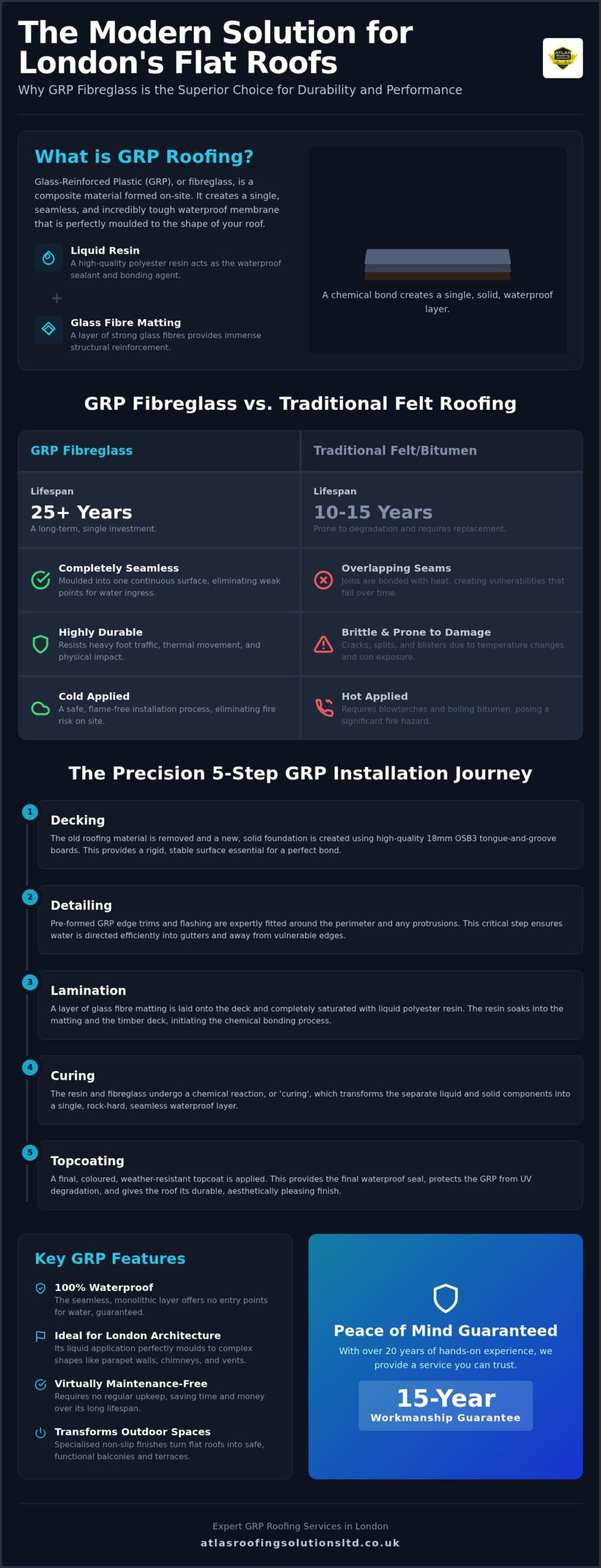
London’s rooftops are changing. For decades, bitumen and felt were the standard, but they often failed under the capital’s unpredictable weather. Today, Glass-Reinforced Plastic (GRP), commonly known as fibreglass, has taken over as the gold standard for flat roof protection. It’s a material designed for resilience. GRP consists of two primary components: a high-quality liquid resin and a durable glass fibre matting. When these are combined on-site, they form a robust, reinforced layer that’s significantly tougher than traditional materials.
Many Londoners are moving away from bitumen because it becomes brittle over time. The constant expansion and contraction caused by our city’s temperature swings eventually lead to cracks and splits. GRP doesn’t have this problem. It remains flexible enough to handle thermal movement whilst maintaining its structural integrity. It’s a professional-grade upgrade that turns a vulnerable area into a permanent asset for your home.
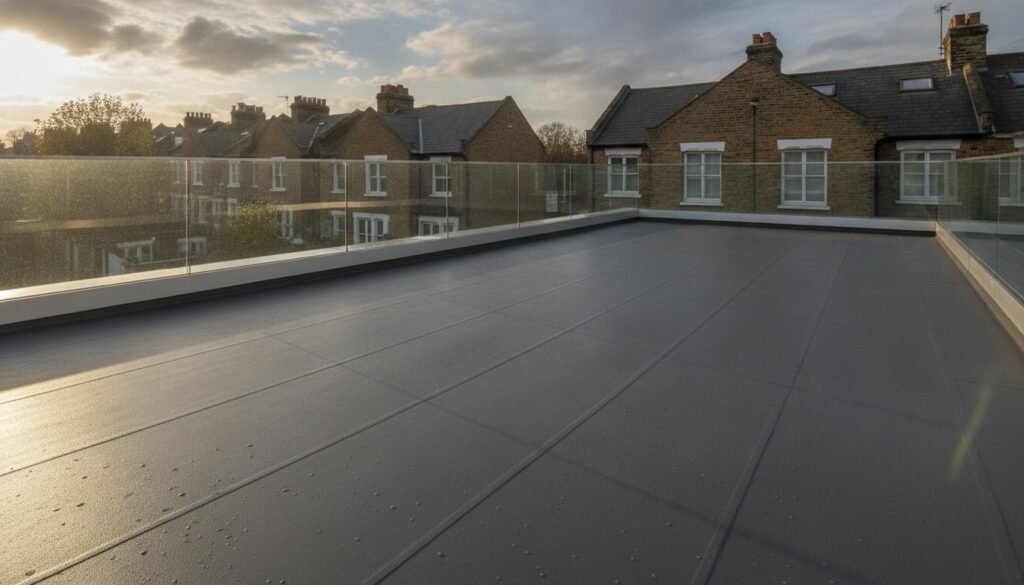
Beyond its strength, GRP roofing London offers a sleek, modern finish. Unlike the bulky, overlapping layers of felt, GRP is entirely seamless. You can choose from various colours and textures, including non-slip options for terraces, making it as attractive as it is functional. It’s the ideal choice for those who want their roof to look as good as it performs.
The science behind the waterproof seal
The secret to its longevity lies in the chemical process. Once the liquid resin is applied over the glass matting, it undergoes a curing process. This transforms the separate components into a single, continuous membrane that bonds directly to the roof deck. Because there are no seams, joints, or welds, there’s simply nowhere for water to get in. GRP is a cold-applied system that eliminates fire risks during installation, as it requires no open flames or high-heat torches.
Why London architecture suits GRP
London’s varied skyline, from ornate Victorian terraces to sleek modern apartments, presents unique challenges. Many older properties feature complex parapet walls and chimney stacks that are notoriously difficult to seal with traditional felt. GRP excels here. Its liquid application allows it to mould perfectly around roof lanterns, drainage pipes, and awkward corners. This flexibility ensures a tight seal in places where other materials usually fail.
If you’re currently dealing with a failing bitumen roof, considering a material upgrade is often more cost-effective than repetitive flat roof repair London. Whether it’s a small kitchen extension or a large commercial balcony, GRP provides a tailored fit that traditional rolls of material just can’t match. It’s a dependable, long-term solution that provides peace of mind for years to come.
The Fibreglass Installation Process: Precision and Durability
Installing a fibreglass roof is a methodical process that demands patience and the right conditions. Unlike traditional felt, which can be patched up in haste, GRP roofing London requires a dry environment for the chemical bond to form correctly. Moisture is the enemy of a successful installation. Even a light drizzle during the curing phase can compromise the entire structure; this is why we monitor the London weather forecasts with extreme precision before we begin any project.
The five-step GRP installation journey
We approach every project with a clear, linear plan to ensure a hassle-free experience for the homeowner. It starts with the foundation. We remove the old material and install high-quality, 18mm OSB3 tongue-and-groove boards. This provides a stable, moisture-resistant deck that won’t shift or flex. Once the deck is secure, we move to the detailing phase.
- Decking: Creating a rigid, flat surface using OSB3 boards.
- Detailing: Fitting pre-formed GRP edge trims to direct water flow into the guttering system.
- Lamination: Laying the glass fibre matting and saturating it with liquid resin.
- Curing: Allowing the chemical reaction to turn the liquid into a solid, seamless membrane.
- Topcoating: Applying the final weather-resistant layer for UV protection and aesthetic finish.
The topcoat application is arguably the most vital step. Without this final layer, the resin would eventually degrade under the sun’s rays. Our team ensures a uniform finish that protects your home from the elements for decades. It’s a simple, effective way to turn a vulnerable flat surface into a durable asset.
Technical standards and quality control
Technical standards for GRP roofing London are strict, and for good reason. A common mistake made by less experienced contractors is getting the resin-to-matting ratio wrong. We use a precise measurement of approximately 1.5kg to 2kg of resin per square metre. If there’s too little resin, you get “pinholing”, which are tiny, invisible gaps that lead to leaks. If there’s too much, the roof becomes brittle and prone to cracking. We’ve spent over 20 years perfecting this balance.
Before we sign off on any job, we perform a “tack-free” inspection. This ensures the surface is completely hard and no longer sticky to the touch. It’s this attention to detail that allows us to offer a 15-year guarantee on our workmanship with total confidence. If you’re considering an upgrade, we provide no-obligation quotes to help you plan your project without any pressure or sales tactics.
Choosing the right material for a flat roof often involves weighing up immediate costs against long-term reliability. GRP roofing London is frequently compared to traditional bitumen felt, EPDM rubber, and mastic asphalt. Whilst felt might seem like the budget-friendly choice at first glance, the performance gap between these materials is vast. A standard felt roof typically offers a lifespan of around 15 years before it begins to degrade. In contrast, a professionally installed fibreglass roof can easily exceed 30 or even 40 years of service. It is a structural investment rather than a temporary fix.
One of the biggest advantages of GRP is its resistance to environmental factors. London’s weather can be punishing, with rapid temperature shifts that cause many materials to expand and contract until they fail. GRP is engineered to handle these thermal movements without cracking. It is also naturally resistant to UV rays and moss growth, which are common issues that plague traditional roofing. Because it is virtually “fit and forget”, it requires almost zero maintenance beyond an occasional sweep to clear away fallen leaves or debris.
Fibreglass vs Felt: The long-term investment
The primary weakness of felt lies in its seams. Over time, the adhesive in these joints weakens, leading to blisters, tears, and water ingress. GRP is a single, continuous membrane with no joints or welds. This eliminates the most common point of failure entirely. When you analyse the “true cost” over 25 years, GRP is almost always the more economical choice because it removes the need for recurring repairs. For homeowners who aren’t quite ready for a full material upgrade, we still provide expert roof repairs London to keep your existing structure watertight whilst you plan for the future.
GRP vs EPDM Rubber
EPDM rubber is another modern alternative, but it lacks the sheer physical toughness of fibreglass. Rubber is a soft, flexible membrane that can be easily punctured by a dropped tool, a sharp stone, or even heavy hail. GRP is incredibly rigid and impact-resistant. This makes it the superior choice for any area that needs to be functional. If you plan on using your roof for a garden, a balcony, or a terrace, GRP is the only material that can comfortably support heavy pots and constant foot traffic without risk of damage. Visually, GRP provides a polished, architectural finish that enhances the property’s value, whereas rubber often has a more industrial, matte-black appearance that can look out of place on a residential home.
Versatility and Maintenance: Beyond Simple Protection
A flat roof doesn’t have to be a wasted space. Whilst many roofing materials are purely functional, fibreglass offers the rigidity required to support heavy planters, patio furniture, and regular foot traffic. This versatility is one of the main reasons GRP roofing London has seen such a rise in popularity. It allows homeowners to reclaim the top of their property. Whether you’re looking to create a quiet spot for morning coffee or a robust platform for a green roof garden, GRP provides the structural foundation to make it happen safely.
The material’s strength is matched by its ease of upkeep. Because the finish is non-porous, dirt and organic matter struggle to take root. This prevents the moss and lichen growth that often damages felt or tiled roofs. It’s a “hassle-free” solution that stays looking new with very little effort. Keeping your roof in top condition is more about basic awareness than intensive labour.
Creating a London roof terrace
In a city where outdoor space is at a premium, converting a flat roof into a terrace is a smart investment. To ensure these areas are safe for use, we apply a specialised non-slip finish during the installation. This involves integrating a fine mineral grit or a textured pattern into the final topcoat layer. It provides excellent grip underfoot, even during a typical London drizzle. We also ensure that any railings or balustrades are integrated seamlessly. We seal the fixings directly into the GRP membrane to prevent the common leak points found in traditional installations. GRP serves as a superior base for artificial grass or decking because it provides a perfectly flat, rot-proof foundation that won’t degrade under the weight of your chosen floor covering.
Protecting your 15-year guarantee
We take pride in our workmanship and provide a 15-year guarantee on all our GRP installations. To keep your roof performing at its best, we recommend a simple annual check. This isn’t a complex task. You just need to ensure your gutters are clear and that no structural movement in the building has affected the roof’s perimeter. Cleaning the surface is straightforward. A quick mop with warm, soapy water and a mild detergent is usually all that’s required to restore the original colour. Avoid using harsh solvent-based cleaners or bleach, as these can dull the protective topcoat over time. If you notice a minor surface scratch, it’s rarely a cause for alarm. The waterproof seal is located deep within the laminated glass matting, so a superficial mark won’t compromise the roof’s integrity. If you’re ready to upgrade your property, request a no-obligation quote from our specialists to get started.
Expert GRP Roofing Services in London by Atlas Roofing Solutions
We’ve spent over 20 years protecting London homes from the elements. As a family-owned business, our reputation is built on every roof we install. Honesty. Integrity. Quality workmanship. These aren’t just words to us; they’re the foundation of how we operate. GRP roofing London requires a specific level of technical skill that only comes with decades of hands-on experience. We don’t believe in high-pressure sales tactics or complex jargon. Instead, we provide straight-talking advice and transparent pricing that helps you make an informed decision for your property.
Our 15-year guarantee on all workmanship is a core part of our service. It isn’t just a piece of paper. It’s a statement of confidence in our methods and the materials we use. We know that a correctly installed fibreglass roof will last for 30 years or more. This guarantee covers the structural integrity of the installation, ensuring your home remains dry and protected against the city’s variable weather. It provides the long-term security and peace of mind that every homeowner deserves.
Why choose a family-run specialist?
When you choose Atlas Roofing Solutions, you benefit from personal accountability. You won’t be passed around a distant call centre or deal with subcontracted sales agents. You speak directly to the experts who understand the unique architectural challenges of London properties. This direct communication ensures that your specific needs are heard and understood from the very first contact. We take immense pride in our work. Our local reputation is our most valuable asset, and it drives us to maintain the highest standards on every project. We treat your home with the same care and precision we would our own.
Requesting your no-obligation quote
Getting started is a simple and hassle-free process. We offer free site visits across London to assess your flat roof’s condition and discuss your options. During this visit, we’ll identify any underlying structural issues and explain how a GRP system can resolve them. We provide detailed, written quotes that cover every aspect of the project. This includes high-quality materials, skilled labour, waste removal, and the final weather-resistant topcoat. There are no hidden costs or surprise fees. We believe in being an open book regarding our methods and standards. Contact Atlas Roofing Solutions today for your GRP assessment and discover why we’re the trusted choice for London flat roof solutions.
Secure Your Home with a Permanent Waterproof Solution
Investing in your property’s protection doesn’t have to be a recurring headache. Whilst traditional felt roofs often struggle with the capital’s variable weather, GRP roofing London provides a seamless, structural barrier that stands the test of time. You’ve seen how this modern material transforms vulnerable flat surfaces into durable assets, whether you’re looking for a simple extension cover or a functional roof terrace. It’s a “fit and forget” solution that offers genuine peace of mind for decades.
At Atlas Roofing Solutions, we bring over 20 years of industry experience to every project. As a family-owned and operated business, we take pride in our “straight-talking” approach and transparent standards. Our 15-year workmanship guarantee ensures that your investment is protected by experts who truly understand London architecture. Don’t let another rainy season cause unnecessary stress for your household.
Get a Free GRP Roofing Quote from Atlas Roofing Solutions today and take the first step toward a maintenance-free home. We’re here to help you protect your property with confidence and care.
Frequently Asked Questions
How long does a GRP fibreglass roof actually last?
A professionally installed fibreglass roof typically lasts between 30 and 40 years. This longevity makes GRP roofing London a far superior choice compared to traditional bitumen felt, which often requires replacement after just 15 years. Because GRP is a single, seamless membrane, it doesn’t suffer from the joint failures or UV degradation that plague older materials. It’s one of the most cost-effective long-term investments for your property’s protection.
Is GRP roofing more expensive than traditional felt?
GRP roofing London involves a higher initial investment compared to traditional torch-on felt. However, the total cost of ownership is significantly lower over the roof’s lifespan. Felt roofs frequently require repairs or full replacement every decade, whereas fibreglass remains maintenance-free for decades. When you factor in the 15-year guarantee we provide, the “per year” cost of a GRP system is much more affordable than repetitive felt patching.
Can I walk on my GRP roof or use it as a terrace?
Yes, GRP is exceptionally rigid and can easily support regular foot traffic. This makes it the ideal material for balconies, walkways, or roof terraces. To ensure safety, we apply a specialised non-slip grit finish to the final topcoat. Unlike rubber membranes that can puncture under pressure, a fibreglass roof handles the weight of patio furniture and heavy planters without compromising the underlying waterproof seal or structural integrity.
Is GRP roofing noisy when it rains on a flat roof?
GRP roofs aren’t noticeably noisier than other flat roofing materials during a downpour. The acoustic performance depends largely on the underlying insulation and decking rather than the waterproof membrane itself. Because we install GRP over solid 18mm OSB3 boards, the structure is dense enough to dampen the sound of rain. Modern “warm roof” insulation layers further reduce noise transfer, ensuring a quiet interior environment for your family home.
Can GRP be installed over an existing felt roof?
We don’t recommend installing GRP directly over old felt. For a fibreglass roof to bond correctly and provide a 100% waterproof seal, it requires a clean, dry, and structurally sound timber deck. Our process involves removing the failing felt and installing fresh OSB3 boards. This ensures the new system has a stable foundation, preventing the moisture traps and structural movement that cause amateur “overlay” installations to fail prematurely.
Is GRP roofing fire-safe for London residential properties?
Yes, modern GRP systems are fully compliant with UK Building Regulations regarding fire safety. We use high-quality resins and fire-retardant topcoats that meet BS EN 13501-5 standards. This ensures your roof provides a high level of protection against external fire spread. Additionally, because GRP is a cold-applied system, there’s no risk of fire during the installation process itself, as we never use open flames or high-heat gas torches.
Does GRP roofing suffer from osmosis or cracking?
Osmosis and cracking are almost always the result of poor installation rather than material defects. Osmosis occurs when moisture is trapped in the laminate during application, whilst cracking happens if the resin-to-catalyst ratio is incorrect. By choosing a specialist with over 20 years of experience, you eliminate these risks. We ensure the climate is perfectly dry and the chemical mix is precise, resulting in a flexible yet robust finish.
What maintenance does a fibreglass roof require?
A fibreglass roof is virtually maintenance-free. Unlike felt, it doesn’t attract moss or lichen, and it won’t become brittle under UV exposure. We suggest a simple annual check to ensure your gutters are clear of debris and that no structural shifts have occurred in the building. If the surface becomes dirty, a quick wash with mild detergent and warm water is enough to restore the original colour and keep it looking brand new.