Did you know that over half of London’s homes were built before 1945? This means your chimney stack has likely endured more than eighty years of relentless British rain and biting frost. For many homeowners, this high-altitude brickwork remains a case of “out of sight, out of mind” until a damp patch appears on a ceiling or masonry lands on the driveway. It’s a stressful discovery. You want a home that’s secure and weather-tight, but finding a specialist for chimney repointing London who you can actually trust often feels like a minefield.
We understand those anxieties. As a family-owned specialist with over 20 years of experience, we know that protecting a period property is a significant responsibility. You deserve straight-talking advice rather than a high-pressure sales pitch. This guide explains why professional repointing is vital for preserving your property and avoiding the massive costs of a full stack rebuild. We’ll explore the specific materials required for London’s heritage bricks, the methodical process of a quality repair, and how a 15-year guarantee provides the long-term security your home needs. Durable results. Simple process. Total peace of mind.
Key Takeaways
- Learn how to spot early warning signs of mortar decay and damp before they lead to falling masonry or internal property damage.
- Understand the technical steps involved in professional chimney repointing London, from safe roof access to the precision “raking out” of failed joints.
- Discover why breathable lime mortar is the only correct choice for preserving the integrity and appearance of London’s period brickwork.
- Compare the modest cost of preventative maintenance against the significant expense of a full chimney stack rebuild to protect your home’s value.
Understanding Chimney Repointing: Signs Your London Home Needs Attention
Understanding Chimney Repointing is the first step toward securing your home’s structural integrity. Simply put, it’s the process of renewing the external part of mortar joints between your bricks. Whilst it might seem like a cosmetic fix, it’s actually your chimney’s primary defence against the elements. In a city like ours, mortar doesn’t just age; it battles against a century of industrial legacy. Historical pollution and acid rain have a nasty habit of accelerating decay, eating away at the lime or cement binder until the joints become brittle and porous. When this happens, your chimney stack stops shedding water and starts absorbing it.
Visual Red Flags: What to Look for from the Ground
You don’t always need a ladder to spot trouble. A quick walk around your property can reveal several warning signs that you need chimney repointing London. Keep a sharp eye out for these indicators:
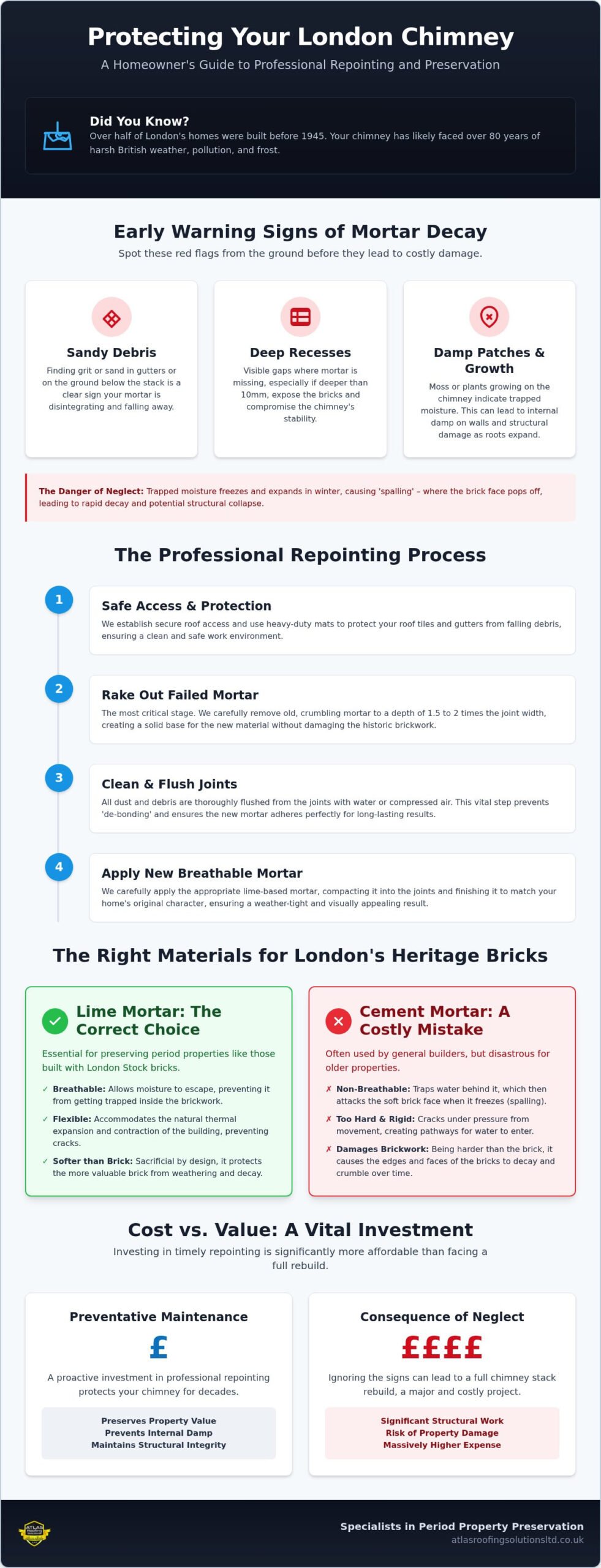
- Sandy debris: If you find small piles of grit or “sand” in your gutters or on the pavement below the stack, your mortar is literally disintegrating.
- Deep recesses: Look for gaps where the mortar has vanished, leaving the edges of the bricks exposed. If the gaps are deeper than 10mm, the stack’s stability is at risk.
- Vegetation: Seeing green growth like moss or even small shrubs like buddleia? This is a major red flag. It means moisture is trapped deep within the masonry, providing a perfect home for roots that will eventually prize your bricks apart.
Neglecting these signs leads to a destructive cycle called “spalling”. This happens when moisture gets trapped behind a hard or failing mortar joint. During winter, that water freezes and expands, causing the face of the brick to pop off entirely. Once the hard “fire skin” of the brick is gone, the soft interior decays rapidly. If left alone, this leads to internal damp patches on your bedroom walls or, in extreme cases, a total structural collapse of the stack. Following a structured chimney maintenance London checklist can help you catch these warning signs early and prevent minor wear from escalating into a costly disaster.
London Environmental Factors: Why Our Chimneys Age Differently
London chimneys face unique pressures. The “urban heat island” effect means the city stays significantly warmer than the surrounding countryside. This leads to more frequent thermal expansion and contraction cycles, which puts immense stress on old mortar. If the joints aren’t flexible enough to move, they crack.
There’s also a hidden chemical battle happening inside your flue. Decades of burning coal left thick layers of soot. When modern rain seeps through cracked joints, it reacts with that historical soot to create acidic compounds. This corrodes the chimney from the inside out. Most Victorian and Edwardian homes across the capital were built with “London Stock” bricks. These are beautiful, porous materials that require a soft, breathable mortar to survive. Using the wrong materials is often worse than doing nothing at all, which is why local expertise is vital for a lasting repair.
The Professional Process of Chimney Repointing in London
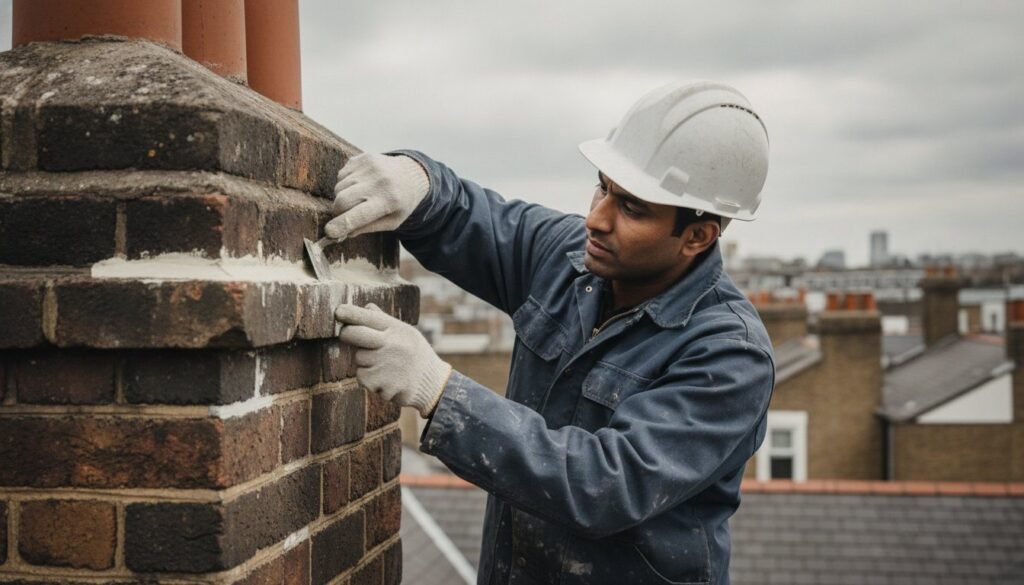
Professional chimney repointing London isn’t just about a quick application of new mortar. It’s a methodical restoration that requires precision and patience. We begin every project by ensuring safe access and protecting your property. Heavy-duty mats cover the roof below the stack to catch debris. Falling mortar can easily crack slates or clog gutters; we take every precaution to prevent that. This preparation phase creates a secure environment for our team and total peace of mind for you.
Step-by-Step: Raking, Cleaning, and Filling
Raking out is the most critical stage of the entire process. We remove the failed mortar to a specific depth, usually 1.5 to 2 times the width of the joint. This ensures the new material has enough surface area to “grip” the brickwork properly. Whilst some contractors use mechanical grinders to speed this up, they must be handled with extreme care. A single slip can permanently scar a Victorian brick. We often use hand tools for more delicate areas to preserve the original masonry. Following expert advice on Signs Your London Home Needs Attention, we ensure every joint is handled with the respect a period property deserves.
Once the joints are raked, we flush them with water or use compressed air to remove every trace of dust. If dust remains, it creates a barrier that causes “de-bonding,” leading to the new mortar falling out within a few years. Wetting the bricks also prevents them from sucking moisture out of the new mortar too quickly, which can cause premature cracking. It’s a simple step that many general builders skip, but it’s vital for a long-lasting finish.
Finishing Techniques: Weatherstruck vs. Flush Pointing
The finish of the joint is your chimney’s first line of defence against the elements. In our city’s notoriously wet climate, we often recommend “Weatherstruck” pointing. This technique involves angling the mortar joint so the top edge is slightly recessed. This creates a small slope that sheds rainwater away from the brick edges. It stops water from pooling and prevents the “spalling” effect we discussed earlier. It looks sharp and performs brilliantly under pressure.
For high-end heritage restorations, some homeowners choose “Tuck Pointing.” This involves using a mortar that matches the bricks exactly, with a fine, raised white line applied over the top to create the illusion of perfect, thin joints. Regardless of the style you choose, the material must be breathable. Some builders suggest using high-strength cement, but rigid mortar can actually destroy soft “London Stock” bricks. If you’re concerned about your chimney’s current condition, we can provide a free site visit to assess the best approach for your home.
Lime Mortar vs. Cement: Choosing the Right Materials for Heritage Stacks
Material choice is the single most important factor in a long-lasting repair. Many homeowners assume that “stronger is better” and opt for modern Portland cement. For a Victorian or Edwardian terrace, this is a costly mistake. If your mortar is harder than your bricks, the brickwork will eventually fail. We see this often with chimney repointing London projects where previous builders used rigid cement on soft London Stock bricks. The result is almost always spalling, where the brick face crumbles away because moisture has no other way to escape.
The Case for Lime: Flexibility and Breathability
Most London homes built before 1920 were originally constructed using lime mortar. This material is prized for its “breathability.” It allows moisture to evaporate through the mortar joints rather than through the bricks themselves. This protects the masonry from freeze-thaw damage. Lime is also naturally flexible. It can accommodate the minor structural movements common in London’s clay soils without cracking. According to the SPAB guide to chimney maintenance, using like-for-like materials is essential for the long-term health of heritage buildings. It ensures your chimney remains a “reliable guardian” of your home rather than a structural liability.
We also focus heavily on aesthetic consistency. London’s historic streets have a unique character. We don’t just slap on any grey mix; we carefully match the colour and texture of the new mortar to your existing brickwork. This preserves the kerb appeal and historical value of your property. It’s about pride in workmanship and respecting the architectural heritage of the capital.
When Cement is Appropriate (and When It Isn’t)
Cement isn’t always the villain. For modern properties built after the 1950s, cement-based mortars are standard and perfectly functional. These buildings use harder, kiln-fired bricks designed to work with a rigid binder. However, the problems start when builders apply “ribbon pointing” with hard cement to old stacks. This is where the mortar sits proud of the brick, trapping water in the joints. It’s a shortcut that leads to rapid decay.
If your property is a mid-century or modern build, we use the correct mix ratios to ensure durability without compromising the stack’s stability. For heritage properties, we stick to traditional methods. We provide a transparent, straight-talking assessment of which material your specific chimney requires. There are no high-pressure tactics here; just a commitment to doing the job properly so it lasts for decades, not just a few seasons. We back this up with our 15-year guarantee, giving you total security in the materials we choose.
Cost vs. Value: Why Repointing is a Vital Investment
Investing in your home’s exterior is rarely as exciting as a new kitchen, but it’s far more critical for your bank balance. Proactive chimney repointing London is a fraction of the cost of a full stack rebuild. If you wait until bricks are loose or the stack is leaning, you’re looking at a major structural project involving substantial labour and material costs. A well-maintained chimney also does wonders for your property’s kerb appeal. In the competitive London housing market, a tidy, weather-tight stack suggests a home that’s been cared for with precision and pride.
Neglect carries hidden penalties. When mortar fails, water doesn’t just stay in the brickwork. It travels. We often see homeowners dealing with damp patches on internal chimney breasts, ruined wallpaper, and even timber rot in the roof joists. These secondary repairs often cost significantly more than the original repointing would’ve. By acting early, you protect the very fabric of your property and avoid the stress of emergency repairs during a winter storm.
Factors Influencing the Price of Repointing in London
Several variables dictate the final investment. Height is a primary factor; a three-storey Victorian townhouse requires more complex access than a single-storey extension. Location matters too. An end-of-terrace property might offer easier access than a mid-terrace house where materials must be handled with extra care. Scaffolding is a non-negotiable safety investment for any work at height in London. It provides a stable platform for our craftsmen to work with the thoroughness your home deserves. Whilst specialist lime mortar carries a slight premium due to the skill required, it prevents the expensive “spalling” damage we discussed earlier, saving you thousands in the long run.
Long-Term Protection: The 15-Year Guarantee
When done correctly, professional repointing should last between 25 and 50 years. We believe in our workmanship, which is why we offer a 15-year guarantee. This allows you to “set and forget” your chimney maintenance, knowing it’s shielded against the capital’s unpredictable weather. It’s part of our commitment as a family-run business to provide a hassle-free experience. For broader property maintenance, you can explore our Expert Roof Repairs London services to ensure your entire roofline is secure.
Don’t leave your home’s protection to chance. If you’re worried about the state of your brickwork, we can provide a free site visit to give you an honest, straight-talking assessment of what’s required. It’s about long-term security, not a quick fix.
Choosing a Specialist for Chimney Repointing in London
Selecting the right contractor for chimney repointing London is just as vital as the materials used in the repair. Whilst many general builders offer pointing services, a chimney is a specialised structure that sits at the intersection of masonry and roofing. A specialist understands how a stack behaves under wind loads and how it interacts with your roof’s flashing and tiles. They also possess the local knowledge required to navigate specific borough regulations, especially if your property sits within a conservation area where like-for-like material matching is a legal requirement.
When you receive a quote, look for transparency. A professional estimate shouldn’t just be a single figure. It should clearly outline the preparation phase, the depth of the raking out process, and the method for disposing of debris. If a quote seems suspiciously low, it often means the contractor plans to “smear” new mortar over the old joints rather than raking them out properly. This shortcut fails within a few seasons and often causes more damage to the brickwork than it solves. Accountability matters in our industry.
Questions to Ask Your Roofing Contractor
Before you sign a contract, have a straight-talking conversation with your chosen firm. This helps alleviate anxieties and ensures you aren’t dealing with rogue traders. Start with these three essential questions:
- “Do you use lime or cement mortar for my specific age of property?” As we have explored, using cement on a pre-1920s home can be disastrous. A true expert will immediately identify your brick type and recommend the correct binder.
- “How do you ensure dust control and safety for my neighbours?” Raking out mortar is a messy job. A responsible specialist uses dust extraction or specialised techniques to keep your property and the neighbouring houses clean.
- “Is the scaffolding included in the quote or handled separately?” Scaffolding is a major part of the logistics. Ensure the price you see is the final price you’ll pay, with no hidden “access fees” added later.
The Atlas Roofing Advantage: 20 Years in the Capital
We take immense pride in being a family-owned business with over 20 years of experience serving the London community. We aren’t a faceless corporate entity; we are local experts who value our reputation over quick wins. This “quiet confidence” comes from decades of practical experience on every type of London property, from Victorian terraces to modern apartment blocks. We offer free site visits and provide transparent, no-obligation quotes that break down every stage of the journey.
Our goal is to be a reliable guardian for your home. By combining traditional craftsmanship with modern efficiency, we ensure your chimney remains weather-tight and beautiful for decades. For more detailed information on our full range of restoration services, feel free to visit our Chimney Repair London pillar page. We believe in honesty, integrity, and workmanship that stands the test of time. Your home’s safety is our priority.
Securing Your Home’s Future
Protecting your property starts with understanding the unique needs of London’s historic masonry. We’ve explored how the right materials, like breathable lime mortar, prevent the destructive cycle of spalling and internal damp. We’ve also seen how proactive chimney repointing London avoids the daunting costs of a full stack rebuild. Your chimney is a vital guardian against the capital’s weather; it deserves specialist care that respects its heritage and ensures long-term stability.
As a family-owned business with over 20 years of expertise, we’re here to provide that care with transparency and integrity. We are fully insured and offer a 15-year guarantee on all workmanship to give you total peace of mind. You don’t have to navigate the roofing market alone or worry about rogue traders. Our team provides the straight-talking advice and durable results your home needs. To take the first step toward a weather-tight and secure property, Request your free chimney inspection and no-obligation quote today. We look forward to helping you preserve your piece of London’s architectural history.
Frequently Asked Questions
How much does chimney repointing cost in London?
The cost of chimney repointing London depends on several variables, including the size of the stack and the complexity of access. London properties often require scaffolding due to their height, which is a significant factor in the total investment. Heritage buildings using specialist lime mortar may also see different rates compared to modern cement work. We provide transparent, no-obligation quotes after a site visit to ensure you receive an accurate price tailored to your specific property.
How long does chimney repointing take to complete?
A standard chimney repointing project usually takes between one and three days to complete once the scaffolding is in place. This timeline depends on the number of flues and the condition of the existing mortar. Weather is the most significant variable; we cannot apply new mortar during heavy rain or frost as it compromises the curing process. Our team works methodically to ensure a high-quality finish whilst minimising disruption to your daily routine.
Do I need scaffolding for chimney repointing?
Yes, scaffolding is almost always necessary for a safe and professional repointing job. It provides our craftsmen with a stable, secure platform to rake out old joints and apply new mortar with precision. Working from ladders is not only dangerous but prevents the thoroughness required for a long-lasting repair. Whilst it adds to the initial setup, it ensures the work is carried out to the highest safety and quality standards.
Can I repoint my own chimney stack?
Repointing a chimney stack is not a recommended DIY task for most homeowners. The risks of working at significant heights are extreme, and the technical skill required to mix and apply the correct mortar is substantial. Using the wrong materials can lead to permanent brick damage, as we discussed in the heritage sections. Hiring a specialist ensures the job is done safely and is backed by a professional guarantee for your peace of mind.
What is the best time of year to repoint a chimney in the UK?
The best time for chimney repointing in the UK is during the spring, summer, or early autumn. Mortar requires mild, dry conditions to cure properly and achieve maximum durability. We avoid working in temperatures below 5 degrees Celsius, as frost can cause the fresh mortar to crack and fail. By scheduling your maintenance during the warmer months, you ensure the new joints bond perfectly and provide the long-term protection your home deserves.
Will repointing my chimney stop a damp problem?
Professional repointing will stop damp problems if the moisture is entering through failed or porous mortar joints. By creating a weather-tight seal, we prevent rainwater from soaking into the masonry and travelling to your internal walls. However, if the damp is caused by a leaking flue liner or internal condensation, additional repairs may be needed. A thorough inspection will identify the exact source of the ingress before work begins on your chimney.
What is the difference between pointing and repointing?
Pointing refers to the visible finish of the mortar joints between your bricks. Repointing is the restorative process of raking out old, decayed mortar and replacing it with fresh material. Whilst “pointing” is often used as a general term, repointing is the specific maintenance task required to maintain structural integrity. It involves deep cleaning the joints and applying new mortar to ensure the stack remains secure and waterproof for the next generation.
How often should a chimney be repointed?
A high-quality repointing job should last between 25 and 50 years, depending on the chimney’s exposure to the elements. Stacks undergoing chimney repointing London are subject to significant pollution and thermal stress, which can accelerate wear. We recommend a visual inspection every five years to check for sandy debris or visible gaps. Catching minor decay early allows for simple repairs and prevents the need for a more expensive, full-scale restoration later. Our essential chimney maintenance London checklist provides a practical guide to help you stay on top of these inspections and protect your home year after year.