If you’re staring at a damp patch on the ceiling, is your first thought about the leak or the fear of being overcharged by an unreliable contractor? It’s a common anxiety for any homeowner. Understanding exactly how much does a new roof cost UK wide is the first step to taking back control of your home maintenance. You need a professional solution that protects your family for the long term, not a temporary fix that fails when the British weather turns.
We know that budgeting for a major renovation feels daunting, especially with the strict 2026 energy efficiency regulations now in play. You want straight talk and transparency, not high-pressure sales tactics. This guide provides a clear breakdown of the latest roofing costs, from material durability to the reality of scaffolding and waste disposal fees. We’ll explore which materials offer the best return on investment and how to choose a partner who treats your home with genuine care. By the end, you’ll have the confidence to secure a durable, hassle-free roof that truly lasts.
Key Takeaways
- Understand exactly how much does a new roof cost UK wide by distinguishing between a simple tile overlay and a complete structural replacement.
- Discover how your home’s specific pitch and square metreage dictate the amount of labour and specialised safety equipment required for the job.
- Compare the upfront costs and long-term lifespan of materials ranging from budget-friendly concrete tiles to premium natural slate.
- Identify essential “hidden” expenses such as scaffolding hire and waste disposal to ensure your initial budget remains realistic and transparent.
- Learn why a 15-year workmanship guarantee from a local specialist is the best way to future-proof your home against the latest 2026 building regulations.
Understanding the Real Cost of a New Roof in 2026
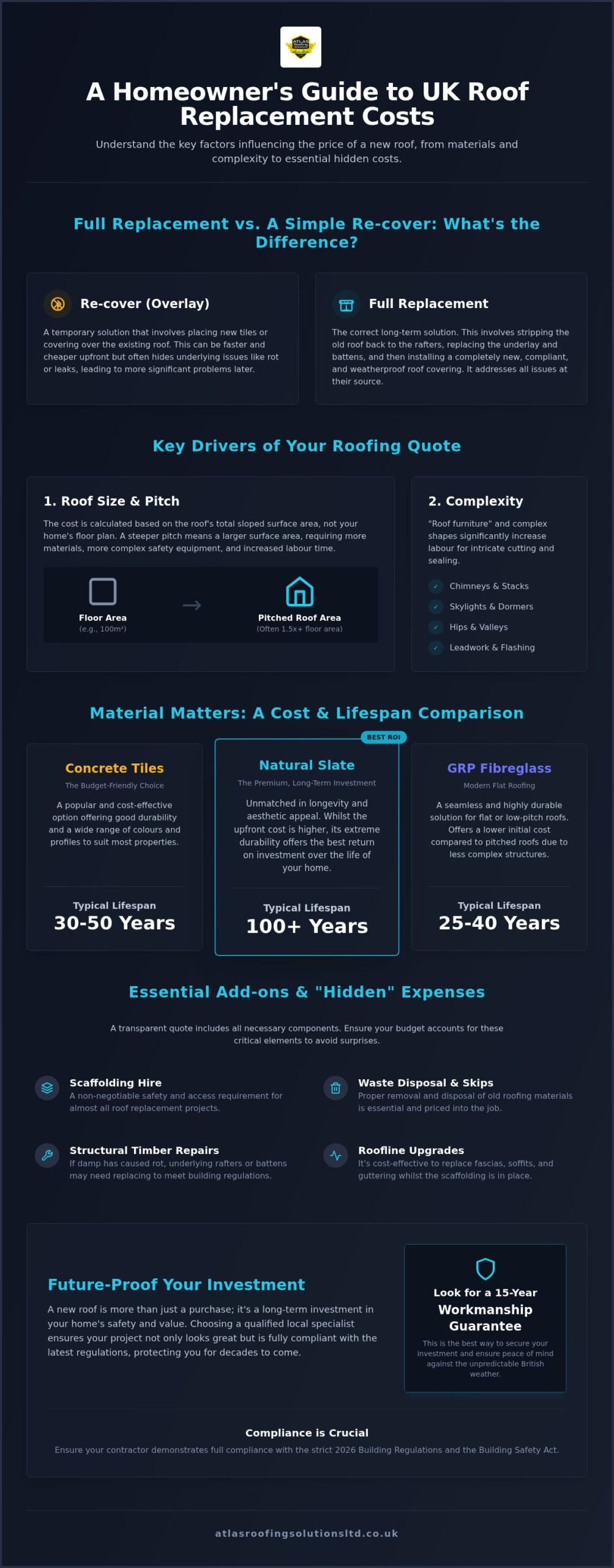
Calculating a budget for a major home project often starts with a quick search for national averages. But if you’re asking how much does a new roof cost UK homeowners in 2026, you’ll quickly find that a single figure rarely tells the whole story. A full replacement involves stripping the structure back to the rafters, replacing the underlay, and installing new battens before the final covering is laid. This is entirely different from a “re-cover” or overlay, which simply hides existing problems rather than fixing them at the source. We believe in doing the job once and doing it right.
For a reliable estimate, you need to look at the total project cost. This isn’t just about the tiles on top. It includes skilled labour, high-quality materials, and the standard 20% VAT. In 2026, material prices have stabilised after the volatility of previous years, but logistics and labour costs continue to rise. This year also brings stricter accountability under the Building Safety Act, meaning your contractor must prove competency and compliance on every project. When researching your options, it’s helpful to consult a comprehensive list of roofing materials to see how choices like natural slate or concrete tiles impact your bottom line.
Why Prices Vary Across the UK
Labour rates in the capital are naturally higher, but “hidden” logistics like parking permits and congestion charges often add hundreds to a final invoice. We call this the “London Premium,” and it’s a reality for any local project. Accessibility is another major factor. A detached property with clear access on all sides is straightforward. In contrast, a mid-terrace house in a narrow street requires precision planning for scaffolding and waste removal. These regional logistics change the final invoice because they dictate how many skips are needed and how long the team spends moving materials by hand.
Pitched vs. Flat Roof Baseline Costs
Flat roofs usually offer a lower entry price because they require fewer structural materials and less time to install. Modern GRP fibreglass options provide excellent durability, but they still have different maintenance requirements than a traditional pitched roof. Pitched roofs involve more complex timber work and a larger surface area, which naturally drives up the initial quote. Before you commit to a full installation, check for signs your roof needs replacing to ensure you aren’t paying for a complete overhaul when a targeted repair might suffice.
Key Drivers of Your Roofing Quote: Size, Pitch, and Complexity
Every roof is a unique puzzle. While the footprint of your home provides a starting point, it’s the geometry above that dictates the final quote. When homeowners ask how much does a new roof cost UK wide, they are often surprised by how square metreage is actually calculated. We don’t just measure the floor space. We measure the actual slope area. A steeply pitched roof has a much larger surface area than a shallow one, even if the houses look identical from the street.
Pitch doesn’t just affect the amount of material. It changes how we work. A steeper incline requires more complex safety equipment and specialised scaffolding. Labour naturally slows down on a sharp slope because every movement must be secured. It’s about safety and precision. Then there is the “roof furniture”. Every chimney, skylight, or dormer window adds hours of intricate leadwork and sealing. These aren’t just add-ons; they are critical junctions that keep your home watertight.
The Complexity Factor
Valleys and hips are the areas where two roof planes meet. These require custom-cut tiles and specific flashing, which increases material waste and labour time. It’s often the best time to handle chimney repairs or leadwork upgrades while the scaffolding is already in place. Integrating these tasks into a single project is far more cost-effective than calling out a specialist later. A “strip and re-roof” covers everything from the felt up, but if your home requires a completely new timber structure, the scope of work and the budget will change significantly.
Structural Integrity and Timbers
What happens if we find rotten rafters? Most projects only require new battens, which are the horizontal strips the tiles hook onto. However, if the underlying structural timbers have suffered from long-term damp, they may need replacing to meet official building regulations. When you’re trying to figure out how much does a new roof cost UK homeowners often focus on the tiles, but the health of your timbers is what truly determines the project’s lifespan.
A professional survey is the only way to avoid mid-project price hikes. It identifies hidden decay early so your quote remains accurate from start to finish. If you’re concerned about the state of your current structure, we can help you organise a thorough inspection to give you total peace of mind and a clear, honest plan for your home.
Material Matters: Comparing Slate, Tile, and Flat Roof Costs
Material choice is where your budget meets your home’s aesthetic. While the size and pitch of your structure set the foundation of your quote, the “finish” dictates the final figure. When calculating how much does a new roof cost UK homeowners often find that materials account for a significant portion of the total expenditure. Choosing the right covering isn’t just about the initial price. It’s about how many decades of protection you’re buying for your investment.
It’s also vital to consider the weight of your chosen material. If you’re moving from a lightweight felt to heavy concrete tiles, your existing rafters might need structural reinforcement. This can add unexpected labour costs to the project. We always assess the structural capacity of your home before recommending a specific material to ensure your new roof is as safe as it is beautiful.
Pitched Roof Materials: Tiles vs Slates
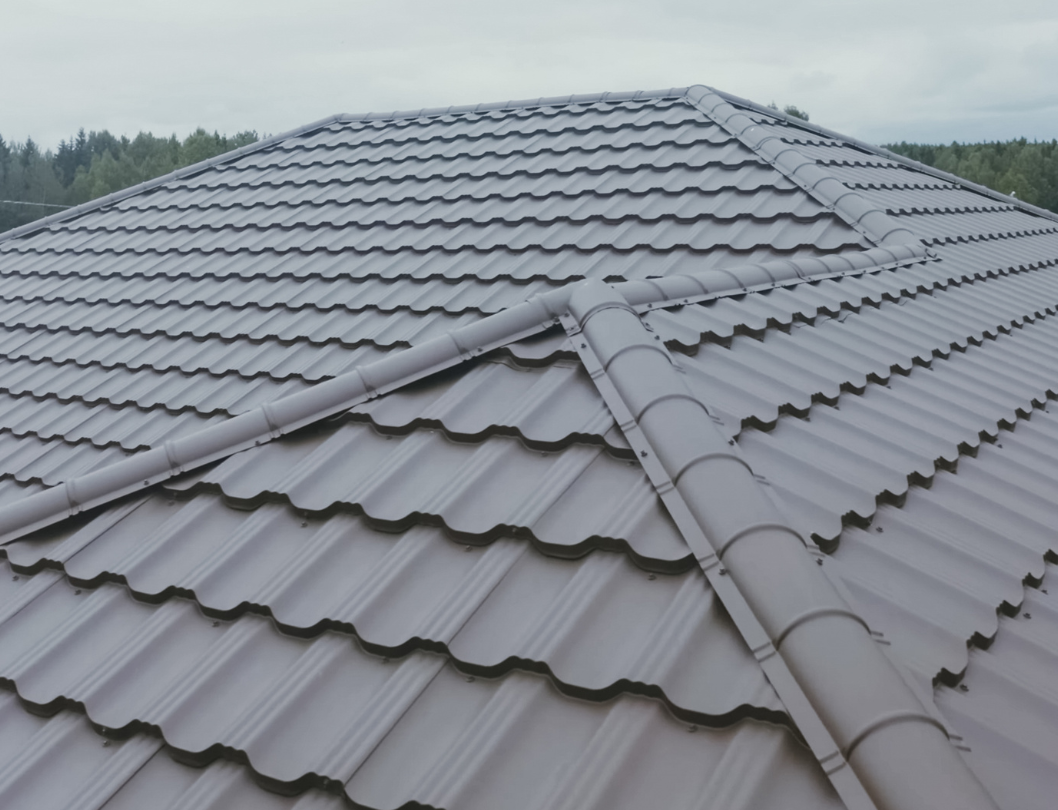
Concrete tiles are the workhorse of the British roofing industry. They are cost-efficient, durable, and come in various colours to match almost any neighbourhood. They are the most common choice for those seeking a balance between price and performance. Clay tiles offer a more traditional look and superior colour retention over time, but they carry a higher price point and require more precision during installation.
For heritage properties or those seeking a premium finish, natural slate remains the gold standard. It’s a significant upfront investment, but it offers a potential 100-year lifespan. This makes it a “once-in-a-lifetime” roof that adds substantial value to any property. While the initial cost is higher, the longevity often results in a lower cost-per-year than cheaper alternatives.
Flat Roof Options: GRP Fiberglass vs Felt
Flat roofing has evolved significantly. Traditional torch-on felt is still a popular option because it offers the lowest entry cost. It’s a functional choice, but it often carries a shorter guarantee and can be prone to leaks at the seams as it ages. For homeowners looking for a “fit and forget” solution, we recommend GRP fiberglass.
Fiberglass is applied as a cold liquid that cures into a single, seamless sheet. Because there are no joints, there are no weak points for water to penetrate. We specialise in these modern installations because they offer the best long-term value for extensions and garages. To give you total peace of mind, we provide a 15-year workmanship guarantee on our fiberglass roofs. It’s a simple, hassle-free way to ensure your home stays dry for decades without the need for constant maintenance or patch repairs.
Essential Add-ons: Scaffolding, Waste, and Roofline Maintenance
When you receive a quote for a roof replacement, the figure on the page often focuses on the tiles and timber. However, the true answer to how much does a new roof cost UK wide includes several essential “add-ons” that are often overlooked until the project begins. These aren’t optional extras. They are the logistical and safety requirements that ensure your home stays protected and your project remains legal. Transparency is key here. A quote that seems too good to be true often hides these costs, leading to stressful mid-project price hikes.
Scaffolding is the most significant of these essentials. It is a non-negotiable requirement for safety and legal compliance. It provides our team with a secure platform to work with precision and protects your property from falling debris. While some contractors might offer a lower base price by excluding scaffolding from the initial estimate, we believe in providing a total project cost from day one. Leadwork is another critical area. Replacing the lead flashings around chimneys and in valleys is the only way to guarantee a watertight seal. It is a “belt and braces” approach that prevents leaks at the most vulnerable points of your structure.
The Roofline: Fascias, Soffits, and Gutters
Your roofline is the finishing touch that protects your home’s rafters from damp and rot. We often suggest replacing your fascias, soffits, and guttering at the same time as your main roof. Choosing high-quality uPVC fascias and soffits provides a low-maintenance, durable solution that won’t require painting or sanding for years to come.
There is a major cost-saving benefit to doing this work whilst the scaffolding is already in place. You avoid the expense of hiring a separate team and re-erecting safety platforms later. Integrated guttering installation ensures that rainwater is channeled away from your walls effectively, preventing long-term damp issues. It is a simple, proactive step that adds immediate kerb appeal and long-term security to your home.
Waste Management and Site Clearance
Removing several tonnes of old tiles, felt, and timber is a major logistical task. In urban London environments, this requires careful planning for skip placement and timely collection. Professional waste disposal is essential for environmental compliance. We ensure that your old roofing materials are disposed of responsibly at licensed centres.
Beware of “cheap” quotes that ignore proper waste disposal. These often result in fly-tipping or leaving the homeowner with a mess to clear themselves. A reputable contractor handles the entire process, leaving your site clean and tidy. If you want a clear, all-inclusive breakdown of these essential services, you can request a transparent roofing quote from our family-run team today.
Finding a Trusted Local Specialist for Your New Roof
Choosing the right contractor is just as important as selecting the right tiles. While the question of how much does a new roof cost UK wide is a financial one, the answer depends heavily on the skill of the installers. A local London roofer understands the specific challenges of the city’s architecture, from the narrow access of Victorian terraces to the structural nuances of Edwardian semis. This local knowledge ensures that your project complies with regional building styles and logistics, preventing costly delays or aesthetic mismatches.
We believe that true value comes from accountability. As a family-owned business with over 20 years of experience, we value our reputation over quick wins. We treat every home as if it were our own, focusing on protection and preventative care. This is why we provide a 15-year workmanship guarantee on all new installations. It is our way of future-proofing your investment, giving you total peace of mind that your home is secure against the elements for the long term.
Comparing Quotes the Right Way
It is tempting to simply pick the lowest number on a piece of paper. However, the lowest quote is often the most expensive in the long run. If a contractor excludes scaffolding, waste disposal, or high-quality underlay, those costs will eventually surface as “extras” mid-project. When you compare quotes, use this checklist to ensure you are looking at a like-for-like comparison:
- Does the quote include all materials, including battens and leadwork?
- Are scaffolding and skip hire fees clearly stated?
- Is there a written workmanship guarantee?
- Will the contractor handle the site clearance and waste disposal?
For a deeper dive into what to expect during the process, our Professional New Roof Installation London guide provides a comprehensive roadmap for 2026 homeowners.
The Atlas Roofing Difference
At Atlas Roofing Solutions Ltd, we pride ourselves on being a transparent alternative to generic national chains. Our 20 years of London experience means we have seen every possible roofing challenge and solved it with care. We provide durable, weather-resistant solutions that are designed to last, not just look good for a few seasons. We don’t believe in high-pressure sales; we believe in honest, straight-talking advice that helps you make the best decision for your property.
Accurate pricing starts with a physical inspection. This is why we offer free site visits to assess the true condition of your timbers, pitch, and roofline. It is the only way to provide a tailored, no-obligation quote that reflects the reality of your project. If you are ready to discover exactly how much does a new roof cost UK homeowners in your specific area, we invite you to book your free consultation today. Let us help you protect your home with the quiet confidence that only comes from seasoned local authority.
Secure Your Home’s Future with a Durable New Roof
Budgeting for a major home project shouldn’t be a source of stress. While the question of how much does a new roof cost UK wide depends on your home’s unique size and complexity, the most important factor is the quality of the installation. A durable roof requires more than just new tiles. It demands high-quality underlay, precision leadwork, and a commitment to meeting the latest 2026 energy efficiency standards. By choosing the right materials and accounting for essential logistics like scaffolding, you ensure your investment protects your home for decades.
At Atlas Roofing Solutions Ltd, we bring over 20 years of local experience to every project. As a family-owned and operated business, we pride ourselves on accountability and honest, straight-talking advice. We provide a 15-year workmanship guarantee to future-proof your home, ensuring a simple and hassle-free experience from the first site visit to the final clearance.
Ready to take the next step? Get a Free, No-Obligation New Roof Quote from London Experts today. Let’s work together to build a roof you can rely on.
Frequently Asked Questions
How much does a new roof cost for a 3-bedroom semi-detached house in the UK?
A 3-bedroom semi-detached property typically falls within the national average range of £7,000 to £13,000 for a full replacement. The final figure depends heavily on whether you choose budget-friendly concrete tiles or premium natural slate. When calculating how much does a new roof cost UK wide, remember that semi-detached homes often require more scaffolding than terraced properties, which impacts the labour and logistics portion of your final invoice.
Does a new roof add value to my UK property?
A new roof is a significant selling point that provides potential buyers with immediate peace of mind. It protects the structural integrity of the building and significantly improves kerb appeal. Beyond aesthetics, a modern installation helps your home meet the 2026 Future Homes Standard for energy efficiency. This can improve your EPC rating, making the property more attractive and valuable in a competitive market.
How long should a new roof last before needing repairs?
The lifespan of your roof depends primarily on the materials used during installation. Concrete tiles usually last between 30 and 50 years, whilst natural slate can protect a home for a century. High-quality GRP fiberglass flat roofs often last over 30 years with minimal maintenance. Choosing a specialist who provides a 15-year workmanship guarantee ensures that the initial construction is sound and built to withstand the British weather.
Do I need planning permission for a new roof in London?
You generally don’t need planning permission for a like-for-like roof replacement under permitted development rights. However, you must apply if you’re changing the roof’s shape, height, or using materials that differ significantly from the original, especially in conservation areas. You must always obtain Building Regulations approval if you’re replacing more than 50% of the roof structure to ensure it meets current safety and insulation standards.
Is it cheaper to repair a roof or replace it entirely?
Repairing a few slipped tiles or a minor leak is certainly cheaper in the short term. However, if your roof is over 25 years old or suffers from widespread damp, a replacement offers better long-term value. Our detailed guide on roof repair vs replacement can help you understand the structural warning signs and cost implications before making your decision. When you consider how much does a new roof cost UK homeowners over a 30-year period, a full replacement often prevents the compounding costs of repetitive, expensive patch repairs and potential structural timber damage.
How long does it take to install a new roof on a standard UK home?
A standard semi-detached house usually takes between 5 and 10 working days to complete. This timeline includes the initial scaffolding erection, stripping the old materials, and laying the new structure. Complex projects involving multiple chimneys, valleys, or significant timber repairs may take longer. We always aim for a methodical, step-by-step progression to ensure the project remains hassle-free and the site stays tidy throughout the process.
Are there grants available for new roofs in the UK in 2026?
There are currently no direct government grants that cover the entire cost of a new roof for most homeowners. However, under the 2026 Future Homes Standard, you may find regional subsidies or “green” loans for the high-performance insulation required during a replacement. Some local authorities provide assistance for low-income households or pensioners through the Home Repair Assistance grant, so it’s worth checking with your local council.
What is the best time of year to have a new roof installed?
Spring and summer are the most popular times for roofing projects because the weather is generally more stable and the days are longer. This allows for faster progress and reduces the risk of rain delays. However, a professional team can install a roof year-round. We take extra precautions during autumn and winter to ensure your home remains watertight and protected at every stage of the installation process.