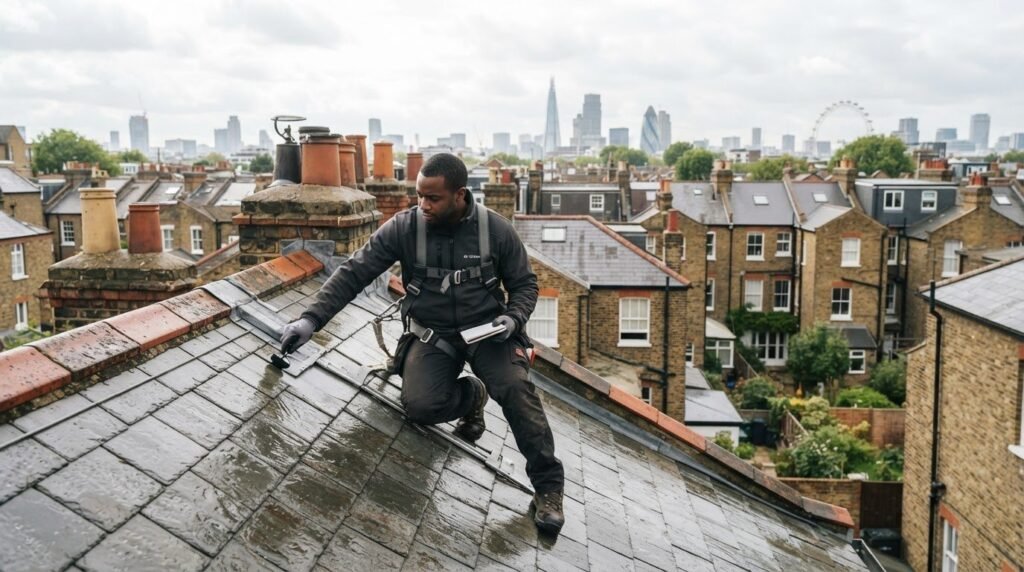
A roof can look sound from the ground and still need attention. If you’re wondering how often you should have your roof inspected in the UK, arrange a professional inspection at least once a year. Book an additional check after severe weather, when wind or heavy rain may have loosened tiles or exposed weak points.
It’s easy to put roof maintenance off when there’s no obvious leak. Regular inspections can help identify wear before it develops into a more disruptive problem. The right interval depends on the roof’s material, age and condition.
This guide explains how often to arrange an inspection, why flat, tiled and slate roofs may need different attention, and what a professional checks. You’ll also learn when to arrange an earlier inspection, including after a storm or if you notice signs of water getting in.
Key Takeaways
- Use your roof’s age, condition and exposure to weather to shape its inspection schedule, rather than relying on one routine for every home.
- Flat roofs generally need closer, more frequent attention than sound pitched roofs; learn how the covering affects the timing.
- A professional check looks beyond the roof covering to details such as flashing, joints, drainage and signs of moisture inside the loft.
- Spotting wear early can help you decide whether a repair, guttering work or a larger roofing project is the practical next step.
How often should I get my roof inspected?
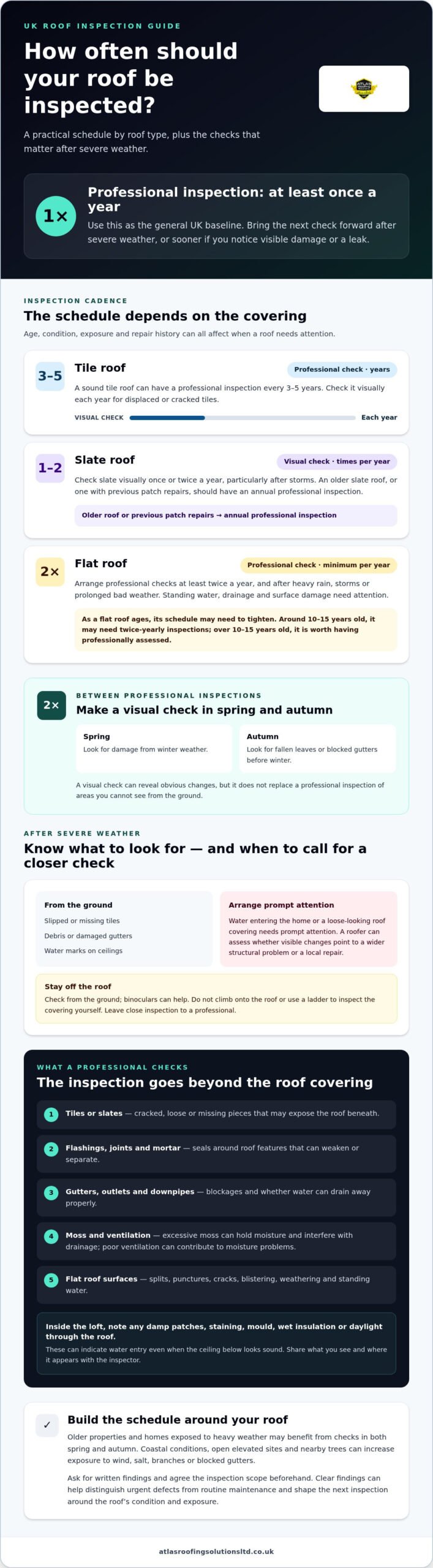
For UK homes, arrange a professional roof inspection at least once a year. Book an additional check after severe weather, particularly if you notice visible damage or a leak.
A seasonal visual check can help you spot changes between professional inspections. The roof’s age, material and exposure all affect the schedule.
Local Weather and Roof Exposure
Local weather and the roof’s position affect how quickly roofing materials wear. Coastal conditions can expose roofs to salt and strong winds, while open, elevated sites may face more wind than sheltered streets. Nearby trees can drop branches and leaves, blocking gutters or damaging tiles. Regular inspections are particularly useful for homes with greater exposure or overhanging trees.
If you’re asking how often you should have your roof inspected in the UK, use an annual professional inspection as your baseline. Older properties or homes exposed to heavy weather may benefit from checks in both spring and autumn, rather than waiting for a problem to appear.
There is no single inspection interval for every rented property. Landlords should act on visible damage and signs of leaks; regular checks can also help identify maintenance needs.
Checks After Severe Weather
After a storm, look for damage caused by high winds, heavy rain or other severe weather. From the ground, check for slipped or missing tiles, debris, damaged gutters and water marks on ceilings. Don’t climb onto the roof; leave close inspection to a professional.
After severe weather, a roofer can assess whether visible changes indicate a wider structural problem or a local repair. Water entering the home or a loose-looking roof covering needs prompt attention.
The cost of an inspection depends on the roof’s size, access, condition and the scope of the work. The price is provided after a quote request.
Choose a roofer with experience inspecting your roof type and ask for evidence of relevant insurance. Agree the inspection scope beforehand and request written findings. If you’re considering how often to have your roof inspected in the UK, those findings can help shape a schedule around its condition and exposure.
Does Roofing Material Affect Inspection Frequency?
Yes. The covering and roof design affect how often to arrange a visual check and a professional inspection. A useful UK baseline is a visual check twice a year, with additional attention after severe weather.
How often should a roof be inspected in the UK? At least once a year is a sensible general recommendation, but the professional inspection interval depends on material, age and condition. A newer roof in good condition may need a different schedule from an older roof with a history of leaks.
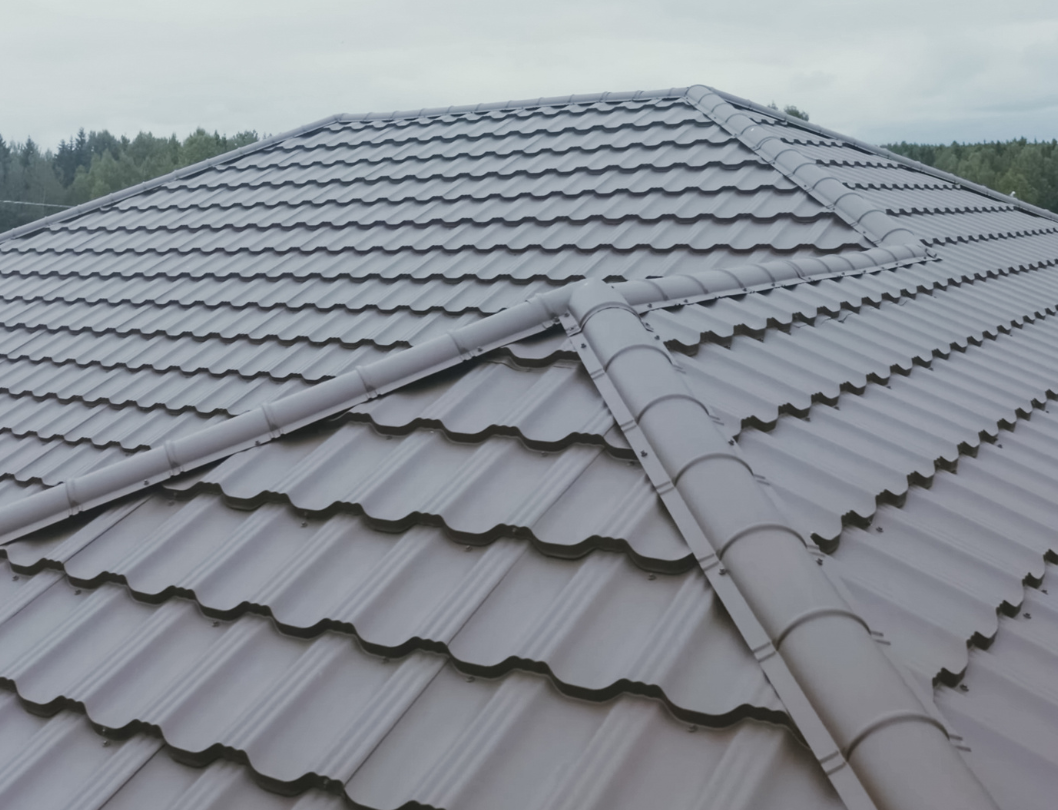
- Tile: A sound tile roof can have a professional inspection every 3-5 years. Check it visually each year, since displaced or cracked tiles can let water in.
- Slate: Visually check slate once or twice per year, particularly after storms. An older slate roof or one with previous patch repairs should have an annual professional inspection.
- Flat roof: Arrange professional checks at least twice per year, and after heavy rain, storms or prolonged bad weather. Flat coverings can hold standing water, making drainage and surface damage important to monitor.
For a flat roof, the schedule may need to tighten as it ages. A flat roof around 10 to 15 years old may need inspections twice a year, whilst one over 10-15 years old is worth having professionally assessed. Its covering, drainage and previous repair history all affect the timing.
A visual check can help you notice obvious damage, such as a slipped tile or blocked outlet. It doesn’t replace a professional inspection, which can assess areas that aren’t visible from the ground. Follow a regular schedule for your roof type, then bring the next inspection forward after storms or if you spot a leak. Early attention can prevent small defects from developing into costly repairs.
Areas checked during a professional inspection
A professional inspection examines the roof covering and the details that keep water out. You can safely check from the ground and inside the loft, then note anything that needs closer attention.
During an inspection, the roofer checks:
- Tiles or slates: Look for cracked, loose or missing pieces that may expose the roof beneath.
- Flashings, joints and mortar: These areas seal gaps around roof features and can weaken or separate over time.
- Gutters, outlets and downpipes: Check whether they’re blocked and whether water can drain away properly.
- Moss and roof ventilation: Excessive moss can hold moisture and interfere with drainage; poor ventilation can contribute to moisture problems.
- Flat roof surfaces: A professional checks for splits, punctures, cracks, blistering, weathering and standing water.
Inside the loft, look for damp patches, staining, mould, wet insulation or daylight showing through the roof. These signs can indicate water entry, even when the ceiling below looks sound. Record what you see and where it appears, so the inspector can focus on the relevant area.
From the ground, binoculars can help you spot slipped tiles, debris or a sagging roofline. The Health and Safety Executive discourages untrained people from accessing roofs, so don’t climb a ladder to inspect the covering yourself.
For routine upkeep, schedule a visual check twice a year, in spring and autumn. Spring is a chance to spot damage from winter weather; an autumn check can reveal fallen leaves or blocked gutters before winter. A professional inspection looks beyond visible surface issues and assesses whether repairs are needed. Ask for clear findings on the roof’s condition and the priority of any work, so you can distinguish urgent defects from routine maintenance.
Maintenance schedules for tile, slate and flat roofs
Plan maintenance around the roof covering, its age and any history of leaks. Include gutters and inspection records too.
Professional Inspections and Deeper Maintenance
A tile roof in good condition can have a professional inspection every 3-5 years, while an older roof or one with previous leaks needs checks every 1-3 years. Older slate roofs, especially those with patch repairs, are better inspected annually. Flat roofs need closer attention: arrange professional inspections twice a year, and bring one forward if heavy rain leaves standing water.
A deeper maintenance review every 2-5 years can identify wear in mortar, flashing and felt before water reaches the structure. After strong weather, also look for missing tiles and new damp patches inside. A visible defect or leak calls for prompt assessment rather than waiting for the next scheduled visit.
Inspection Reports and Maintenance Records
An inspection report records the roof’s condition and any recommended work. Photographs can show the location and appearance of a defect, such as a split flat-roof membrane or failing flashing.
Keep each report with its date, photographs and details of completed repairs. Comparing records over time helps you track whether a crack has widened or moisture has returned inside. It also gives the next inspection a clear starting point, instead of relying on memory.
Gutters need their own regular maintenance. Clear them every 6-12 months, and more often if trees nearby shed leaves into them. Blocked gutters can prevent water draining properly, so include them in spring or autumn checks. If an inspection identifies a leak or damaged covering, arrange a roof repair before the defect allows further moisture into the home.
Atlas Roofing Solutions Ltd: Roof Installation
When an inspection finds damage that needs repair, or roof installation is the more practical option, Atlas Roofing Solutions Ltd can help. The company also handles flat roof repair, chimney repairs, guttering, and uPVC fascias and soffits, addressing related issues that can affect how well your home sheds water.
With over 20 years of experience, Atlas Roofing Solutions Ltd offers a 15-year guarantee on workmanship. Free site visits and transparent, no-obligation quotes help you understand the proposed work before deciding how to proceed.
If an inspection has raised concerns about a leak, loose covering or ageing roof, contact Atlas Roofing Solutions Ltd to discuss the next step.
Make your next roof check count
Use your inspection findings to make a clear maintenance decision, rather than leaving them in a folder. Note which work is urgent, what can be planned and when you’ll review the roof again. This gives you a practical record to follow and keeps future decisions focused on your home’s actual condition.
If you’re deciding how often you should have your roof inspected in the UK, let its condition guide your next step. Atlas Roofing Solutions Ltd carries out roof installation, roof repairs and guttering. A localised defect may call for a repair, widespread deterioration may point towards installation, and drainage problems may make guttering work relevant. Focus on the issue identified and avoid work the roof doesn’t need.
Contact Atlas Roofing Solutions Ltd to discuss your roof and the work it may need. A considered next step can help you protect your home with confidence.
Frequently Asked Questions
How Do I Know if My Roof is OK?
You can spot warning signs, but a ground-level look can’t confirm the whole roof is sound. Check whether the roofline appears even, then look for damp marks or a musty smell in the loft. A persistent damp patch beneath a chimney, for example, can help a roofer pinpoint where to investigate. Note its location and whether it changes after rainfall.
How Often Should You Check Your Roof in the UK?
Arrange a professional inspection at least once a year, and bring it forward after severe weather or visible damage. A ground-level visual check between professional visits can help you notice changes, such as debris in a gutter or a tile that appears out of place. For a London home exposed to strong winds, note any changes after a storm.
How often should you maintain your roof?
Review the roof’s maintenance needs during regular checks, and deal with identified defects rather than waiting for the next scheduled inspection. Clear gutters every 6-12 months, more often if nearby trees shed leaves into them. Keep a simple record of the date, what you noticed and any work completed. This makes it easier to see whether the same area needs attention again.
How often should different UK roof types be inspected, such as slate, tile and flat roofs?
A tile roof in good condition can have a professional inspection every 3-5 years, while older slate with previous patch repairs benefits from annual inspection. Flat roofs generally need professional checks twice a year. These are starting points, not interchangeable schedules: a leak history, ageing materials or a changed roof surface can mean an earlier assessment is sensible.
When is the best time of year to inspect a roof in the UK?
Spring and autumn are practical times for routine checks. In spring, look for changes that may have followed winter weather; in autumn, check for leaves around drainage points before wetter conditions arrive. Check a newly installed roof after its first winter or a heavy storm season, too. Don’t wait for a seasonal visit if you notice a leak or fresh damage.
What signs mean a UK roof needs an immediate inspection?
Arrange prompt attention if water is actively entering the home, a ceiling develops a fresh stain, or you can see a missing tile or damaged roof covering. After severe weather, fallen roofing material or a sudden change in the roofline also needs attention. Keep clear of the roof and note where the problem appears, such as above a loft window or chimney.