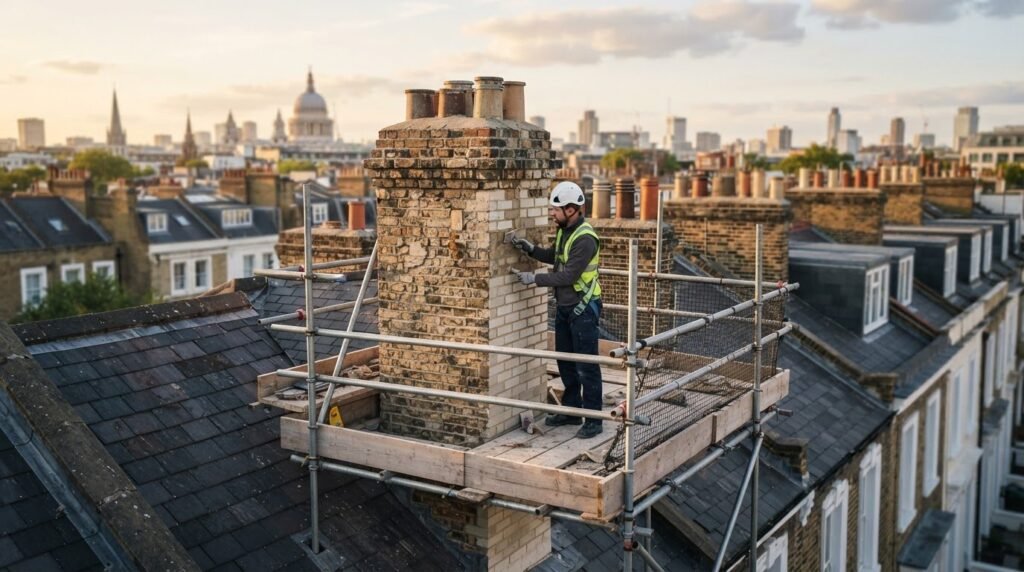
Access can matter as much as the mortar. The cost to repoint a chimney stack in London depends on its size and condition, how much mortar needs replacing, and how safely the work can be reached. There’s no single price for every home; the cost depends on the job and is provided after a quote request.
If you’ve spotted crumbling joints or loose mortar, find out whether the damage needs attention before it worsens. The signs aren’t always easy to judge from the ground, so avoid climbing onto the roof to inspect the stack.
This guide explains what can affect the cost, what to look for when checking your chimney and what to expect from a clear estimate. You’ll also learn how repointing differs from more extensive chimney repairs, helping you understand what your roof may need.
Key Takeaways
- Look for crumbling or missing mortar and other visible signs of wear to help judge whether the chimney needs attention.
- Access can make a substantial difference to the total: the chimney’s height, position and need for scaffolding all affect the work involved.
- Older brickwork needs a suitable mortar choice. The wrong match can affect how well the repair works with the existing masonry.
- Compare quotes by checking what work is included, including mortar removal, replacement, access arrangements and any additional repairs.
- Experience with chimney repairs and clear evidence of insurance can help you assess a contractor’s suitability before work begins.
What Affects Chimney Repair Cost?
The main cost drivers are the amount of damaged mortar, any additional repairs and safe access to the stack. A two-storey roof, restricted working space or damaged brickwork can change the scope considerably.
Access and scaffolding requirements
Access requirements describe how workers and materials can reach the chimney safely. They matter because scaffolding can form a significant part of the job. The setup depends on the building’s height, roof layout, scaffold position and how long it is needed.
A stack set behind a ridge or above a narrow side return can require more involved access than one beside an open roof edge. Scaffolding costs should be separated from the repointing work in an estimate, so you can see what the access provision covers. These are market figures, not a price for any individual job.
Standard two-storey repointing costs
A standard two-storey repointing job involves removing deteriorated mortar from the stack’s joints and applying fresh mortar. This gives a useful comparison point, but the actual scope depends on how much mortar has failed and whether the brickwork also needs attention.
For example, a small area of open joints is different from a stack with widespread mortar loss and damaged bricks. An inspection helps distinguish repointing from a partial rebuild, which involves replacing masonry rather than simply renewing joints. The price depends on the case and is given after a quote request; the amount of work, materials and access all influence it.
London location and approval considerations
Central London can cost more where restricted access, scaffold positioning or site logistics make the work harder. The location within London alone doesn’t determine the price; the property and access conditions matter. London labour prices are normally higher than in northern parts of the UK, and scaffolding can add significantly to a chimney repair total.
Like-for-like chimney repointing generally doesn’t require planning permission in the UK. For a listed property or one in a conservation area, owners are advised to contact their local authority before work starts. Building regulations approval is not normally needed for repointing treated as like-for-like maintenance.
Other repairs can change the scope. Damaged lead flashing, which seals the joint between the chimney and roof, needs attention separately from mortar joints. Loose or cracked bricks may require replacement, while a damaged chimney crown, also called flaunching, may need repair to protect the top of the stack. Ask for each item, including any proposed rebuilding, to be described clearly in the estimate.
During an inspection, the roofer should assess the mortar, bricks, flashing and crown as distinct parts. The amount of failed joints, the condition of surrounding masonry and safe access all affect the work required. An estimate that identifies these components makes it easier to understand whether it covers repointing alone or additional repairs.
How Can I Tell If My Chimney Needs Repointing?
Look for mortar that’s missing, crumbling, powdery or visibly recessed between chimney bricks. Open joints can let water enter the brickwork, while loose or cracked bricks may indicate damage beyond pointing. From ground level, binoculars can help you examine the stack; don’t climb onto the roof to inspect it. A close inspection can distinguish localised mortar failure from a need for partial rebuilding.
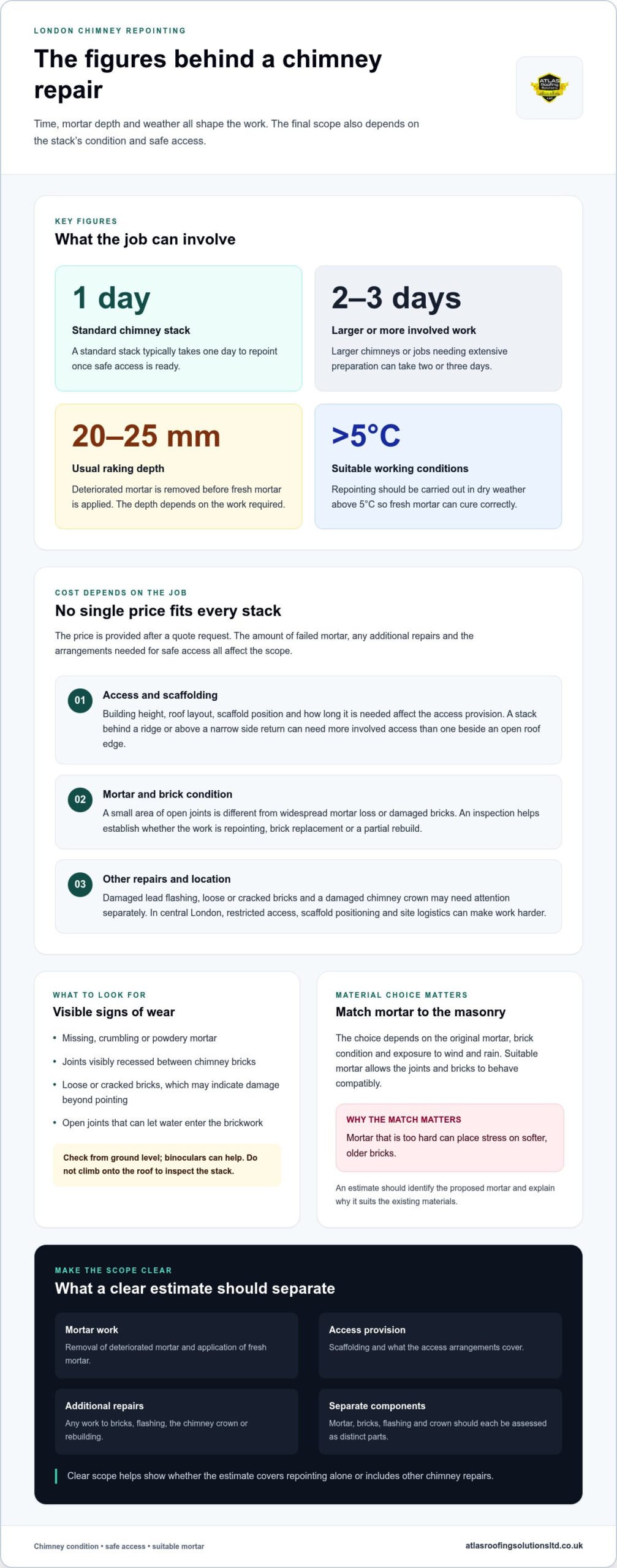
Time depends on the stack’s size, the amount of failed mortar, weather and safe access. A standard chimney stack typically takes one day to repoint once safe access is ready. Larger chimneys or those needing extensive preparation can take two or three days. Scaffolding arrangements and rain or cold weather can affect when the work starts and how steadily it proceeds.
Repointing involves removing deteriorated mortar from the joints before filling them with fresh mortar. The usual raking depth is around 20-25 mm, depending on the work required. A homeowner may notice gaps, but shouldn’t try to rake joints out: disturbing sound mortar can damage brick edges. A specialist assesses the joints and checks whether bricks are cracked, loose or spalling.
Older brickwork needs mortar that works with the existing masonry. The choice depends on the original mortar, brick condition and exposure to wind and rain. A suitable match allows the joints and bricks to behave compatibly; mortar that’s too hard can place stress on softer, older bricks. During an inspection, ask which mortar is proposed and why it suits the chimney’s existing materials.
Delaying repairs can leave open joints exposed to rain, allowing moisture to enter the stack and worsen existing deterioration. Unsuitable mortar can also harm older brickwork, turning a pointing repair into a wider masonry problem. The right repair depends on whether the defect is limited to mortar or includes damaged bricks. Chimney repairs should address the cause and extent, not just cover visible gaps.
Mortar work shouldn’t be carried out in freezing conditions. Repointing should take place in dry weather above 5°C so fresh mortar can cure correctly. If joints are deteriorating, arrange an assessment before choosing a repair method or timing. A closer assessment of the joints and brickwork can help identify the right chimney repair approach for the damage.
Contractor experience and insurance
Chimney work combines masonry repairs with roof-level access, so the inspection needs to consider both the stack and its position. In London terraces, for example, a central chimney can be harder to reach than one beside an open roof edge. Assessing the property helps establish the work required and the safe access arrangements.
Ask how the contractor distinguishes failed mortar joints from damage that needs brick replacement or a rebuild. A clear answer should explain what they’ve seen on the stack and how it affects the proposed work. Older properties need particular care: hard cement can be unsuitable for some historic brickwork, so a contractor should explain how they assess the existing materials before choosing a repair method.
Experience is also visible in the inspection and written scope. The contractor should identify which parts of the chimney need attention, such as the stack, joints or flashing, rather than describing the job only as “chimney repair”. Ask what safe access the work requires and how the team will protect the roof and surrounding areas. These details help you understand what the quote covers.
Insurance is separate from workmanship. Before work starts, ask to see the relevant documents and make sure the insured business name matches the company you’re hiring. Check the policy dates, the type of work covered and whether the documents address work at height. The wording matters: a policy may cover some activities but not every task involved in reaching and repairing a chimney.
Also ask how the company’s cover relates to damage or injury connected with the work. Don’t assume a general policy covers every chimney task, scaffold arrangement or property. If another company supplies access equipment, establish who is responsible for that part of the job. Written clarity can prevent confusion when several parties are involved.
Before accepting a quote, use a short check:
- Match the contractor’s business name across the quote and insurance documents.
- Confirm the policy is current and describes relevant roofing or chimney work.
- Ask how the inspection supports the recommended repair, such as repointing rather than rebuilding.
- Check who arranges safe access and who is responsible for each work element.
A roofer who explains the inspection, proposed materials, access plan and insurance in plain terms gives you a clearer basis for comparing quotes. For a Victorian terrace with worn joints, for instance, the explanation should connect the visible mortar damage to the repair proposed. Clear detail makes it easier to judge whether the scope fits the chimney’s condition.
What to check in a contractor’s quote
A useful chimney repointing estimate should explain the work, access and materials in plain terms. Compare the same items across estimates rather than judging roofing work by the total alone. One estimate, for example, may cover mortar joints only, while another includes flashing repairs or brick replacement.
Start with the inspection findings and the exact work proposed. The estimate should identify which faces of the stack need repointing and whether deteriorated mortar will be removed before fresh mortar is applied. If loose bricks were found, ask whether replacing them is included. Clear descriptions help you see whether estimates cover the same repair.
Check the access plan next. The chimney’s height and position affect how workers can reach it safely, so the estimate should explain the access arrangements. Look for details such as scaffold erection, hire and removal, and whether the setup covers the full work area. If a chimney sits behind a roof ridge, the estimate should account for reaching that section.
Materials deserve a specific description too. The estimate should state the proposed mortar and explain how it suits the existing brickwork, especially on older properties. Check whether it includes removing loose mortar, preparing the joints, applying the new pointing and clearing debris. “Repoint chimney” alone doesn’t show how much preparation or which sections are included.
Separate repairs should appear as distinct items. Lead flashing seals the junction between the stack and roof; damaged flashing isn’t the same repair as failed mortar joints. Likewise, a cracked crown or broken bricks may need work beyond repointing. Ask for each item to be described, including whether it is included, excluded or dependent on further work becoming visible.
Before accepting an estimate, review these details:
- The chimney faces and joints included, with any excluded areas identified.
- The mortar preparation, application and clean-up described as separate work stages.
- Scaffolding and other safe access arrangements shown clearly.
- Flashing, brick replacement or crown repairs listed separately from repointing.
- The total, payment arrangements, VAT treatment and any workmanship guarantee stated in writing.
Finally, ask how changes to the scope will be handled. If removing loose mortar reveals damaged brickwork, for example, the estimate should explain how additional work will be described and agreed. Keep the written estimate and any revised scope together. That record makes it easier to compare the original proposal with the completed chimney work.
Average UK chimney repointing cost
A market comparison puts chimney repointing between £631 and £978, with a median of about £750. This typical range comes from 26 price samples across seven sources, collected on 22 October 2026. It gives a useful UK benchmark, not a fixed rate for every chimney or a final price for a particular property.
A typical figure can help set expectations, but it doesn’t describe every job. A small area of mortar failure differs from repointing across the whole stack. An estimate also reflects the labour required, the condition of the brickwork and access to the roof. Compare the work included, not just the total.
Repointing is only part of the possible repair scope. Cracked bricks may need separate attention, while damaged lead flashing or a deteriorated chimney crown involves different work. A chimney breast is inside the home, so its condition doesn’t automatically show what’s happening to the external stack. An inspection should identify the actual defect before a repair is proposed.
For a fair comparison, separate the estimate into the work proposed, materials, labour and access arrangements. Check whether it covers all sides of the stack or only visible joints. Also see whether it includes removing failed mortar, replacing it and clearing debris. If one estimate includes additional repairs and another covers pointing alone, their totals aren’t directly comparable.
A general cost guide is no substitute for an assessment of your property. Height, stack position and the extent of mortar damage affect the work involved. A central chimney that needs more involved access can require a different setup from an easily reached stack. The estimate should follow the inspection findings and clearly describe the work proposed.
Use general cost information as a starting point, then compare each written scope against the visible condition of your chimney. Check that additional work, such as addressing cracked masonry or lead flashing, is described separately. That makes it easier to understand what the estimate covers and why two quotes may differ, without treating the lowest total as automatically equivalent.
For a quote based on the chimney’s condition and proposed work, request a chimney repair quote.
Atlas Roofing Solutions Ltd: Roof Installation
Atlas Roofing Solutions Ltd can help when worn chimney mortar needs professional attention or the surrounding roof also needs repairs. Chimney repairs address the stack itself, while Roof Repairs can cover related issues with the roof. If the roof needs replacing rather than repairing, Roof Installation may be the more suitable next step.
A site visit helps assess the condition and scope of the work. Atlas Roofing Solutions Ltd provides transparent, no-obligation quotes, so you can understand the proposed work before deciding how to proceed. Its workmanship is backed by a 15-year guarantee.
For a clear next step, contact Atlas Roofing Solutions Ltd or visit atlasroofingsolutionsltd.co.uk.
Take the next step with confidence
Before arranging work, consider whether the chimney is an isolated concern or part of a wider roofing issue. A clear assessment can distinguish a repair to the stack from work involving the surrounding roof, so your next decision is based on your home’s needs. The cost to repoint a chimney stack in London depends on the masonry’s condition, the work required and access. Contact Atlas Roofing Solutions Ltd for a free, no-obligation estimate and full roof inspection.
Atlas Roofing Solutions Ltd offers chimney repairs alongside Roof Repairs, Roof Installation and Guttering. That broader roofing experience can be useful when the chimney and roof need attention together, or when you’re planning a more extensive project. If you’re ready to discuss the condition of your roof or chimney, contact Atlas Roofing Solutions Ltd and take a practical next step towards protecting your home.
Frequently Asked Questions
What Does the Job Include?
Chimney repointing renews the mortar between the stack’s bricks. The work typically involves raking out deteriorated mortar, preparing the joints, applying fresh mortar and clearing away debris. The roofer may also identify cracked bricks or defects around the chimney’s top during the work. Those repairs are separate from repointing, so check whether the estimate includes them or describes them as additional work.
What Is The Difference Between Repointing and Rebuilding?
Repointing replaces failed mortar in the joints, while rebuilding replaces some or all of the chimney’s masonry. Repointing suits a stack with sound, stable bricks and deteriorated mortar. A rebuild may be needed where bricks are loose, badly damaged or the stack is unstable.
How much does it cost to repoint a chimney stack in London in 2026?
The cost to repoint a chimney stack in London in 2026 is typically within the market range of £631-£978, with a median of about £750. This range comes from 26 price samples across seven sources, collected on 22 October 2026. It’s a market benchmark, not a fixed quote. The chimney’s size, mortar condition and access needs shape the final price.
What is the average cost per square metre to repoint a chimney in the UK?
This provides a rough way to understand how the area of masonry affects labour and materials, but a chimney estimate may also include access and preparation. A stack’s height, shape and position can make pricing by area alone misleading, so compare the full scope rather than multiplying a rate mechanically.
How do chimney stack repointing costs vary by height, size and condition?
Taller stacks and chimneys in difficult positions generally require more involved access, while larger areas of failed mortar mean more preparation and labour. Widespread brick damage can also change the job from repointing to masonry repairs or rebuilding.
How much does scaffolding for chimney repointing cost in London?
A scaffold may need to span a roof ridge or fit around restricted space, affecting its setup and hire. Check whether the estimate includes erection, hire and dismantling. Scaffolding is an access requirement, separate from the mortar work itself.
What extra costs can arise, such as replacing bricks, flaunching or lead flashing?
Separate masonry and roof-junction repairs can add to a repointing job. These are UK market estimates; the amount depends on the damage and work involved. Ask for each repair to be itemised separately from repointing.
What signs indicate a chimney stack needs repointing rather than repair or rebuilding?
Repointing may be suitable when mortar is crumbling or missing but the bricks remain firm and the stack looks stable. Cracked or loose bricks, a leaning stack or damage around the chimney top may point to wider repairs or rebuilding. Water ingress near the chimney can also come from defective flashing rather than mortar joints. An inspection helps distinguish these problems because each needs a different repair.