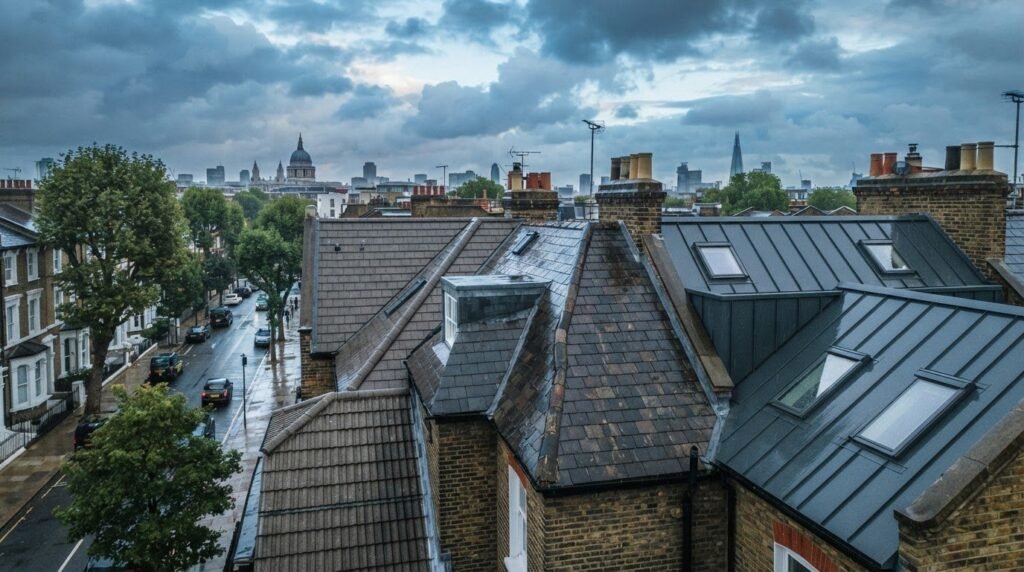
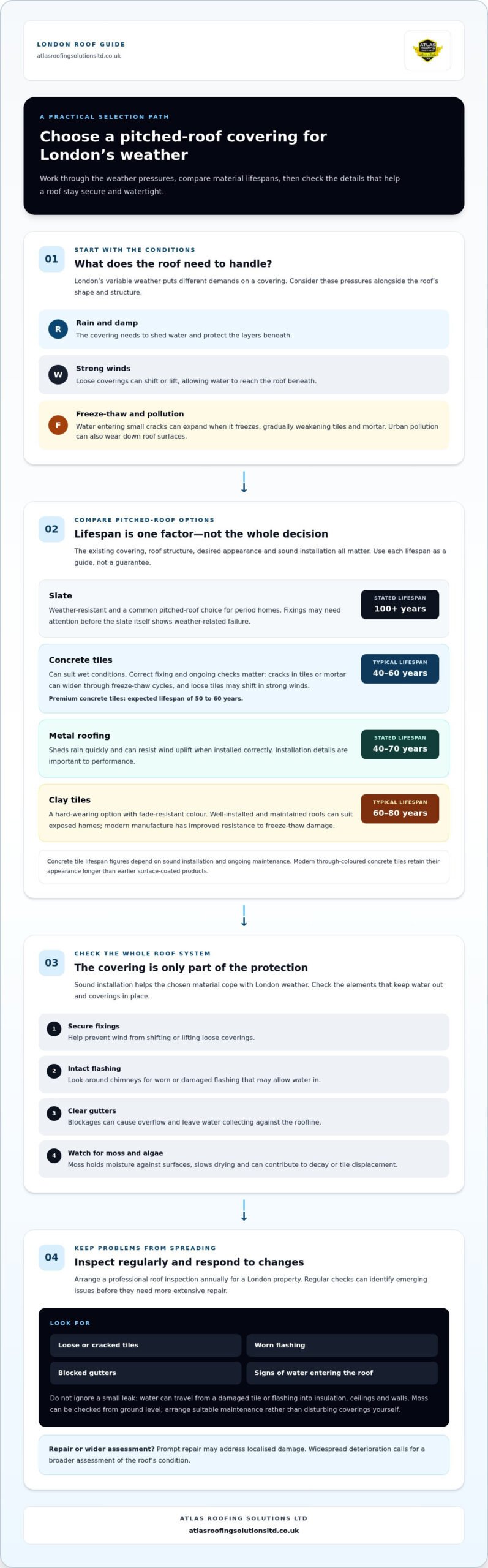
For pitched homes, slate, concrete tiles and metal are all strong roofing materials for London weather. Slate can last 100 years or more, concrete tiles typically last 40 to 60 years, and metal roofs have a stated lifespan of 40 to 70 years. Their suitability depends on more than lifespan: rain, wind, damp and freeze-thaw cycles all put different demands on a roof.
When choosing roofing materials for London weather, look beyond appearance. A covering needs to shed water, stay secure in strong winds and suit the shape and structure of your roof. The right choice balances these practical demands with the look you want for your home.
This guide compares slate, concrete tiles and metal roofing for London’s variable conditions. You’ll see where each material performs well, what to consider before choosing, and why fixings and the roof’s overall condition matter as much as the covering.
Key Takeaways
- Compare slate, concrete tiles and metal by more than appearance: consider how each handles rain, wind and freeze-thaw conditions.
- Concrete tiles can suit wet conditions, but correct fixing and regular checks help reduce the risk of wind damage and water ingress.
- Slate can last for over a century; its fixings may need attention before the slate itself shows weather-related failure.
- Metal roofing sheds rain quickly and can resist wind uplift when installed correctly, making the installation details important.
- Look for moss, loose tiles, worn flashing and blocked gutters, as these can affect how well a roof copes with London weather.
Concrete roof tiles
Concrete roof tiles can suit London’s wet conditions when properly fitted and maintained. Freeze-thaw cycles can widen cracks in tiles and mortar, while strong winds may lift or shift loose coverings. Secure fixings matter: a displaced tile can let rain reach the roof beneath.
A concrete tile roof typically lasts 40 to 60 years in the UK. Premium concrete tiles have an expected lifespan of 50 to 60 years. Modern through-coloured tiles retain their appearance longer than earlier surface-coated products, which can lose their finish as the surface wears. These figures depend on sound installation and ongoing maintenance.
Clay tiles are another option for pitched roofs. In the UK, well-installed and maintained clay tile roofs typically last 60 to 80 years. Their hard-wearing surface, fade-resistant colour and ability to withstand wind uplift can suit exposed London homes. Modern clay tile manufacture has also improved resistance to freeze-thaw damage.
For a London roof, the average installation or replacement cost per square metre depends on the roof’s area, pitch, access, chosen material and removal requirements. The cost is set out in a free, no-obligation quote.
Maintenance and repair costs depend on the roof material, the location and extent of damage, and whether the work is localised or widespread. Access and materials also affect the work required. Atlas Roofing Solutions Ltd provides transparent pricing in a free, no-obligation quote.
Slate or clay tiles are common pitched-roof choices for period homes in London. Changing roofing materials in a conservation area may require approval, so the existing covering and the property’s setting can influence which replacement is suitable.
London’s urban pollution can gradually wear down roofing surfaces. Freeze-thaw conditions add pressure: water enters small cracks, then expands as it freezes, gradually weakening tiles and mortar. On a concrete roof, damaged mortar or a cracked tile can let water in, so pay attention to visible changes.
Preventative maintenance helps catch problems before they spread. Look for loose or cracked tiles, worn flashing around chimneys and signs of water entering the roof. Clear gutters regularly: blockages can cause overflow and leave water collecting against the roofline. Moss holds moisture against surfaces, slowing drying and contributing to decay or tile displacement.
Arrange a professional roof inspection annually for a London property. Regular checks can identify displaced tiles, damaged flashing and blocked gutters, as well as emerging problems before they need more extensive repair. Don’t ignore a small leak: water can travel from a damaged tile or flashing into insulation, ceilings and walls.
Concrete tiles perform well in wet weather, but the covering is only one part of the roof. Sound fixings, intact flashing and clear gutters all help protect your home. A prompt repair may address localised damage, while widespread deterioration calls for a broader assessment of the roof’s condition.
What Roofing Materials are Best for British Weather?
London’s climate calls for coverings that shed rain, tolerate damp and stay secure in wind. The best option also depends on whether your home has a pitched or flat roof.
Pitched roof coverings
Tiles and slate cover sloping roofs, where gravity helps rain run towards the gutters. Clay tiles are hard-wearing, resist wind uplift and retain their colour; slate offers weather resistance and can last over a century. These materials suit different roof structures and appearances, so the existing covering can guide a like-for-like choice. For London homes, sound fixings matter as much as the surface: wind can shift loose coverings and let water reach the layers below.
Flat roof coverings
Flat roofs need continuous waterproofing, rather than rows of overlapping tiles. Felt is a familiar option, but UK felt flat roofs typically last 10 to 20 years when installed and maintained well. Fibreglass, also called GRP, forms a seamless surface that sheds water efficiently; rubber and fibreglass systems typically last around 25 to 30 years in the UK. On a flat roof, drainage and sound edges help limit water pooling and entry.
Moss and algae moisture retention
Moss holds water against roof surfaces, keeping them damp for longer and slowing drying after rain. On London roofs, trapped moisture can contribute to decay and tile displacement. Algae can also mark the surface, though moss is the main concern for moisture retention. Check for growth and displaced tiles from ground level, then arrange suitable maintenance rather than disturbing the coverings yourself.
Planning rules can affect your choice of material. Most roofing work in the UK doesn’t require planning permission, but changing materials in a conservation area may require approval. This is relevant when replacing a period home’s covering, particularly if the new material changes its appearance.
Green roofs and solar tiles aren’t suitable for every London home. Roof structure, pitch, drainage and planning context all affect suitability. A flat roof and a steep pitched roof, for example, present different design considerations. Any option needs to work with the existing roof, not just its appearance or environmental aim.
Roof replacement also requires weather planning. The structure is most exposed when the existing covering is removed, and rain at that stage can cause problems. Plan temporary protection before work begins. Select and stage materials and components with contingencies in mind, rather than relying on next-day deliveries if conditions change.
If a flat roof’s waterproofing is damaged, a prompt assessment can help identify the appropriate next step. Flat roof repairs address localised damage without confusing it with the needs of a full replacement.
Felt flat roofs in London typically last 15-20 years. EPDM and GPR synthetic membranes are used on London flat roofs, described as low-maintenance and reliable; EPDM or GRP is recommended for durability and water resistance.
Slate roofing durability and weather resistance
Natural slate is a durable pitched-roof covering, but London’s changing weather tests the whole roof, including its fixings.
Natural slate durability
Natural slate roofs typically last 100 years or more when installed and maintained well. Welsh slate is dense and non-porous, so it resists water absorption and freeze-thaw damage. That makes slate a strong option for homes exposed to challenging weather. The slate itself rarely fails because of weather; nails and other fixings usually need attention first. During inspections, look for slipped slates or gaps that could let rain reach the roof beneath.
Slate offers weather resistance and fire protection. Its performance still depends on the roof’s construction: sound fixings keep slates in place during strong winds, while intact flashing protects vulnerable joints. A sudden leak may point to a slipped slate or worn detail rather than widespread failure of the slate covering.
Slate, tile and shingle options
Slate, clay tiles and asphalt shingles suit different priorities and roof designs. Clay tiles are hard-wearing, retain their colour and can withstand wind uplift. Asphalt shingles offer another pitched-roof choice, with a typical UK lifespan of 20 to 30 years. Material choice affects the roof’s appearance and expected service life, but the existing structure and correct installation also matter.
For a period home, matching the existing covering can preserve its established appearance. Concrete tiles provide a different option, with a typical UK lifespan of 40 to 60 years when installed and maintained well. Each covering needs compatible details at edges, ridges and chimneys; weaknesses at those junctions can undermine even durable materials.
Material durability comparisons
For London, natural slate can last 100 years or more, clay tiles typically 60 to 80 years, concrete tiles 40 to 60 years, and metal roofs 40 to 70 years. These figures assume good installation and maintenance where specified. Metal sheds water quickly and resists wind uplift when correctly installed; slate resists water absorption and freeze-thaw damage.
Durability isn’t just a comparison between surfaces. Wind can move loose coverings, while water entering through failed fixings or flashing can damage the roof structure. A material’s long lifespan depends on secure installation and attention to vulnerable details. Even a sound slate roof needs its fixings assessed over time.
Roofing material lifespans
Expected lifespan provides a useful comparison, not a maintenance schedule. In the UK climate, asphalt shingles typically last 20 to 30 years; concrete tiles, 40 to 60 years; clay tiles, 60 to 80 years; and natural slate, 100 years or more. Metal roofs in London have a stated lifespan of 40 to 70 years.
These ranges show why the covering alone doesn’t settle a replacement decision. Installation quality, maintenance and exposure to weather all affect roof performance. If leaks recur or damage spreads beyond isolated areas, an assessment can distinguish a local repair from broader deterioration. Sudden water ingress also warrants prompt attention, whatever the roof material.
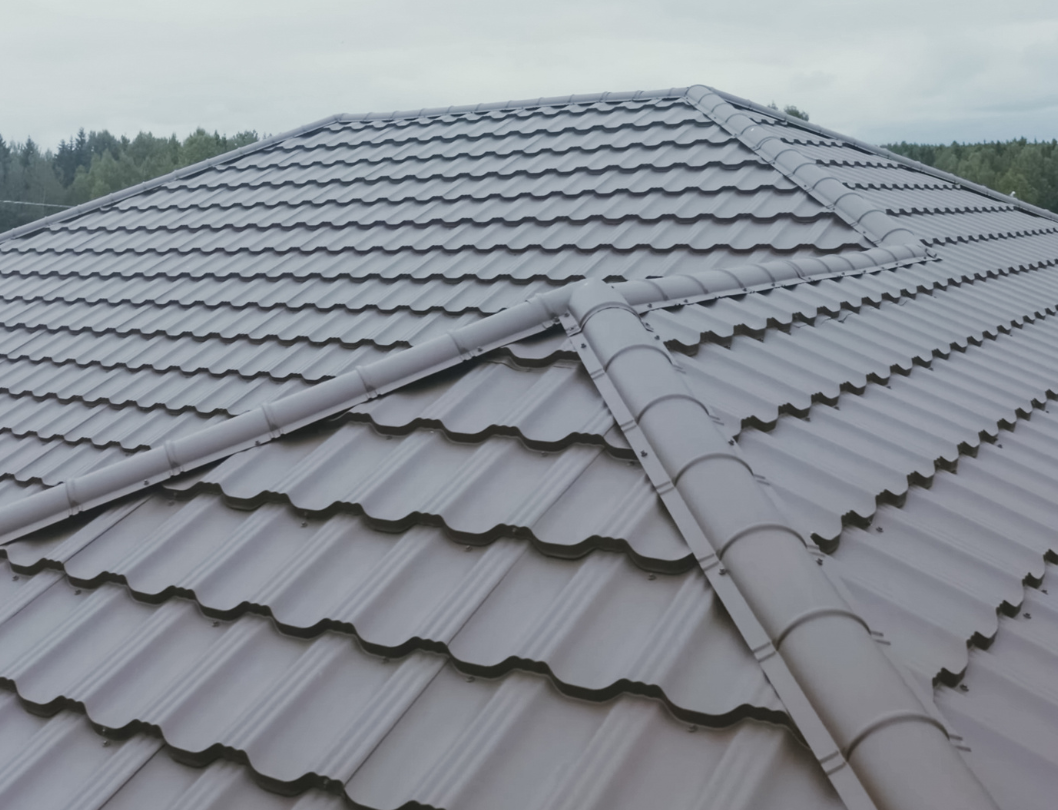
Metal roofing can suit London homes where quick drainage and resistance to wind matter. London metal roofs have a stated lifespan of 40 to 70 years, whilst modern standing seam systems are expected to last more than 50 years. The exact system and installation details influence how well the covering performs over time.
During heavy rainfall, metal roofs shed water quickly. Correct installation also helps them resist wind uplift, especially when strong gusts put pressure on exposed roof edges. Fixings, seams and roof junctions all form part of the weather barrier. If one detail fails, water can get beneath the main covering.
Metal systems can suit complex roof shapes and low pitches. Their flexibility may help where a roof has awkward junctions or a design that doesn’t suit standard tiles. Pitch still affects drainage, so the layout and compatible components need to work together. Flashings, valleys and ridge parts should be as durable as the main metal covering.
Material choice matters too. Aluminium offers corrosion resistance in coastal environments, while zinc develops a protective patina. Metal roofs are recyclable and typically require minimal upkeep, but still benefit from periodic attention. After challenging weather, check the visible roof surface, edges and drainage points for signs of movement or damage.
Metal reflects sunlight, which can help keep London homes cooler during summer. In winter, the roof covering and insulation have different roles: metal sheds rain, while insulation helps limit heat loss. An insulated flat roof can help prevent heat loss in colder months. Ventilation matters too, as airflow helps prevent condensation from degrading roof timbers and insulation.
For quality roofing, the connection between the covering and its details is crucial. Stainless steel fixings offer superior longevity in challenging environments. Compatible flashings, valleys and ridge components help avoid weak points where materials meet. For example, a durable metal sheet paired with less durable junction components may leave the roof vulnerable before the main surface reaches the end of its service life.
Metal roofing’s long lifespan can make it an option for homeowners seeking a durable covering, but the roof’s form and installation remain central. A low-pitched roof, for instance, needs a system suited to its pitch and a clear route for water to drain. Correct fixing helps manage wind uplift, while well-matched junction components help protect against rain.
Routine checks should focus on seams, fixings, flashings and drainage paths. Look for movement or damage after strong winds, and watch for water that doesn’t drain away. Addressing a small defect early can help prevent water ingress from affecting insulation or internal finishes. Metal offers useful weather performance, but sound detailing and maintenance help preserve it.
London’s variable weather and roofing material suitability
Choosing roofing materials for London weather means weighing rain, wind, damp and pollution together. The covering matters, but so do fixings, flashing and drainage, which all affect how well the complete roof performs.
Resistance to heavy rain
Rain resistance depends on how effectively a covering sheds water and protects its joints. Slate and pitched tiles direct rainfall down the roof, while metal sheds water quickly. On flat roofs, felt and fibreglass provide waterproof coverings, but drainage and sound edges remain important. During prolonged wet spells, water can exploit gaps around chimneys, valleys or roof edges.
For example, deteriorated flashing where a roof meets a chimney can let water in, whatever the main covering. Check junctions and drainage routes as well as the roof surface. Clear gutters help prevent overflow from adding water against the roofline, particularly after persistent rain.
Resistance to wind uplift
Wind uplift occurs when gusts catch coverings and try to lift or shift them. Correct fixing helps tiles resist this force; metal roofs also resist wind uplift when installed correctly. Clay tiles can withstand wind uplift, but loose or worn coverings remain vulnerable. These details matter during London’s strong winds, which can also damage chimneys, gutters and flashing.
After a windy spell, look from ground level for displaced tiles and signs of damage around roof edges. Gaps in the covering can expose the layers beneath to rain. Secure installation and compatible ridge, valley and flashing components help the roof work as one weather-resistant system.
Moss resistance
Moss resistance describes how readily a roof avoids moss growth and the damp it retains. Moss keeps water against roof surfaces, preventing them from drying properly. On London roofs, this moisture can contribute to decay and tile displacement. Pay attention to shaded or persistently damp areas, where slow drying can allow moss to remain against the covering.
Check for moss and algae alongside loose tiles, blocked gutters and worn flashing. Moss can hold water against slate and tile roofs, so the covering alone doesn’t eliminate the need for maintenance. Safe moss removal can reduce moisture retention; avoid disturbing tiles, as this can create new gaps.
Pollution adds pressure in London’s urban environment and can wear down roofing surfaces over time. Inspect for visible wear rather than judging condition by material alone. Slate, clay tiles, concrete tiles and metal all have different lifespans, but exposed surfaces and roof details need attention across every type. These are practical considerations when comparing roofing materials for London weather.
No covering compensates for poor fixing or damaged flashing. Match the material to the roof’s pitch and structure, maintain gutters and address small defects promptly. If wind or rain has damaged your roof, arrange a roof repair to address the affected area.
Atlas Roofing Solutions Ltd: Roof Installation
Atlas Roofing Solutions Ltd can help when a roof needs replacing, has weather damage or needs gutter attention. Its roof installation and repair services give homeowners a practical next step after comparing slate, tiles and metal. The right choice depends on the roof’s structure and condition, as well as the covering’s appearance and weather performance.
If a leak is localised, roof repairs may address the affected area; widespread deterioration may call for a new installation. Guttering also directs rainwater away from the roofline. A free site visit and transparent, no-obligation quote can clarify the work involved and suitable options for your home.
To discuss your roof, contact Atlas Roofing Solutions Ltd.
Choose a roof that works for your home
The best roofing materials for London weather suit your home’s structure, appearance and maintenance needs. Before deciding, consider how the covering will work with roof edges, chimneys and rainwater drainage. These details help turn a material preference into a practical plan for protecting the whole roof.
Atlas Roofing Solutions Ltd provides roof installation when a covering needs replacing, roof repairs when damage needs attention, and guttering to carry rainwater away from the roofline. Considering these elements together helps you treat the roof as a complete system rather than choosing a covering in isolation.
Take the next step by discussing the condition and needs of your roof with Atlas Roofing Solutions Ltd. Contact Atlas Roofing Solutions Ltd to talk through your roofing project and move towards a suitable solution for your home.
Frequently Asked Questions
Which roofing materials are best suited to London’s rain, wind, frost and temperature changes?
For pitched London roofs, natural slate and clay tiles are durable choices, and metal is another option when correctly installed. Slate resists water absorption and freeze-thaw damage, while modern clay tiles have improved resistance to frost-related damage. For a flat roof, fibreglass forms a seamless surface that sheds water. Match the covering to the roof’s structure, and consider ventilation and insulation as well as the outer material.
What maintenance and repair costs should London homeowners expect for different roof materials?
Costs depend on the roof material, the location and extent of damage, whether repairs are localised or widespread, and access and materials. The price is provided after a quote request.