Could two roofing quotes cover completely different work, even if the totals look similar? That’s why the questions to ask a roofing contractor matter. Before agreeing to roof repairs or a replacement, find out exactly what’s included, what could change the price and how your home will be protected while work is under way.
It’s reasonable to want clear answers before making a decision. A site visit and a written, transparent quote help you understand the proposed work and compare like with like. Atlas Roofing Solutions Ltd is a family-owned roofing specialist serving homes and businesses across London. The team brings over 20 years of experience and provides a 15-year workmanship guarantee.
This guide covers practical questions about the scope of work, costs and possible extras, timescales, disruption, weather protection and workmanship. Use them to clarify what’s planned before you decide how to proceed.
Key Takeaways
- Use the questions to ask a roofing contractor to clarify the roof problem, the proposed solution and who is responsible for each part of the work.
- A project-specific site visit can help identify visible issues, access requirements and the scope behind the proposal.
- Compare written quotes by checking the work, materials, exclusions and assumptions, not just the headline description.
- Discuss access, protection for outdoor areas and end-of-day arrangements before work begins, particularly if part of the roof will be exposed.
- Follow a simple comparison process: define the problem, review the assessment, compare written scopes and clarify protections.
Questions to Ask a Roofing Contractor Before You Discuss the Work
Roofing proposals can be difficult to compare. Contractors may describe a repair differently, and the work, materials or responsibilities may vary even when the wording sounds similar. Ask what’s happening, why a particular solution is proposed and who is responsible for each part before you agree to anything.
Start with four essentials: the scope of work, the evidence behind the recommendation, what the quote includes and which guarantee applies. This gives you a practical framework without assuming that every London flat roof, pitched roof or chimney needs the same approach. For a simple overview of what a roofer does, it’s useful to know that roofing work can involve different tasks and materials.
What should I explain about my roof problem?
Describe what you’ve noticed, where it appears and when it began. For instance, explain whether a stain has spread, a tile looks out of place or water appears after particular weather. Photos taken safely from the ground, along with details about access to the property, can make the initial discussion more useful.
Separate what you’ve observed from what you think is causing it. A damp patch may be linked to a roof leak, but the source might not be visible from inside the home. Ask what needs to be inspected before the cause and recommended repair can be established.
Which questions matter before agreeing to a visit?
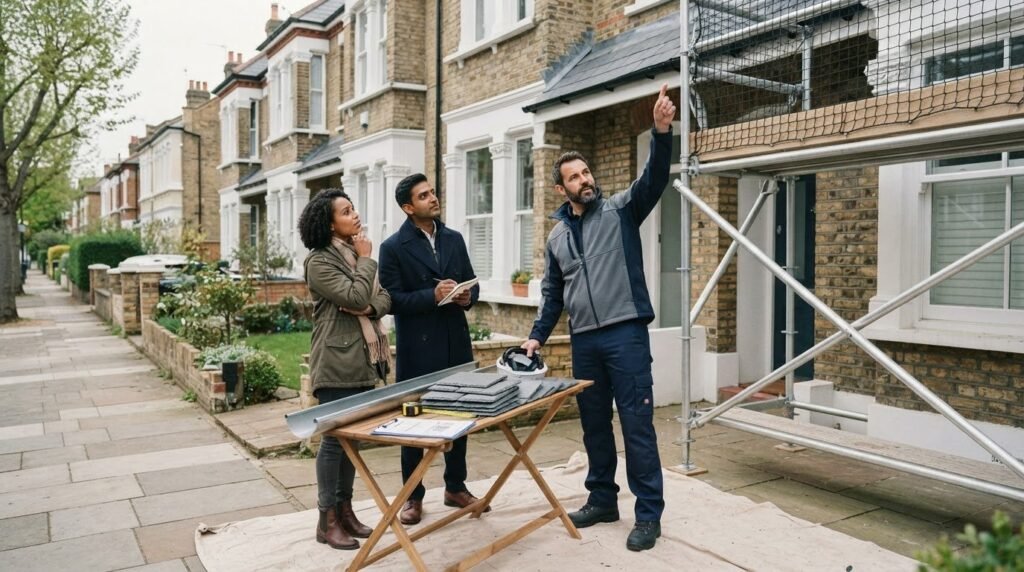
Ask what the site visit will assess, such as the reported issue, visible roof areas and access requirements. Find out what information would help the roofer prepare. A visit gives the roofer a view of your specific project that a photograph or phone description alone can’t provide. Atlas Roofing Solutions Ltd offers free site visits and transparent, no-obligation quotes.
Before the visit, gather a few practical details. They help frame the discussion, but they aren’t a diagnosis of the roof.
Have ready, if available:
- A short description of the problem and when it started
- Photographs taken from a safe position
- Any recent changes, such as a new leak or visible damage
- Useful access information, including any restrictions around the property
- Details of previous roof work or repairs, if known
During the visit, ask what the roofer observed and how those findings relate to the recommended work. A clear explanation should distinguish visible issues from anything that needs closer assessment. Once the scope is set out, review the written quote and the guarantee that applies. Atlas Roofing Solutions Ltd provides a 15-year workmanship guarantee.
Questions About Roofing Experience, the Survey and the Proposed Scope
Experience is useful context, but it shouldn’t be the only basis for a decision. A roofer who has worked on many properties still needs to assess your roof, its condition and the work you’re considering. Ask about experience relevant to your project, then look for a clear explanation of how the assessment informs the proposal.
How should a contractor explain their roofing experience?
Ask about relevant work, such as roof repairs, flat roofing or full installations, and how that experience relates to your property. Atlas Roofing Solutions Ltd brings over 20 years of experience to residential and commercial roofing projects in London. Time in the trade is useful context, but it doesn’t mean every roof needs the same solution. For broader roofing-industry resources, explore the National Roofing Contractors Association.
What should a roofing survey and written scope cover?
A site visit should help establish what’s visible, what needs further investigation and what work is proposed. Ask how the findings support the recommended approach. If a replacement is being considered, our professional new roof installation guide explains key points to consider.
Before accepting a proposal, check that its written scope makes the work easy to understand. It should distinguish included tasks from assumptions, exclusions and anything that may need further investigation. Look for details such as:
- Observed condition: which areas or issues were seen during the visit?
- Recommended work: what tasks are proposed, and how do they address the findings?
- Materials: what materials are included in the proposal?
- Access: what arrangements or requirements have been considered?
- Exclusions: what work is outside the quoted scope?
This detail matters because proposals can use similar descriptions while covering different tasks. Compare the written scopes line by line rather than relying on labels such as “roof repair” or “replacement”. If something is unclear, ask for it to be explained and clarified in the proposal before you agree. A transparent scope makes it easier to see what’s planned and compare quotes on the same basis.
Atlas Roofing Solutions Ltd carries out free site visits and provides transparent, no-obligation quotes, helping London property owners understand the proposed work before deciding. You can learn about our roofing services as you consider the next step.
Questions About Roofing Quotes, Materials and Guarantees
A quote is useful only if you can tell what the price covers. The questions to ask a roofing contractor should clarify the proposed work, the materials and any terms that could affect the final scope. Compare the written details, not just the headline wording. Two quotes labelled “roof repair” may describe different tasks.
What should a roofing quote include?
Check that the quote sets out the work, materials, access arrangements and exclusions. If an item is provisional, depends on further investigation or could change, it should be identified and explained in plain language. Ask for unclear wording to be clarified in writing so you know what’s included before agreeing to the work. Atlas Roofing Solutions Ltd provides transparent, no-obligation quotes following a free site visit.
Use this simple comparison when reviewing proposals:
| Compare |
What to check |
| Scope |
Are the tasks and areas of the roof described clearly? |
| Materials |
Are the proposed materials identified, with their suitability explained? |
| Exclusions |
Is work outside the quote clearly listed? |
| Payment terms |
Are the payment stages and terms stated in writing? |
| Guarantee wording |
Is the guarantee’s coverage and duration explained? |
Compare each row across the quotes. If one proposal leaves out access arrangements or doesn’t explain what happens if further work is needed, that difference matters. Ask for the missing detail to be set out rather than assuming it’s included.
What should I ask about materials and workmanship guarantees?
Ask why the proposed materials suit your roof type and the work involved. The explanation should relate to your project rather than rely on a generic description. Also clarify whether a stated warranty applies to the product or to the workmanship. These cover different things, so read the written terms to understand what is and isn’t included.
Atlas Roofing Solutions Ltd provides a 15-year workmanship guarantee. This applies to workmanship, not automatically to materials or unrelated work. Read the guarantee wording alongside the quote and check how it relates to the work proposed. Clear paperwork gives you a sound basis for comparing quotes and understanding what you’re agreeing to.
Questions About Site Safety, Weather Protection and Everyday Disruption
Roofing work can affect more than the roof itself. Before the job starts, agree how people, tools and materials will move around the property and how work could affect daily routines. These questions to ask a roofing contractor help turn general assurances into practical arrangements for your home and the work planned.
How will the property and garden be protected?
Ask which areas will be used for access and where materials or debris may be handled. A London home with a narrow side passage, shared entrance, small garden or limited driveway space has different practical considerations from a property with more room around it. Discuss which surfaces or planting need particular care, and how household access will be managed. Agree the arrangements before work begins, taking account of the property layout and the specific job.
It’s also useful to agree how you’ll be kept informed. Clarify who your main point of contact is, how updates will be shared and how changes to the day’s plan will be communicated. If you need to use a particular entrance or driveway, raise that early. Clear expectations can help reduce avoidable disruption for everyone at home.
What happens if weather or hidden damage changes the plan?
Roofing work can leave areas exposed during the process, so ask how temporary weather protection and end-of-day arrangements will be handled for your project. Weather can affect when particular tasks can be carried out, while concealed issues may only become visible once work is under way. The plan should account for these uncertainties rather than assume that work can continue to a fixed schedule in every condition.
Before work begins, agree how newly discovered damage or a change in scope will be explained. Ask how any extra work, its effect on the plan and any change to the quote will be set out, and how approval will be obtained before additional work proceeds. This gives you the chance to understand the reason for a change before deciding whether to approve it.
Before work starts, clarify:
- Access routes and areas used for the work
- How gardens, driveways and nearby surfaces will be considered
- How the roof will be protected if an area is exposed
- Who will provide updates and explain changes to the plan
- How newly identified work will be described and agreed
Good preparation supports a smoother project, while regular roof checks can help you spot issues before they grow. For practical preventative advice, see our seasonal roof maintenance guide. If you’re planning roofing work in London, arrange a free site visit to discuss the property and the proposed work.
How to Choose a London Roofing Contractor Using Questions
Good answers should help you make a decision, not leave you with more uncertainty. They should be specific to your roof, consistent with the written proposal and explained in language you can follow. Use the same process to review each option, keeping your priorities in view, whether you need a repair, flat roofing work or a new roof.
How can I compare roofing contractors fairly?
Start with the work your property needs rather than comparing general promises. Check that each proposal responds to the same problem, then compare the details side by side. If the scopes differ, ask for the difference to be explained so you can judge what each approach includes.
- Define the problem: note the symptoms and areas of concern you want assessed.
- Review the survey: understand what was observed, what is recommended and what may need further investigation.
- Compare written scopes: check the work, materials, exclusions and access assumptions in each proposal.
- Clarify protections: read the payment terms and guarantee wording, and understand how disruption or changes to the plan will be handled.
Clear, documented commitments are more useful than broad assurances. If an answer doesn’t match the quote or a term is difficult to understand, ask for a plain-language explanation and written clarification before deciding. You should be able to trace the proposed work back to the findings and see what’s included without having to guess.
What is the next step after asking these questions?
A site visit gives a roofing specialist the opportunity to assess the roof and the requirements of your particular property. This matters in London, where homes and access arrangements vary. No two projects should be assumed to have the same scope. After the assessment, a clear proposal can help you understand the recommended work and decide whether it meets your needs.
Atlas Roofing Solutions Ltd is a family-owned London roofing specialist serving residential and commercial clients. We provide free site visits and transparent, no-obligation quotes, so you can review the proposed work without pressure to proceed. Take the next step at your own pace: arrange a roofing site visit.
Take the Next Step With a Clear Roofing Plan
The right questions to ask a roofing contractor help you understand what needs doing, why it’s recommended and what the quote includes. Compare written scopes, materials, exclusions and guarantee terms. Before work begins, also agree on access, weather protection and how updates will be shared.
A site visit can turn your concerns into a project-specific proposal. Atlas Roofing Solutions Ltd is a family-owned London roofing specialist with over 20 years of experience. We provide free site visits, transparent, no-obligation quotes and a 15-year workmanship guarantee, so you have clear details to consider before deciding.
Ready to discuss your roof? Arrange a free, no-obligation roofing site visit and take the next step with confidence. A clear plan starts with a straightforward conversation.
Frequently Asked Questions
What questions should I ask a roofing contractor before hiring them?
Ask about relevant experience, what the roof inspection will cover, the written scope, materials, exclusions, site protection and workmanship guarantees. The questions to ask a roofing contractor should help you understand the proposed work and who is responsible for each part. Request plain-language explanations, then compare proposals against the same requirements. Before agreeing, clarify how changes will be explained and approved, so you know how decisions will be handled if the work needs to change.
How do I know if a roofing contractor’s quote is thorough?
A thorough quote clearly describes the proposed work and materials, identifies relevant exclusions or assumptions, and explains any provisional items. Check that it reflects the roof and project discussed during the site visit. If one quote includes repairs to a particular area and another doesn’t, they aren’t directly comparable. Ask for unclear wording to be explained before deciding, and make sure the written proposal gives you a clear picture of what you’re agreeing to.
Should a roofing contractor provide a written guarantee?
Ask for the guarantee terms in writing and check the duration, the work covered and any conditions that apply. A workmanship guarantee relates to the work carried out; it shouldn’t automatically be treated as a manufacturer’s warranty for materials. Read the guarantee alongside the quote to see how it relates to the specific project. Read the documented wording to understand its coverage.
What should a roofer inspect during a site visit?
A site visit should assess the reported problem, visible roof condition, relevant roof features and practical access. The inspection depends on the property and the work being considered, whether it’s a repair or a larger project. Ask the roofer to explain what they observed and distinguish visible findings from concealed areas or anything needing further investigation. The proposed scope should follow from the assessment, rather than relying only on a brief description of the issue.
How should roofers protect my home and garden during work?
Discuss access routes, working areas, nearby surfaces, materials and debris before work begins. Agree how arrangements will suit your property, including particular concerns about a garden, driveway or household entrance. If the roof will be exposed during the work, ask how temporary weather protection and end-of-day arrangements will be managed. Clarify how you’ll receive updates if weather or newly discovered damage affects the plan, and how any extra work will be explained.
Is a free roofing quote the same as a confirmed price?
No. A free quote means there’s no charge for the quote, but you should still check exactly what work it covers and whether any items are provisional or subject to further investigation. Ask how changes to the scope will be explained and agreed. Atlas Roofing Solutions Ltd offers free site visits and transparent, no-obligation quotes in London. Review the written details so you understand the proposal before deciding whether to proceed.
What if a roofer finds hidden damage after work starts?
Ask for newly discovered damage to be documented, explained and approved before additional work proceeds. The roofer should clarify what has changed, why it matters and how it affects the agreed scope. Some conditions may be concealed until work begins, so agree in advance how updates and decisions will be handled. Clear communication keeps you informed and gives you the opportunity to understand and approve changes rather than be surprised by work that wasn’t in the original proposal.