What if the biggest threat to your London terrace isn’t the British rain, but the very pipes meant to carry it away? For many homeowners in the capital, old cast iron systems are becoming a costly burden, whilst modern alternatives often feel like a gamble against strict conservation rules. Finding the best guttering for London homes requires a careful balance between historical charm and 2026 durability. You want a system that protects your brickwork without ruining your kerb appeal.
We know that dealing with damp patches and overflowing joints is a massive headache. It’s frustrating to watch water damage your exterior because of a system that’s past its prime. This guide simplifies the entire process, showing you how to achieve a leak-free home with materials that actually last. We’ll explore the most resilient uPVC and metal options, navigate the maze of local planning regulations, and help you secure a long-term guarantee for your peace of mind. From Victorian terraces to modern builds, we’ve got the practical answers you need.
Key Takeaways
- Learn why London’s urban heat island effect requires specific guttering materials that can handle rapid expansion and contraction without leaking.
- Discover how to match guttering styles to your property type, ensuring Victorian terraces maintain their classic look whilst modern blocks get the high-capacity drainage they need.
- Compare the pros and cons of uPVC and aluminium to find the best guttering for London homes that balances long-term durability with aesthetic appeal.
- Understand why a gutter replacement is only half the job and how healthy fascias and soffits prevent rot and dampness in your roof space.
- See why expert installation, from precise pitch calculations to choosing the right bracketry, is essential for a truly maintenance-free experience.
Understanding London’s Unique Guttering Requirements
London presents a specific set of challenges for any roofline. Whilst rural properties deal with wind and steady rain, the capital operates within its own microclimate. To find the best guttering for London homes, you must first understand the “urban heat island” effect. Buildings and tarmac trap heat, keeping the city significantly warmer than the surrounding home counties. This constant temperature fluctuation causes gutters to expand and contract more aggressively than they would elsewhere. If your system lacks the flexibility to handle this thermal movement, joints will fail and leaks will follow quickly.
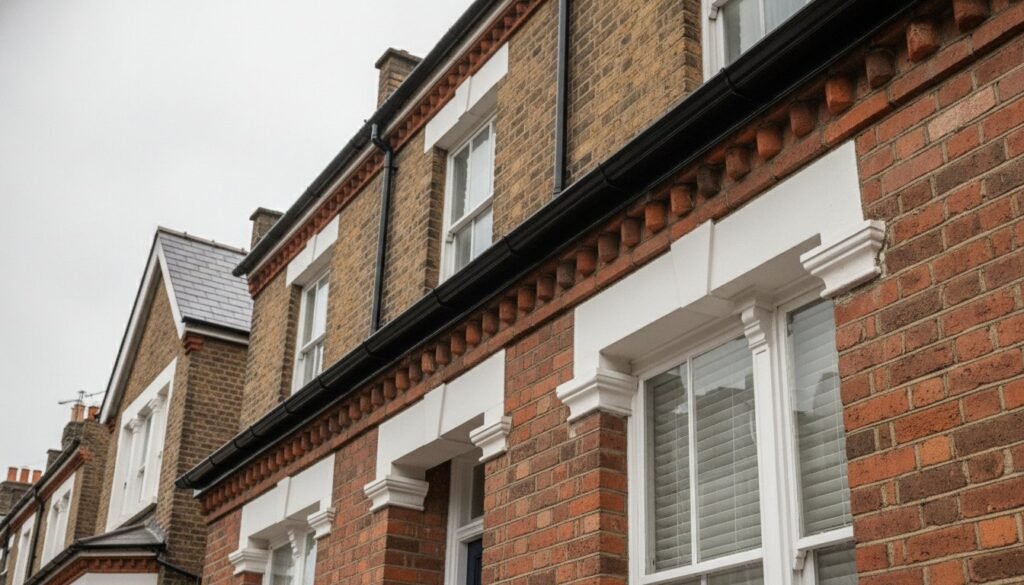
The intensity of rainfall has also changed. We’re seeing more frequent, sudden downpours that can overwhelm older, narrow channels. When water can’t escape fast enough, it spills over the side and cascades down your exterior walls. In London’s iconic Victorian and Edwardian terraces, this leads to penetrating damp. Because these older bricks are naturally porous, consistent overflow soaks directly into the masonry. It doesn’t just look unsightly; it weakens the mortar and creates internal damp issues that are far more expensive to fix than a simple pipe replacement. For a foundational look at how these systems work, you can check this Rain gutter overview for technical details on drainage design.
Weather Resilience in the Capital
Urban pollution is another factor often overlooked. Traffic film and soot can settle in your drainage system, reacting with certain materials over time. We recommend high-capacity systems made from UV-stable uPVC or treated metals. These materials won’t become brittle after a few summers in the city sun, and they resist the corrosive effects of London air. Durability is essential. You need a setup that stays functional and keeps its colour without constant maintenance or painting.
Architectural Diversity and Gutter Choice
London isn’t a “one size fits all” city. A sleek modern apartment in Canary Wharf has very different needs compared to a listed townhouse in Kensington. Using the wrong profile can ruin a building’s kerb appeal or even violate local conservation rules. Finding the best guttering for London homes means looking beyond the price tag to the specific architectural era of your street. Whether it’s a deep-flow uPVC for a busy terrace or a classic “ogee” style for a period property, the goal remains the same: protecting the structural integrity of your foundations whilst respecting the building’s character.
Comparing Guttering Materials: Pros and Cons for Londoners
Selecting the best guttering for London homes isn’t just about price; it’s about matching a material’s lifespan to your property’s needs. Whilst cast iron was once the standard across the capital, 2026 offers a range of high-performance alternatives. Each material reacts differently to London’s urban environment, meaning your choice will dictate how often you’re up a ladder or paying for repairs. Modern uPVC remains the most popular choice for its balance of cost and durability, but premium metals like aluminium are gaining ground for their “fit and forget” appeal.
For those with contemporary architectural projects, steel and copper offer a striking aesthetic. These niche options are incredibly durable but come with a higher initial investment. On the other end of the spectrum, cast iron remains the go-to for listed buildings where heritage looks are non-negotiable. However, it’s vital to remember that cast iron requires regular painting to prevent rust, which can be a significant maintenance burden for busy homeowners. If you’re unsure which material suits your terrace, our team can provide transparent quotes and site visits to help you decide.
The Rise of High-Quality uPVC
Modern uPVC is a world away from the brittle plastics of the past. It’s now UV-stable, meaning it won’t fade or crack under the intense city sun. For many, it’s the ultimate hassle-free solution. You can choose from various profiles, including deep-flow systems designed to handle the heavy downpours we mentioned earlier. It’s cost-effective and, when installed correctly, offers a clean look that complements both new builds and refurbished Victorian terraces.
Metals vs Plastics: A Performance Review
When comparing performance, thermal expansion is a key factor. Plastic gutters move more than metal ones, so they require high-quality gaskets and expansion joints to stay leak-free. Aluminium is a standout here; it’s lightweight, rust-resistant, and boasts a 50-year functional life expectancy. This makes it ideal for ageing Victorian fascia boards that might struggle with the weight of heavy cast iron. All installations must adhere to the UK Building Regulations for drainage to ensure water is managed safely. Choosing a material that requires minimal attention over a 15-year cycle is usually the smartest move for long-term peace of mind.
Matching Guttering Styles to Your London Property Type
London’s skyline is a patchwork of eras. From the narrow Victorian terraces of Fulham to the sprawling Edwardian semis of Muswell Hill, every property type demands a specific approach. Finding the best guttering for London homes isn’t just about functionality; it’s about architectural sympathy. For many, this means choosing between the decorative, scalloped edges of an “ogee” profile or the simple, understated efficiency of a half-round system. Selecting a style that clashes with your neighbours’ rooflines can look jarring and potentially impact your property value.
Modern apartment blocks face different challenges. These buildings often have large, flat roof areas that require high-capacity box guttering. Without this, even a standard London shower can cause an overflow. For suburban semi-detached homes, the goal is often standardisation. Replacing mismatched sections with a continuous uPVC run creates a clean, professional finish that boosts kerb appeal instantly. As a family-owned business with 20 years of experience, we’ve seen how a unified roofline can transform the look of a street.
Period Property Considerations
Working on older homes requires a delicate touch. Victorian brickwork is rarely perfectly level. This makes bracket spacing and alignment critical. If brackets are placed too far apart on an uneven wall, the guttering will sag, leading to standing water and eventual leaks. We pay close attention to the details, ensuring new systems don’t obscure decorative cornices or hand-carved masonry. It’s about providing a reliable guardian for the building whilst keeping its historical soul intact. High-quality uPVC now comes in “cast-effect” finishes, giving you the heritage look without the weight or the rust.
Navigating Local Regulations
London is home to hundreds of conservation areas where Article 4 directions may apply. In these zones, you can’t simply pick any material from a catalogue. Local councils often insist on like-for-like replacements to preserve the street’s character. All work must also align with the UK Building Regulations (Approved Document H) to ensure the drainage is safe and efficient. We help homeowners navigate these rules, ensuring your new guttering meets both legal standards and aesthetic requirements. Getting professional advice early prevents the hassle of planning disputes later on.
The Complete Roofline: Why Fascias and Soffits Matter
Installing the best guttering for London homes is only half the battle if you ignore the boards they’re attached to. Many homeowners make the mistake of fixing brand new channels onto old, timber fascias that are already starting to rot. This is a recipe for disaster. The fascia board acts as the structural spine for your entire drainage system. If that wood is soft or decaying, it won’t hold the weight of heavy downpours. Eventually, the brackets pull away, leading to catastrophic leaks and damage to your rafters.
Soffits are equally vital. These are the boards tucked underneath the fascia, and their primary job is to let your roof breathe. Without proper ventilation through the soffits, condensation builds up in your attic space. Over time, this trapped moisture causes roof timbers to rot from the inside out. Upgrading to modern uPVC fascias and soffits provides a maintenance-free foundation that protects your home for decades. It’s a smart investment that significantly boosts the kerb appeal and resale value of London properties, especially in competitive boroughs where buyers look for “move-in ready” homes.
Supporting the Weight of Rainwater
A standard run of guttering becomes incredibly heavy during a typical London storm. If your fascia boards aren’t secure, you’ll likely experience “gutter sag”. This creates low points where water pools instead of flowing toward the downpipe. Standing water is a major issue; it attracts pests and puts even more strain on the system. When we install a complete roofline, we ensure the brackets are anchored into solid material. We also recommend integrating bird guards and leaf protection. This keeps the channels clear and prevents debris from causing unnecessary weight stress on your boards.
Aesthetic Unity and Kerb Appeal
First impressions matter. A mismatched roofline with peeling paint on the fascias and shiny new gutters looks unfinished. By matching your gutter colours with your fascias, you create a seamless, professional appearance that immediately elevates the look of your street. For a deeper dive into these components, see The Ultimate Guide to Soffit and Fascia. If you’ve noticed your current boards looking tired or soft, don’t wait for them to fail. You can contact us for a transparent quote to upgrade your entire roofline and ensure your home stays protected for the long term.
Expert Installation: Why the Right Contractor is Vital
Finding the best guttering for London homes is only half the journey. The other half is ensuring it’s fitted by someone who understands the city’s unique structural quirks. Even the most expensive aluminium or high-grade uPVC system will fail if the installation is rushed. We’ve seen countless homes where brand new gutters were fitted perfectly level. Whilst that might look tidy, it’s a technical failure. Gutters need a precise “fall” toward the downpipe to ensure water actually moves. Without this calculation, you’re just left with a long, expensive birdbath attached to your roof.
Our installation process follows a methodical, five-step progression to ensure long-term security:
- Step 1: Accurate Survey. We calculate the pitch and roof area to ensure the system can handle peak London rainfall.
- Step 2: Correct Bracketry. London masonry varies from porous Victorian brick to modern flint. We select fixings that won’t pull loose under the weight of a winter storm.
- Step 3: Expansion Gaps. We leave specific room at the joints. This allows the material to expand and contract during the capital’s temperature swings without buckling.
- Step 4: Water Testing. We run a flow test before we leave the site. This proves the system is leak-free and draining exactly as intended.
- Step 5: The Guarantee. We secure your 15-year workmanship guarantee, giving you a clear point of contact should you ever need us.
The Atlas Roofing Solutions Ltd Difference
Atlas Roofing Solutions Ltd has been a fixture in the London roofing market for over 20 years. As a family-run business, we’ve built our reputation on being a reliable guardian for your home. We don’t believe in high-pressure tactics. Instead, we offer free site visits and transparent, no-obligation quotes. This straight-talking approach ensures you know exactly what you’re paying for. Our 15-year workmanship guarantee isn’t just a piece of paper; it’s a reflection of the pride we take in every terrace and townhouse we work on.
Avoiding the “Solar Cowboy” Trap
Be wary of budget contractors who promise the world for an impossibly low price. These “cowboy” outfits often skip the vital pitch calculations or use cheap, non-UV-stable brackets that snap after a single summer. A poor installation can lead to penetrating damp that costs thousands to fix. Always ensure your contractor is fully insured and DBS-checked for your safety. If you want a hassle-free experience with a team that knows the best guttering for London homes, we’re here to help. Get your free, transparent guttering quote from Atlas Roofing Solutions Ltd today.
Securing Your Home’s Future Against the London Rain
Your roofline serves as the primary shield for your property against the capital’s shifting climate. As we’ve explored, finding the best guttering for London homes involves more than just selecting a durable material; it requires a complete system that respects your building’s architecture whilst incorporating modern drainage performance. From the strength of the fascia boards to the precise pitch of the channels, every component must work in harmony to prevent damp and preserve your masonry.
Choosing a partner for this work is a decision that impacts your home for decades. Atlas Roofing Solutions Ltd offers over 20 years of local expertise, operating as a family-run business that values reputation and transparency. We back our workmanship with a 15-year guarantee, ensuring your investment is protected long after the job is done. To begin your journey toward a maintenance-free roofline, Request a Free Site Visit and Transparent Quote from our specialists today. We look forward to helping you protect your home with confidence.
Frequently Asked Questions
How often should I clean my gutters in London?
You should clean your gutters at least twice a year, typically in late autumn and spring. London’s urban environment often leads to a build-up of soot and traffic pollution alongside traditional debris like leaves and moss. If your property is near large trees or in a high-pollution zone, we recommend quarterly inspections. Regular cleaning prevents the weight of wet sludge from sagging your brackets and damaging your fascias.
Do I need planning permission to change my guttering in a London conservation area?
In most cases, you don’t need planning permission for repairs or like-for-like replacements. However, many London boroughs have Article 4 directions that restrict external changes to preserve historical character. If you live in a conservation area or a listed building, you must check with your local council before switching materials, such as moving from cast iron to uPVC. Professional advice ensures your project remains compliant with local heritage rules.
What is the best guttering material for a Victorian terrace?
For a classic Victorian terrace, the best guttering for London homes is often cast-effect uPVC or powder-coated aluminium. These materials replicate the traditional “ogee” or half-round look of original cast iron without the heavy maintenance or rust issues. They provide a heritage aesthetic whilst being much lighter on ageing fascia boards. This choice balances historical sympathy with 2026 durability, ensuring your period property remains protected.
How much does it cost to replace guttering, fascias, and soffits in London?
The total cost depends on several factors, including property size, material choice, and the complexity of the roofline. A standard terrace requires fewer materials than a detached home, but may involve more complex access requirements. Because every London roofline has its own unique challenges, we provide free site visits and transparent, no-obligation quotes to give you an accurate figure tailored specifically to your home’s requirements.
Can I install new gutters over my existing wooden fascia boards?
We strongly advise against “capping” over old timber. If there’s even a small amount of rot hidden beneath the surface, the moisture will continue to spread, eventually causing the fixings to fail under the weight of rainwater. A full replacement of the fascias and soffits ensures a solid, rot-free foundation that protects your rafters and keeps your new guttering system perfectly aligned for the long term.
What are the signs that my London home needs new guttering immediately?
Look for clear warning signs like water marks or damp patches on your exterior brickwork. If you notice “gutter sag” where the pipes are pulling away from the house, or if water overflows during a typical London downpour, your system is failing. Other red flags include damp patches on interior walls or cracked masonry caused by consistent splashing, all of which require urgent attention to prevent structural damage.
Why is uPVC the most popular choice for London rooflines in 2026?
Modern uPVC has become the standard because it offers exceptional weather resistance without the premium price of metal. In 2026, these systems are fully UV-stable and won’t become brittle or discoloured over time. They are also incredibly versatile, allowing homeowners to achieve a clean, modern look or a heritage finish that satisfies the diverse architectural styles found across the capital’s various boroughs.
Does Atlas Roofing Solutions Ltd provide a guarantee on gutter installations?
Yes, Atlas Roofing Solutions Ltd provides a comprehensive 15-year guarantee on all workmanship. As a family-owned business with over 20 years of local experience, we take full accountability for every project we undertake. This guarantee ensures that your new roofline remains a reliable guardian for your home, providing long-term peace of mind and protection against the specific challenges of the London climate.