Imagine waking up at 2 AM to the rhythmic “plink-plink” of water hitting your floorboards during a sudden London downpour. It’s a sound that instantly triggers a heavy knot of anxiety in your stomach. You aren’t just thinking about a damp patch; you’re worrying about structural rot and the daunting task of finding a reliable specialist for a roof leak repair. Most homeowners feel a genuine sense of dread when the weather turns, fearing that a small drip today could become a major financial headache tomorrow.
We know how vulnerable it feels when your home’s first line of defence fails. You want the water stopped, and you want it done right the first time without the stress of “cowboy” contractors. This guide will show you exactly how to contain the damage immediately, identify the true source of the ingress, and permanently resolve the issue to protect your property. We’ll walk you through the essential emergency steps and explain how to find a trustworthy, family-run expert amongst a sea of questionable options. You’ll gain a clear, methodical plan to restore your home’s safety and your own peace of mind.
Key Takeaways
- Learn how to spot subtle warning signs like damp patches or peeling paint before they escalate into major structural issues.
- Discover the essential emergency steps for a successful roof leak repair, including how to safely manage water ingress and protect your home’s electrics.
- Understand why London’s historic Victorian and Edwardian properties are uniquely vulnerable to the local climate and urban pollution.
- Find out why a professional “strip back” diagnosis is the only way to achieve a permanent solution rather than a temporary patch.
- Establish a simple seasonal maintenance programme to keep your gutters clear and ensure your roof remains a reliable guardian for your property.
Identifying the Signs of a Roof Leak Before It Escalates
In a domestic setting, a roof leak is defined as any breach in the external waterproofing layer that allows moisture to enter the building’s envelope. It isn’t always as dramatic as a gaping hole or water splashing onto your floorboards. More often, it’s a silent, persistent ingress that bypasses your tiles, slates, or flat roof membrane. These subtle leaks are frequently the most dangerous because they go unnoticed for months, quietly feeding structural rot in your timber joists or saturating your loft insulation. Catching these signs early is the difference between a straightforward roof leak repair and a full-scale structural renovation project.
Early detection acts as a vital shield for your property. When water enters a home, it rarely stays in one place. It tracks along beams, follows electrical conduits, and soaks into porous masonry. By the time you see a visible drip, the internal damage is often already significant. Being a “reliable guardian” of your home means looking beyond the obvious and identifying the quiet warnings your roof is sending before the next London storm hits. This vigilance prevents the long-term degradation of your home’s skeleton.
Internal Red Flags in Your Attic and Ceilings
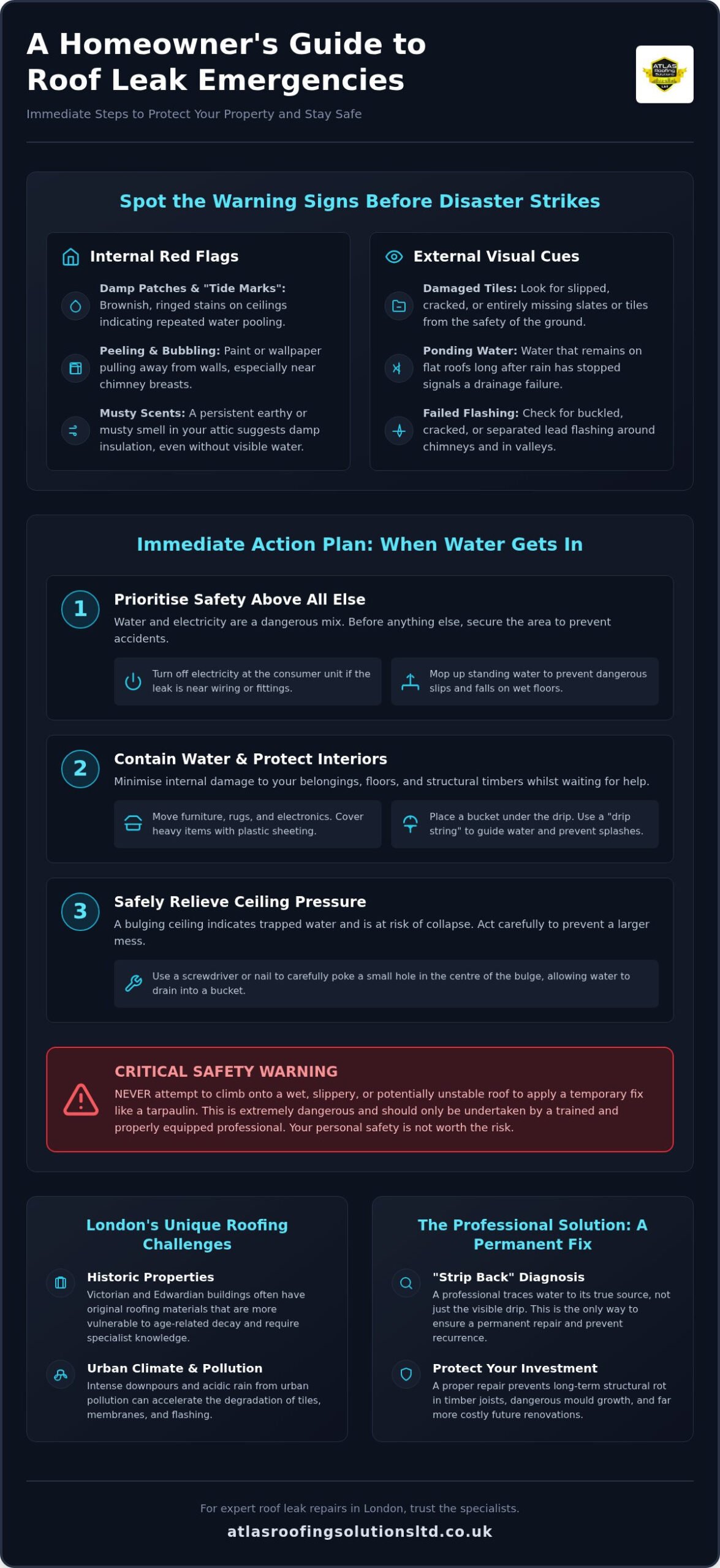
Your first clues often appear in the upper storeys of your home. Look for “tide marks” on your ceiling plaster; these are brownish, ringed stains that indicate water has pooled and dried repeatedly over time. In the attic, trust your nose. A persistent musty or earthy scent usually suggests damp insulation amongst the joists, even if you can’t see standing water. Keep an eye on your walls too. Wallpaper that starts to bubble or paint that peels away from chimney breasts often signals that water is tracking down the masonry from a faulty seal above. These are clear indicators that a professional roof leak repair is required to prevent timber decay and mould growth.
External Visual Cues from the Ground
You don’t need a ladder to spot potential trouble. From the pavement, check for slipped, cracked, or missing slate and clay tiles, especially after a heavy gale. If you spot any damaged units, understanding your options for broken roof tiles repair can help you act quickly before water finds its way into your home. If you have a flat roof section, look for “ponding” water that remains long after the rain has stopped. This suggests a drainage failure or a dip in the structure that could eventually breach the surface. Pay close attention to the lead flashing around chimneys and in the valleys where two roof slopes meet. If the metal looks buckled, cracked, or pulled away from the brickwork, your home’s defences are compromised. At Atlas Roofing Solutions Ltd, we’ve spent 20 years identifying these specific vulnerabilities in London properties, ensuring a small defect doesn’t become a costly disaster.
When you discover water ingress, your first instinct is often to panic. Slow down. Safety is your absolute priority. Water and electricity are a lethal combination; if water is dripping near sockets, switches, or light fittings, turn off the power at the consumer unit immediately. Wet floors also become incredibly slick. Clear any standing water with a mop to prevent falls before you begin the process of containing the roof leak repair. Remember that your property can be fixed, but your physical safety cannot be replaced.
Once the area is safe, you must act fast to limit the internal damage. These initial minutes are crucial for protecting your floorboards, joists, and personal belongings. If the situation feels overwhelming or the water is pouring in during a storm, it is time to consult an urgent roof repair London specialist who can provide professional containment and advice.
Protecting Your Interior and Belongings
Move furniture, rugs, and electronics away from the “drip zone” immediately. If an item is too heavy to move, cover it with heavy-duty plastic sheeting. Most people reach for a bucket, but a common mistake is letting the water splash out onto the floor. You can prevent this by using a “drip string.” Tie a piece of twine to the leak point on the ceiling; the water will follow the cord directly into your container without splashing. If you notice a bulge in your ceiling plaster, it is holding a significant weight of trapped water. Use a small screwdriver or nail to poke a hole in the centre of the bulge. This releases the hydraulic pressure safely into a bucket, preventing the entire ceiling from collapsing under the weight.
Temporary External Containment
Temporary measures like tarpaulins are stop-gaps, not permanent fixes. They are useful for keeping the rain out whilst you wait for a roofer, but they must be secured correctly with weighted battening rather than just bricks. However, there is one golden rule: never climb onto a wet or damaged roof yourself. London roofs are often steep, and old slates become dangerously brittle when wet. It is far safer to document the damage from the ground. Take clear photos of the leak’s location and any visible external damage before you make any changes. These images are vital for your insurance claim and help us understand the scale of the issue. For a thorough assessment that doesn’t put you at risk, consider booking a professional roof inspection with our experienced team.
Common Causes of Roof Leaks in London Properties
London’s architecture is iconic. However, the Victorian and Edwardian terraces that line our streets face a unique set of environmental pressures. These properties have stood for over a century, but their roofing systems aren’t invincible. Urban pollution and slightly acidic rain gradually weaken the structural integrity of clay tiles and mortar joints. When you combine this with the capital’s erratic freeze-thaw cycles, materials that were once robust begin to fail. Identifying the root cause requires the eye of a roof repairs London specialist who understands the nuances of local building stock.
It isn’t always the tiles that give way first. Neglecting your roofline—the gutters, fascias, and soffits—is a frequent catalyst for water ingress. Blocked gutters cause rainwater to back up, forcing it under the eaves and into your rafters. This often leads to a complex roof leak repair that involves more than just swapping a few slates. Keeping these drainage paths clear is your first line of defence against the damp, as even a small blockage can compromise a perfectly sound roof structure.
Chimney Stacks and Lead Flashing Failures
Chimneys are the most exposed part of your home. In older London properties, the mortar joints in the stack often perish over time, allowing moisture to soak into the masonry. The lead flashing creates the watertight seal where the chimney meets the roof. This metal is incredibly durable, yet it isn’t immortal. Over decades, thermal expansion causes the lead to stretch and shrink. Eventually, small fatigue cracks appear amongst the folds. These tiny fissures are enough to let driving rain bypass your tiles and enter your attic space, often tracking down the chimney breast into your living areas.
Flat Roof Vulnerabilities: Felt vs. Modern Fibreglass
Many London extensions still rely on traditional bitumen felt. Whilst common, felt is prone to “blistering” as trapped moisture expands in the sun. This leads to surface cracking and eventual failure. Poor drainage is the primary enemy here; “ponding” water adds significant weight and accelerates the degradation of the membrane. At Atlas Roofing Solutions Ltd, we often see these issues resolved permanently by upgrading to a seamless GRP fibreglass system. Unlike felt, fibreglass has no joints or seams, making it a much more resilient option for the city’s modern homeowners. It turns a recurring roof leak repair headache into a long-term, hassle-free solution.
Professional Roof Leak Repair Techniques
A quick patch might stop a drip for a week, but it rarely solves the underlying problem. Professional roof leak repair isn’t about hiding the damage; it’s about restoring the structural integrity of your home. We often see “repairs” where a contractor has simply smeared sealant over a crack. This approach traps moisture inside, accelerating the rot of your timber battens. A permanent solution requires a methodical “strip back” process. By removing the surrounding tiles or slates, we can trace the water’s path to its true entry point, which is often several feet away from where the drip appears inside.
Authenticity matters for London properties. We ensure that every replacement tile or slate is colour-matched to your existing roof. Using reclaimed materials for older Victorian homes maintains the aesthetic value whilst providing modern protection. We also look at the bigger picture. A roof doesn’t work in isolation. We check how the repair integrates with your guttering and uPVC fascias to ensure water flows away from the building exactly as it should. If you want a repair that lasts, our expert roofing team provides the thoroughness your home deserves.
Pitched Roof Tile and Slate Replacement
Replacing a damaged slate or tile is a precision task. We use specialist tools to remove individual units without disturbing the surrounding structure. Once the tile is out, we inspect the underlying breathable membrane. If the old bitumen felt has perished, we replace that section to ensure a secondary layer of protection. Every new tile is secured with stainless steel or copper nails to prevent wind uplift during the next London gale. This attention to detail ensures your roof remains a reliable guardian against the elements. For a deeper understanding of the materials and methods involved, our guide to broken roof tiles repair in London covers how to identify different tile types and match colours accurately for a seamless finish.
Specialist Flat Roof Repair Solutions
Flat roofs require a different set of skills. For minor leaks on traditional felt, cold-applied liquid membranes offer a fast and effective seal. However, if the deck is saturated, we may recommend a more robust approach. We compare the benefits of repatching existing felt versus a full GRP fibreglass overlay. It’s vital to note that professional flat roof repairs require precise temperature conditions. Applying resins in the wrong weather prevents proper curing, leading to premature failure. We monitor the local forecast to ensure every GRP application is performed in the “sweet spot” for maximum durability and longevity.
Preventing Future Leaks: Maintenance and Expert Care
Prevention is always more cost-effective than a midnight emergency. Whilst we’re always ready to assist with a roof leak repair, our goal is to help you avoid the stress of water ingress altogether. London’s climate is notoriously damp; therefore, establishing a seasonal maintenance schedule is your best defence. We recommend a thorough check every autumn and spring. This ensures your home is prepared for the winter gales and the heavy summer downpours that often overwhelm older drainage systems. A proactive approach keeps your property dry and your repair bills low.
One of the simplest ways to protect your roof is to keep your guttering clear. When gutters are choked with leaves, moss, or urban grit, rainwater has nowhere to go. It pools against the fascia boards and is eventually forced under the first row of tiles. A dry roof starts with a clear path for water to leave the building. If you find yourself booking a roof leak repair every few months, it might be a sign that your materials have reached the end of their natural life. In these cases, a new roof installation London homeowners can trust provides a permanent, long-term solution that adds genuine value and security to your property.
The Annual Roof Health Check
A professional site visit is about more than just looking for holes. During a survey, we examine the integrity of the mortar in your ridge tiles and chimney pots. These are high-exposure areas where small cracks can quickly become entry points for moisture. We also check for moss growth. Whilst it might look characterful, moss acts like a sponge, holding water against your tiles and slates. This prevents efficient runoff and can lead to frost damage during the colder months. Clearing this debris is a simple step that significantly extends the lifespan of your roof structure and prevents the need for urgent interventions.
Why Choose Atlas Roofing Solutions Ltd?
We believe that home maintenance should be simple and hassle-free. At Atlas Roofing Solutions Ltd, we take pride in being a “reliable guardian” for our local community. As a family-run business with 20 years of London experience, we don’t use high-pressure sales tactics. Instead, we offer transparent, straight-talking advice and no-obligation quotes. Every repair or installation we perform is backed by our 15-year workmanship guarantee. This commitment to quality ensures that when we fix a problem, it stays fixed. You aren’t just hiring a contractor; you’re partnering with a team that values accountability and long-term security above all else.
Secure Your Home Against the Next London Storm
Protecting your property starts with staying alert to subtle changes and acting fast when water ingress appears. We’ve explored how to contain a leak safely; using drip strings and releasing ceiling pressure; whilst highlighting why a professional “strip back” is the only way to ensure a permanent roof leak repair. By understanding the specific vulnerabilities of London’s historic housing, you can move from reactive panic to proactive care. A dry home is a safe home, and catching small defects early is the best way to prevent costly structural rot.
At Atlas Roofing Solutions, we take pride in being the reliable guardian of your home. We bring over 20 years of specialist roofing experience to every project, ensuring your roof remains durable and watertight. Our family-run team believes in honesty and accountability; that’s why we offer free site visits and transparent pricing with no hidden surprises. Every job we complete comes with a 15-year guarantee on all workmanship for your total peace of mind.
Don’t let a small drip become a structural disaster. Contact our family-run team for a free, no-obligation roof repair quote today. We’re here to help you restore your home’s safety and keep it protected for years to come.
Frequently Asked Questions
How much does a typical roof leak repair cost in London?
The cost of a roof leak repair depends on the extent of the damage, the height of your property, and the specific materials required. Every London home is different, which is why we provide free site visits to assess the situation properly. This transparent approach ensures you receive an accurate, no-obligation quote based on the actual work needed rather than a vague industry average. For a detailed breakdown of current labour rates and material costs, our guide to leaking roof repair cost in London for 2026 provides the honest pricing information you need to avoid being overcharged.
Can I fix a leaky roof from the inside of the attic?
Fixing a leak from inside the attic is only a temporary measure and won’t solve the underlying problem. Whilst you might stop a visible drip, the water is still penetrating your external tiles and saturating your structural timbers. This trapped moisture often leads to wood rot and mould. A permanent, professional fix must always be applied to the exterior of the roof to restore the building’s waterproof seal.
How do I find exactly where my roof is leaking?
Finding the source is often difficult because water tracks along rafters and internal beams far from the initial entry point. Start by inspecting your attic with a torch during a heavy downpour and look for wet patches or damp insulation. If the source isn’t obvious, we use our 20 years of experience to trace the ingress by checking common failure points like chimney flashing and valley gutters.
Is a leaking roof an emergency that needs immediate attention?
Yes, a leaking roof should always be treated as an urgent priority to protect your home’s structural integrity. Even a small drip can lead to saturated insulation, ruined ceiling plaster, and dangerous electrical hazards if water reaches light fittings. Acting fast prevents a relatively simple repair from escalating into a much more expensive and disruptive structural project.
Will my home insurance cover the cost of roof leak repairs?
Insurance coverage typically depends on the cause of the leak and your specific policy details. Most insurers cover sudden “perils” like storm damage or a fallen tree. However, leaks caused by gradual wear and tear or a lack of routine maintenance are often excluded. It is vital to document the damage with photos and check your policy wording before making a claim.
How long does a professional roof leak repair usually take?
Most minor repairs, such as replacing slipped slates or fixing a small section of flashing, are completed within a few hours. More complex structural issues or extensive flat roof repairs might take a full day or longer. Our team works efficiently to restore your home’s safety, though we always prioritise dry weather conditions to ensure materials bond and cure correctly.
What is the best way to temporarily patch a flat roof leak?
The most effective temporary fix for a flat roof is a cold-applied emergency sealant or a heavy-duty tarpaulin. These solutions provide a short-term barrier against the rain whilst you wait for a specialist to arrive. Ensure any tarpaulin is secured with weights rather than nails to avoid creating new holes in your perishing felt or fibreglass surface.
Should I repair my roof or is it time for a full replacement?
Repairing is usually the best option for isolated issues like a single cracked tile or a minor flashing failure. However, if your roof is over thirty years old and leaks are appearing in multiple locations, a full replacement is often more cost-effective in the long run. We provide straight-talking advice to help you choose the most durable solution for your property.