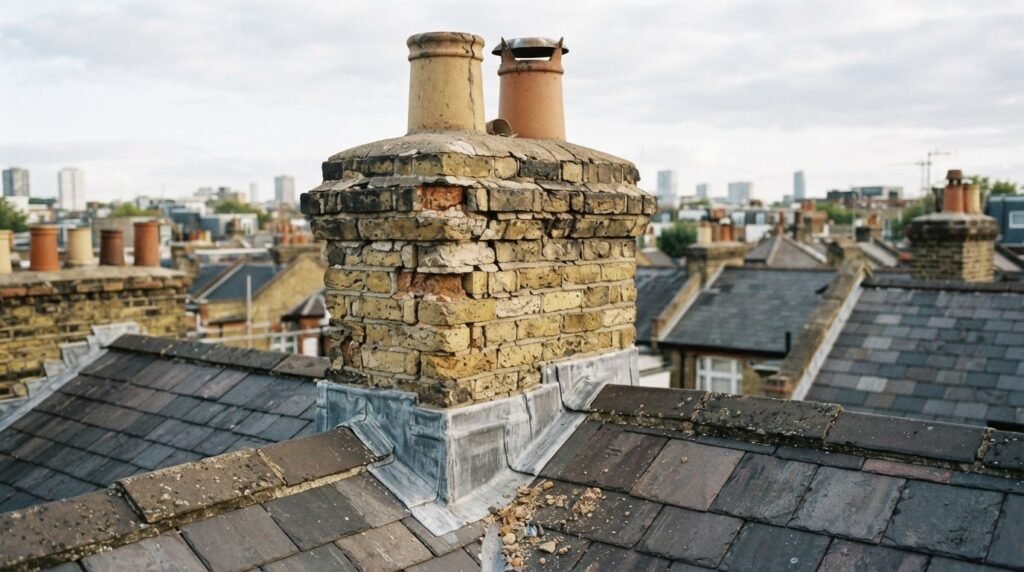
A chimney can look weathered without needing a rebuild, but failing mortar deserves attention. Look for signs your chimney needs repointing, such as cracked, crumbling or missing mortar, loose material falling onto the roof, or damp staining near the chimney. Repointing is generally suitable when the bricks remain sound and the mortar joints have failed; mortar often lasts roughly 25 to 30 years.
It’s understandable to wonder whether a repair will be enough or whether the chimney needs more extensive work. This guide explains how to recognise failing pointing, how repointing compares with a partial or full rebuild, and what a professional inspection should assess. You’ll also learn what to look for safely from the ground or inside the loft, and when a visual check should lead to a closer assessment. The aim is to help you understand what may be happening without mistaking a surface mark for proof that the whole chimney needs rebuilding.
Key Takeaways
- Cracked, crumbling or missing mortar can let water into the chimney; the condition of the bricks helps determine whether repointing is suitable.
- Extensive brick damage, loose upper courses or a leaning stack may call for rebuilding part or all of the chimney instead.
- Look for visible defects from the ground and signs of damp in the loft, but leave roof-level checks to a professional.
- A lasting repointing job involves removing failed mortar and applying suitable replacement mortar, not simply covering over damaged joints.
When Should A Chimney Be Repointed?
Repointing is usually suitable when the mortar joints have failed but the bricks remain sound. A professional assesses the exposed masonry, the depth of the joints and any signs of moisture before choosing the repair.
Cracked or Missing Mortar Joints
Cracked, recessed, crumbling or missing mortar indicates deterioration between the bricks. Gaps can let rainwater enter the masonry. When temperatures drop, freezing water expands and may damage the mortar and brick faces. Regular mortar debris on the roof or in gutters is another clue. Repointing replaces failed mortar; a chimney rebuild may be needed if the brickwork itself is extensively damaged. Tuckpointing is a decorative finish that gives the appearance of fine joints, rather than simply replacing failed mortar.
Recognising Failed Chimney Mortar
Signs include loose or powdery mortar, open gaps, and joints that have receded behind the brick faces. According to Transport Scotland, failed mortar joints indicate deterioration in masonry. Uneven colour alone doesn’t prove the pointing has failed; loss of bond and reduced protection from water are stronger clues. Chimney mortar typically lasts roughly 25 to 30 years, though condition matters more than age alone.
A professional checks how deeply the joints have failed, whether the bricks remain sound and whether the stack shows signs of movement. They select a repointing method and mortar suited to the existing masonry, rather than covering defective material.
Choose a specialist who assesses joint depth, brick condition and movement, then clearly explains the proposed repair and choice of mortar. Approval requirements depend on the property and scope of work, so a mortar defect alone does not determine whether planning permission or building regulations approval applies.
Arrange the work before cold weather if possible, since suitable temperatures can help mortar cure. A visual check may reveal failing joints, but an assessment from roof level helps establish what repair is needed.
Repointing compared with partial or full rebuilds
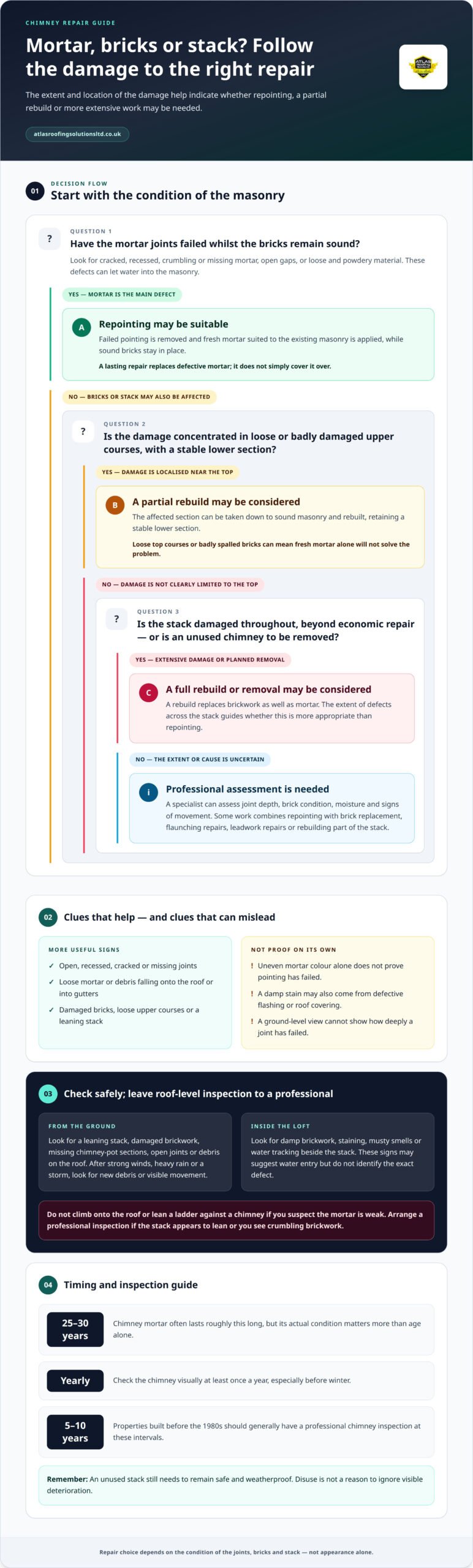
Repointing renews failed mortar joints while keeping sound bricks in place. The professional removes defective pointing and applies fresh mortar suited to the existing masonry. This is appropriate when the damage lies mainly in the joints, rather than the bricks or the stability of the stack. A rebuild replaces brickwork as well as mortar, so the extent of damage determines which chimney repair is suitable.
During an assessment, the professional considers where the damage is and whether the masonry remains sound. Widespread mortar failure across several sides, for example, can indicate a need for repointing, while badly damaged bricks or a leaning stack may call for more extensive work. Weather exposure can affect a chimney over time, but the condition of the brickwork and stack guides the decision.
- Repointing: suitable where bricks remain sound and failed mortar is the main defect.
- Partial rebuild: replaces damaged brick courses, such as loose or badly spalled courses near the top, while retaining a stable lower section.
- Full rebuild or removal: may be considered if the stack is beyond economic repair throughout, or an unused chimney is to be removed.
Loose top courses, badly spalled bricks, a cracked crown or a leaning stack can indicate that fresh mortar alone will not solve the problem. If damage is concentrated near the top, the affected section can be taken down to sound masonry and rebuilt. If defects extend throughout the stack, a full rebuild may be more appropriate than replacing mortar alone.
Some jobs call for a combination of repairs. Repointing may be carried out alongside brick replacement, renewed flaunching around chimney pots, leadwork repairs or rebuilding part of the stack. Each can affect weatherproofing, so an assessment should establish the cause and extent of the damage before work begins.
If you’ve spotted loose bricks or damage beyond the joints, a chimney repair assessment can help establish whether repointing or rebuilding is the right approach.
Visual chimney checks and professional inspections
A visual check can flag changes to the chimney stack, while a professional inspection examines defects more closely. Check from the ground and inside the loft, not from the roof. These checks can help you decide whether to arrange a closer assessment.
Visual Chimney Checks
From the ground, look for a leaning stack, damaged brickwork, missing sections of chimney pot or debris on the roof. Inside the loft, check for damp brickwork, staining, musty smells or water tracking beside the stack. These signs may point to water entering through the chimney, but they do not identify the exact defect.
Among the signs your chimney needs repointing, open joints or fresh mortar debris may be visible from the ground. After strong winds, heavy rain or a storm, look for changes such as new debris or visible movement. Never climb onto the roof or lean a ladder against a chimney if you suspect the mortar is weak. A ground-level view can raise concern, but it cannot show whether mortar has failed deeper inside a joint.
Inspection Intervals and Older Chimneys
Check the chimney visually at least once a year, especially before winter. Chimneys on properties built before the 1980s should generally receive a professional inspection every 5 to 10 years. An unused stack still needs to remain safe and weatherproof, so disuse isn’t a reason to ignore visible deterioration.
Arrange a professional inspection if the stack appears to lean, even slightly, or you see crumbling brickwork. A leaning chimney needs closer assessment because a visual check alone cannot establish its stability or weather resistance.
A routine inspection examines the pointing, bricks, leadwork, flaunching, chimney pot and surrounding roofing together. The professional pays particular attention to upper courses, corners, chimney shoulders and areas exposed to prevailing weather. This helps distinguish failed mortar from defects elsewhere, such as faulty flashing or cracked flaunching, which can also let water into the building.
Inside the loft, water marks near the chimney stack may show where moisture is tracking, but damp patches can have more than one cause. The signs your chimney needs repointing can overlap with other roof defects, so a professional assesses the masonry and roof junction together. A closer inspection helps determine whether repairs are needed to the pointing, leadwork or another part of the chimney.
Chimney repointing process
Professional repointing renews defective joints without covering up deeper deterioration. Proper preparation and suitable mortar matter: together, they help protect the chimney structure.
Stages of the professional chimney repointing process
A professional first assesses the masonry and arranges safe access, usually with suitable scaffolding at chimney height. They check the chimney’s condition and identify defective joints, while noting whether the flashing or other areas need attention. This helps establish whether repointing alone will address the problem.
- Remove old, crumbling mortar from the defective joints.
- Clean out the joints so loose material won’t interfere with fresh mortar.
- Apply suitable replacement mortar by hand, working it into the joints.
- Review the finished pointing and surrounding masonry for missed defects.
Simply smearing mortar over failed material is unlikely to last. Proper preparation helps the new mortar bond within the joints between the bricks. If the inspection finds unsound brickwork, that may need attention as part of the wider repair.
Repointing Duration and Lifespan
There is no set duration for chimney repointing. The time depends on the area of failed pointing, how deeply the joints need clearing, safe access and conditions for the mortar to cure. A small, localised repair involves less work than repointing multiple elevations or combining the job with other chimney repairs.
Chimney mortar joints typically last roughly 25 to 30 years under normal conditions. That’s a general guide, not a deadline: exposure and the quality of the existing masonry affect how quickly deterioration develops. Repointing is best arranged before cold weather, when reasonable temperatures can help mortar cure. A fireplace or chimney breast may show internal damp if water gets through the masonry, but repointing won’t resolve a leak caused by defective flashing.
For a professional assessment of the joints, arrange chimney repointing before further deterioration affects the structure.
Atlas Roofing Solutions: Chimney repairs
Atlas Roofing Solutions Ltd assesses chimney damage and carries out chimney repairs when failing mortar, damaged brickwork or related defects need professional attention. A clear assessment helps distinguish repointing from repairs to other parts of the stack, such as flashing, so the work addresses the source of the problem.
If you’ve noticed crumbling joints, damp near the chimney or loose masonry, describe what you’ve seen and arrange a site visit. Atlas Roofing Solutions Ltd provides transparent, no-obligation quotes, so you can understand the proposed work before deciding how to proceed.
Contact Atlas Roofing Solutions Ltd to discuss a chimney repair.
Take the next step towards a sound chimney
Recognising the signs your chimney needs repointing is a useful starting point, but the next step is understanding what the masonry requires. A clear professional assessment turns visible concerns into a practical repair plan, helping you decide what to address and in what order. You do not need to diagnose the fault yourself. Share what you’ve noticed, such as damp inside the loft or debris near the stack, and let the assessment guide the work.
If the issue extends beyond the chimney, Atlas Roofing Solutions Ltd also carries out roof repairs, guttering work and roof installation. This can help address related roof problems as part of a wider plan, rather than treating each visible issue in isolation.
Arrange an assessment with Atlas Roofing Solutions Ltd and take a straightforward step towards protecting your home.
Frequently Asked Questions
How often should chimneys be checked?
Check your chimney visually at least once a year, ideally before winter, and again after strong winds, heavy rain or storms. For a property built before the 1980s, arrange a professional inspection every 5 to 10 years. If you notice a new lean, falling masonry or water tracking in the loft, don’t wait for the next routine check. Avoid climbing onto the roof to inspect it.
How can you tell if chimney mortar joints are deteriorating?
Look for mortar that has become powdery, loose or recessed, or gaps where mortar is missing between bricks. Small piles of mortar fragments on the roof or in the gutters can also be a clue. A change in colour alone does not establish failure. From the ground, compare visible areas for open joints, but leave a close assessment to a professional, particularly if bricks appear loose.
What does the professional process for repointing a chimney safely involve?
A professional first assesses the masonry and arranges suitable access to the chimney. They remove defective mortar, clean the joints and apply replacement mortar selected for the existing brickwork. The assessment should also consider related defects, such as damaged flashing, so the repair addresses the relevant parts of the stack. Safe access matters because chimney work takes place above the main roof, where footing and reach are restricted.