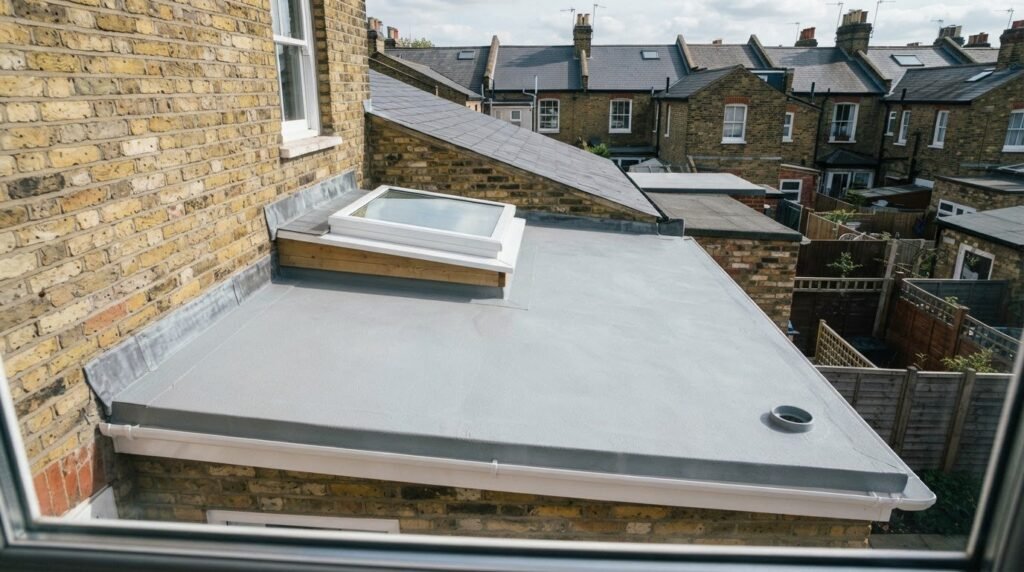
GRP has a clear trade-off: it creates a seamless, lightweight waterproof layer, but prolonged standing water can shorten its life. The benefits of a GRP roofing system may make it a practical option for smaller or unusually shaped flat roofs. Installation and curing also require suitable conditions.
Durability is an important consideration when choosing a flat-roof material, but it is not the only one. The right option also depends on installation, drainage, maintenance and how the roof will be used.
This guide explains GRP’s strengths and limitations, then compares it with felt and liquid roofing. You’ll also learn what affects its lifespan, what to look for in guarantee terms and which details influence cost, helping you assess what may suit your roof.
Key Takeaways
- Compare GRP with felt and liquid roofing by considering weight, drainage, maintenance and the roof’s intended use.
- Separate a roof’s expected lifespan from its guarantee, and consider how standing water and installation conditions can affect performance.
- GRP’s seamless finish can suit smaller or complex roof shapes, but roof design and conditions during installation matter.
- Assess building regulations and fire safety in relation to the complete roof build-up, not just the waterproof surface.
Comparison of flat-roofing materials
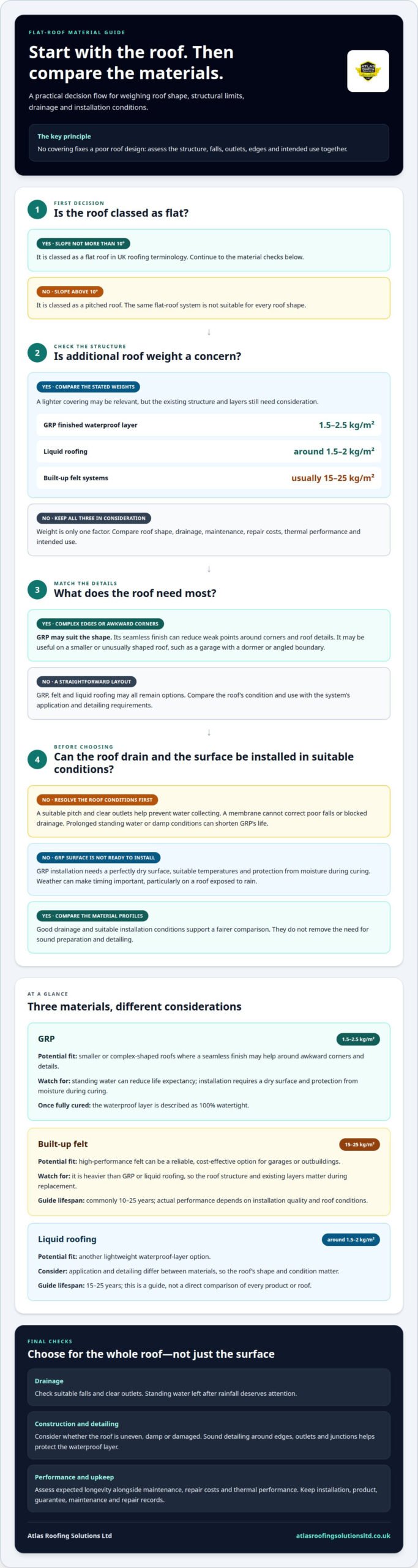
GRP, felt and liquid roofing each suit different flat-roof projects. A finished GRP waterproof layer typically weighs 1.5 to 2.5 kg per square metre. Built-up felt systems usually weigh 15 to 25 kg per square metre, while liquid roofing weighs around 1.5 to 2 kg per square metre. These differences matter when the existing roof structure has limits on additional weight.
GRP forms a seamless surface, which can reduce weak points around awkward corners and roof details. Once fully cured, its waterproof layer is described as 100% watertight. Installation needs a perfectly dry surface, suitable temperatures and protection from moisture during curing. That weather-sensitive process can make timing important, particularly when a roof is exposed to rain.
Felt is a familiar option, and high-performance felt can be reliable and cost-effective for garages or outbuildings. Built-up felt is heavier than GRP or liquid roofing, so the roof structure and existing layers matter during replacement. Liquid roofing also creates a light waterproof layer, at around 1.5 to 2 kg per square metre. The materials differ in application and detailing, so contractors consider the roof’s shape and condition.
Drainage matters for every flat-roof material. A suitable pitch and clear outlets help prevent water from collecting, particularly in a rainy city such as London. Prolonged standing water or damp conditions can reduce GRP’s life expectancy. A membrane alone cannot correct poor falls or blocked drainage.
Compare roofing materials by looking beyond the initial installation. Consider expected longevity, maintenance, repair costs and thermal performance together. A well-specified roof can contribute to thermal performance and reduce heat loss in colder months. GRP may suit a roof with complex edges, felt may suit a garage project, and liquid roofing is another lightweight option. Start by assessing the roof’s structure, drainage and intended use.
Lifespan and material guarantees
GRP, felt and liquid roofing have different lifespan estimates, but installation quality and roof conditions affect how long each performs. Felt roofing is commonly given a lifespan of 10 to 25 years, while liquid roofing is given 15 to 25 years. These ranges are guides, not a direct comparison of every product or roof. GRP’s service life also depends on construction quality, drainage and ongoing exposure to weather.
Standing water is a particular concern for GRP. Prolonged exposure to standing water or damp conditions reduces its life expectancy, so effective drainage matters from the outset. Poor preparation or moisture during curing can also affect the finished surface. On a flat roof, sound detailing around edges and outlets helps protect the waterproof layer from avoidable strain.
A guarantee is not the same as a lifespan estimate. A material guarantee usually concerns the product, while a workmanship guarantee relates to installation. Read the written terms to understand what is covered, for how long, and whether exclusions or maintenance conditions apply. A product defect and damage associated with poor drainage, for example, are different issues. Consider the guarantee alongside the installation specification, not as a promise that the roof will need no attention.
Keep records of the installation date, product details and guarantee documents, along with notes about maintenance visits and repairs. This information helps establish the roof’s history if a problem develops. For a GRP roof, pay attention to outlets, edge details and visible surface damage. Clearing debris helps maintain drainage, and standing water left after rainfall deserves prompt attention.
Longevity also depends on choosing a system that suits the roof’s shape and use. A flexible detail around a complex edge, for example, needs careful integration with the main waterproof layer. A roof installation assessment can help identify the construction and drainage factors that influence the expected performance of a flat roof.
Is GRP roofing suitable for all flat roof types and sizes?
No. GRP can suit smaller roofs and complex shapes, but it isn’t automatically right for every flat roof. In UK roofing terminology, a roof with a slope of not more than 10 degrees is classed as flat. Roofs with slopes above 10 degrees are pitched, so the same system isn’t suitable for every roof shape. The roof’s design and condition matter as much as its area.
Its seamless finish can be useful around several corners or an irregular outline, where separate sheet edges would need careful joining. A small garage roof with a dormer or angled boundary is one example of a shape GRP may suit. The finished waterproof layer is typically around 1-2 mm thick. That thin layer still needs a sound surface beneath it, with detailing that carries water towards the outlets.
Size alone does not determine whether GRP is suitable. On a broad flat roof, the layout of outlets, edges and junctions affects how the surface performs. A simple rectangular roof may have fewer awkward details than one with rooflights, upstands or changes in level. Every junction needs to connect properly with the main waterproof layer. If the design leaves water standing, changing the material alone will not solve the drainage problem.
The existing construction also influences whether GRP is a sensible option. Before applying a new covering, consider whether the roof is uneven, damp or damaged. Covering a weak deck, for example, will not make the structure sound. An assessment should consider the roof’s shape, falls, drainage, edges and intended use together. This helps determine whether GRP’s seamless finish suits the project or another material better fits the construction. The key question is not simply whether the roof is small or large, but whether the complete design supports a durable, properly drained waterproof layer.
Does GRP roofing meet UK building regulations and fire safety requirements?
GRP can be part of a compliant roof, but naming the material alone does not establish compliance. In the UK, assessment applies to the complete roof design and building work, including the supporting deck, insulation, waterproof layer, junctions and drainage. Fire performance also needs consideration as part of the assembly. A GRP finish alone cannot answer either question.
Fire safety depends on the specified product and how the roof is constructed. Product documentation should describe the tested fire performance and the roof build-up it covers. Evidence for one GRP system, for example, should not automatically be treated as evidence for a different deck or insulation arrangement. Changes to layers or details can affect the performance of the complete construction.
Building work also needs to be considered in context. Replacing the covering on an existing garage presents a different design situation from installing a new flat roof over living accommodation. The supporting structure, insulation, adjoining walls and roof openings all help define what needs assessment. Relevant requirements depend on the building and proposed work, not on GRP as a category.
A sound assessment connects the product information to the exact roof specification. It should identify the deck, insulation, membrane, edge details and junctions, then consider how those components work together. For instance, adding insulation beneath a GRP layer changes the roof build-up, so the evidence needs to match that arrangement. Keep the specification and product documents with the project records. This gives a clear basis for assessing both fire performance and the roof design. For a planned GRP project, discuss a roof installation with a roofing professional who can assess the proposed build-up and its details.
Atlas Roofing Solutions Ltd
Atlas Roofing Solutions Ltd can help you assess your roof’s condition, layout and drainage needs when considering GRP. This can be useful when planning a replacement, investigating a leak or deciding whether an existing flat roof needs repair. The right choice depends on the whole roof, not just its surface material.
Roof installation and repairs address the covering and its supporting details, while guttering and uPVC fascias and soffits help manage rainwater at the roof edge. Considering these components together can clarify what work your property needs and how to protect the roof.
If you’d like to discuss your flat roof, contact Atlas Roofing Solutions Ltd.
Choose the next step for your roof
The benefits of a GRP roofing system matter most when the material suits the roof’s design and how the space is used. Before choosing a solution, decide what you need the roof to do over time. A garage, an extension and a roof with regular access may each have different priorities; for specialised outdoor structures and covered patios, reviewing designs from companies such as North Florida Screen Enclosures can provide useful insight into purpose-built roofing systems.
Turn your decision into a practical project brief. Note the roof’s current condition, how rainwater leaves the surface and any planned changes to the building. These details help keep the discussion focused on the work, rather than on choosing a material in isolation. They also give you a clearer basis for comparing the specification and expected maintenance.
If you’re ready to discuss your roof, contact Atlas Roofing Solutions Ltd. A clear starting point can make the next decision feel more straightforward.
Frequently Asked Questions
Are there any disadvantages of GRP?
Yes. GRP installation needs a dry surface, suitable temperatures and protection from moisture during curing, so poor weather can disrupt the work. The material also performs poorly with prolonged standing water. Repairs can be more involved than a small surface patch because damaged areas may require replacement of roof layers. Good drainage and careful installation help avoid preventable problems.
What do I need to know about GRP Roofing?
GRP roofing is a fibreglass-based covering formed on the roof as a continuous waterproof surface. Its performance depends on the complete roof construction, including the deck, edges, outlets and junctions. Installation also requires appropriate conditions while the material cures. For a London property, consider how the roof sheds rain and whether its shape suits a seamless covering.
What are the main benefits of a GRP flat roofing system?
The main benefits of a GRP roofing system are its seamless finish, low weight and ability to follow complex roof shapes. A roof with several corners or junctions may benefit from a continuous surface rather than multiple sheet joins. GRP also provides a neat finish. These advantages matter most when the roof design, drainage and installation conditions suit the material.
How long does a GRP roof last in the UK?
There is no single lifespan that applies to every GRP roof in the UK. Longevity depends on the quality of the roof construction, installation, drainage and ongoing exposure to weather. Persistent standing water, for example, reduces GRP’s life expectancy. A sound roof design and clear outlets help protect the covering and support its performance over time.
How does GRP roofing compare with EPDM and felt roofing?
GRP is a fibreglass laminate, EPDM is a rubber membrane, and felt uses layered roofing material. GRP’s seamless finish may suit complex shapes, while felt is a familiar option for garages and outbuildings. Compare materials by considering the roof’s shape, supporting structure, drainage, maintenance needs and intended use. EPDM and felt systems also depend on correct detailing and installation.
How is a GRP roof installed, and how long does installation take?
Installation involves preparing a suitable, dry roof surface, applying the fibreglass system and protecting it from moisture while it cures. The finished roof has a waterproof surface, with carefully formed details at edges and outlets. There is no single installation timeframe for every project: roof size, shape, preparation, weather and curing conditions all affect the programme.