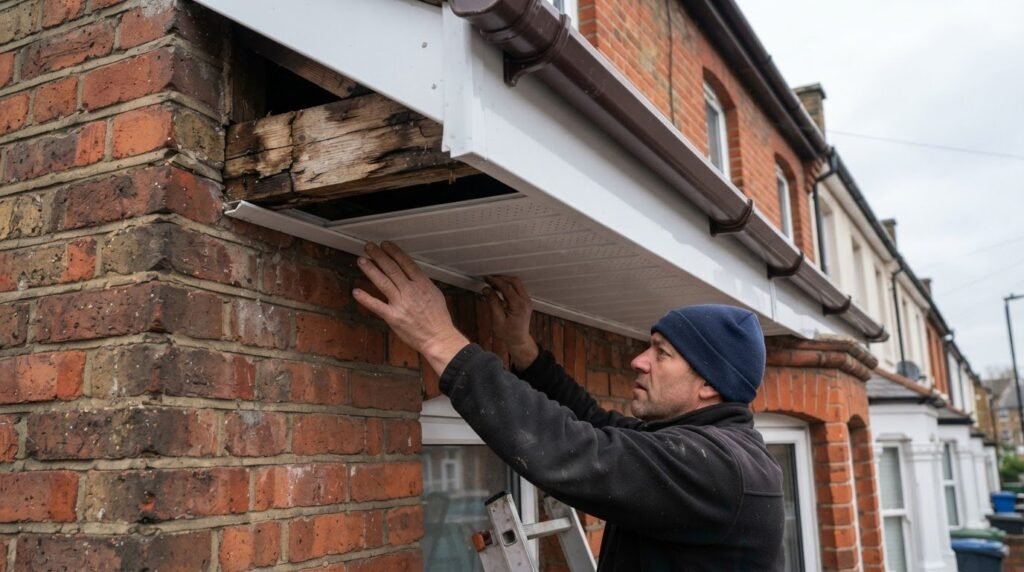
Damaged soffits can put more than your roofline’s appearance at risk. If boards are cracked, loose, water-damaged or letting pests in, arrange an assessment promptly. uPVC soffit replacement in Haringey may be appropriate when the existing boards are no longer sound. Ventilation matters too: soffits help protect the roof space while allowing air to circulate.
It’s understandable to want urgent repairs without replacing parts that are still doing their job. The right approach depends on the condition of the existing timber: sound boards may be suitable for capping, while damaged or damp material may need to be removed and replaced.
This guide explains the warning signs to look for, how replacement and capping differ, and what to expect during installation. It also explains why soffit ventilation helps protect the roof, so you can understand the recommended work and make an informed decision.
Key Takeaways
- Look for loose or damaged roofline boards and water-related signs to judge when repairs need prompt attention.
- Capping can suit sound timber, but damaged or damp boards may need full replacement rather than a cover-up.
- Plan for fascia and soffit replacement to typically take 2 to 5 days, with the work sequence shaped by the roofline’s condition.
- Keep ventilation in view: correctly designed soffits help airflow through the roof space and support protection from moisture.
Need Fascia & Soffits Installed Urgently?
Loose or cracked fascia and soffits can expose the roof edge to water and pests. In Haringey, act promptly if you notice damage, leaks or peeling paint.
UPVC Roofline Benefits
uPVC roofline products generally last longer and need less maintenance than timber. A uPVC fascia also avoids regular repainting, making it a practical choice for homeowners seeking a lower-maintenance finish. Soffits sit beneath the roof overhang, while fascia boards run along its edge and support the guttering. Together, they help protect the eaves and shape the roofline’s appearance.
Compare the proposed colour and finish with your windows, doors and brickwork. Glazing and home improvement specialists such as FrameHouse often highlight how coordinating window and door frames with your roofline can give the front and rear of your home a balanced, cohesive look. The written specification should identify the chosen finish and the roofline sections it covers.
Quotes and Replacement Costs
Compare quotes by scope, not just by the final figure. Check whether the work includes soffits, fascia, removal and disposal of old material, guttering adjustments, and repairs to the underlying timber. Ask for the proposed colour and finish to be recorded. A clear breakdown helps you see whether quotes cover the same roofline work.
The cost of replacing uPVC soffits depends on the length and layout of the eaves, access, material choice and the condition of the existing boards. More extensive damage or additional work to connected fascia and guttering can change the scope. Local assistance is scheme-specific: eligibility for Haringey Council programmes, and whether roofline repairs qualify, depend on the council’s criteria. Don’t assume grant funding will be available.
In most cases, replacing fascias, soffits or guttering doesn’t require planning permission. Listed buildings and homes in conservation areas may need approval. Building regulations are a separate consideration: the work should preserve suitable roof ventilation and meet any requirements that apply to the property.
Installer Checks and Replacement Signs
Look for an installer who provides a written scope, explains whether timber will be removed or capped, and specifies how the roofline will be finished. These details help you understand the work before it begins. Signs that soffits may need attention include cracks, water damage, leaks, peeling paint, discolouration, signs of pests or poor roof ventilation. For example, staining beneath the eaves alongside a leak calls for closer inspection than a colour change alone.
Full replacement versus capping over existing timber
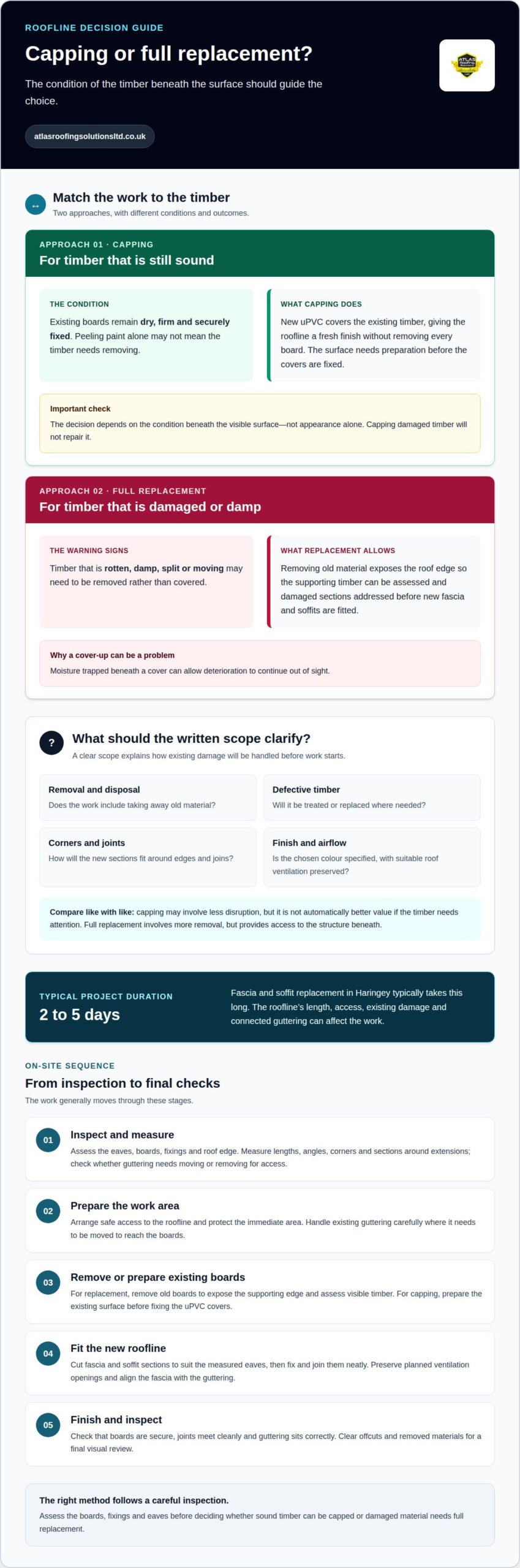
Capping covers existing timber with new uPVC, giving the roofline a fresh finish without removing every board. It may suit timber that remains dry, firm and securely fixed. For example, if the boards are sound but the paint is peeling, capping may avoid unnecessary removal. The decision depends on the condition beneath the visible surface, not appearance alone.
Full replacement is more appropriate when timber is rotten, damp, split or moving. Covering damaged boards won’t repair them, and trapped moisture can let deterioration continue out of sight. Removing the old material exposes the roof edge, allowing the supporting timber to be assessed and damaged sections addressed before new soffits and fascia are fitted.
Compare the approaches by asking what each includes: removal, disposal, treatment or replacement of defective timber, and fitting around corners and joints. A quote should explain how existing damage will be handled and how suitable airflow beneath the roof will be preserved. Check that the chosen colour and finish apply consistently to the specified boards. A written scope clarifies responsibilities before work starts.
Capping may involve less disruption, but it isn’t automatically the better-value choice if the timber needs attention. Full replacement involves more removal, yet provides access to the structure beneath. The right method follows a careful inspection of the boards, fixings and eaves. A roofline assessment can help establish which approach suits the condition of your home.
Installation process and project duration
Fascia and soffit replacement in Haringey typically takes 2 to 5 days. The installation process depends on the roofline’s length, access, existing damage and whether connected guttering needs attention.
A clear sequence helps explain what to expect on site. The work generally moves from assessment and preparation to removal, fitting and final checks.
- Inspect and measure: The installer assesses the eaves, existing boards, fixings and roof edge. Measurements establish the lengths and angles needed, including corners and sections around extensions. They also help identify whether guttering needs to be removed or repositioned for access.
- Prepare the work area: The working area is arranged to provide safe access to the roofline and protect the immediate area. Existing guttering may need careful handling before fascia or soffit boards can be reached. The work sequence should account for the property’s layout and any adjoining roof sections.
- Remove or prepare existing boards: For full replacement, old boards are removed to expose the supporting edge. The installer can then assess visible timber and address damaged sections within the agreed scope. If the chosen approach is capping, the existing surface needs preparation before new uPVC covers are fixed.
- Fit the new roofline: Fascia and soffit sections are cut to suit the measured eaves, then fixed and joined neatly. The installer maintains the planned ventilation openings and aligns the fascia with the guttering. Corners, joints and edges receive attention because poor alignment can affect both appearance and fit.
- Finish and inspect: The installer checks that the boards are secure, joints meet cleanly and guttering sits correctly. Offcuts and removed materials are cleared from the work area, leaving the completed roofline ready for a final visual review.
A longer roofline, awkward access, repairs to underlying timber or additional guttering work can extend the schedule. For example, removing deteriorated boards and repairing the exposed edge takes longer than simply fitting replacement sections. Agree the scope and sequence before installation begins, so the expected duration reflects the actual work rather than a standard assumption.
Soffit ventilation and roof protection
Soffits do more than close the gap beneath the roof overhang. Their ventilation helps air move through the roof space, while the boards shield the eaves from rain and other elements. Blocked or poorly planned vents can restrict airflow, allowing moisture to linger in the roof void. Ventilation deserves attention alongside the external finish.
Air should enter through the soffit vents and move through the roof space, rather than becoming trapped at the eaves. Paint, debris or an unsuitable replacement panel can obstruct openings that previously allowed airflow. During roofline work, the installer should identify existing vent positions and keep them clear in the finished installation. Ventilation needs to work along the roof edge, not just at one section.
FNB Roofing states that soffit ventilation under current Building Regulations should be equivalent to a one-inch continuous gap along the roof perimeter. This describes continuous ventilation provision, not an uncontrolled open gap. The finished system needs to provide the required airflow while protecting the roof space from water and pests. Fascia boards and soffits should meet neatly without covering intended ventilation openings.
Before work begins, note whether vents are present along each eaves run and whether insulation or stored items appear to obstruct airflow from inside. A roof inspection can establish how the existing arrangement works and whether replacement panels need ventilation built in. Inadequate roof ventilation is also a possible sign that the roofline needs attention, especially alongside damp marks or discolouration. The practical takeaway: preserve a deliberate airflow path while sealing vulnerable roof edges against weather. For a roofline review focused on airflow and protection, arrange a soffit ventilation assessment.
Atlas Roofing Solutions: uPVC Fascias & Soffits
Atlas Roofing Solutions Ltd can help when damaged soffits, fascias or roofline ventilation need professional attention. Its uPVC Fascias & Soffits service covers replacement work, and roof repairs are available when the roof edge also needs attention. If guttering connects to the affected fascia, including it in the assessment can help define the full scope.
The next step is a site visit to assess the boards, existing timber, ventilation and adjoining guttering. You’ll receive a transparent, no-obligation quote that sets out the proposed work, helping you understand whether replacement or another approach suits the roofline. Atlas Roofing Solutions brings over 20 years of experience and provides a 15-year guarantee on workmanship.
Contact Atlas Roofing Solutions to discuss your roofline repairs.
Take the next step towards a sound roofline
A sound decision starts with understanding what the roof edge needs, not simply choosing a new finish. If you’re considering uPVC soffit replacement in Haringey, let the condition of the existing boards and the ventilation design guide the scope. An assessment can also identify whether the surrounding roof or guttering needs attention.
Atlas Roofing Solutions Ltd provides uPVC Fascias & Soffits, as well as roof repairs, roof installation and guttering. Share what you’ve noticed, such as loose boards, water marks or blocked vents, to discuss the work that may suit your roofline.
Contact Atlas Roofing Solutions Ltd to discuss your roofline. A practical conversation can help you move towards a well-protected home.
Frequently Asked Questions
How long does a typical roofline replacement take?
A fascia and soffit replacement in Haringey typically takes 2 to 5 days. For uPVC soffit replacement in Haringey, the schedule depends on the roofline’s size, access and amount of work involved. Guttering or timber repairs can affect the programme too. A written work plan helps you understand the sequence and expected duration for your property.
How long does installation take?
Installation usually forms part of the 2 to 5 days typically needed for fascia and soffit replacement. The time on site depends on the eaves’ length, access and whether the work includes removing old boards or repairing the roof edge. For a Haringey home, the project scope gives a more useful guide than the fitting stage alone.
What colours are available?
uPVC roofline products come in colour and finish options, but available choices depend on the selected product. Consider how the soffits and fascia will look alongside your windows, doors, brickwork and guttering. For example, a coordinated finish can create a consistent appearance across the front and rear elevations. Include your preferred colour in the project specification.
What guarantee comes with the work?
Atlas Roofing Solutions Ltd provides a 15-year guarantee on workmanship. This relates to the work carried out, rather than establishing a guarantee period for the uPVC materials themselves. Keep the written quote and guarantee details with your home maintenance records. If you’re arranging roofline work alongside other repairs, make sure the documented scope identifies which workmanship the guarantee covers.
How long does uPVC soffit replacement take?
uPVC soffit replacement in Haringey typically takes 2 to 5 days when included in fascia and soffit work. The project duration depends on the property’s roofline, access and whether old material needs removal. A straightforward section may involve less work than a roofline needing repairs beneath the boards, so the schedule should reflect the agreed scope.
Can uPVC soffits be installed over existing timber soffits?
Yes, uPVC soffits can be fitted over existing timber when the boards are sound, dry and secure. Capping may suit timber with a worn surface but no underlying decay. If boards are damp, rotten or loose, covering them can conceal damage rather than resolve it. An assessment of the existing timber helps determine the suitable approach.