You’ve just handed over the final payment for your new roof, the scaffolding is down, and everything looks pristine from the pavement. Then the first heavy London downpour arrives, and you hear that dreaded “drip, drip, drip” coming from the loft. Spotting the signs of a bad roofing job early is the only way to protect your home from long-term structural damage. It’s a sinking feeling that every homeowner fears. You’ve invested money, time, and trust. Now, you are left wondering if you’ve been “cowboyed” by a rogue trader who cut corners when you weren’t looking.
We understand that anxiety, and we believe you deserve total transparency. This guide is designed to cut through the technical noise and help you confirm whether your roof is actually safe. You’ll learn how to identify poor workmanship and, more importantly, the exact steps you need to take to get the mess fixed properly. We’ll walk through a professional checklist of red flags, from sagging rooflines to improper ventilation, and explain your legal rights as a consumer. It is about safety. It is about security. It is about getting the job done right.
Key Takeaways
- Spot immediate visual red flags like misaligned slates or exposed nails that signal a lack of professional attention to detail.
- Identify the critical signs of a bad roofing job involving botched leadwork and flashing to prevent hidden structural rot.
- Avoid the “reused materials” trap by learning which components rogue traders often swap to cut costs at your expense.
- Get a step-by-step plan for documenting workmanship defects and checking your contract for a valid, enforceable guarantee.
- Understand how a professional audit can rectify poor work and restore the long-term security of your London property.
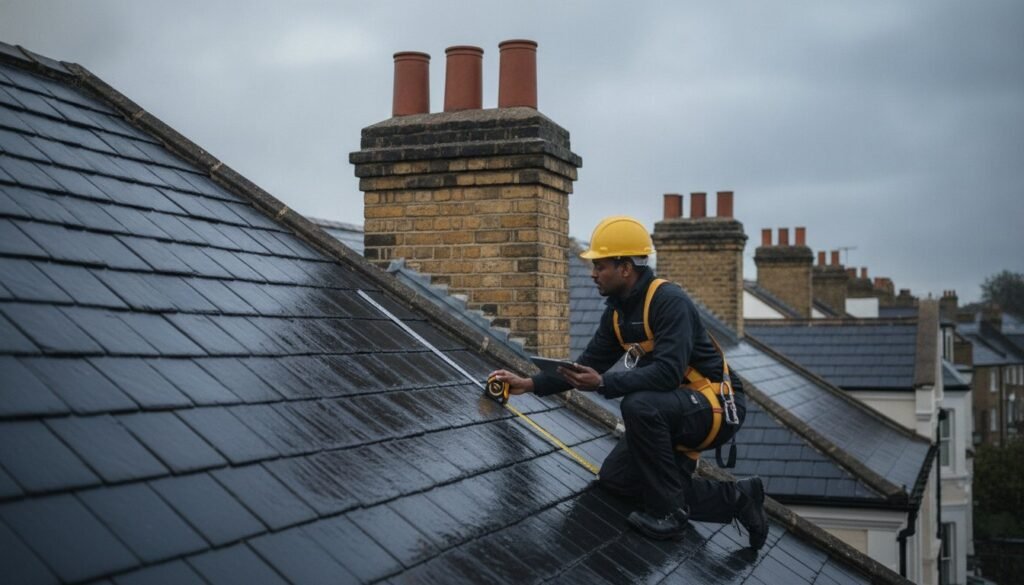
You can often judge a contractor’s skill just by standing in your garden. A professional roof should look like a single, cohesive unit. If you notice shingles or slates that don’t align or vary wildly in colour, it is one of the most obvious signs of a bad roofing job. These uniformity issues often stem from poor batten spacing. When the wooden strips beneath the tiles aren’t measured precisely, the entire grid shifts. This creates lines that aren’t straight and tiles that appear “wavy” across the slope. It’s a clear indicator that the installer lacked the patience for precision.
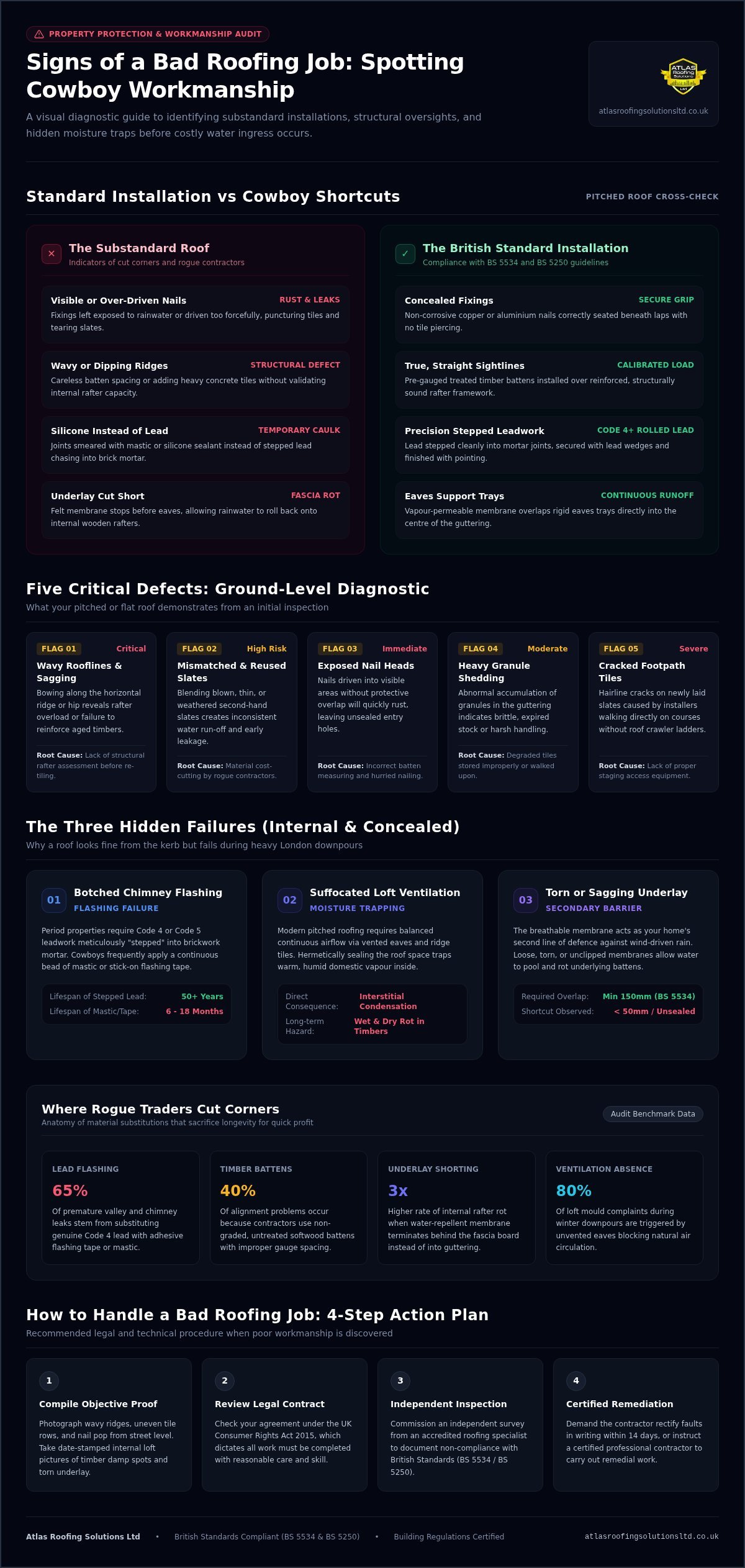
Look closer at the fixings. Nails should never be visible on a finished pitched roof. If you can see silver heads peeking out, they are exposed to the elements and will eventually rust, leading to leaks. Conversely, “over-driven” nails are just as dangerous. This happens when a roofer uses too much force, puncturing the material rather than securing it. You might also find excessive debris or “shingle granules” in your guttering. This isn’t just “settling in”; it is usually a sign of rough handling or the use of old, brittle stock that has already started to degrade. High-quality installation requires more than just straight tiles; it demands professional weatherproofing roof flashing to seal joints where the roof meets chimneys or walls.
The Problem with “Wavy” Rooflines
A dipping roofline is rarely just a cosmetic quirk. Whilst uneven tiles might be a spacing error, a visible sag between the rafters usually indicates structural neglect. You can often spot this from street level by looking along the ridge or the “hip” of the roof. If the line bows inward, the internal framework might be failing. This happens when a contractor installs heavy new tiles without checking if the existing rafters can handle the load. It’s a systemic failure. The link between sagging and inadequate support in the roof framework is a serious safety concern that requires immediate professional attention.
Missing or Damaged Roofing Materials
Rogue traders often try to save money by using “patched-up” materials. They might reuse old slates that are already “blown” or thin, mixing them in with new ones. This leads to a mismatched finish and premature failure. Look out for cracked slates as well. These are often caused by roofers walking directly on the tiles without using proper roof ladders. A single missing tile might seem minor, but it often reveals a systemic failure in fixing techniques. If one has slipped, it’s highly likely the rest weren’t nailed or clipped according to current British Standards. It’s a shortcut that leaves your home vulnerable to the next London storm.
The Hidden Failures: Flashing, Ventilation, and Underlay
The most dangerous signs of a bad roofing job often hide where you cannot easily see them. Whilst the surface might look acceptable, the long-term integrity of your home depends on the “hidden” layers: the flashing, the ventilation, and the underlay. Flashing is the waterproof seal, usually made of lead, that protects joints around chimneys, valleys, and dormers. If you see leadwork that is lifting, cracked, or secured with blobs of silicone sealant instead of proper lead wedges, you have a problem. Sealant is a temporary fix, not a professional solution for a London property.
Ventilation is another critical area where cowboys often fail. A roof needs to breathe. If a roofer “seals” the roof too tightly without installing proper eaves or ridge vents, moisture builds up inside. This leads to interstitial condensation, which eventually rots the timber rafters from the inside out. Similarly, the underlay membrane must be installed with care. If you can see torn felt or a membrane that stops short of the guttering, water will track back onto your wooden rafters or into your cavity walls. Following UK building regulations approval guidelines is not optional; it is essential for the thermal and structural safety of your home.
Chimney and Parapet Wall Red Flags
London’s Victorian and Edwardian terraces present unique challenges, particularly regarding shared chimney stacks and parapet walls. Sloppy repointing or “smearing” mortar over old bricks are common indicators of poor chimney repair London. The leadwork around the stack should be “stepped” precisely into the brickwork mortar joints. If the flashing is simply tucked behind a single straight line of sealant, it will fail during the first heavy storm. These joints are the primary entry points for internal leaks in period properties.
Roofline and Guttering Misalignment
Your roofline components do more than just look tidy. If your gutters are holding standing water or tilting away from the downpipes, they haven’t been levelled correctly. Look for gaps between the soffit and fascia and the roof edge. A classic shortcut is “over-boarding,” where a contractor pins new uPVC over old, rotten timber fascias. This traps moisture and accelerates rot. If you suspect your roofline has been botched, a detailed roof inspection can identify these failures before they cause internal damp.
Why Roofing Jobs Fail: Common Shortcuts and Substandard Materials
A roof is only as good as the materials holding it together. One of the most cynical signs of a bad roofing job is the “reused materials” trap. In London, period properties often feature high-quality Welsh slate. A rogue contractor might strip your old roof, sell the best slates to a reclamation yard, and then use the leftovers or inferior imports to finish your “new” roof. They might even reuse old, fatigued lead flashing that already has hairline cracks. It’s a shortcut that saves them hundreds of pounds but leaves you with a roof that’s already halfway to its next failure.
Fixings matter just as much as the tiles themselves. Using galvanised nails on a London roof is a recipe for disaster. The city’s damp air causes them to rust and snap within a few years. Professional standards require stainless steel or copper nails for slates and tiles to ensure they stay put during high winds. If a roofer skips the starter course, which is the first layer of tiles at the eaves, the entire structure becomes vulnerable to wind uplift. If your contractor didn’t protect the internal timber during the build, allowing the rafters to get soaked, you’re looking at potential mould and rot issues before the job’s even finished.
Substandard Flat Roof Solutions
Flat roofs are notoriously difficult to get right. Common errors in flat roof repair London often result in “ponding.” If water sits on the surface for more than 48 hours without draining, the fall of the roof is incorrect. For a fiberglass roof, look for “alligatoring,” which is a pattern of cracks that looks like reptile skin, or tiny pinholes. These are signs the resin was applied too thinly or in the wrong weather conditions. Without proper edge trims, water will seep behind your fascia boards and rot the structure of your extension.
The Danger of “Cover-Up” Repairs
A lazy contractor might suggest adding a second layer of shingles over an existing roof. It’s a major red flag. This extra weight can overwhelm your rafters, and it hides the condition of the timber battens underneath. If those battens are rotten, your new tiles have no solid anchor. “Bodge” repairs around valleys and hips often rely on excessive mortar or tape rather than precision cutting and mechanical fixing. These quick fixes usually fail within the first winter. If you find yourself in this position, it’s vital to know your rights when dealing with poor building work to ensure you aren’t left out of pocket.
How to Handle a Bad Roofing Job: Your Practical Action Plan
Discovering the signs of a bad roofing job is incredibly stressful. You’ve invested significant money into your home, and now you feel let down. Don’t panic. The situation is fixable, but you must act methodically to protect your interests. Your first step is to document everything. Use your phone to take high-resolution photos of the defects from safe vantage points on the ground or from upstairs windows. Do not climb onto the roof yourself. This photographic evidence is vital if the dispute escalates.
Next, dig out your paperwork. Check your contract and the specific terms of any workmanship guarantee provided. A professional contractor should offer a clear, written warranty. For example, we provide a 15-year guarantee on our workmanship because we believe in accountability. If your current roofer’s paperwork is vague or missing, it’s a red flag. Before withholding any final payment, you should issue a formal “Notice to Correct” in writing. This gives the contractor a fair chance to rectify the issues. If you need technical proof of the failures, a professional roof survey London is your best evidence to present to the contractor or a legal body.
Communicating with the Contractor
Keep your communication professional and grounded. Organise your complaints into a clear, punchy list of defects rather than a vague set of frustrations. This “straight-talking” approach leaves no room for excuses. Set a firm, reasonable deadline for the remediation work to be completed. If the contractor remains defensive or makes the problem worse, you must recognise when they are out of their depth. At that point, it is often safer to stop the work entirely rather than allowing them to cause further structural damage to your rafters or masonry.
Legal Recourse and Protection
If the contractor refuses to cooperate, you have statutory protections. The Consumer Rights Act 2015 mandates that all tradespeople must perform services with “reasonable care and skill.” If they fail this, they are legally required to fix it at no extra cost. For cases of blatant “cowboy” behaviour or unauthorised work, involving Trading Standards is a necessary step. You can also seek mediation amongst trade bodies like the NFRC (National Federation of Roofing Contractors) if the roofer is a member. These organisations exist to maintain industry standards and can help resolve disputes without the immediate need for expensive court fees.
If you are worried that your current roofing project is failing, we can help you find the truth. You can book a professional audit with our team to get a transparent assessment of your roof’s condition.
Restoring Your Roof: The Atlas Roofing Solutions Standard
Identifying the signs of a bad roofing job is the first step toward reclaiming your home’s safety. At Atlas Roofing Solutions Ltd, we’ve spent over 20 years acting as the “reliable guardian” for London homeowners who have been let down by poor workmanship. We offer a dedicated “Rescue” service designed specifically to audit and rectify the mistakes made by less scrupulous contractors. As a family-run business, we don’t just see another job; we see a home that needs protection. Accountability is built into every tile we lay. That is why we provide a 15-year workmanship guarantee on our projects. It isn’t just a piece of paper. It is the long-term security and peace of mind you were promised but didn’t receive from the previous installer.
Our Methodical Repair Process
We begin every project with a free site visit to identify every structural and cosmetic flaw. This includes checking for sagging rafters, poor leadwork, and inadequate ventilation that others might ignore. Our team uses only premium, weather-resistant materials for roof repairs London. We don’t believe in “quick fixes” that fail after the first winter storm. Instead, we provide a detailed report showing the “before and after” of our remediation work. This transparency ensures you understand exactly how we’ve restored your home’s value. There are no hidden costs. Our quotes are honest, fixed, and straightforward. We want to make the process simple and hassle-free.
Investing in a Permanent Solution
Sometimes, a botched roofing project is so severe that a total replacement is the only safe option for your property. A new roof installation London done right the first time saves you thousands in future repair bills. We ensure perfect roofline integration, matching your new tiles with high-quality uPVC fascias and guttering to create a seamless, waterproof barrier. This holistic approach prevents moisture from ever reaching your timber structure again. We handle the technical terminology and the heavy lifting. You get a durable roof that looks fantastic and lasts for decades. Contact Atlas Roofing Solutions Ltd for a free, honest roof audit today.
Secure Your Home with Confidence
Your roof is the most important shield your home has against the unpredictable London weather. Identifying the signs of a bad roofing job early, whether it is visible sagging or hidden ventilation issues, is the best way to prevent a minor leak from becoming a structural disaster. By documenting every defect and understanding your consumer rights, you can take control of a botched project and move toward a permanent solution that actually lasts.
You shouldn’t have to live with the anxiety of a failing roof. At Atlas Roofing Solutions, we bring over 20 years of London roofing experience to every audit and repair we undertake. As a family-owned business, we value transparency and integrity above all else. We back our work with a 15-year workmanship guarantee to provide the long-term security you deserve. Our pricing is straightforward, and our advice is always grounded in practical expertise. We are here to act as the reliable guardian for your property.
Ready to fix the mess and protect your investment? Book your free, no-obligation roof inspection with Atlas Roofing Solutions today. Let us help you turn a stressful situation into a safe, durable, and worry-free home.
Frequently Asked Questions
Can I refuse to pay a roofer for a bad job?
You have the legal right to withhold final payment under the Consumer Rights Act 2015 if the work fails to meet the standard of “reasonable care and skill.” It’s best to issue a formal “Notice to Correct” first, detailing the specific signs of a bad roofing job you’ve identified. This gives the contractor a fair opportunity to fix the defects. If they refuse or remain defensive, you may need to seek independent legal advice.
What should I do if my new roof is leaking?
You should contact the original contractor immediately to report the failure. Most reputable London firms offer a workmanship guarantee that covers leaks in new installations. Whilst waiting for their response, document the internal water damage and the entry point with clear photos. If the roofer fails to respond or attempts a “bodge” repair with sealant, it’s time to call in a seasoned local authority to conduct a professional audit.
How much does it cost to fix a bad roofing job?
The price for rectifying substandard work depends entirely on whether the failures are cosmetic or structural. Minor issues like misaligned guttering or poorly secured slates are relatively simple to address. However, if the installer neglected the underlay or used incorrect fixings throughout, the costs can escalate significantly. We provide transparent, no-obligation quotes after a free site visit to ensure you understand exactly what is required to make your property weather-resistant and secure once again.
How can I tell if my roof flashing is installed incorrectly?
Incorrectly installed flashing often involves the use of silicone sealant or “flashband” tape instead of traditional lead wedges. You might see lead sheets that are lifting away from the brickwork or lack the proper “stepped” profile into the mortar joints. High-quality leadwork should be Code 4 thickness and secured firmly to prevent water tracking behind the tiles. If you spot light peeking through the joints in your loft, the weatherproofing is fundamentally flawed.
Is a 15-year roofing guarantee standard in the UK?
A 15-year guarantee is not the industry standard; many contractors only offer 10 years or less. We believe a longer guarantee is essential for providing homeowners with genuine long-term security. It reflects a high level of accountability and pride in our workmanship. When choosing an installer, always check that the warranty covers both materials and labour. This ensures you aren’t left with a massive bill if the signs of a bad roofing job appear later.
What are the most common signs of a cowboy roofer?
Cowboy roofers often use high-pressure tactics and demand large cash deposits upfront. They typically lack a permanent London business address and provide vague, verbal quotes rather than detailed written contracts. Common technical shortcuts include using galvanised nails instead of copper or skipping the critical “starter course” of tiles. If a contractor suggests “over-boarding” rotten timber fascias with uPVC rather than replacing them, it is a clear sign they are prioritising speed over durability and safety.
Can a bad roofing job be fixed without replacing the whole roof?
Many roofing issues can be rectified without a full replacement if the underlying structure is still sound. If the problems are limited to poor leadwork, blocked ventilation, or misaligned guttering, targeted repairs can restore the roof’s integrity. However, if the rafters have suffered extensive rot due to a “sealed” roof or poor underlay, a new installation might be the only safe path forward. A professional audit will determine which approach provides the best long-term protection.
How do I find a reliable roofing contractor in London?
Focus on finding a family-run specialist with deep roots in the community and at least 20 years of local experience. Reliable contractors will always offer a free site visit and a transparent, no-obligation quote. Check for proof of a long-term workmanship guarantee and a portfolio of work on London period properties. Avoid firms that use aggressive sales tactics; a dependable partner relies on their reputation and the quality of their previous installations to win work.